Is Turbo Lag Really a Thing of the Past?
Share This Page
Turbo lag is the technical term for the short delay between pressing the accelerator pedal and the turbocharger bringing its extra power into play. In modern engines, thanks to electric assistance, twin-scroll and variable geometry, this lag has become imperceptible to most drivers; however, physics still operates by the same rules, and especially at low rpm, it is still felt in some vehicles.
Highlights
- Turbo lag is most pronounced at low rpm, where exhaust gas is insufficient to spin the turbine.
- In newly produced vehicles in the USA, the turbo rate was only 1% in 2000, exceeding 33% in 2019, and it continues to rise.
- A downsized turbocharged engine can be 20-40% more fuel efficient than an atmospheric engine with equivalent power.
- An electric turbo can completely eliminate lag by spinning the compressor independently of the exhaust.
- A suddenly worsening lag can be a sign of a mechanical fault.
What Is Turbo Lag and Why Does It Occur?
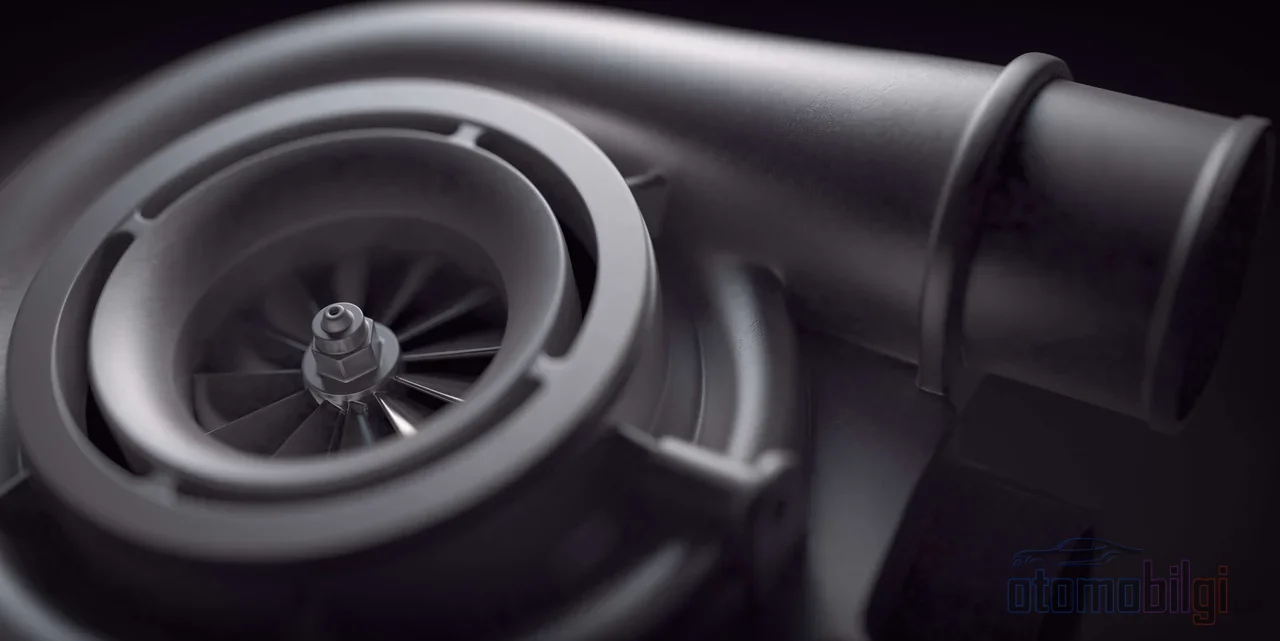
First, let's clarify the mechanism. A turbocharger consists of two fans: the turbine on the exhaust side and the compressor on the intake side. These are connected to the same shaft. The waste energy carried by the exhaust gas spins the turbine, the turbine turns the compressor via the shaft, and the intake air is compressed and sent to the cylinders in a denser form. This way, more power is obtained from the same volume.
The lag arises exactly here. When you press the accelerator pedal, the engine has not yet produced sufficient exhaust energy. It takes time to accelerate the rotating mass of the turbine; in addition, there is a volume that the manifold, intercooler and pressure pipes must fill. In other words, lag is not merely mechanical inertia but a thermodynamic fact: the chain of exhaust enthalpy conversion and pressurization of the airflow inevitably requires a certain amount of time. Exhaust enthalpy conversion, filling of the manifold volume and the mass flow rate chain require time.
The main factors determining the magnitude of the lag are:
- Rotating mass and inertia: The turbine and compressor wheels take time to accelerate during sudden speed increases.
- Exhaust flow: At low rpm, the exhaust gas flow is insufficient to spin the turbine quickly.
- Turbo size: A large turbo delivers more power at high rpm but increases lag at low rpm.
- Turbine-compressor matching: An incorrectly chosen turbine housing (for example, a large A/R value) impairs low-rpm response.
- Calibration and hardware condition: Wastegate failure, an inefficient intercooler, boost threshold settings and ECU calibration all affect lag. The distance of the turbocharger from the exhaust manifold also matters; as the distance increases, the lag grows.
It is also necessary to distinguish between concepts: The complete absence of boost below a certain rpm is a different situation from lag and is called the "boost threshold." Lag, on the other hand, concerns the transient response time after entering the boost zone once. The types of lag are not considered as a whole either; low-rpm lag, high-rpm lag, transient lag seen during sudden throttle changes, and sequential transition lag in multi-turbo setups are each addressed separately.
How Do Downsized Engines Affect Turbo Lag?
As engine displacements have shrunk, the turbo has become the primary way to preserve power. In 2000, only 1% of new vehicles produced in the US had a turbo, while by 2019 this figure had exceeded 33% and continues to rise. A downsized turbocharged engine can be 20-40% more fuel efficient than a naturally aspirated engine of equivalent power. In other words, efficiency and low-end torque are the two main gains of downsizing.
But the same downsizing also brings a trade-off that increases the natural cost of lag: A small-displacement engine produces less exhaust gas, making it harder to spin the turbine. For this reason, turbo selection becomes critical in downsized engines; manufacturers generally prefer smaller turbos due to their lower rotational inertia and lower exhaust flow requirement. In return, they give up some peak power, but gain a livelier and sharper throttle response in everyday use.
Technologies That Reduce Lag: Which One Does What?
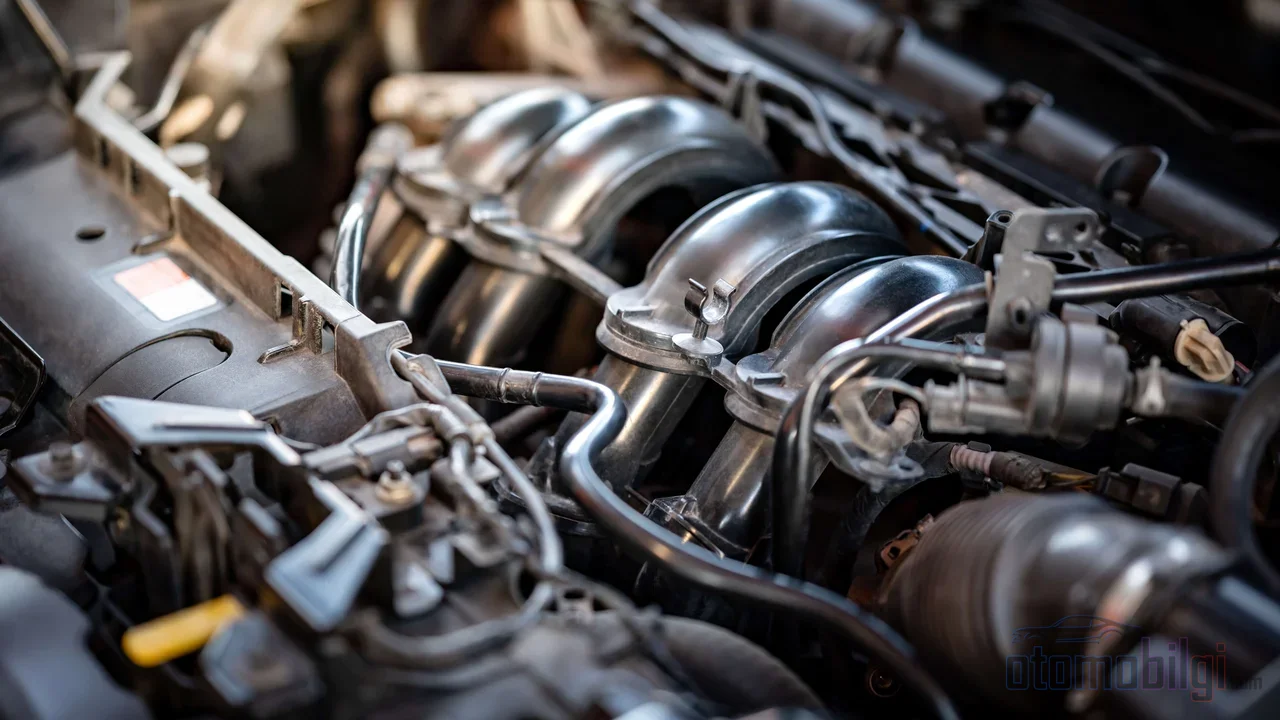
On the engineering side, the fight against lag is carried out along the same two axes: making the turbine use exhaust energy more efficiently, or providing an additional energy source to the turbine. Mature solutions exist on both axes.
Solutions that make the exhaust side more efficient
A twin-scroll turbo reduces interference between cylinders by separating exhaust pulses into different channels. The turbine thus uses exhaust energy more efficiently; low-end torque increases, response quickens, and top-end power is not sacrificed. The downside is that it requires a special exhaust manifold and turbine housing, making it more expensive.
A variable geometry turbo (VGT/VNT), on the other hand, adjusts the angle of the vanes inside the turbine according to engine speed: a narrow cross-section at low rpm for fast spool, a wide cross-section at high rpm for strong performance. Long common in diesels, this technology is increasingly appearing in gasoline performance engines as well. Still, it is far more complex and expensive than standard turbos. Another mechanical improvement is ball bearing journals: by reducing friction, they increase spool speed and nearly eliminate lag. In addition, manufacturers are continuously reducing the inertia of turbine wheels with lighter and stronger materials.
Twin (sequential/twin) turbo setups divide the work: the small turbo engages at low rpm, the large turbo at high rpm. This balances low-end response with top-end power; in return, there is complex manifold design, increased weight, and cost.
Electrically assisted solutions
The real leap is here. An electric turbo (e-turbo) spins the compressor with an electric motor independent of the exhaust, providing instant boost and potentially eliminating lag entirely. Garrett describes the electric turbo as follows:
The electric turbo nearly eliminates lag by spooling up the normal turbo until the exhaust gases come into play.
As a simpler alternative, the electric compressor is an ideal solution for instant performance gains compared to low-pressure blowers, and by improving combustion quality in downsized engines it also reduces fuel emissions. 48V mild-hybrid systems, on the other hand, are described as an effective solution against the turbocharger's weak transient response; electrically assisted turbocharging is being used in the development of more agile, smaller-displacement engines. There are also e-turbo designs that can charge the battery with excess energy after spooling up, meaning the system can enter a self-sustaining cycle.
The software side should not be overlooked either. ECU calibration can increase throttle sensitivity, adjust boost thresholds, and reduce throttle-by-wire delays. Shortening the pipe volume between the turbo and the intake manifold also speeds up the response by reducing the amount of air to be pressurized. The racing world's radical solution, anti-lag (ALS), injects fuel/air into the exhaust manifold to keep the turbine spinning when the throttle is closed; however, since it damages components, it is not suitable for daily use.
Is Turbo Lag Still Felt in Daily Driving?
There are two views, and both are partly right. The first view says that modern technologies (e-turbo, twin-scroll, VGT, lightweight materials) have made lag imperceptible. Indeed, thanks to advances in design, turbo lag is now barely perceived by drivers in most daily-use vehicles sold today. The second view is more cautious: physics has not changed; small turbos and electric assist do not eliminate lag, they mask it. There is some truth to this view; especially during sudden overtakes or full-throttle launches, transient lag is still measurable.
The scenario where lag is most noticeable in the driving experience is the low-rev range in stop-and-go traffic: the car accelerates sluggishly below 2000 RPM, then power arrives suddenly. This typical "wait first, then explosion" feeling is precisely the definition of transient lag. Sudden power surges during dynamic driving can affect vehicle control and create a safety risk in advanced maneuvers; therefore, lag is not merely a comfort issue.
An interesting footnote: some enthusiasts see lag not as a weakness but as an enjoyable character trait. In Formula 1 circles, too, the return of turbo lag to drivers is being discussed along with the 2026 engine regulations; so even at the top tier of racing, the topic is still current.
When is lag a sign of a fault?
A lag that has worsened compared to normal may herald a mechanical problem. The symptoms to watch for are:
- Excessive smoke or unusual noises
- Oil leakage, burnt oil smell from the exhaust
- Inconsistent boost pressure
- High exhaust gas temperature
Especially in VGT turbines, carbon buildup stuck to the vanes can cause them to jam; this can result in lag so severe that it may even render the vehicle undrivable.
Putting the Technologies Side by Side
The comparison below summarizes the solutions I described above across three common criteria: effect on lag, strong point, and cost/complexity penalty.
| Technology | Effect on lag | Key advantage | Disadvantage |
|---|---|---|---|
| Twin-scroll | Increases low-end torque, speeds up response | No sacrifice of top-end power | Requires a special manifold and housing, expensive |
| VGT/VNT | Provides fast spool at low rpm | Wide operating range thanks to vane adjustment based on engine speed | Complex and expensive, sensitive to carbon buildup |
| Small turbo | Faster response with less inertia | Lively throttle response in daily use | Lower peak power |
| Twin (sequential) turbo | Balances low and high rpm | Both response and top-end power | Complex manifold, increased weight and cost |
| Electric turbo | Can completely eliminate lag | Instant boost independent of exhaust flow | More components, increased complexity |
| 48V hybrid support | Can eliminate low-rpm lag | Can be integrated into an existing engine | Requires a 48V electrical system |
Can Lag Be Reduced Through Driving Technique?
No matter how advanced the hardware gets, the driver has a share too. Using gradual throttle input, avoiding sudden throttle loads, and when necessary downshifting to keep the revs high are practical ways to enter the boost zone faster. Downshifting one gear before overtaking in a manual vehicle largely eliminates the feeling of lag, because the turbine is already within the rpm range where it will produce boost.
As for the electric turbo question: since they do not depend on exhaust gas, these systems can completely eliminate lag and offer noticeably smoother throttle response. However, it must also be taken into account that these systems have more components that can fail or need repair; complexity comes at a price.
Conclusion: Is Lag a Thing of the Past, or Did We Beat Physics?
My answer is clear: in daily use, yes, it is largely a thing of the past. Thanks to the targeted low-end torque of downsized engines, twin-scroll, VGT, ball bearings and especially electrically assisted solutions, most drivers no longer notice lag. However, this is not a victory over physics, but a matter of engineering trade-offs: exhaust energy still comes with revs, and if there is not enough energy at low revs to feed the turbine, something has to fill that gap - electricity, a smaller turbine, or software. In vehicles that strike this balance, lag disappears; in those that do not, especially large single-turbo engines with older calibrations, it is still there. Also, a lag that suddenly worsens is no longer "character", but a signal that maintenance is needed. So the most accurate way to answer the question is: lag is not dead, it has become manageable.
Sources
- Turbo Lag: Causes, Effects and Solutions
- What Is an Electric Turbocharger? | Garrett E-Turbo
- What is Turbo Lag and How Can You Reduce It?
- What Is Turbo Lag? | Everything Explained!
- Understanding Turbo Lag: What It Is & How to Minimize It
- The Physics of Delay: Why Turbos Don't Work Instantly
- The Great Divide | Twin Scroll vs. Single Scroll Turbo Test
- All about 48V / Mild Hybrid technology
- Goodbye turbo lag!
- Innovations in e-compressors and e-turbos for fuel cell engines
- Electrification of turbocharger and supercharger for downsized ICEs and HEVs
- Why are modern engines getting smaller?