Turbo or Naturally Aspirated? The Relationship Between Power and Torque and Engine Displacement
Share This Page
Thanks to its small displacement, a turbo engine recovers the energy of exhaust gases to deliver more torque and power, while a naturally aspirated engine offers a direct, uninterrupted relationship between the accelerator pedal and power. Which one is better is a question with no single answer: the result depends on what you prioritize within the triangle of displacement, power and torque. This guide compares the two induction types through the lens of daily use, efficiency and durability.
Highlights
- Turbocharging can, in many cases, increase an engine's power and torque by up to 30% .
- A downsized turbo engine can be 20-40% more fuel efficient than an equivalent-power naturally aspirated engine.
- Modern turbochargers 2000 RPM can deliver full boost at around or even earlier.
- Turbo turbines spin 80,000-200,000 RPM at between.
What Is the Fundamental Difference: How Does Air Enter the Cylinder?
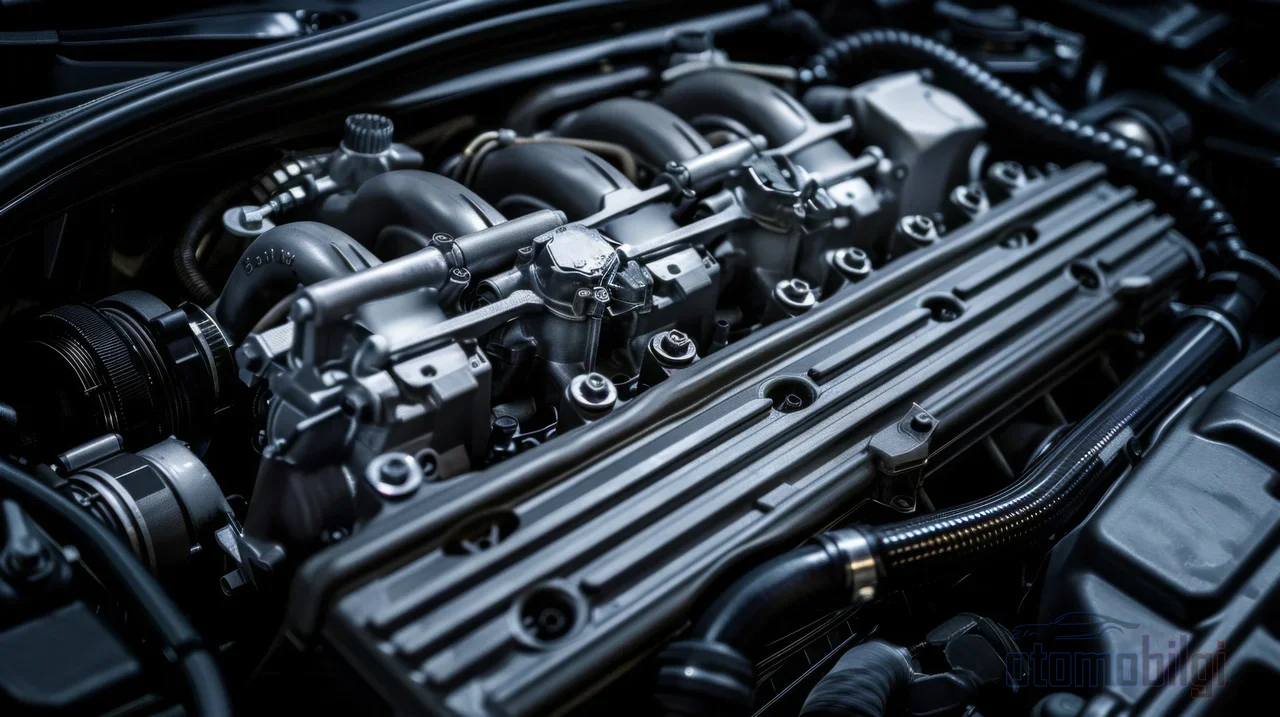
The definition of a naturally aspirated (NA) engine is simple: it has neither a turbocharger nor a compressor. Air is drawn into the cylinders on its own, thanks to the vacuum created inside them, passing through the air filter, throttle body and intake manifold. The more air the engine can burn, the more fuel it burns and the more power it produces.
The turbocharger adds one more factor to the same equation. Instead of expelling the exhaust gases, it uses them to spin a turbine wheel; this wheel, in turn, drives the compressor wheel on the same shaft, compressing ambient air and forcing it into the engine. Denser air enters the cylinders, combustion is denser, and the result is more power. A supercharger performs a similar compression job using a belt-and-pulley system connected to the crankshaft instead of exhaust gases; it comes in three main types: roots, twin-screw and centrifugal.
A small note on terminology: in manufacturers' model codes, the letter T stands for a turbocharged engine, while the abbreviation L indicates a naturally aspirated engine. Knowing this distinction makes reading brochures easier.
How Does Engine Displacement Affect Power and Torque?
Engine displacement determines the amount of fuel-air mixture the engine can burn in each cycle. A larger displacement burns more mixture per cycle; that is why it usually produces more power. Torque is the quantity most directly proportional to displacement: under equal volumetric efficiency and mean effective pressure conditions, more displacement proportionally means more torque at every rpm.
The everyday driving equivalent of this is felt at low rpm. Large-displacement engines produce more torque especially in the lower part of the rev range, which makes them ideal for uses such as pulling away without straining the transmission or carrying loads. Increasing the number of cylinders raises power and smoothness but does not always improve the torque curve; displacement per cylinder is the variable that truly shapes torque character.
How Does a Turbo Extract Big Torque from Small Displacement?
The source of torque is the mass of air burned in each cycle. A turbo does its job not by increasing displacement but by increasing this air mass: the air compressed and forced into the cylinders gives a small engine torque similar to that of a large naturally aspirated engine. In many cases, exhaust-driven turbochargers increase an engine's power and torque up to 30% can increase.
Turbine size also determines character. Small turbochargers spool up quickly even with low exhaust flow, providing mid-range torque; large turbochargers sustain airflow at high RPM, increasing peak power. Manufacturers strike a balance between these two extremes, depending on the engine and the vehicle.
Driving Character: Why Does a Naturally Aspirated Engine Feel More Linear?
In a naturally aspirated engine, power output is proportional to throttle opening. The more you press the accelerator, the more the engine responds; the relationship between pedal depth and engine behavior feels like a straight line. In a turbocharged engine, this line is more curved, because the turbine's spool-up is added to the power curve, and the result can be less predictable.
Both have strengths in daily use. A turbo can make a small engine feel powerful and energetic at everyday speeds; an NA engine, thanks to the progressive relationship between throttle and response, is more balanced and consistent on long journeys. In city driving and heavy traffic, the NA's linear progression feels more advantageous to many drivers; in a turbo engine, low-RPM lag followed by a sudden surge of boost can make smooth driving harder.
There is also a nuance in the linearity debate: modern turbochargers at 2000 RPM or earlier can deliver full boost, and no naturally aspirated engine can reach peak torque at such low RPM. In other words, the turbo is no longer delayed; it can be part of an engine that delivers power surprisingly early.
Is Turbo Lag Still a Problem? The Real Trade-offs
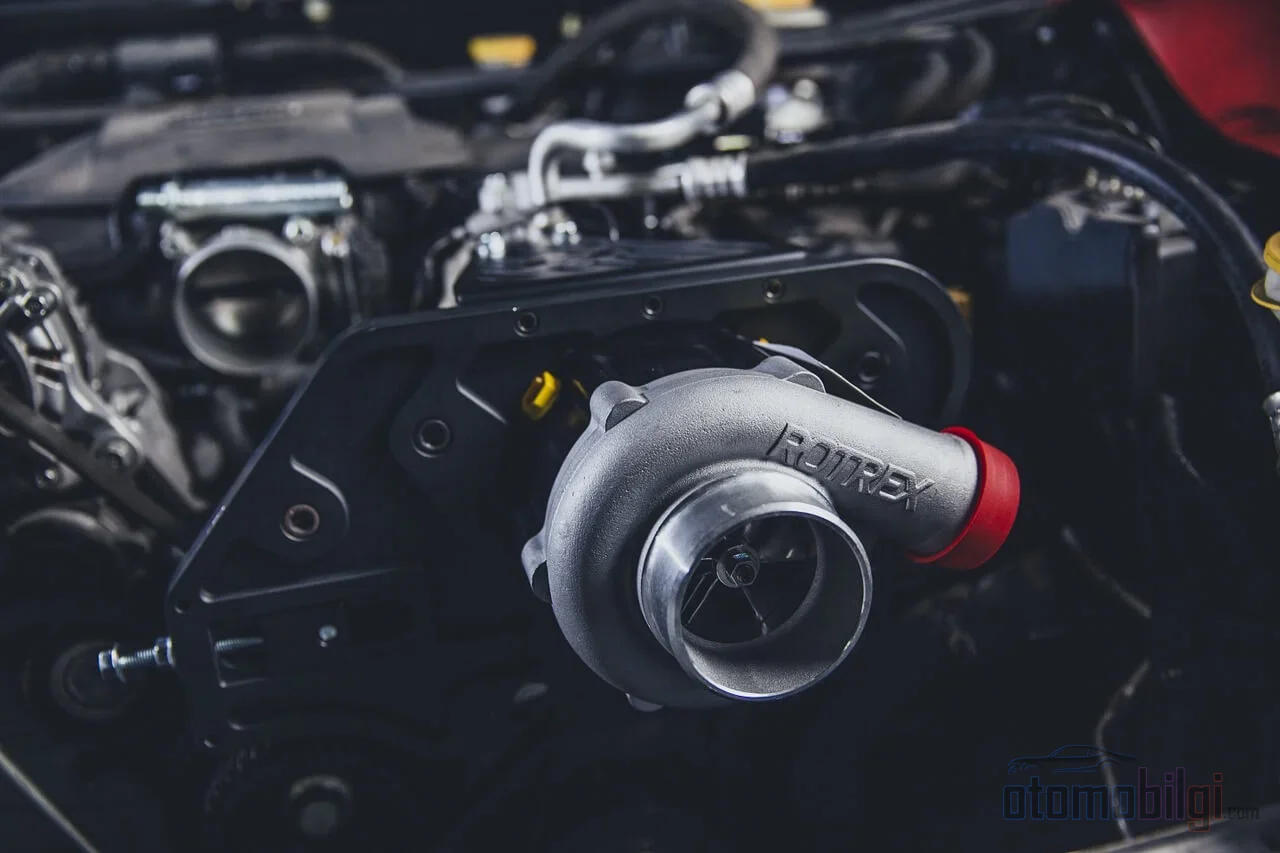
Turbo lag is the reduction in turbine speed and pressure due to the drop in exhaust volume and pressure at low RPM or when the throttle is lifted, delaying the increase in intake flow. Old and simple turbochargers needed time and exhaust flow to build boost; power could be felt either delayed or sudden. Mid-corner, boost suddenly raising the torque could challenge the driver.
Modern vehicles have largely reversed this picture. Thanks to small, fast-spinning turbochargers, direct injection, and hybrid-assisted electric turbo solutions, torque now arrives almost instantly and stays. So lag is still a physical reality, but modern design has made it largely invisible in daily use.
The Balance of Fuel Consumption, Maintenance, and Durability
On the efficiency front, the turbo is clearly ahead: under reasonable driving, and especially in standard fuel consumption test cycles, a small-displacement turbo engine is more efficient than its large naturally aspirated equivalent. A downsized turbocharged engine can be 20-40% more fuel efficient than an equivalently powerful naturally aspirated engine. Under aggressive driving, however, this advantage quickly erodes; as drivers try to compensate for the lag, fuel consumption increases.
In contrast, turbocharging means extra weight for the engine plus rotational inertia. Turbo vehicles place higher demands on fuel quality, engine oil, and spark plugs; the number of parts, heat, pressure, and therefore failure points are greater. All else being equal, a turbocharged engine is more expensive to buy and maintain. Supercharged engines have their own weakness: due to the parasitic losses of belt-and-pulley drive, fuel economy is worse; the supercharger is a pure performance device, not one of efficiency.
A scale warning: turbo turbines 80,000-200,000 RPM and to manage the problems at those speeds, most turbochargers use fluid film bearings. Downsized engines are also known to encounter reliability and durability issues, since they have to carry more load in a fewer-cylinder design. On the other hand, modern turbochargers are becoming cheaper and more durable every day thanks to economies of scale; consumer organizations' assessments also note that turbo technology can occasionally degrade driving quality and create reliability issues.
Petrol or Diesel: Torque Characteristic Comparison
Diesel engines produce more torque than equivalent petrol engines; the main reasons are the high compression ratio and the properties of diesel fuel. However, there is an important nuance: at the same displacement and the same intake pressure, a diesel produces less torque than a petrol engine. The diesel's advantage comes from delivering its torque at lower revs; that is why you need to shift gears earlier in a diesel vehicle. The petrol engine, despite its lower torque, produces high horsepower thanks to its wide rev range and is better suited to speed and agility.
| Feature | Petrol Engine | Diesel Engine |
|---|---|---|
| Torque character | Spread across a wide rev range | Concentrated at low revs |
| Gear shifting | At higher revs | Done earlier |
| Power potential | High horsepower thanks to high revs | Stays at low revs |
| Usage profile | Speed and agility | Traction and load hauling |
Downsizing: Why Do Engines Shrink and Get Turbos?
Engine downsizing aims to reduce fuel consumption and emissions with smaller and lighter engines. The turbo plays a critical role here: it increases power density, i.e. the power-to-engine-size ratio. A small engine runs efficiently in ordinary driving, and when power is needed, the turbo kicks in to deliver large-engine performance.
The trend is so pronounced that as of 2026, the turbocharged four-cylinder engine has become the standard "ordinary person's car" engine. Manufacturers continue to seek an engine-specific balance between fast boost with a small turbo and minimal lag with a large one.
Is a Small Turbo Engine Equivalent to a Naturally Aspirated Large Engine?
In terms of peak power and torque values, yes, a small turbo engine can offer equivalent performance while also providing fuel economy and emissions improvements. However, "equivalent" is not measured only by numbers. The naturally aspirated engine's pedal-response linearity, mechanical simplicity, and image of a "purer character" are the reasons it continues to be respected among car enthusiasts; their rarity in new vehicles also feeds this respect.
Ultimately, the choice is a question of character: for the driver who wants instant torque, low consumption, and modern technology, turbo; for the one who wants uninterrupted response and simplicity, naturally aspirated remains the sensible choice.