What Is a Variable Compression Ratio Engine and How Does It Work
A gasoline engine's compression ratio has been, since the earliest years of automotive history, a fixed number set at the factory and never changing throughout its lifetime. The classic mechanical chain of piston, connecting rod and crankshaft fixes the piston's journey between top dead center and bottom dead center; meanwhile, the engine's needs change according to conditions. At a steady cruising speed, a high compression ratio means efficiency; at full throttle, it means the risk of knock. From an engineering standpoint, this has been a compromise sustained for over a century: every engine is designed to operate at the average of two opposing requirements.
The idea of variable compression ratio (VCR) targets precisely this compromise. An engine that can shift its compression ratio according to load conditions during operation could, in theory, be both efficient at low revs and powerful under high load. The goal is simple, easy to write down; physically implementing it is very hard. In this article, we systematically examine why a fixed compression ratio is a limitation, how the multi-link mechanism breaks this limitation, how the technology pairs with turbocharged engines, and why it has not become widespread in mass production to date.
Why Is a Fixed Compression Ratio a Compromise?
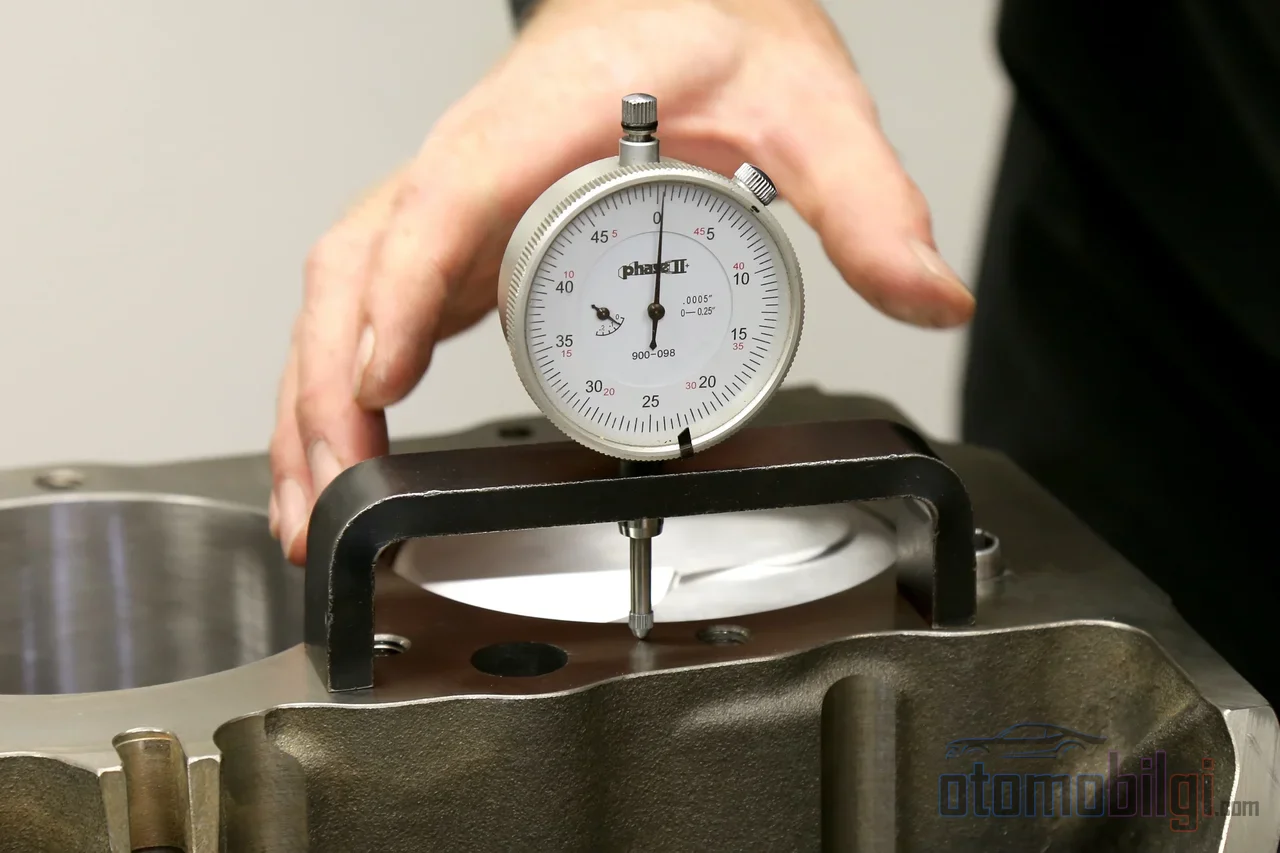
Compression ratio is the ratio of the largest volume in the cylinder, measured when the piston is at bottom dead center, to the combustion chamber volume at top dead center. As the ratio rises, the mixture is compressed more, stores more energy before combustion, and thermal efficiency increases; fuel consumption drops. When the ratio falls, peak power and torque potential increase, especially in turbocharged engines; but fuel economy worsens.
In a gasoline engine, the limit on a high ratio is knock. As compression increases, the temperature and pressure of the mixture rise; without waiting for the spark, the mixture can ignite spontaneously at the wrong moment. This abnormal combustion creates both a loss of performance and a risk of mechanical damage in the engine. The problem varies with load conditions: at cruising speed, airflow is low and the ratio limit is high; during acceleration, airflow increases and the limit drops. In a turbocharged engine, since the intake air is already pre-compressed, the knock limit is pulled down even further.
In short, the same engine is squeezed between two opposing demands: high loads want a low ratio to preserve power, while low loads want a high ratio to improve efficiency. In a conventional engine, because the piston is connected directly to the crankshaft via a connecting rod, the geometry is condemned to a single answer - and that answer has remained fixed in every gasoline engine in production for roughly 130 years.
Highlights
- The VC-Turbo is the first mass-production engine to continuously vary its compression ratio while running, between 8:1 and 14:1.
- Development began in 1998 with the multi-link concept; it required more than 100 prototypes and 30,000 hours of test bench work.
- The targeted output was approximately 200 kW (268 hp) of power and 390 Nm of torque.
- A fuel efficiency improvement of up to 27% was targeted compared to comparable gasoline V6s.
- While four-cylinder turbo engines typically exhibit vibration noise of ~30 dB, it dropped to 10 dB in the VC-Turbo.
How Does the Variable Compression Ratio Engine Work?
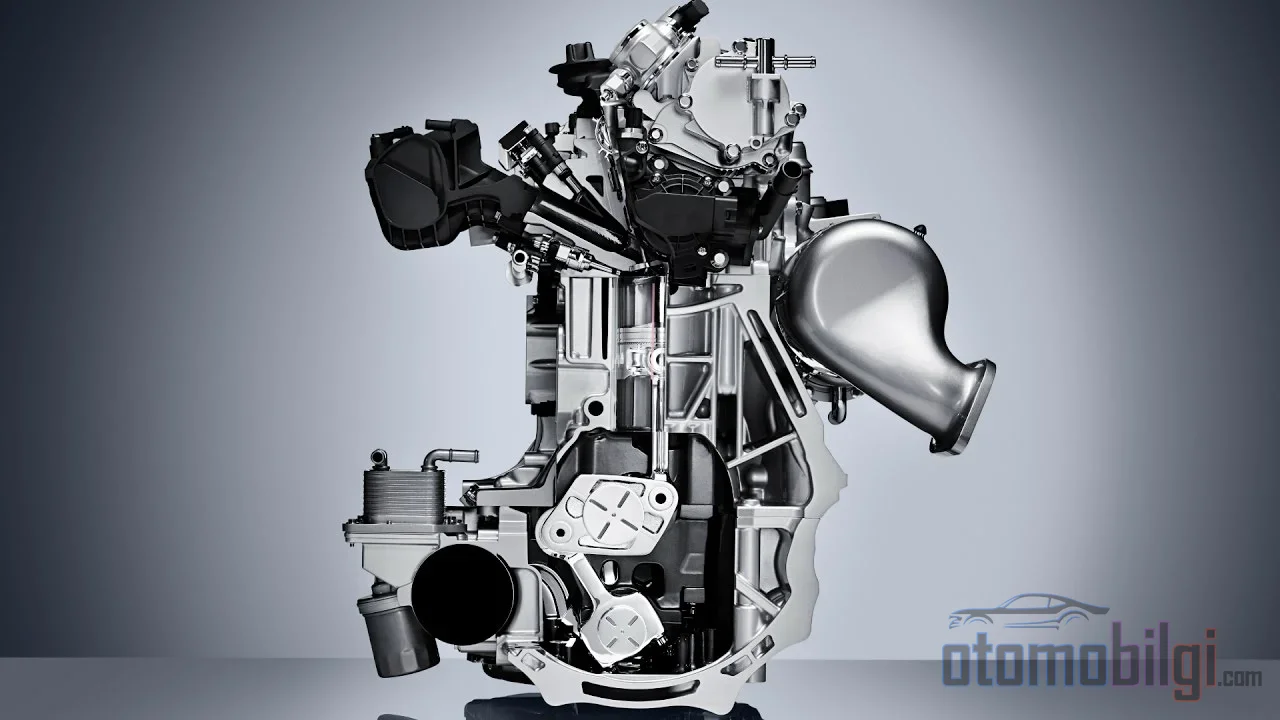
The answer to the question lies in a mechanical redesign. Nissan's 2.0-liter four-cylinder engine, announced as the VC-Turbo, eliminates the traditional connecting rod and replaces it with a multi-link system. In this system, the piston is not connected directly to the crankshaft but through a series of link rods. The critical point is this: if the geometry of the links is changed, the piston's top dead center position physically shifts, and the combustion chamber's smallest volume - and therefore the compression ratio - changes.
The Operating Chain of the Multi-Link
The adjustment of the ratio occurs through a four-step kinematic chain:
- An actuator motor moves the actuator arm.
- The arm rotates the control shaft.
- The shaft changes the angle of the lower link (L-link).
- The multi-link system redefines the compression ratio by adjusting the vertical position of the piston stroke.
The eccentric control shaft changes the piston stroke position of all four cylinders simultaneously; the electric motor serving as the actuator is connected to a Harmonic Drive reducer. The result is a continuously variable compression ratio ranging seamlessly from 8:1 (high load) to 14:1 (low load). The system detects driver behavior and driving conditions and instantly selects the appropriate ratio: in high-load situations such as acceleration, overtaking, and hills, the ratio drops; it rises at steady highway speed, deceleration, idle, and stop-and-go traffic.
Side Benefits: Friction and Vibration
The multi-link architecture has an optimized layout, not a random one. The upper link is positioned so that it remains nearly vertical; this reduces cylinder wall friction and improves fuel economy. Piston motion also becomes symmetrical, thereby weakening second-order vibration sources. According to the manufacturer's information, the engine's vibration noise has dropped from approximately 30 dB, the benchmark average for four-cylinder turbo engines, to 10 dB; thanks to the multi-link connecting rods limiting the piston's lateral movement, a balance shaft is no longer needed. In return, the cost of the mechanism is tangible: the engine carries roughly three times more bearings than a conventional engine, and these bearings, as we will see later, have become the center of the reliability debate.
High Ratio for Efficiency, Low Ratio for Power: How Is the Dilemma Resolved?
The value of variable compression is only understood together with its supporting systems. The VC-Turbo is not a lone engine but a coordinated package: it works together with a wide-range single-scroll turbocharger, electronic wastegate, integrated exhaust manifold, and a high-capacity intercooler. When the driver is cruising at a steady speed and floors it to overtake, the turbo engages instantly and the engine switches to a low compression ratio; full-load potential is used without the risk of knocking. Once the speed settles again, the system returns to the high ratio.
On the low-load side, electronic VTC (variable valve timing) kicks in: the intake valves are closed late, providing operation similar to the Atkinson cycle and reducing pumping losses. Combined with the high compression ratio, this means a remarkable efficiency gain at light loads. When the ratio drops, the engine returns to its normal combustion cycle.
The fuel system also performs a dual role. Direct injection (GDI) cools the cylinder through the heat-absorbing effect of fuel evaporation and prevents knocking at high compression; multi-point injection (MPI) increases efficiency at low load. The engine can switch between the two modes instantly. Target performance is approximately 200 kW (268 hp) of power and 390 Nm of torque; compared with V6 petrol engines of similar power, a fuel efficiency improvement of up to 27% was targeted. Weight reduction was not overlooked either: mirror bore coating reduces cylinder friction by 44% and the engine is 25 kg lighter than the VQ 3.5 V6. In other words, a four-cylinder turbocharged engine is positioned to do the work of a six-cylinder naturally aspirated engine with less fuel.
Two Decades of Development: How Did the First Series Production Happen?
Nissan's VCR research began in 1998 with the invention of the multi-link technology. The VC-Turbo, the first production-ready engine, was introduced at the Paris Motor Show in September 2016 as the world's first production-ready variable compression ratio engine; sales began in 2018. The scale shows the seriousness of the claim: more than 100 engine prototypes, 3 million km of equivalent road testing, and 30,000 hours of test bench work equivalent to 5 million km on the road. Nissan became the first automaker to put this technology into series production; no brand had ever before brought a system that reliably varies the compression ratio in a working engine to series production.
An interesting collaboration during the development process is also worth noting: a bearing vibration problem that emerged during high-rev testing was solved with the contribution of the Renault Sport team, which specializes in dynamic motion analysis in Formula 1. This detail shows how much new engineering groundwork the technology required.
Why Doesn't Everyone Still Have Variable Compression?
Despite its technical elegance, VCR has not achieved wide adoption in series production, and the reasons are not abstract but measurable. The first reason is cost and complexity: the multi-link system, actuator motor, control shaft, and three times as many bearings add significant part and assembly complexity compared to a conventional block. The second reason is the proven reliability record: Nissan's 1.5-liter three-cylinder KR15 VC-Turbo version has open recalls for bearing failures, and the manufacturer was forced to announce recalls totaling 767,000 vehicles for the vehicles affected by the problem. Although some user communities claim that the problem stemmed more from manufacturing quality than from design and was later resolved, this assessment is not based on official technical documentation; what is certain is that the bearing problems left the technology's reputation tarnished.
The third reason is that the benefit is conditional. Variable compression improves fuel economy, but this improvement depends on conditions: the system approaches its full potential only in use with frequent low-load operation, stop-and-go, and cruising-heavy driving. In a vehicle used under continuous high load, there is little opportunity to switch to the high ratio, and the gain shrinks. Moreover, the alternatives have grown stronger as well: solutions such as the Atkinson/Miller cycle, variable valve timing, and cylinder deactivation can capture part of VCR's efficiency promise with much simpler mechanisms.
Limited to Gasoline? Diesel and Other Applications
VCR is not solely a problem of gasoline engines. On the diesel side, variable compression serves the function of limiting peak combustion pressure: by lowering the ratio under high load, peak cylinder pressure is kept under control, which opens the door to lighter and cheaper block geometries. The research literature shows that VCR in diesel can also improve cold starting and low-load behavior. The main reason it has not become widespread in diesels is the same as on the gasoline side: mechanism complexity, cost, and mass-production reliability.
In general VCR research, it has been projected that variable compression combined with a downsizing strategy could deliver benefits of up to 35% in drive-cycle fuel efficiency - this is an estimated upper bound, independent of the manufacturer's target value. On the octane side, the relationship is also clear: in forced-induction applications, when boost pressure exceeds 18 psi, knock resistance at race-fuel level, such as 110 octane, is usually required; variable compression meets part of this need mechanically by lowering the ratio at full load. This shared address of compression ratio and octane sensitivity is the best reason to understand the two topics under a single roof.
Conclusion: The Intersection of Promise, Physics, and the Factory Floor
The variable compression ratio is a real and proven technology that mechanically resolves the gasoline engine's oldest compromise. Thanks to the multi-link system, the same engine can run efficiently at a 14:1 ratio under low load and knock-resistant at an 8:1 ratio at full load; when combined with a turbo, Atkinson-like valve timing, and dual injection, the targeted picture is to deliver V6 performance from four cylinders with less fuel.
But the technology's story does not end with a beautiful kinematic diagram. For a mechanism requiring twenty years of development, more than a hundred prototypes, and vibration analysis at Formula 1 level, being cost-effective and durable in mass production is a separate exam; bearing failures and recalls covering hundreds of thousands of vehicles have shown that this exam has not yet been fully passed. Variable compression is therefore not a mainstream solution today; it is an engineering case that measures the distance between a proven principle and immature manufacturing practice. The idea is right; the challenge is making it run with the same reliability on every factory line and for every customer.
Sources
- VC-Turbo Engine | Innovation - Nissan Motor Corporation
- INFINITI VC-Turbo: The world's first production-ready variable compression ratio engine
- Two new engines, including advanced Variable Compression Turbo - Nissan News
- Variable compression ratio - Wikipedia
- Compression ratio - Wikipedia
- Variable Compression Ratio - DieselNet
- Nissan's Most Ambitious Engine Took 20 Years To Build - HotCars
- Nissan's Troubled VC Turbo Engine - CarBuzz
- Benefits and challenges of variable compression ratio at diesel engines - ResearchGate
- 110 Octane Gas: When the Extra Knock Resistance Matters - Sunoco Race Fuels