The Atkinson and Miller Cycles: Sacrificing Power for Efficiency
Share This Page
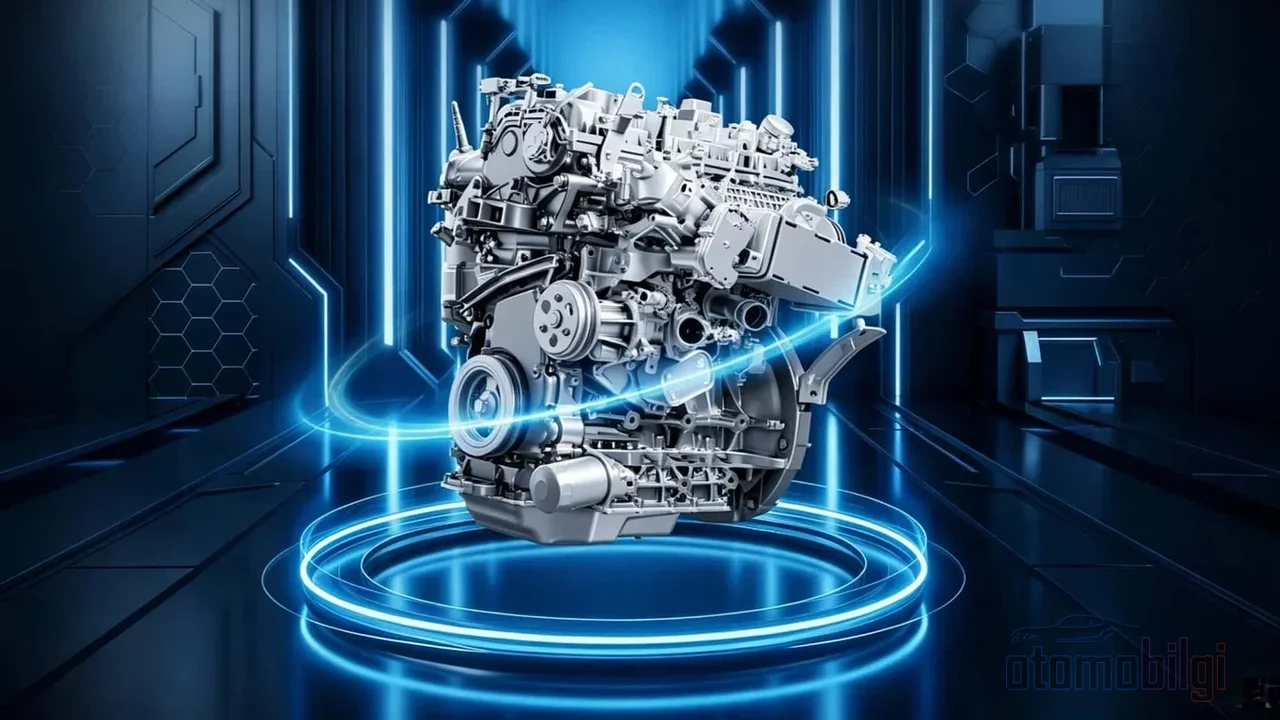
The Atkinson cycle holds the expansion stroke longer than the compression stroke, converting more of the fuel's heat energy into mechanical work, while the Miller cycle is the version of the same technique combined with turbocharging or supercharging. Both give up some power in exchange for efficiency - and that is exactly why they make sense alongside hybrid systems and modern turbo gasoline engines. In this article, I explain the common logic of the two cycles, the distinction between compression and expansion ratios, and why each works in which vehicle.
Highlights
- Atkinson cycle Patented by James Atkinson in 1882 , six years after the Otto cycle.
- The source of efficiency is expansion, not compression: the effective compression ratio is lowered while the expansion ratio is preserved.
- The intake valve remains open until 20-30% of the compression stroke is completed.
- In conventional engines, 33-40% of combustion energy is lost with the exhaust.
- The first mass-produced Atkinson hybrid engine went into service in the Toyota Prius in 1997.
What are the Atkinson and Miller cycles, and how different are they from the Otto cycle?
The four-stroke cycle developed by Nicolaus Otto in 1876 - intake, compression, combustion, and exhaust - is the de facto standard for gasoline engines today. In the Otto cycle, the piston begins compressing the air-fuel mixture it took in during the intake stroke as soon as the exhaust valve closes. The compression and expansion strokes are geometrically equal, and the engine derives much of its efficiency from raising this compression ratio as high as the knock limit allows.
James Atkinson's idea in 1882 was to deliberately break this symmetry. If the expansion stroke is longer than the compression stroke, the combustion gases cannot escape through the exhaust valve without giving up their power to the piston. Atkinson initially solved this idea with complex linkage mechanisms; his design, the cycle engine , accomplished all four strokes in a single crank revolution with a linkage arrangement. It was efficient, but hard to balance at high rpm, mechanically unwieldy, and never became commercially widespread.
The modern solution is far more elegant: achieving the same effect without touching the crank mechanism at all, simply by delaying the closing of the intake valve. This is precisely the basis of the approach Ralph Miller patented in 1956
and which is applied today in both naturally aspirated and turbocharged engines.
The source of efficiency: not the compression ratio, but the expansion ratio The chain of logic here explains the entire difference between the two cycles. If the intake valve closes later than normal (known in the literature as LIVC), the piston continues intake for a while even after starting the compression stroke, pushing part of the mixture back into the manifold. The result: the effective amount of air entering the cylinder decreases and the effective compression ratio drops . However, since the piston's downward travel - the expansion stroke - is geometrically unchanged, the expansion ratio stays in place. Thus, the compression ratio becomes smaller than the expansion ratio.
Why does this difference yield a gain? Because while the energy spent on compression work decreases, the time for the combustion energy to convert into mechanical work during expansion increases. The goal is to bring the gas pressure inside the cylinder as close to atmospheric pressure as possible by the end of the power stroke; if there is still high-pressure gas when the exhaust valve opens, that energy has been wasted. In a conventional engine, exhaust gases are expelled at 3-7 bar of pressure and at temperatures reaching 1000 °C- between one-third and one-half of the combustion energy goes to the exhaust pipe without ever doing any useful work.
Late closing is not the only option. Early intake valve closing (EIVC) achieves the same result: the valve closes at the beginning of the stroke, and as the piston descends, a slight vacuum forms in the cylinder, with the mixture essentially drawing itself in by expanding. There are differences between the two strategies in terms of thermal management and pumping losses; studies on marine engines have also shown that closing the valve too early can increase fuel consumption.
Otto, Atkinson and Miller cycles side by side
| Feature | Otto | Atkinson | Miller |
|---|---|---|---|
| Compression / expansion ratio | Equal | Compression < expansion | Compression < expansion |
| Intake valve timing | Normal closing | Late closing (LIVC) | Late or early closing |
| Air filling | Full | Partial, reduced | Completed by turbo/supercharger |
| Power density | High | Low | Can be kept high |
| Typical use | Classic gasoline engines | Hybrid vehicles | Turbocharged gasoline engines |
| Basic gain | Power | Thermal efficiency | Efficiency + knock resistance |
Why is the Atkinson cycle used in hybrid vehicles?
The cost of the Atkinson cycle is clear: the late-closing intake valve causes the same cylinder volume to take in less air. Power density drops; peak torque and mean effective pressure per cylinder decline. You get an engine that produces less power than an Otto engine of the same size, with weak torque especially at low revs. On its own, for a gasoline vehicle, this is a handicap the driver will feel every time they press the accelerator.
The hybrid system exactly compensates for this handicap. The electric motor produces instant torque from zero; it takes over the engine's weakest operating range - the low-rev and full-load region. This way, the gasoline engine can operate almost always on the most efficient line of the load and rev map. This combination first entered the production line in the first-generation 1997 at the end of Toyota Prius and has been the standard formula for hybrid drivetrains ever since.
Application examples are bold: the 1NZ-FXE in early Priuses, the Toyota Dynamic Force engine family, Ford's C-Max and Fusion hybrids, and Lexus's hybrid models all share this logic. The journey from the technology's invention to entering the production line took a full 100 years - without an electric motor, this cycle's power deficit could not be sold to anyone.
What does the Miller cycle offer to turbocharged gasoline engines?
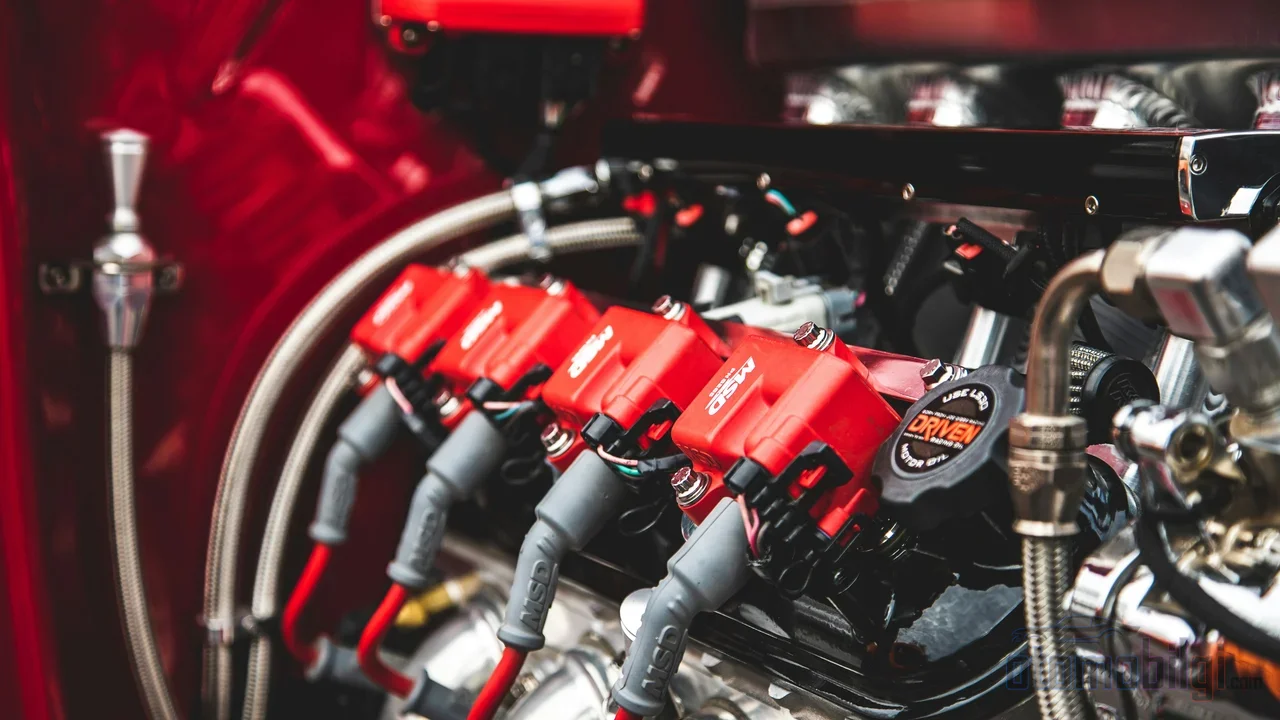
The second way to close Atkinson's power deficit is to compress more air into the cylinder. That is exactly what the Miller cycle is: the effective compression ratio, lowered by late intake valve closing, is compensated by the extra air supplied by a turbocharger or supercharger. The mixture enters the cylinder at above-atmospheric pressure; the engine benefits from the efficiency of Miller timing while still producing the expected power.
This approach has a distinct value in turbocharged petrol engines: knock control. Knock is the spontaneous ignition of the compressed mixture without waiting for the spark plug's spark, and high compression ratios and high charge pressures increase the risk. The traditional solution is to lower the geometric compression ratio - which also takes away the fuel economy gain. The Miller cycle resolves this dilemma: the geometric ratio can be kept high, but the effective ratio at the moment of compression is limited thanks to the late-closing valve. In downsized turbocharged engines, this is a common knock-reduction strategy.
The numerical gain is measurable too. The Miller cycle delivers noticeable fuel savings compared to comparable conventional engines, thanks to reduced pumping losses at partial load, improved efficiency, and a drop in NOx emissions; in early production applications, 10-15% consumption reduction is among the cited figures. When combined with high boosting, it has been shown to carry the potential for simultaneous improvements in fuel economy and knock resistance.
A lesson from history: the Mazda Millenia
The first production application of the Miller cycle in automotive history was the Mazda KJ-ZEM V6 engine in 1994 - fed by a Lysholm-type supercharger, this engine, due to its production cost and complexity, could not secure the commercial success of the sedan called the Millenia. But the idea was not waste: modern turbocharged petrol engines using Miller timing precisely to solve the knock and consumption problem is the path that engine pioneered.
"Atkinson" or "Miller"? The terminology debate
Let us add a note of technical honesty. What Toyota and some manufacturers call the "Atkinson cycle" is actually a specific valve timing: late intake valve closing. In the literature, this practice is also called "Miller timing." Some engineering sources draw the distinction as follows: naturally aspirated engines with late IVC are called "Atkinson," while those with forced induction are called "Miller." According to another view, the naming is entirely arbitrary; what matters is that the over-expanded cycle is implemented through IVC timing, and whether forced induction is used does not change this classification.
The historical priority debate is also interesting. Körting built a gas engine with short compression and long expansion in 1891, Charon received a French patent in 1888 for a similar cycle without a supercharger, and in 1927 in reports dated from that era, it is known that even controlling the effective compression via valve timing to limit knock on low-octane fuels was on the table as an option. So the name "Atkinson" resembles today's practice less than Atkinson's own mechanism; but the idea that deserves the credit - separating expansion from compression - is his.
Why doesn't every gasoline engine run on the Atkinson or Miller cycle?
The answer lies in the main axis of the article: these cycles trade power for efficiency. In an ordinary gasoline engine without an electric motor or turbocharger, the Atkinson cycle means less power from the same displacement and especially weak torque at low rpm. The driver feels it at every start and every overtaking maneuver; and for the manufacturer, the engine has to be made larger to deliver the same performance - which partly cancels out the efficiency gain. While the Miller cycle closes this gap with a turbocharger, it adds cost and complexity, as the supercharged early applications showed.
The summary chain of logic is this: the Atkinson cycle alone gives up power in exchange for efficiency; the hybrid system brings the power back with the electric motor. The Miller cycle combines the same efficiency logic with a turbocharger and brings the power back. The equation you encounter on both paths is the same - keeping expansion longer than compression to turn the energy that would escape through the exhaust into work - and the most efficient hybrid and turbocharged gasoline engines of 2026 still run on engineering-matured versions of this 19th-century idea.
Sources
- Atkinson cycle
- Miller cycle
- Atkinson, Miller, or Otto: Internal Combustion Cycles Explained
- What Is the Atkinson Combustion Cycle, and What Are Its Benefits?
- Miller Cycle Engines
- Why does Toyota use Atkinson cycle engines?
- Comparison of performances of air standard Atkinson and Otto cycles
- Design and optimization of an Atkinson cycle engine
- Experimental study on the effects of the Miller cycle
- This Obscure Mazda Sedan