Port Injection or Direct Injection? Why the Engine Fuel Delivery Decision Matters
Share This Page
Port injection sprays fuel into the intake manifold, while direct injection sprays fuel directly into the combustion chamber; port injection offers a smoother throttle response and lower particulate emissions, while direct injection provides higher efficiency and lower CO2. That is why manufacturers who want to balance power, efficiency and emissions all at once use both systems together in the same engine.
Highlights
- Direct injection's operating pressure is 50-100 times higher than port injection.
- The fuel mist in the air 135 mph reaches a speed of; droplet diameter 0.000003 inch goes down to.
- Toyota D-4S system uses both injectors together at low-mid load.
- By combining dual injection with higher boost, Ford increased peak torque by 30 lb-ft .
- In Atkinson-cycle hybrid engines, two fueling methods can sit side by side.
What Is Port Injection and How Does It Differ From Direct Injection?
Gasoline in liquid form does not burn on its own. For combustion, it must first be broken into fine droplets - that is, atomized - and then vaporized. All the differences between the two injection types arise from this simple physical requirement: where and at what pressure the fuel is sprayed determines the engine's character.
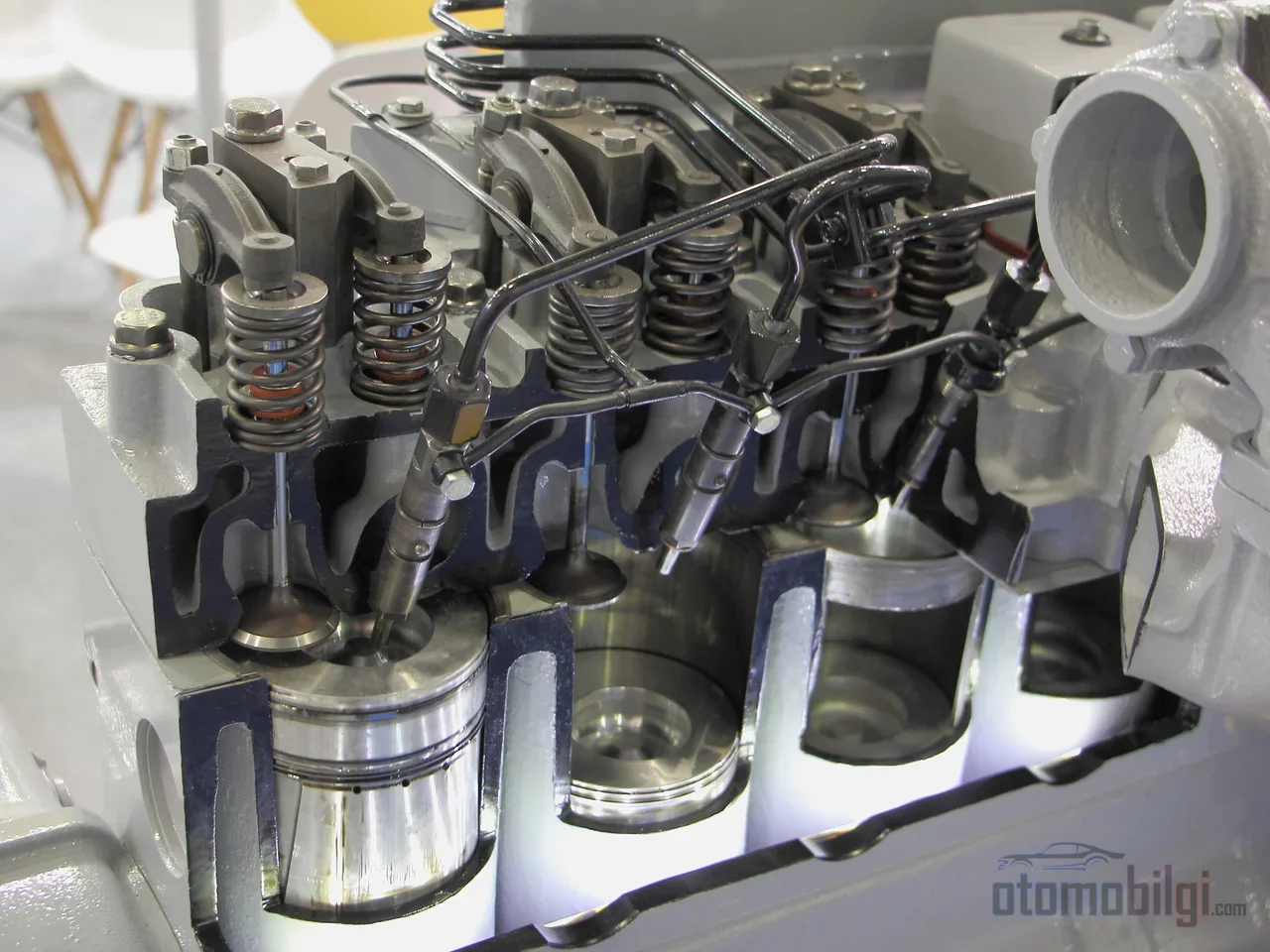
In port injection (PI, or multi-point/MPFI since a separate injector is assigned to each cylinder), the injector is mounted on the intake manifold and sprays fuel just before the intake valve, behind the valve. The fuel travels a long way through the intake runner before entering the cylinder and has plenty of time to vaporize. Placing the injector away from the valve and spark plug, in an overhead position, is also mechanically easy; since the system operates at low pressure, it is both cheap and robust.
In direct injection (GDI/DI), however, the injector opens directly into the combustion chamber through a separate access point in the cylinder head. The pressure rises by orders of magnitude: 50-100 times the pressure in port systems. The scale shows how dramatic the difference is - 1000 psi fuel pressurized to, 0.006-0.011 inch when sprayed through orifices of this diameter, produces a mist with a droplet diameter of only 0.000003 inch , 135 mph traveling at a speed of. Since this rapid phase change occurs inside the cylinder, its effect is felt there too.
Port Injection: Why Is It Still a Valid Technology?
The most overlooked advantage of port injection is how it uses the heat absorbed by the fuel as it vaporizes. In a PI system, this cooling effect takes place in the intake manifold; the fuel cools the incoming air, increases the air's density, and raises the power potential in a naturally aspirated engine. In other words, port injection gives atmospheric engines a small internal charging advantage.
The second advantage lies in emissions. The fuel wets the surfaces behind the intake valve and evaporates over a longer period, preparing a homogeneous mixture; this reduces the amount of fuel that escapes combustion and lowers particulate matter (PM) output. Throttle response is also smooth for the same reasons: the mixture is ready under all conditions, and the system is simple and predictable. The technical basis of many drivers' impression that "old engines had more character" lies partly in this predictability.
Its weaknesses are also clear. The mixture cannot be atomized as finely as in direct injection; some of the injected fuel sticks to the intake port walls, disturbing the targeted air-fuel ratio. Since not all of the mixture entering the cylinder burns under ideal conditions, the PI engine lags behind DI in thermal efficiency.
What Direct Injection Gains and What It Costs?
What it gains: Compression, efficiency and CO2
The main strength of direct injection is that it moves evaporative cooling inside the combustion chamber. This phase change during the compression stroke reduces the likelihood of the mixture igniting early and uncontrollably - that is, detonation. Since combustion chamber surface temperatures drop, engineers can go for higher compression ratios in both naturally aspirated and turbocharged engines; a high compression ratio directly means efficiency. More efficient combustion of the fuel means less fuel for the same work and lower CO2 emissions. This is the fundamental technological step that allows us to compare the compression ratios of most modern gasoline engines with those of the early 2000s.
What it costs: Cost, noise and particulates
The same technology also has a bill. 50-100 times higher pressure means more expensive injectors and a high-pressure pump; the pump constantly producing high pressure also creates a noise source, and most DI engines therefore run with two fuel pumps. Direct injectors are structurally noisy and add a characteristic ticking sound to the engine.
The emissions balance is two-sided. While DI lowers CO2, it produces more particulate matter: since there is less time for evaporation before injection, some of the fuel escapes the combustion chamber and the catalytic converter as soot particles. These particles are similar to those emitted by diesel engines, only smaller. In addition, carbon buildup behind the intake valves is a real service problem for some DI users - because fuel no longer washes the valve, deposits accumulate. A rare but serious example: some drivers have to have their intake valves cleaned with walnut blasting after tens of thousands of kilometers. Carbon buildup is a topic for a separate article; the main question here is how manufacturers manage the balance between these two systems.
Comparison Table: PI and DI Side by Side
| Feature | Port Injection (PI) | Direct Injection (DI) |
|---|---|---|
| Injection location | Intake port, behind the valve | Directly into the combustion chamber |
| Operating pressure | Low | 50-100 times that of PI |
| Atomization | Coarser droplets | Fog reduced to 0.000003 inches |
| Compression ratio potential | Limited | High thanks to cooling |
| CO2 emissions | Higher | Lower |
| Particulate matter (PM) | Lower | Higher |
| Throttle response | Smooth, predictable | Sharp but slightly noisier |
| Cost | Cheap, single pump | Expensive, usually two pumps |
Looking at the table, the choice seems easy: DI for efficiency, PI for simplicity. But the performance difference itself is not as big as you might think; even in forum-level technical discussions, it is noted that the direct power difference between the two systems stays at a few percentage points, and that DI's main contribution is allowing a higher compression ratio. So the real story is not one technology defeating the other, but the two dividing the workload in the same engine.
Why Do Manufacturers Use Both Injection Systems Together?
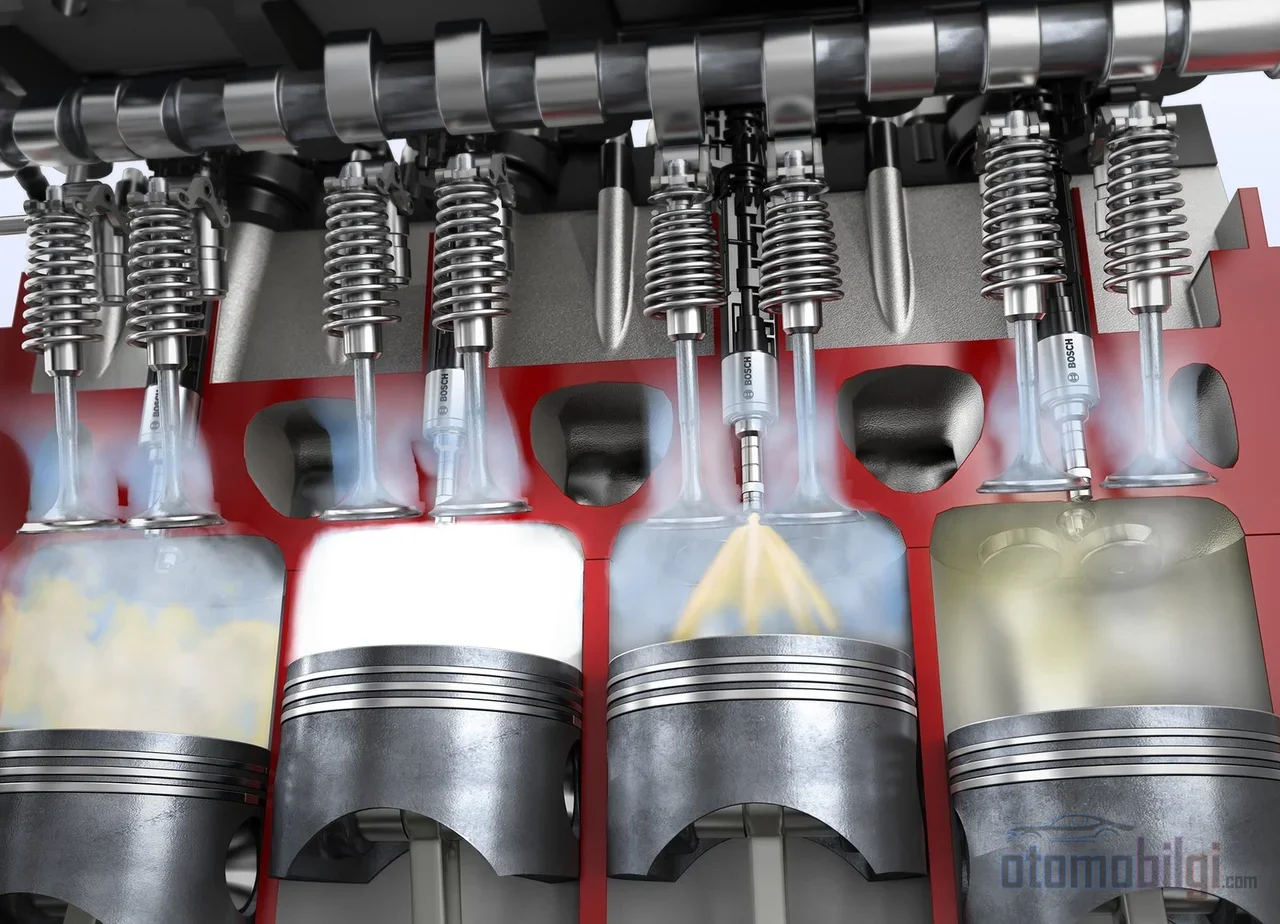
Dual injection keeps both port and direct injectors in the same engine. The ECU activates one, both, or a programmed mix depending on rpm and load. The logic is simple: combining DI's fuel economy and knock advantage with PI's low emissions and valve cleaning advantage. At every point of the engine's operating range, the most suitable supply method is selected.
Toyota is the best-known practitioner of this. D-4S It introduced its system in a V-6 more than a decade ago; today it uses it in 2.0-liter flat fours (built by Subaru), 3.5-liter V-6s and 5.0-liter V-8s. At the low-to-mid loads and rpm corresponding to normal driving, it fires both injectors together - this increases the density of the naturally aspirated intake air while port injection keeps washing the valves, effectively cleaning away carbon buildup. At high load and rpm, where knock risk is high, DI takes over the entire fuel supply.
Ford's approach is different: low-pressure PI accompanies the high-pressure DI, and port injection is never completely disabled. The application range is broad - 2.7 to 5.0 liters of turbocharged and naturally aspirated V-6/V-8s, the 3.3 V-6 F-150s, the 2017 F-150 Raptor and the GT's 3.5-liter EcoBoost V-6, as well as the 2018 Mustang GT's 5.0 V-8. At idle and low rpm, PI alone runs quietly and efficiently; as rpm and load increase, the two systems supply fuel in a mixed manner, with PI always covering at least 5-10% of the fuel. Ford combined dual injection with higher boost pressure in the new 3.5-liter V-6, increasing peak torque by 30 lb-ft . Audi applies the same idea in its 3.0-liter V-6 and 5.2-liter V-10s.
As electric motors are given increasing propulsion roles, our task is to improve engine efficiency at every opportunity. Ford's dual-fuel technology has proven to be a valuable, cost-effective strategy in this effort.
The scientific literature also supports this trend: dual injection offers advantages such as greater control flexibility, enhanced cooling effect, knock reduction, suitability for engine downsizing, and extended lean-burn operation. In practice, the gains are modest but real: fuel economy improves especially at idle and low-speed city driving, and during moderate acceleration the two injectors work together to balance atomization, valve cleanliness, and throttle response.
One nuance should be noted: not every dual injection system solves carbon buildup. In some performance engines, port injectors only come into play for extra fuel at high revs and under boost; during most of normal driving, the valves are still exposed only to DI, and deposit accumulation can still occur. What determines whether the system works is which operating zone the port injector is active in.
The Atkinson Cycle and Its Relationship with Hybrids
The Atkinson cycle is an operating strategy that deliberately sacrifices power density in pursuit of efficiency; it produces less power than the traditional Otto cycle but improves fuel economy. That is why its natural home is hybrid vehicles: the electric motor fills the power deficit while the engine runs at its most efficient point. Cars like the Toyota Prius and the Ford C-Max and Fusion Hybrid are well-known examples of the modern Atkinson cycle; Toyota is the brand that led the way in making this technology widespread in production.
Its connection to the injection side is this: Atkinson cycle engines can also have two fuel delivery methods - direct and port injection - side by side; one or both are used depending on the need. Since every percentage point is sacred in an efficiency-focused cycle, the small but real fuel economy contribution of dual injection is especially meaningful on these platforms.
What Does This Mean for the Buyer?
The system affects purchase and usage decisions beyond technical curiosity. Finding an engine with port injection only is becoming increasingly difficult these days; most new gasoline engines are either pure GDI or dual injection. If you buy a vehicle with pure DI, factor in intake valve carbon buildup as a long-term maintenance item; a dual-injection engine, where port injection also engages at high rpm, significantly reduces this risk. If your driving style demands heavy loads and high revs, DI's knock tolerance and boost durability come to the fore; if your use is urban and idle-heavy, PI's emissions and smoothness advantages stand out. The decision is not about picking a single winner; it is about knowing which system is active in which operating region of the engine.
Sources
- Explained: Why Some Engines Have Both Port and Direct Injection
- Dual injection: An effective and efficient technology to use engines
- Direct vs Port Fuel Injection Explained
- How Direct Injection Engines Work
- Atkinson cycle
- Here's how Atkinson-cycle engines work to save gas
- Port Injection vs Direct Injection: What's the Difference?