How Does Mazda's Spark-Plug-Free Gasoline Engine Work?
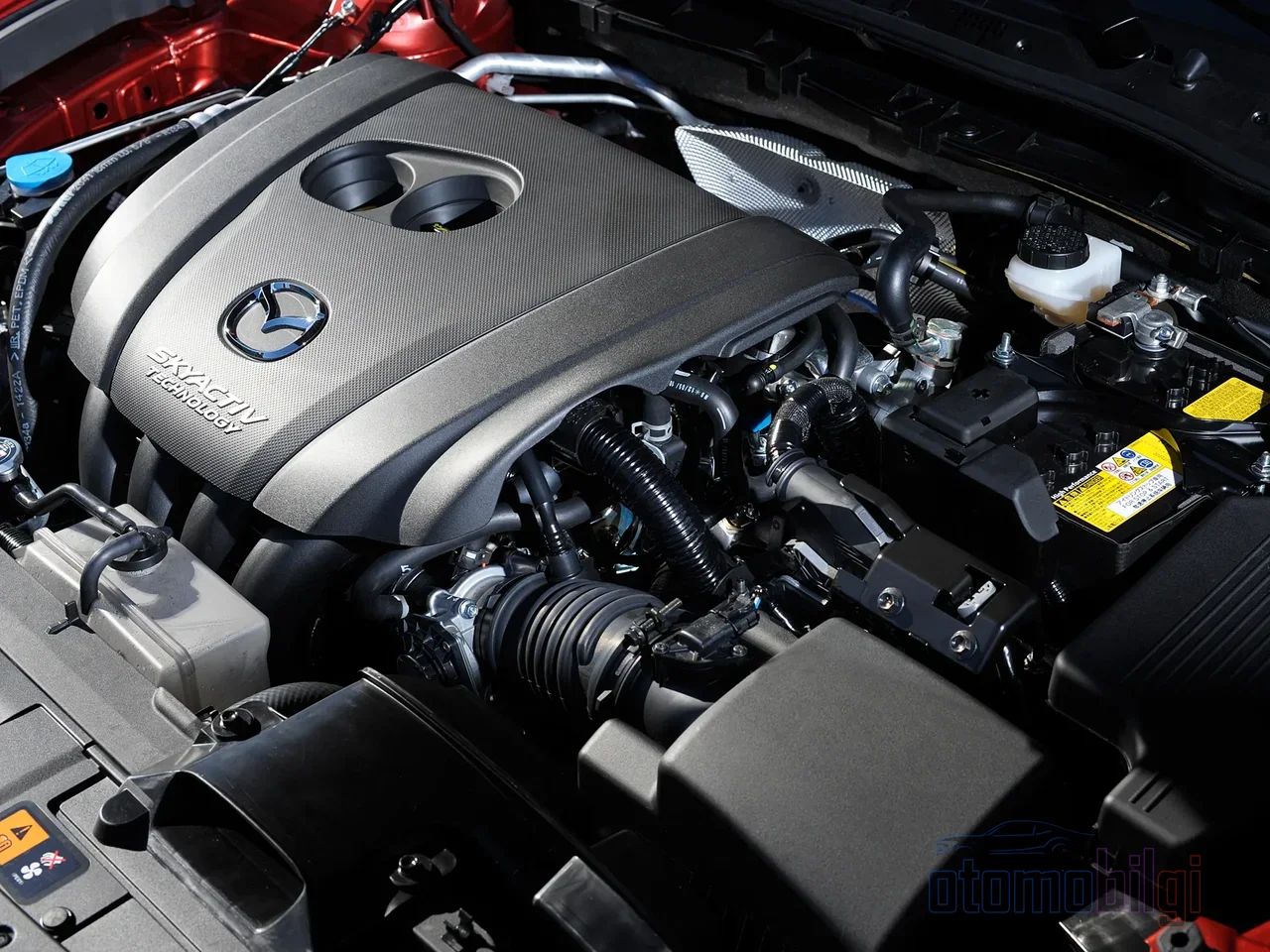
The connection established between gasoline engines and the spark plug appears to be an assumption that no one has ever questioned: gasoline is ignited by a spark, diesel by compression. Mazda shook this assumption to its core with the SKYACTIV-X engine; it managed to run a gasoline-burning engine on a self-igniting mixture, without needing a spark plug across most of the rev range. So how is gasoline ignited without a spark plug, why does it bring efficiency gains, and why has this idea not spread as widely as expected in series production? On this page, we will examine the technical answers to these questions step by step, using engineering logic.
Why Do Gasoline and Diesel Engines Ignite Differently?
In a conventional gasoline engine, air and fuel are mixed homogeneously before entering the combustion chamber. This mixture, compressed inside the cylinder, is ignited from a single point by the spark produced by the spark plug; the flame spreads outward from the plug, burning the mixture. This is the fundamental operating principle of the spark-ignition (SI) engine.
In diesel, the opposite arrangement is set up. Only air is taken into the cylinder, and this air heats up with the high compression ratio. By the end of compression, the air usually reaches a range of 550-700°C; this temperature is above the self-ignition point of the diesel fuel injected into the cylinder. Without any need for a spark plug, the fuel ignites the instant it contacts the hot air. This is the compression-ignition (CI) principle.
The reason for the asymmetry here is the chemistry of the fuels. Gasoline is a fuel more resistant to self-ignition than diesel (or in other words, more resistant to knocking); the compression ratio of a standard gasoline engine does not by itself provide the temperature and pressure conditions required for gasoline to ignite spontaneously. That is why a spark is needed. Diesel, on the contrary, with its low self-ignition threshold, is naturally suited to this ignition method. Both architectures have been shaped according to the character of their own fuel. The truly interesting question is this: Can a gasoline engine ignite through compression, if the right conditions are provided?
HCCI: The Physical Logic of Spark-Plug-Free Gasoline Ignition
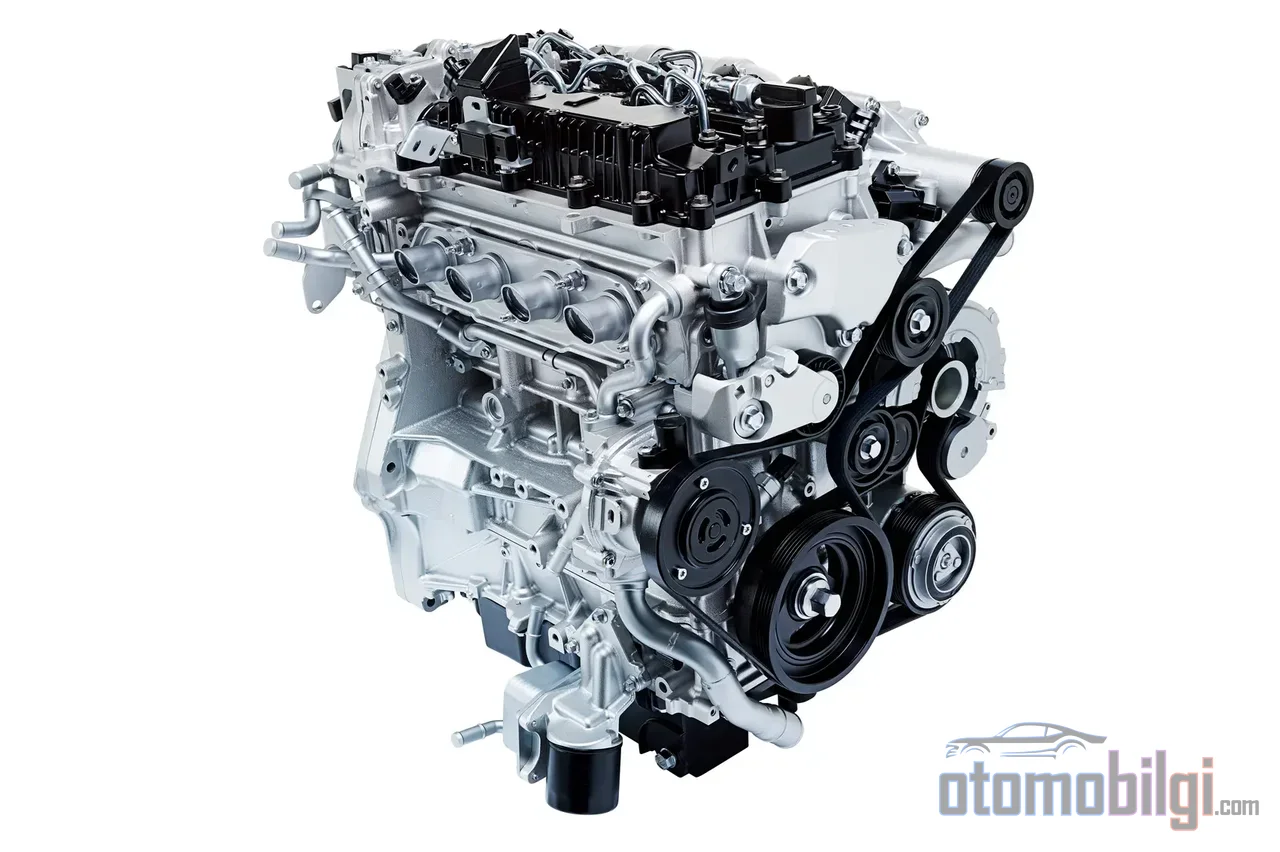
The answer is yes, and its name is HCCI, Homogeneous Charge Compression Ignition. In HCCI, air and gasoline are mixed homogeneously before combustion begins, just like in a classic gasoline engine. The difference lies in the ignition stage: The mixture is heated not by the spark plug's spark but by the piston's compression, and when the compression is advanced sufficiently, the entire mixture ignites spontaneously at the same moment, flamelessly. There is no flame front spreading outward from a single point; combustion occurs instantly and volumetrically inside the cylinder.
Highlights
- HCCI makes compression ignition possible in a gasoline engine instead of a spark plug; compared to a conventional gasoline engine, it carries an efficiency advantage of up to 30%.
- In Mazda's SPCCI method, the spark plug is not removed entirely; compression ignition is active in an estimated ~90% of normal driving.
- Since HCCI combustion takes place at low temperature, NOx emissions drop to nearly zero.
- Technology's biggest obstacle is control: combustion timing cannot be adjusted directly, as in a classic spark plug system.
Why Is This Method So Efficient?
HCCI's efficiency promise is fed from three separate sources. The first is the compression ratio: HCCI engines can run with diesel-like compression ratios above 15 and can use a lean fuel mixture; this alone means roughly 30% higher efficiency potential compared to a conventional gasoline engine. The second is gas exchange losses: The mixture diluted with EGR reduces throttle losses. The third is combustion temperature: flameless and low-temperature combustion reduces NOx emissions to nearly zero and also suppresses soot formation.
There is also an attractive argument on the cost side: compared to diesels, which require reinforced blocks and parts for compression above 20:1, an HCCI gasoline engine can be produced more cheaply. The prototypes General Motors introduced in 2007 could run on regular gasoline and E85 with a 12:1 compression ratio and promised 15% lower fuel consumption than port-injected engines. On paper, everything is fine; the problem is disciplining this form of combustion inside the cylinder.
The Control Problem: The Price of Spark-Free Combustion
In spark ignition, the control mechanism is clear: you adjust ignition timing with picosecond precision using the command you give to the spark plug. HCCI has no such control lever. The moment of spontaneous ignition depends on the mixture's temperature, pressure, and composition; you must change these three parameters quickly and precisely so that combustion occurs at the right moment. From an engineering standpoint, this means managing the engine through indirect variables.
The result is an observation repeated in the academic literature: HCCI's stable operating range is narrow. Sensitivity to boundary conditions such as ambient temperature, intake pressure, and fuel properties is high. GM's prototype engines could operate in HCCI mode only up to about 55 mph (approximately 89 km/h); at high speed and heavy load, the system had to automatically revert to spark ignition. As long as the upper load limit cannot be exceeded, the technology remains a solution that can only be used in a slice of the load range.
There are two additional challenges. During cold starting, exhaust gas temperature is not enough to heat the mixture; while reference CAI implementations require exhaust temperatures of 300-350°C, this heat source is not available in a cold engine. At low load, the mixture remains too lean and the temperature too low, resulting in misfires and low combustion efficiency. Also, mode transitions are not seamless: in GM's test vehicles, transitions from SI to HCCI created a noticeable jolt. Although GM claimed this vibration would go unnoticed in series production, for a production program seeking consistency, such glitches mean serious costs.
SPCCI: Mazda's Idea of Putting the Spark Plug to Work Instead of Eliminating It
Mazda's SPCCI (Spark Controlled Compression Ignition) approach in the SKYACTIV-X engine is an elegant answer to HCCI's control problem: instead of eliminating the spark plug entirely, it repositions it as a trigger and timing tool. Thus, the range where compression ignition is valid extends across most of the engine map.
How Is the Combustion Chain Established?
The logic is simple but clever. The spark plug first initiates a normal spark ignition; this initial fireball suddenly raises the pressure and temperature inside the cylinder. This artificial pressure wave pushes the remaining homogeneous mixture past its compression ignition threshold, and all of the remaining mixture ignites spontaneously. In other words, the spark plug is not the master of ignition; it becomes the clock that times the ignition. An engineering assessment summarizes this as calibrating the engine to knock rather than avoiding knock: the ignition moment that HCCI cannot control is pinned to a reference point by the spark plug's spark.
The system's real brain lies in the software. The engine switches among pre-loaded maps for spark ignition, compression ignition, or a mix of the two. According to assessments, the engine reportedly operates in SPCCI mode for an estimated 90% of the time under normal driving conditions; the updated e-SKYACTIV X version aims for high fuel efficiency by carrying SPCCI with lean mixture across a wide range of loads and rpm. The spark plug has two tasks: triggering combustion and stepping in at moments on the edge of compression ignition, such as cold starts and high loads. For this reason, the spark plug is never completely disabled in any scenario.
Similar Approaches: Residual Gas Trapping
There are other ways to expand the applicability of compression ignition. In GM's system, hot residual gas is trapped in the cylinder by early closing of the exhaust valve; in cold environments, more hot gas is retained to bring the mixture to its ignition threshold. Mazda similarly expands the operating window by strategically using hot exhaust gas. The common point is this: the chemistry of spark-free ignition is constant; what changes is only the engineer's repertoire for managing mixture temperature.
Real-World Consumption: Promise and Reality
SKYACTIV-X's measured consumption figures show the technology's potential: 2020 Mazda 3 prototypes measured 34.6 mpg with the 6-speed manual transmission and 39.9 mpg with the automatic. For the 2.0-liter SKYACTIV-X Mazda 3, an official figure of 50 mpg was reported in the European NEDC combined test cycle, with a range of 42-54 mpg mentioned. User data, meanwhile, shows that real-world road consumption can hover around 5.3-6 L/100 km.
That said, there is a recurring criticism in user feedback: despite the engine's 180 hp output, the economy-focused tuning may not meet performance expectations. From an engineering standpoint, this is not surprising. SPCCI's efficiency advantage comes from lean mixture and low-temperature combustion, which means the tuning philosophy leans on fuel economy.
Short Answer: Does the Spark Plug Go Away, and Why Didn't It Become Widespread?
The clear answer to the question is this: In Mazda's SPCCI engine, the spark plug acts as a control tool that triggers ignition with a spark in roughly 90% of normal driving and ignites the remaining mixture through compression; the spark plug comes into play as the actual igniter only during cold starts, high loads, and mode transitions. In other words, the spark-ignition-free gasoline engine is an engineering solution that does not eliminate the spark plug but redefines it.
The reason it could not become widespread is also read from the same technical picture. Control of HCCI-type combustion is indirect; the stable operating range is narrow, high loads cannot be carried, and cold start and low-load problems can only be partially solved with software and hardware complexity. Indeed, in early GM prototypes, a diesel-like rattling engine sound drew attention and additional insulation packages were required. Although Mazda has produced the most comprehensive commercial answer to these problems, due to the added complexity, the narrow window of benefit, and the accelerating cost advantage of electrification, the technology has not become an industry-wide standard. Even Nissan notes in its own HCCI assessment that the current technology allows only a limited stable combustion range.
Nevertheless, SPCCI is concrete proof that the development life of the internal combustion engine is not over. This approach, which blurs the gasoline-diesel dichotomy, is still an instructive specification for engineering that wants to push the limits of efficiency and emissions: to the extent that you can control ignition, it is possible to combine the advantages of both worlds in the same cylinder.
Sources
- SKYACTIV-X with Spark Controlled Compression Ignition (SPCCI)
- HCCI (Homogeneous-Charge Compression Ignition)
- Compression ignition comes to gas engines
- Homogeneous charge compression ignition
- How Mazda's Compression-Ignition Engine of the Future Works
- Here's how Mazda's HCCI engine works
- Why Don't Diesels Have Spark Plugs?
- Mazda's SKYACTIV-X Spark Controlled Compression
- Homogeneous charge compression ignition