Why Doesn't a Diesel Engine Use Spark Plugs?
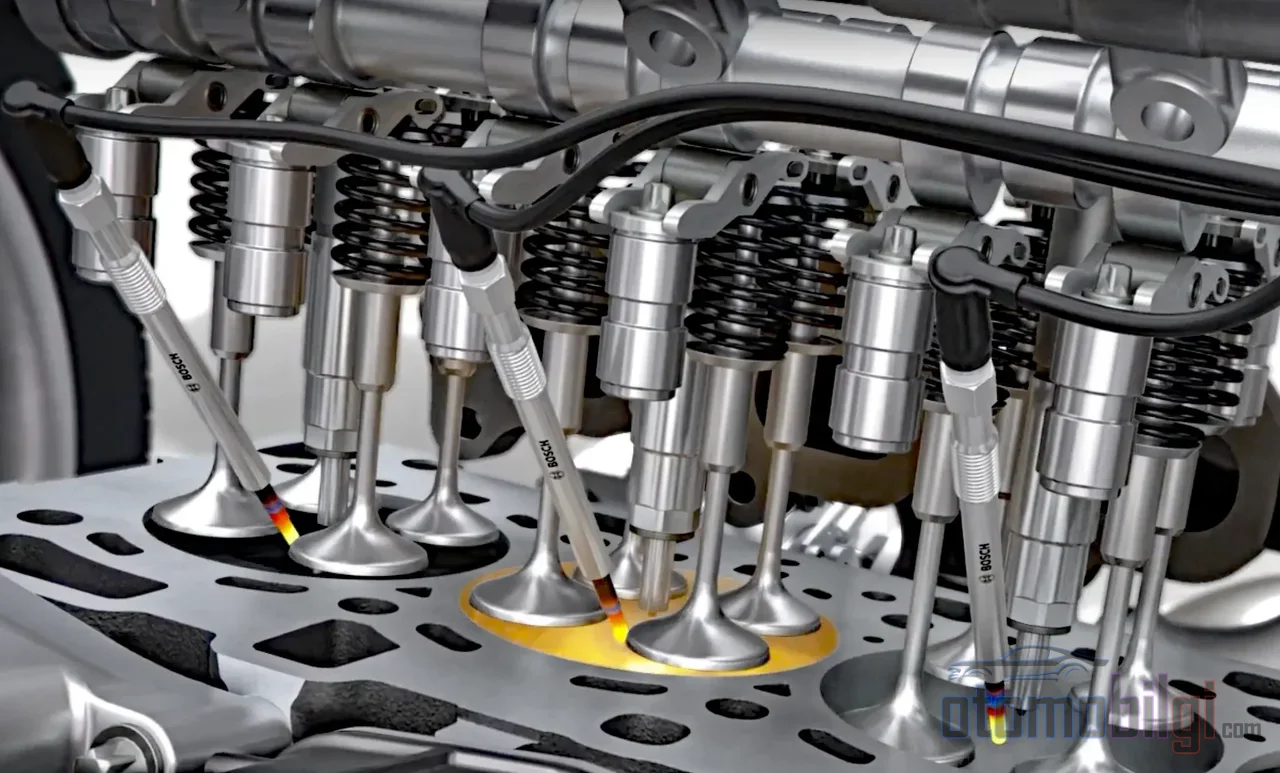
In a gasoline engine, when the spark plugs go out, the engine stops too; without an electrical spark, the fuel-air mixture usually cannot be ignited. Yet on the same street, a diesel vehicle completes its combustion cycle millions of times without a single spark producer inside its cylinders. Both engines use the same four strokes, have the same piston-crank mechanism, and are part of the same fuel economy debates. So what is it that creates the difference? The answer lies not in the spark plug itself, but in the ignition duty being delegated to the engine.
On this page, we will examine step by step the physics behind how a diesel engine runs without spark plugs, comparing it with the gasoline ignition system; we will also explain why the glow plug is so often confused with the spark plug, and tie the diesel's characteristic high torque-low rpm behavior to the same ignition difference.
What Exactly Does the Spark Plug Do in a Gasoline Engine?
The gasoline engine, technically known as the spark-ignition cycle or commonly as the Otto cycle, operates on this principle. During the intake stroke, air and gasoline enter the cylinder together; this pre-mixed mixture warms up slightly during the compression stroke, but is kept at a controlled temperature low enough to prevent self-ignition. The moment of ignition is entirely a decision coming from outside: just before top dead center, the spark plug throws a high-voltage spark between its two electrodes, and the flame front spreads through the mixture.
This arrangement has a critical limit. The gasoline engine's compression ratio is deliberately kept low to prevent the mixture's compression heat from igniting it prematurely, in other words to prevent knocking. A typical gasoline engine operates at a ratio between 8:1 and 12:1; as the ratio increases, the mixture tends to explode spontaneously without waiting for the spark plug's spark. So in a gasoline engine, the spark plug is not a comfort component but the defining component of the cycle: no spark, no combustion.
Ignition Through Compression: The Fundamental Physics of the Diesel Cycle
In a diesel engine, the operation is built on the exact opposite of this logic. In this cycle, developed by German engineer Rudolf Diesel in 1893, only air enters the cylinder during the intake stroke; the fuel has not yet joined the mixture at all. During the compression stroke, this air is compressed at a much higher ratio than in a gasoline engine, typically between 15:1 and 20:1.
Compression is a process of doing work, and thermodynamically it is approximately adiabatic: as the volume decreases, the work done on the air is converted into heat. The result is a measurable jump in temperature and pressure. At a compression ratio such as 18:1, model calculations show that the air reaches approximately 610 °C and a pressure of 47 bar as the piston approaches top dead center; more conservative calculations still give a value of at least 400 °C. The self-ignition temperature of diesel fuel is below this range.
Highlights
- The diesel engine compresses only air; when the fuel is injected into the hot air, it ignites spontaneously
- Typical diesel compression ratio 15:1 - 20:1; At 18:1 the air reaches approximately 610 °C and 47 bar
- The diesel cycle differs from the Otto cycle by heat addition at constant pressure versus constant volume
- The glow plug heats the combustion chamber only during cold starts; it does not ignite the fuel
- Diesel has the highest thermal efficiency among internal combustion engines; marine diesels reach up to 55%
The Diesel Cycle in Four Strokes
The diesel engine also operates on four strokes, with the same stroke names as the gasoline engine; the difference lies in what happens within each stroke:
- Intake: Only air is drawn into the cylinder (in some configurations, air diluted with exhaust gas recirculation); with the throttle wide open, air flows in freely.
- Compression: The air is compressed at a ratio of 15:1-20:1, raising it above its ignition temperature.
- Power: As the piston approaches top dead center, the injector sprays atomized diesel fuel into the hot air at high pressure; the fuel self-ignites the moment it makes contact, and the expanding gas pushes the piston.
- Exhaust: The combustion products are expelled and the cycle begins anew.
The elegance here emerges in load control. A gasoline engine regulates power by throttling the amount of mixture entering the cylinder; in a diesel, the throttle is not used for this purpose. Power is controlled by varying the amount of fuel injected. Since air is always plentiful, the diesel typically runs on lean mixtures well beyond its stoichiometric ratio; at peak torque, the air-fuel ratio is typically kept above 25:1.
The Thermodynamic Difference Between the Diesel Cycle and the Otto Cycle
The two cycles are distinguished by the manner of heat addition. The Otto cycle is defined by heat addition at constant volume: the spark plug fires, the mixture burns very rapidly, and pressure rises while the piston has barely begun to move. The diesel cycle, in its ideal form, is defined by isentropic (adiabatic) compression and heat addition at constant pressure: fuel injection continues in a controlled manner as the piston begins its expansion, so pressure remains approximately constant while heat is added. The timing of fuel ignition is determined not by a spark, but by the start of injection. This is also the origin of the diesel engine's having the highest thermal efficiency of all practical internal and external combustion engines: a very high expansion ratio and inherently lean combustion yield effective efficiencies of up to 55% in marine diesels. For comparison, in the 1897 Schroter test, the first diesel engine produced 13.1 kW at 26.2% effective efficiency; a groundbreaking figure for its time.
The Glow Plug Is Not a Spark Plug
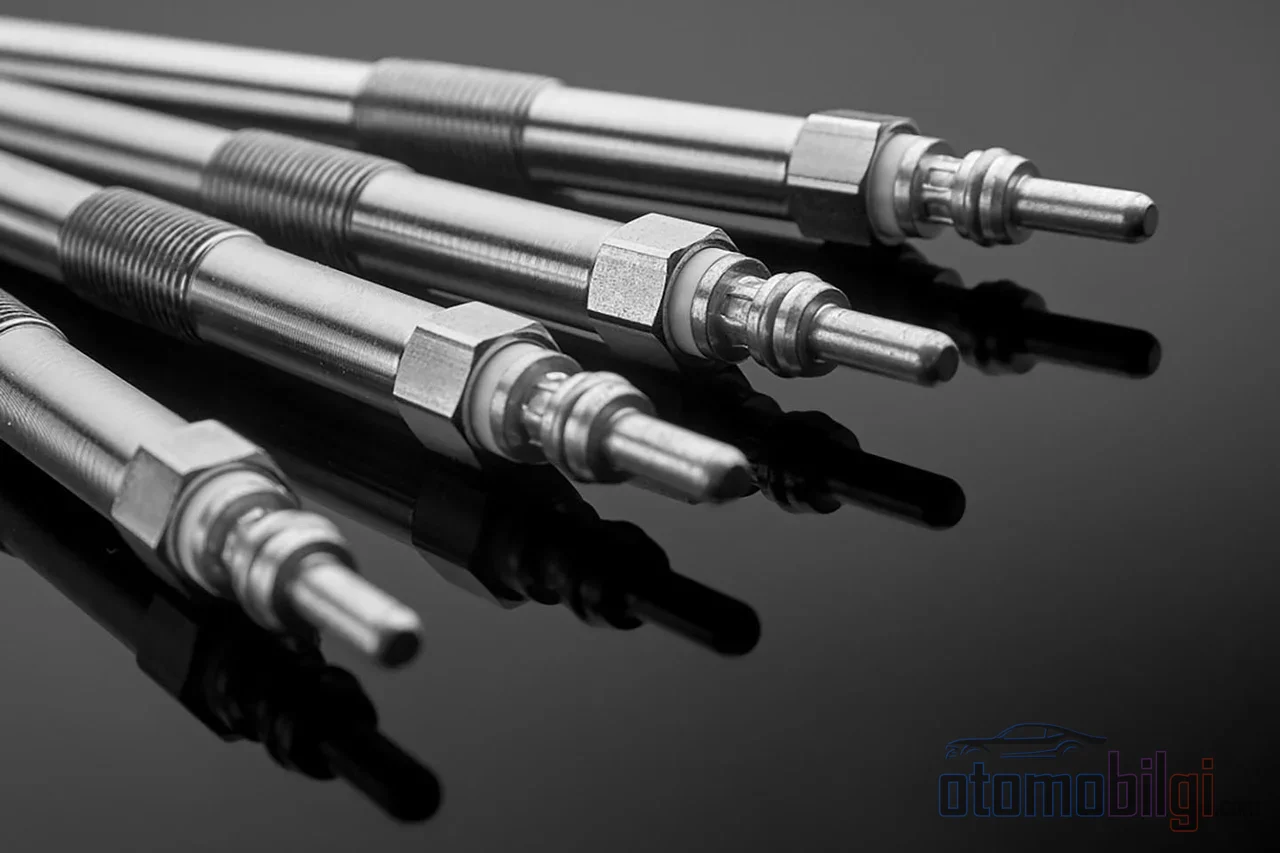
The glow plug that diesel vehicle owners see in the parts catalog, despite the similarity in its name, does not do the same job as the spark plug. The spark plug produces a spark in every cycle; the glow plug, on the other hand, is an electric heater and has a single task: to heat the combustion chamber in cold weather, before starting.
In a cold cylinder, part of the compression heat escapes to the cold metal walls, and the air may fail to reach the required ignition temperature. The glow plug fills this gap: it does not ignite the mixture directly, it only helps reach the temperature threshold needed for the first ignition to occur. In mild temperatures a diesel can run even without a glow plug; the moment they become critical is cold starting. That is why the two parts cannot be used interchangeably: one is an ignition device, the other a cold-start support element. Ceramic-element glow plugs provide an additional cold-start advantage in this job.
Why Can the Compression Ratio Be This High?
In a gasoline engine a 15:1 ratio triggers a chain of premature combustion that begins with knocking; in a diesel this ratio is the norm. The physical reason is simple: there is no fuel in a diesel engine during compression. Since only air is compressed, the risk of premature ignition disappears, and the ratio can be pushed to levels impossible for gasoline engines. Producing heat during compression is not a flaw in this engine; it is the ignition method itself.
The benefit of the high ratio is also measurable: as the compression ratio increases, cycle efficiency and the power produced rise. So why aren't more extreme values like 40:1 or 80:1 used? Here the efficiency limit clashes with secondary combustion-related problems: high compression also raises combustion temperature and therefore NOx emissions. The same principle applies in traditional devices like the fire piston that inspired Rudolf Diesel: rapid adiabatic compression produces fire.
How Does the Ignition Difference Shape Diesel's Character?
The diesel engine's high-torque, low-revving character is often presented as a separate debate; in fact it is the result of a compression-ignition layout. It is enough to follow the chain step by step.
The Origin of High Torque
The primary factor is the high compression ratio: the 15:1-20:1 range produces strong cylinder pressure even at low revs, that is, high mean effective pressure. The second factor is architecture: diesels are mostly designed with a long stroke, and a long stroke means a larger lever applied to the crankshaft, that is, higher torque. The third factor is the fuel: diesel fuel carries more energy per gallon than gasoline does. In supercharged diesels, turbo boost pressure reinforces this picture even further. The combination of these three gives the diesel a power curve weighted toward the lower end rather than the top of its rev band.
Why Does It Run at Low Revs?
The injection, mixing, and self-ignition of the fuel in each cycle take time; as revs rise, the time left for this process shrinks. In a gasoline engine it is known when the spark will fire; in a diesel, ignition depends on the balance between injection and the temperature of the trapped air, and this balance is strained at high revs. The result is that the diesel typically operates in a rev range below that of the gasoline engine, but within that range delivers more of what matters as torque.
Short Answer: Why Doesn't a Diesel Engine Use Spark Plugs?
A diesel engine does not use a spark plug because the air takes on the ignition duty: air alone is compressed at a ratio of 15:1-20:1, and this compression raises the air to about 600 °C; diesel fuel injected into the hot air ignites spontaneously without needing a spark. The spark plug is the externally supplied ignition source in a gasoline engine; in the diesel, compression has taken the place of that source. The difference is not the presence or absence of a single part, but two different thermodynamic design philosophies: one times the spark, the other produces the heat.
The waves of this single difference spread throughout the engine: because ignition is controlled by injection, the knock limit disappears, the compression ratio can be raised, efficiency increases, power is regulated by the amount of fuel, and the engine gains a character that piles its torque into the low revs. Running without spark plugs is not a shortcoming; it is an engineering choice made by Rudolf Diesel in 1893, first measured in 1897, and still the most efficient practical internal combustion engine today.
Sources
- Diesel engine - Wikipedia
- Diesel cycle - Wikipedia
- The Diesel Engine - HyperPhysics, Georgia State University
- Combustion in Diesel Engines - DieselNet
- Diesel (Compression Ignition) Engines - EGEE 102, Penn State
- How Diesel Engine Ignites With No Spark - 3DMechanism
- Spark plugs vs Glow plugs - Champion Auto Parts
- Winter Glow Plugs - Niterra (NGK NTK)
- Why Diesels Make So Much Torque - Banks Power
- Theory of Diesel Cycle - nuclear-power.com