What Is Diesel Engine Runaway and How Do You Stop It?

On the morning of March 23, 2005, a distillation tower at BP's isomerization unit at the Texas City refinery filled with hydrocarbons, and when it became over-pressurized, a geyser-like release of vapor began from the blowdown stack. A diesel pickup idling about 7.5 meters away was engulfed in the spreading raffinate vapor cloud. The engine began consuming the vapor as fuel, its speed rose uncontrollably, and while personnel tried to shut it down, backfire ignited the cloud. Fifteen workers died in the explosion and 180 were injured.
This article describes what happened mechanically that morning: why an engine without a throttle controls its speed through the "quality" of its fuel, why an unwanted fuel source leads to an uncontrolled speed surge known as a runaway, and which methods of stopping the engine actually work.
Torque Control in Diesels: Why Is There No Throttle?
One of the most fundamental operational differences between a gasoline engine and a diesel engine is how the air-fuel mixture is managed. In a diesel engine, pure air unmixed with fuel is drawn into the cylinder on every intake stroke; the fuel is delivered directly into the cylinder via injectors at the end of the compression stroke. The high temperature produced by compression ignites the mixture on its own. In other words, ignition is achieved not by a spark plug but by compression ignition.
The critical consequence of this arrangement is this: torque is determined by the mass of fuel delivered to the cylinder. Volumetrically, air is always abundantly available; the more fuel is injected, the more power the engine produces. For this reason, there is no need to place a throttle in the intake path. In a gasoline engine, the throttle is an indispensable component that controls both the volume and richness of the mixture; in a diesel, control rests entirely on the injection quantity. This approach is known in the technical literature as quality governing of torque.
This is where the unknown side of this system begins. Because control relies entirely on injected fuel, the engine treats any flammable substance entering the air intake as fuel. There is no throttle available to lean out the mixture or choke the engine. If an unwanted fuel source appears, no built-in mechanism remains to stop the engine.
Highlights
- A diesel engine has no throttle; torque is controlled by the mass of injected fuel, i.e. by mixture quality.
- A diesel runaway occurs when the engine draws fuel from an unwanted source, exceeds its speed limit, and suffers catastrophic damage from loss of lubrication.
- Switching off the ignition does not stop a runaway; combustion continues until the uncontrolled fuel source is physically cut off.
- The most effective intervention is to cut off the airflow: a physical plug, a CO2 extinguisher, or an automatic air-intake shutoff valve.
- In the 2005 Texas City explosion, the runaway and backfire of an idling diesel pickup ignited the vapor cloud: 15 dead, 180 injured.
What Is a Diesel Runaway, and How Does It Differ From Ordinary Overspeed?
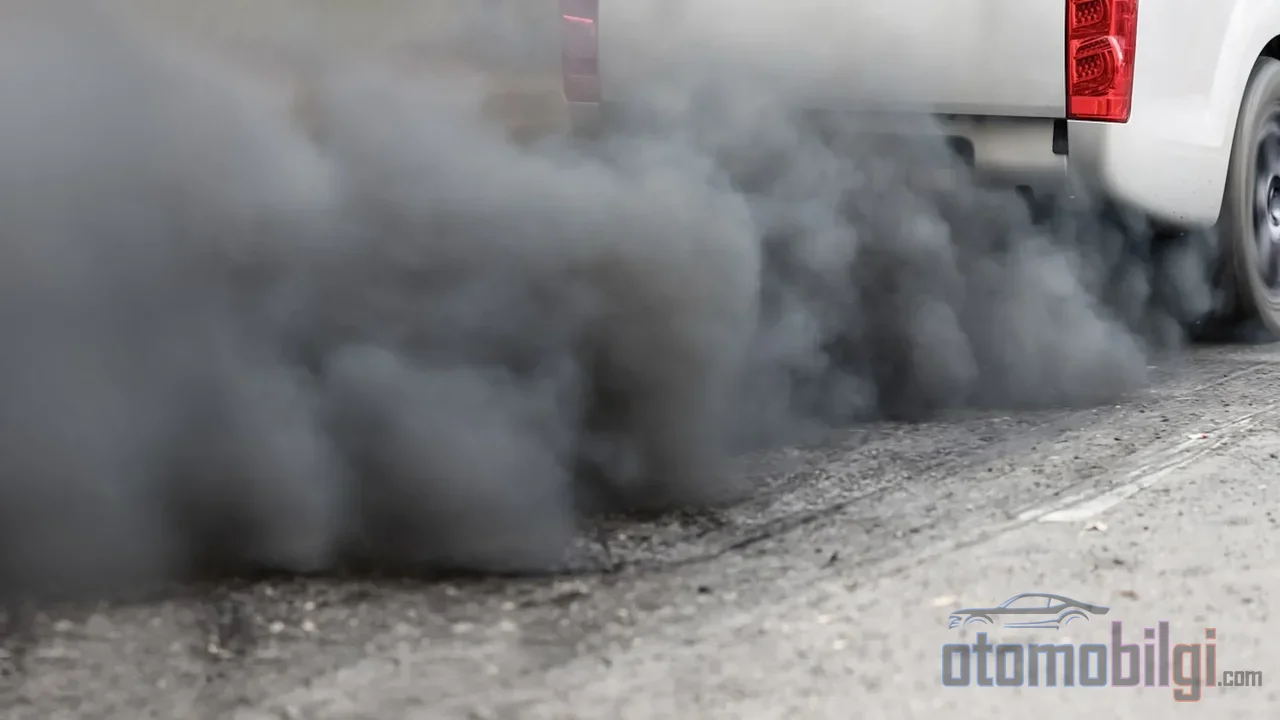
A diesel engine runaway occurs when the engine draws excess fuel from an unintended source independently of its own control system and its speed continuously rises, resulting in loss of lubrication and catastrophic mechanical damage. Hot-bulb engines and jet engines can also run away through a similar process; the phenomenon is not exclusive to diesels.
It should not be confused with ordinary overspeed. Ordinary overspeed is the result of an operational error, a control fault, or mechanical degradation, and the normal shutdown procedure still works. In a true runaway, however, combustion takes place even if the injection system is disabled; the engine is finding fuel on its own.
The practical and surprising conclusion that follows is this: turning off the ignition does not work in a runaway. Electrical shutdown only disables injection control; it does not eliminate uncontrolled fuel sources such as oil leaking through the turbo seal, flammable gases in the environment, or the unintended spraying of a faulty pump. Combustion continues until the air is physically cut off or the engine comes to a mechanical stop.
The Diesel's Generosity: An Engine That Can Burn Anything
The diesel engine's fuel flexibility is a valuable engineering feature, but it is a weakness when it comes to runaway. A diesel can burn many types of oil, gasoline, and various flammable gases. In refinery and oilfield environments, this is a serious hazard scenario: even at relatively low concentrations, a hydrocarbon vapor drawn into the intake manifold is consumed like additional fuel and engine speed rises uncontrollably.
In other words, there is no need for an external "fuel fill" into the engine. The vapor cloud in the environment mixes into the air intake on its own, enriching the mixture; torque rises, speed rises, and within a short time the engine exceeds its own strength limit.
The Road to Runaway: Internal and External Causes
Causes Originating from the Engine
The most common trigger is the degradation of the turbocharger oil seal. Pressurized engine oil leaks into the intake line of the turbo compressor, atomizes, and enters the combustion chamber. Broken seals, the unintended excess fuel spraying of a faulty injection pump, crankcase ventilation system problems, excessive blow-by from worn piston rings and cylinder liners, and overfilling of crankcase oil are other mechanisms leading to the same outcome.
A subtle detail: turbo oil leakage can accumulate in the intercooler and the pipes. In an engine where only the turbo failed and only the turbo was replaced, the oil remaining in the lines can be the trigger of the next runaway. Knowing the warning signs is valuable: abnormal noises from the turbo, increased oil consumption, excessive smoke, changes in performance, and engine speed rising on its own even though the driver is not pressing the accelerator.
Causes Originating from the Environment
A turbo is not required for a runaway to occur. If flammable gas is present in the environment and can reach the intake manifold, a gas leak alone can trigger a diesel runaway. It makes no difference whether a diesel engine is idling or not; a running engine treats hydrocarbons in the surrounding atmosphere as a fuel source. In naturally aspirated engines, excessive oil at the intake, internal wear, or crankcase ventilation problems set up the same scenario.
For this reason, the risk of diesel runaway and vapor ignition in the petroleum industry, i.e. in refineries and downstream facilities, was identified in the late 1960s, and refineries began requiring automatic overspeed protection devices from 1972 onward.
The Price of Uncontrolled Revs: How Does the Engine Die?
In a runaway situation, the engine speed far exceeds the engine's design limit. The lubricating film cannot perform its duty at these speeds, and the engine either stops with a mechanical failure or keeps running until the air supply is physically cut off. The forms of destruction are varied: the turbo disintegrating at excessive speed, piston-valve collision due to valve float, connecting rod breakage from extreme inertia forces, and the explosion of the crankcase.
Whether an engine can survive a runaway depends on the duration, the speed reached, and the damage sustained. Even if an engine that has been shut down quickly appears intact, it must be inspected by an expert before being restarted.
How Is Diesel Runaway Stopped?
There is only one answer to the problem: cut off the air going to the engine. The ignition, throttle, injection - none of these are solutions, because the problem is where the fuel is coming from, and that source is outside the injection system. The applicable methods are as follows:
- Physically blocking the airflow: The air filter housing or intake line is closed with a cover or plug. This is the most direct and reliable method.
- Spraying a CO2 fire extinguisher into the air intake: Carbon dioxide removes from the intake the oxygen needed for combustion. Even a heavy commercial pickup manufacturer's official user manual recommends switching the ignition to OFF and directing a CO2 or dry chemical type extinguisher into the grille in a runaway situation. In practice, the entire contents of the extinguisher must be discharged with the horn pressed against the intake.
- Using a decompressor: In engines equipped with decompressors (mostly industrial and marine engines), combustion is eliminated by holding the valves open.
- Stalling in a high gear: As a last resort in a vehicle with a manual transmission, shifting into a high gear (4th and above), fully applying the foot and hand brakes, and then quickly releasing the clutch stops the engine; the vehicle does not move. However, this maneuver can cause catastrophic damage to the transmission, especially the gearbox housing. If done incorrectly - if the clutch is pressed and the gear is shifted to neutral - the engine is freed and the revs climb even higher above the red zone.
On the industrial side, the solution is more systematic: automatic air shut-off systems continuously monitor engine speed, and when overspeed is detected, the valve at the intake closes automatically. These systems are described as the only proven and reliable means of stopping a diesel engine once a runaway has begun. Such arrangements, known as positive air shut-off systems (PASS), are standard safety equipment in refineries, natural gas compression stations, and mining operations. On the driver's side, the standard precaution rests on the same idea: a rpm-sensing intake valve, or at least a plug that can be rapidly applied to the intake line.
There is also an engineering concern to keep in mind: suddenly cutting off the air while the engine is running at high rpm can cause the intake duct to collapse or blow out the blower seals. This does not mean the shut-off is wrong; it simply shows that the intake system must be evaluated accordingly.
Texas City 2005: The Industrial-Scale Price of a Diesel Runaway
The failure in the isomerization unit at BP's Texas City refinery on March 23, 2005 was the stage for the most dramatic scene of this very mechanical chain. A distillation tower filled with hydrocarbons, became overpressurized, and a geyser-like release of raffinate vapor began from the blowdown stack. Before long, a diesel pickup idling nearby was engulfed by the vapor cloud.
The engine's mixture quality control was helpless against the richness of the cloud: the pickup consumed the hydrocarbons in the air as fuel, rpm went out of control, and the engine overheated. As personnel tried to shut the engine down, it backfired, and this backfire ignited the vapor cloud. In the explosion, 15 workers died, 180 people were injured, and 44 trailers were damaged. The official investigation identified the backfire from the idling diesel pickup, located about 25 feet (roughly 7.5 meters) from the blowdown drum, as the most likely ignition source.
A note on certainty should also be honestly made: independent assessments stated that the ignition source could not be conclusively proven, that witnesses saw a vehicle accelerating near the blowdown drum with a glowing red exhaust, but that whether this was the ignition source is unknown. So this is very likely the scenario, but it cannot be presented as the only proven explanation.
The systemic lesson of the accident is broader than diesel runaway alone: site management had not investigated the blowdown stack's venting, and six separate ISOM blowdown incidents had occurred between 1994 and 2004. The official recommendations point to moving to flare systems for the safe burning of vapors and avoiding the use of blowdown drums like the one in Texas City. The practical change triggered by the same reports is the widespread adoption of automatic air shut-off valves for diesel equipment in refineries.
Summary: An Engine Without a Throttle Is Stopped With Air
The short answer to how a diesel runaway is stopped is this: not turning off the ignition, but cutting off the air going to the engine. Close the air intake with a physical plug, discharge an entire CO2 extinguisher into the intake, or use the decompressor. In a vehicle with a manual transmission, stalling in high gear is the last resort; the transmission can be sacrificed, but first the brakes must be fully applied and the highest gear selected. In industrial environments, the only reliable solution is an automatic air intake valve with rpm detection.
The power and efficiency of a diesel engine rely on torque control through mixture quality. The same principle means that every flammable substance not belonging to the engine itself counts as fuel. This is exactly where the chain that cost 15 human lives in Texas City began: an oil seal or a vapor cloud found the single weak point of an engine with no throttle.
Sources
- Diesel engine runaway
- Texas City refinery explosion
- BP America (Texas City) Refinery Explosion - CSB
- Diesel Engine Runaway Prevention for Downstream - AMOT
- Runaway Diesel Engine: Causes, Signs and Prevention
- Ram 2500/3500 Owner's Manual - Engine Runaway
- Lessons from Texas City: A Case History (IChemE)
- Understanding Diesel Engine Runaway