Gasoline or Diesel? The Comparison That's Still Relevant in 2026
Share This Page
The question "gasoline or diesel?" no longer has a single valid answer in 2026: the right answer comes not from how the engine works, but from your usage profile. The short version is this: if your annual mileage is low and your routes consist of short city trips, gasoline; if long highway trips and hauling loads are on the table, diesel is generally the more sensible choice. The rest is a matter of grounding this decision in measurable data.
Key Takeaways
- Diesel engines lead gasoline engines in thermal efficiency by approximately 20% ; this difference directly translates into fuel economy.
- The compression ratio in gasoline engines is in the range of 8:1-12:1, while in diesel engines it is 14:1-23:1 .
- The lifetime maintenance cost of a diesel engine can turn out 50-100% higher than that of a gasoline engine.
- Turbocharged engines miss their catalog fuel economy figures more often than naturally aspirated engines; in some cases a decline of 8-15% can be observed.
- The decision threshold is usage mileage: at low mileage, gasoline comes out with a lower total cost for most drivers.
Two Engines, Two Different Ignition Logics
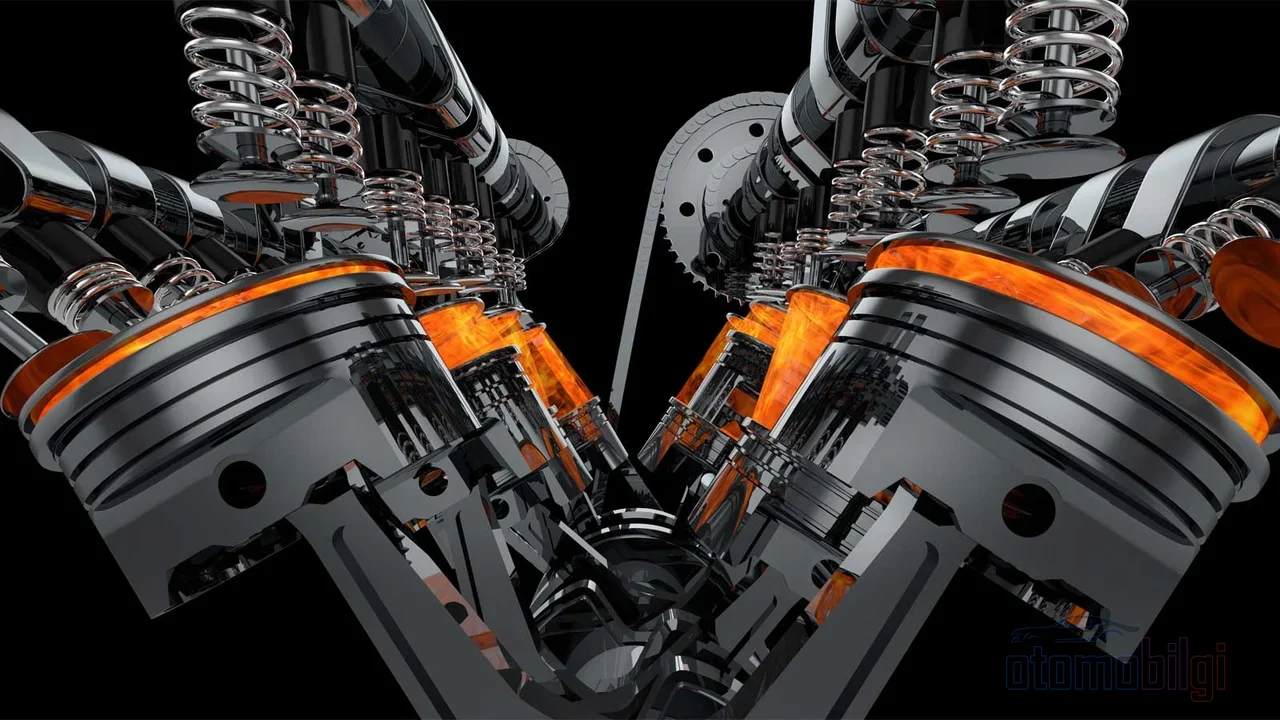
The fundamental difference between gasoline and diesel engines is how the fuel is ignited. In a gasoline engine, the air-fuel mixture is compressed and ignited by the spark produced by the spark plug. A diesel engine has no spark plug; the engine compresses only air at a very high ratio, the temperature rising from compression becomes sufficient for the fuel to ignite spontaneously, and the fuel is injected into the cylinder at that moment. That is why a diesel engine is called a compression-ignition engine.
At the root of this difference lies the compression ratio. In gasoline engines, the ratio is typically kept between 8:1 and 12:1 , because a gasoline engine takes the fuel into the cylinder during the intake stroke; if the mixture is compressed too much, it ignites uncontrollably on its own, and this is called knocking. In diesel, only air is compressed; since the fuel is not yet in the cylinder, there is no risk of premature ignition of the mixture, and the ratio easily rises to the 14:1 to 23:1 range. As the ratio increases, thermal efficiency increases, and this is the physical basis of diesel's lasting advantage in fuel economy.
The same physics also creates a disadvantage: in small diesel engines, the in-cylinder temperature may not be sufficient for ignition in cold weather. That is why diesels use glow plugs; they heat the combustion chamber before cold starts to make ignition easier. Gasoline engines have no such need, as the spark plug can produce a spark under all conditions.
Why Is Torque Character Diesel's Trump Card?
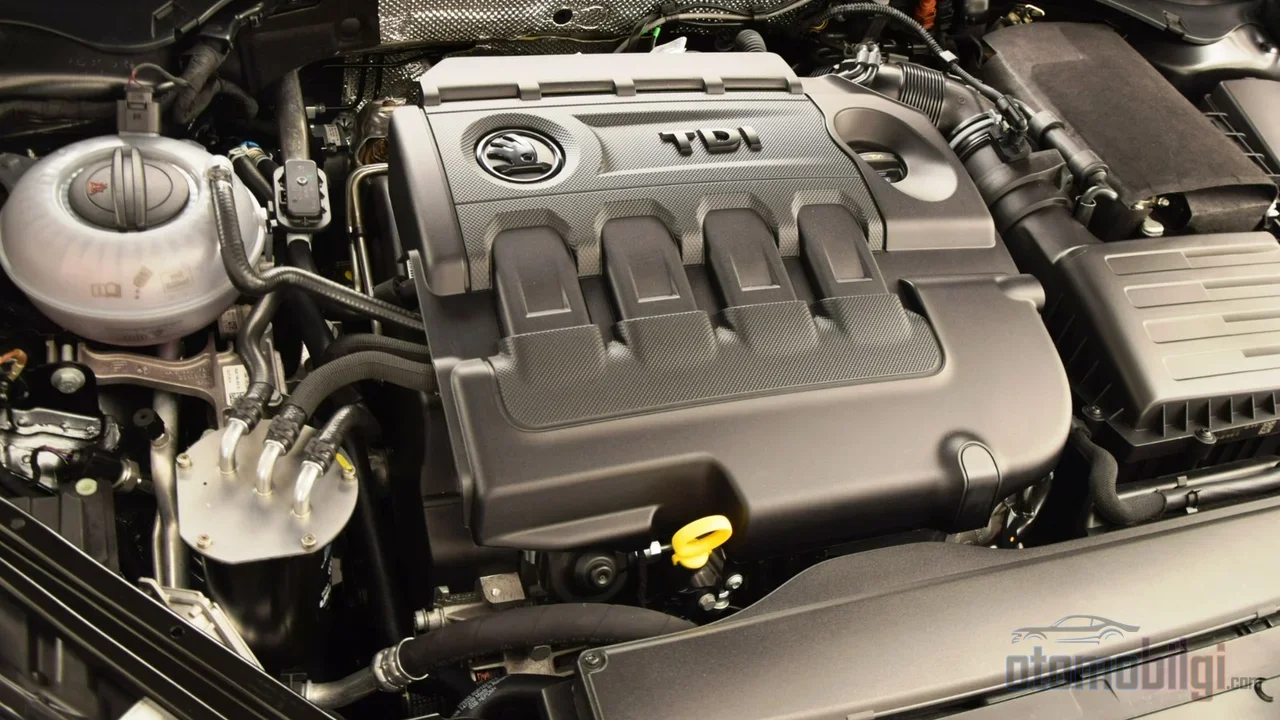
When you put the gasoline and diesel versions of the same vehicle side by side, you will see that the diesel's torque figures are noticeably higher. There are multiple reasons for this: the high compression ratio, the energy density of diesel fuel, the difference in combustion speed, the widespread use of turbochargers in diesels, and typically long-stroke cylinder geometry. As a result, diesel produces its power not at high revs, but at lower revs and with higher torque .
On the road, this translates clearly: on hills, with a full trunk, or while towing a trailer, you can keep the car at low revs without touching the clutch much. Moving a trailer from a standstill is where low-end torque makes the most noticeable difference. For someone who tows frequently and heavily, diesel is generally the better choice.
Running at low revs also reduces mechanical wear. In gasoline engines, cylinder wear typically begins to show at around 120,000-150,000 miles while some diesels are known as engines capable of covering over 1 million miles Many diesel cylinders also feature removable liners; at high mileages, it is possible to renew the engine instead of replacing it entirely. If your odometer runs fast, this lifespan difference becomes a serious line item.
Turbo or Naturally Aspirated: The Fine Print of the Efficiency Claim
Turbocharging recovers the energy of the exhaust gases and sends more air to the cylinder, allowing you to get more power from a smaller engine. On paper, this is a more efficient engine: small displacement, low fuel consumption, big power when needed. In real-world use, however, the picture is not that clear-cut. Turbocharged engines miss the fuel economy figures stated in the catalog more often and by a larger margin than naturally aspirated engines; in some cases an efficiency decline of around 8-15% has been measured. The reason is simple: the power reserve offered by turbocharged engines pushes the driver to use the right foot more often, and the efficiency on paper cannot be achieved in real traffic.
Steady-speed cruising on the highway is the exception where turbo engines excel; under constant load, the turbo works efficiently. In the stop-and-go cycle of city traffic, however, the advantages of naturally aspirated engines become apparent: simpler mechanical construction, more predictable fuel consumption, more stable power delivery. With a naturally aspirated engine, the relationship between the fuel it consumes and the catalog figures is easy to read; in a turbo engine, this relationship is far more sensitive to driving style.
Let us also add how the induction difference produces different outcomes in both fuels: in diesels, the turbo spreads the already high torque across an even wider rev range and increases towing capacity; in the diesel world, turbo is nearly standard. In gasoline engines, on the other hand, the turbo is usually a means of downsizing - that is, getting the power of a larger engine from a smaller one - and the efficiency promise becomes heavily dependent on driving style.
Which Engine Makes Sense for Which Use?
The most honest way to simplify the decision is to look at the usage scenario. Engine choice depends less on how good the engine is on its own, and more on the conditions under which you run it.
| Usage Scenario | More Suitable Engine | Why |
|---|---|---|
| Urban, short distance | Gasoline | Smoother acceleration, lower noise, simpler operation |
| Long distance, highway | Diesel | Low-end torque for maintaining speed and fuel savings |
| Heavy loads, towing | Diesel | High torque at low revs, towing without strain |
| Low annual mileage | Gasoline | Lower purchase and maintenance cost - diesel's efficiency advantage cannot catch up |
One warning is essential here: diesel's fuel savings only make sense if you drive enough kilometers. If most of your driving consists of short urban trips, diesel's efficiency advantage never materializes; the engine runs cold, the glow plug kicks in, and savings do not become clear over short distances. Diesel does not make you money without earning the kilometers.
Does transmission choice change this balance?
Partly. A CVT transmission offers superior fuel economy with smooth power delivery and no gear shifts, especially in stop-and-go urban use. A manual transmission gives full driver control and is generally cheaper to repair; however, the efficiency of modern automatic transmissions has largely invalidated the assumption that a manual always burns less fuel. In other words, modern automatics on the transmission side are now a factor that strengthens rather than weakens the gasoline engine's urban efficiency argument.
Fuel and Maintenance Cost Balance: Looking at the Numbers
Diesel engines 15-25% more fuel-efficient, but three more cost items must be written right next to that figure: diesel fuel costs more per liter, the purchase price of a diesel vehicle is higher, and diesel maintenance is more expensive. Fleet data shows that maintenance costs over a diesel engine's lifetime are 50-100% higher than for gasoline, and annual diesel maintenance averages $1,200-2,000 on trucks, the 100,000-mile periodic maintenance of a diesel roughly doubles; the monthly difference falls in the $20-40 range.
The difference at the parts level is also tangible: an air filter on a gasoline car costs 20-40 EUR, on a diesel 30-50 EUR; a diesel also has a 50-80 EUR fuel filter item. Spark plug replacement on a gasoline car costs 40-80 EUR, while glow plugs on a diesel run 80-150 EUR . It is enough to note these figures, along with the additional maintenance needs created by diesel's exhaust after-treatment systems - such as AdBlue and DPF - as a cost line in the decision process; there is no need to go into the details of these systems, it is enough to know that diesel's maintenance schedule is busier than gasoline's.
The purchase price difference should not be underestimated: the diesel version of the same model can be up to $8,000-12,000 more expensive on the used market. There is also an interesting correction on the fuel side: although diesel fuel is more expensive per liter, it carries more energy per unit volume; less fuel is needed for the same work. In the long run, total fuel costs can converge between the two fuels depending on the vehicle and driving style. That is why the total cost balance inevitably pivots at a kilometer threshold: at low mileage gasoline wins, at high mileage diesel wins, and the threshold shifts according to the nature of your usage.
How can you calculate fuel consumption yourself?
Make the comparison not with catalog values but with your own data. Run the tank down to the low-fuel mark with normal driving, note how many liters you filled up with, and apply the formula: liters ÷ (km2 − km1) × 100 = L/100 km. Comparing the gasoline and diesel versions with this measurement gives the performance of both engines on your actual route, providing a more honest basis for decision than the catalog value.
Decision Guide: Should You Buy Gasoline or Diesel in 2026?
The measurable summary is this: Diesel is superior in thermal efficiency and torque; it is more expensive in purchase price, maintenance, and fuel price per liter. Gasoline, on the other hand, is simpler, has cheaper maintenance, and is better suited to city use. You can reduce the decision to five questions:
- Is your annual mileage high? If so, diesel's efficiency advantage starts to cover the maintenance and purchase difference.
- Are your routes mostly highway? The highway is the environment where diesel's low-end torque and efficiency are put to use.
- Do you carry loads or tow a trailer? For this job, diesel's low-end torque is a tangible ease of operation.
- Does your use consist of short city trips? Then diesel's savings never become clear, and gasoline makes more sense.
- How many years will you keep the vehicle? A plan of long-lasting, high-mileage use can take advantage of diesel's durability.
For a profile that answers yes to most of these questions, diesel is still a rational choice in 2026. For someone who answers no, gasoline's lower total cost remains the decisive winner for most drivers.
Sources
- Diesel vs. Gas Engines: Key Differences Between Gas and Diesel Engines
- Diesel Engine Basics
- Difference Between Petrol And Diesel Engines
- 5 reasons why diesel engines make more torque than gasoline engines
- Turbocharged Engines: Fuel-Economy Boost or Bust?
- Petrol vs Diesel Cars: Which Is the Better Choice?
- Petrol vs Diesel: Which is Cheaper to Run in 2026?
- Diesel vs Gas Fleet Comparison
- Diesel vs Petrol Service Costs
- Manual vs. Automatic: Five Myths About Stick Shifts