Octane Rating: Does It Add Power or Take It Away?
Share This Page
Octane rating does not add power to the engine; it is a stability indicator measuring the fuel's resistance to self-ignition under compression. What determines power is how much the engine compresses the mixture. High-octane gasoline merely allows this power to be safely unleashed in high-compression or turbocharged engines; put into an ordinary engine, it neither adds speed nor protects the engine.
Highlights
- Octane rating is not power, it is resistance to knocking (detonation); by reference, iso-octane is 100 and heptane is 0.
- In Europe, standard Super gasoline RON 95, while Super+ is based on RON 98 ; in the US, pump values are labeled on the AKI scale, roughly 4-6 octane lower.
- Diesel's cetane number works in exactly the opposite way to octane: fast ignition is an advantage, and the RON value of diesel fuel is only in the 15-25 range.
- Putting premium in a vehicle that does not require it provides no measurable gain in power or efficiency.
- Low octane in a modern engine usually shows itself not as damage but as power loss ; the ECU retards the ignition advance.
What Exactly Does Octane Rating Measure?
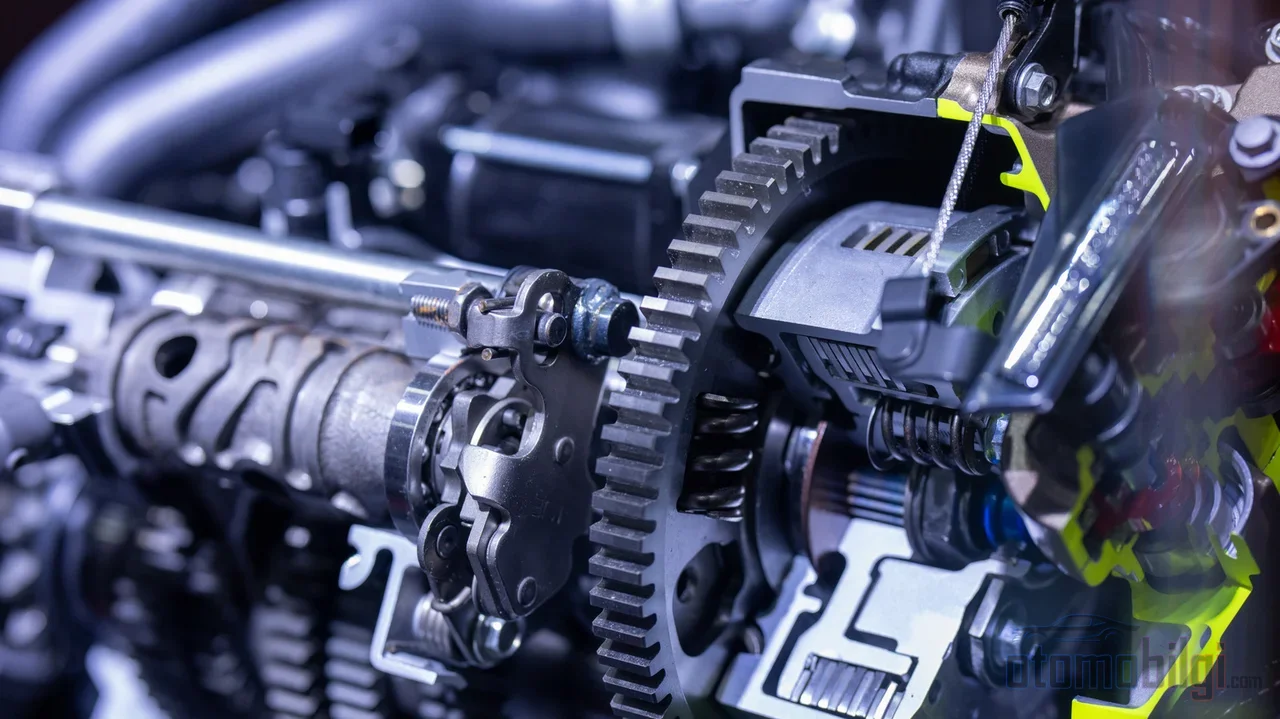
In a gasoline engine, normal combustion is orderly: the spark plug ignites, the flame front spreads in a controlled manner within the cylinder, and pressure rises gradually. If the temperature and pressure of the mixture exceed a certain threshold, part of the unburned mixture self-ignites before the flame front has even reached it. This sudden, uncontrolled second ignition causes cylinder pressure to spike abruptly; that metallic knocking sound you hear from the wall is exactly this. In technical literature it is referred to as knock, detonation, or auto-ignition, and it should not be confused with a concept that is often misused: pre-ignition is ignition before the spark plug fires, while knock develops after normal combustion has begun.
Octane rating is the standard measure of how much the fuel resists this self-ignition. The scale has two reference fuels: iso-octane (2,2,4-trimethylpentane) corresponds to 100 points, and normal heptane to 0 points. The meaning of 95-octane gasoline at the pump is this: this fuel produces the same knock behavior as a mixture of 90% iso-octane and 10% heptane. It does not mean the fuel actually contains this mixture; it is merely the equivalent of its behavior in the test engine.
RON and MON: Same Fuel, Two Different Numbers
Knock resistance is not measured with a single test. RON (research octane number) is taken in a test engine run at 600 rpm under relatively mild conditions; MON (motor octane number) is measured at 900 rpm under more demanding conditions such as a preheated mixture and variable ignition timing. In modern pump gasolines, MON is approximately 8-12 points below RON.
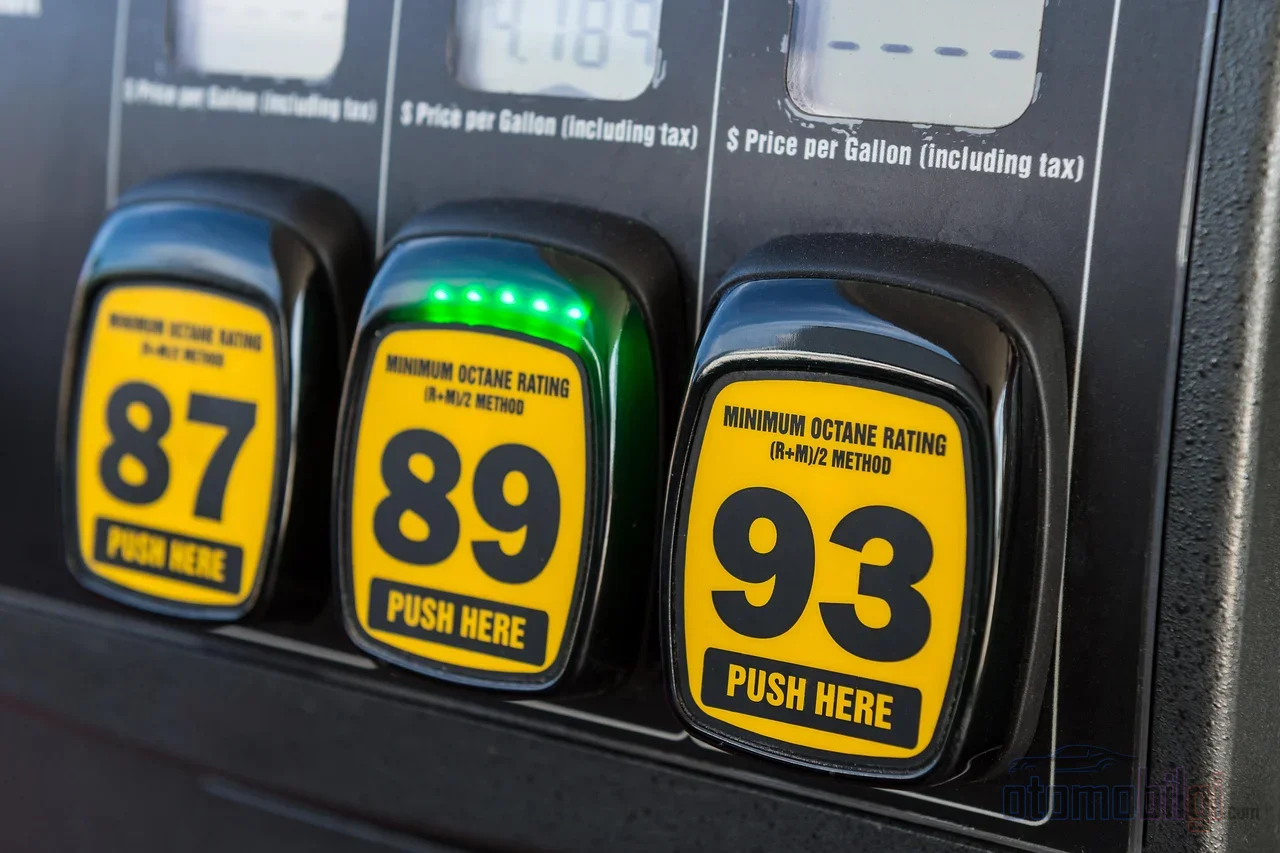
This dual measurement is also the source of labeling differences around the world. In most of the world, including Europe, the number at the pump is RON; in the DIN EN 228 standard, the minimum for Super gasoline is RON 95.0, and for Super-plus it is RON 98.0 (MON 85.0 and 88.0) is required. In the USA, Canada, and Mexico, the pump value is AKI, which is the average of RON and MON. Result: the same fuel appears 4–6 octane lower on a North American pump than in the rest of the world. Although the 87 Regular, 89–90 Midgrade, and 91–94 Premium grades in the USA may seem lower than Europe's 95/98 system, they are simply different scales. This is the practical knowledge everyone dealing with fuel should learn first: octane ratings are compared only within the same region and the same scale.
Does High Octane Really Give an Engine More Power?
Short answer: no. The octane number is not directly related to the fuel's power output or its energy content per unit volume; it only indicates resistance to uncontrolled auto-ignition under pressure. The extra power comes from the way the engine compresses the mixture, not from the fuel's octane rating. A technical statement published by the racing fuel industry summarizes this in a single sentence:
High compression inside the cylinder produces the power, not the fuel itself. Octane does not produce more power.
As the compression ratio rises, thermodynamic efficiency increases; the engine extracts more work from the same amount of fuel. But as the compression ratio increases, the temperature and pressure of the compressed mixture also rise, approaching the knock threshold. High-octane fuel comes into play exactly at this point: it allows the engine to use more aggressive compression, higher turbo boost, and more advanced ignition timing. It is not octane that produces power, but the engine design that octane makes possible.
Independent testing organizations that conduct staged experiments (consumer tests) reach the same conclusion: putting premium in a car that does not require it does not make it faster, more efficient, or longer-lasting. There is a counterpoint that should be mentioned: some tests measured that modern engines can gain on average around 2.7% in fuel economy and around 1.4% in horsepower from premium. These are measurable but hard-to-feel small differences that in most cases do not justify the cost; moreover, since these are figures conveyed via video, they should be considered as merely representative.
What Does Low-Octane Fuel Do in a High-Compression Engine?
Two scenarios need to be distinguished here: old, sensor-less engines and modern engines with knock sensors.
In older designs there is no protection. The compressed mixture can explode on its own before the spark plug ignites; continuous knocking multiplies the pressure shocks that the pistons, piston rings, and valves are exposed to and can eventually lead to engine damage. This is the source of the classic warning: putting low octane in a high-compression engine is dangerous.
The picture is less dramatic in a modern engine, but the result is still a penalty. The knock sensor detects knock within milliseconds, and the ECU does two things: it retards ignition advance, and on a turbocharged engine it limits boost pressure. The engine now runs "trouble-free" without knocking; but retarded ignition means reduced pressure, and both of these reduce power. A dyno example makes this difference concrete: the same turbo engine produced 626 HP on 91 octane and 691 HP on 100 octane; the 65 HP in between is the power the ECU cuts due to the octane deficit. The worst case is still on the table: an engine subjected to prolonged, severe knock carries a risk of damage, and running regular fuel in a vehicle that requires premium ("premium required") is defined by slower acceleration, increased knock, and in the worst case, risk of damage.
The distinction between "premium recommended" and "premium required" is also important in practice. You can put lower octane fuel in a vehicle in the recommended category; performance drops somewhat, but the engine is protected accordingly. In the required category, low octane means at best a noticeable loss of performance, and at worst, risk.
The Reverse: Can You Put High Octane in an Ordinary Engine?
Putting high-octane fuel into an engine designed for lower octane, i.e. one with low compression, brings neither benefit nor harm: combustion continues to complete, the engine is protected, and the money is simply wasted at the pump. The honest answer to the question "I accidentally put in premium, the car runs smoother, should I keep going?" is this: the sensation may be real, but do not expect a measurable mechanical gain; this is where your budget should make the decision. One section also carries a claim in the opposite direction - it is thought that high-octane fuel can cause incomplete combustion in a low-compression engine; however, this view is forum-sourced, and the more widely accepted picture is "harmless but unnecessary."
There is also the additive question: MTBE, ETBE, toluene, and iso-octane are typical octane-boosting compounds; commercial octane booster products perform their function through such compounds. In other words, they work chemically; but they are only meaningful if the engine genuinely needs higher octane.
Cetane Number: Diesel's Mirror Logic
The diesel engine's combustion philosophy is the exact opposite of the gasoline engine's. There is no spark plug in a diesel; the engine compresses air, fuel is injected into the hot compressed air, and it ignites on its own. For this reason, the property diesel wants is the mirror image of what octane wants: for gasoline, what is good is delayed ignition; for diesel, what is good is igniting rapidly as soon as it is injected.
The cetane number measures exactly this: the fuel's ignition delay. As cetane rises, the fuel ignites more easily and earlier. High octane means stability in gasoline, while high cetane means ignitability in diesel; although both scales were originally designed as 0-100, octane can exceed 100. A single number is enough to see the consistency of the logic: diesel fuel's RON value is 15-25 band. Well below the lowest grade of the gasoline pump. Low octane but high cetane is the ideal combination for diesel. For a driver standing in front of the wrong pump, the practical consequence is clear: putting diesel in a gasoline car or vice versa is not a matter that can be compensated with octane tricks, but an incompatibility between different combustion philosophies.
| Feature | Gasoline (octane) | Diesel (cetane) |
|---|---|---|
| Measured property | Resistance to auto-ignition | Ease of ignition (short delay) |
| What a high value means | Late and controlled ignition | Rapid ignition |
| Combustion initiator | Spark plug spark | Compressed hot air |
| Typical reference value | iso-octane 100 / heptane 0 | Defined on a 0-100 scale |
| Position on the scale | Pump: RON 95-98 (Europe) | Diesel fuel's RON is 15-25 |
Turbo Engines and the Modern Octane Demand
In recent years, we have seen more models emerge that demand or recommend premium over regular, and the price difference between premium and regular has also grown. Behind this lies not a random fashion but a clear engineering trend: volumes shrunk by downsizing are filled with turbocharging, and increased pressure (boost) is used together with a high compression ratio. Since both raise in-cylinder temperature and pressure, they narrow the knock margin; engines with rising boost levels require higher-octane fuel, and low octane can lead to knocking.
Octane requirement cannot be read from the compression ratio alone; this is a common oversimplification. Injection technology, more precise fuel delivery, and reduced ignition advance can lower the octane requirement. That is why two engines with the same compression ratio may demand different octane grades; the manufacturer's fuel recommendation is the result of the calibration of the entire engine, not of a single geometric value.
The practical result is the picture we saw above with the dyno example: some turbo engines mostly run normally on low octane, while power quietly drops. Putting regular in your turbo vehicle does not trigger a warning light instantly, but you leave behind the performance you paid for at the pump. If the manufacturer recommends premium, it is a sensible expense for those who want to get the price difference back as power and consistent response; if it does not recommend it, it makes no difference.
Practical Decision Guide: What to Do at the Pump?
To reduce what this page says to three sentences:
- If the manufacturer mandates premium use premium; low octane means, at best, a loss of performance.
- If the manufacturer recommends premium you can use low octane; the engine is protected but power and response drop somewhat. A recommendation means a measurable gain in calibration.
- If the manufacturer says regular premium is a complete waste; it provides neither extra power nor extra protection. Directing the same money toward a maintenance item other than fuel quality is more sensible.
Thinking of the octane number not as a performance feature but as a safety margin the engine establishes with its knock margin clarifies the logic of every decision: the engine produces the power, and octane merely determines under which conditions that power can be fully used.
Sources
- Gasoline explained - octane in depth - U.S. Energy Information Administration
- Octane rating - Wikipedia
- Octane number (RON, MON) & knock resistance - MB Energy
- Why You Might Not Actually Need Premium Gas - Consumer Reports
- Is Premium Gas Worth It - AAA Club Alliance
- Is Premium Gas Worth It? We Test High Octane on 4 Cars - Car and Driver
- You're thinking about Octane the wrong way - ETS Racing Fuels
- The Difference Between Cetane and Octane - Petroleum Service Company
- What is a good cetane number and why is it important - CVA Co-op
- Best Fuel Strategies for Turbocharged and Supercharged Cars - Sunoco Race Fuels
- Do Turbo Engines Need Premium Gas? - Goldfarb Inc.
- Why compression ratios don't dictate octane requirements - Grassroots Motorsports
- Engine knocking - Wikipedia