What Is a Twin-Scroll Turbo and How Does It Work?
On the same engine, with the same turbo housing and the same pressure target, can 43 horsepower at 4,500 rpm and roughly 69 Nm of extra torque really appear when only the exhaust manifold's runner layout is changed? According to measured tests, yes, it can. The entire logic of the twin-scroll turbo system lies hidden in this surprisingly measurable difference: when you split the path that carries exhaust gas to the turbine, the same mechanical energy is used in a smoother, more efficient way.
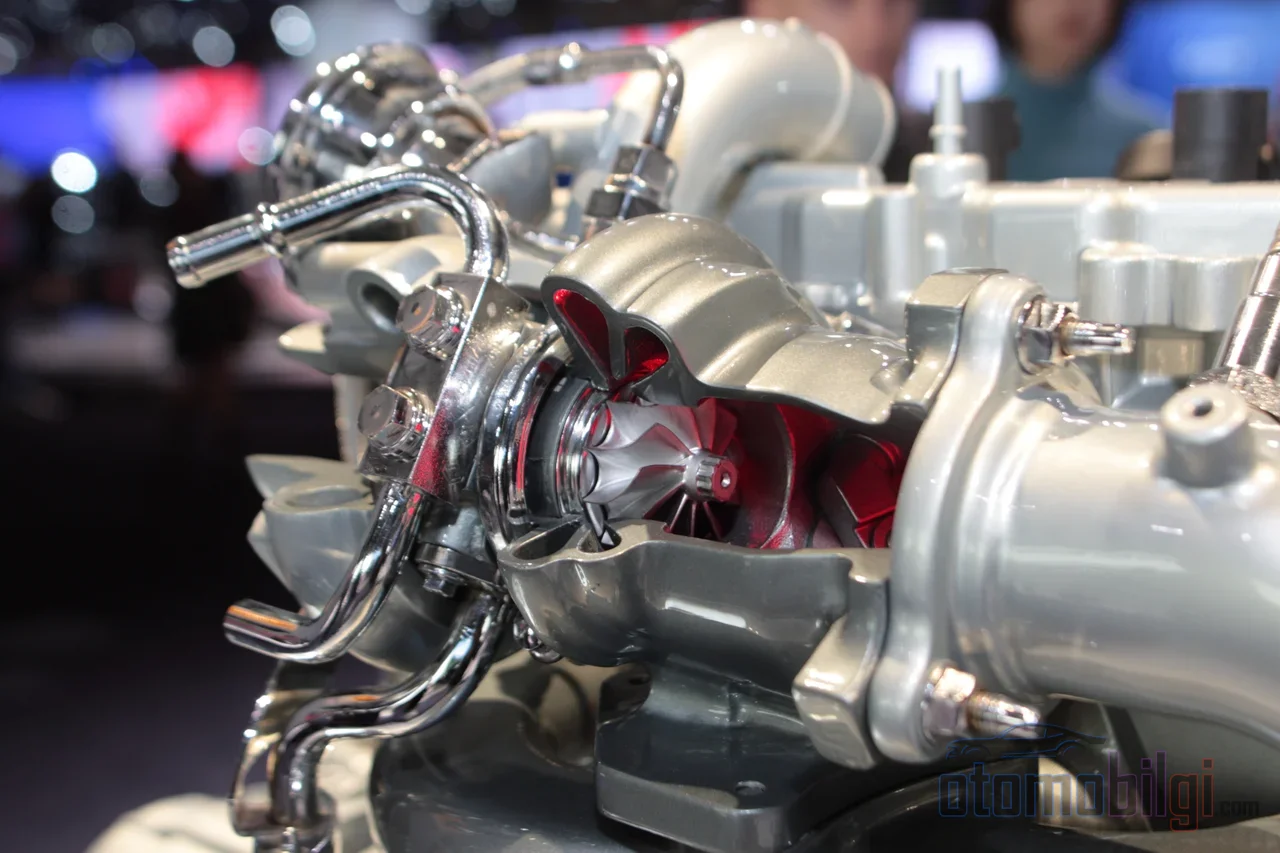
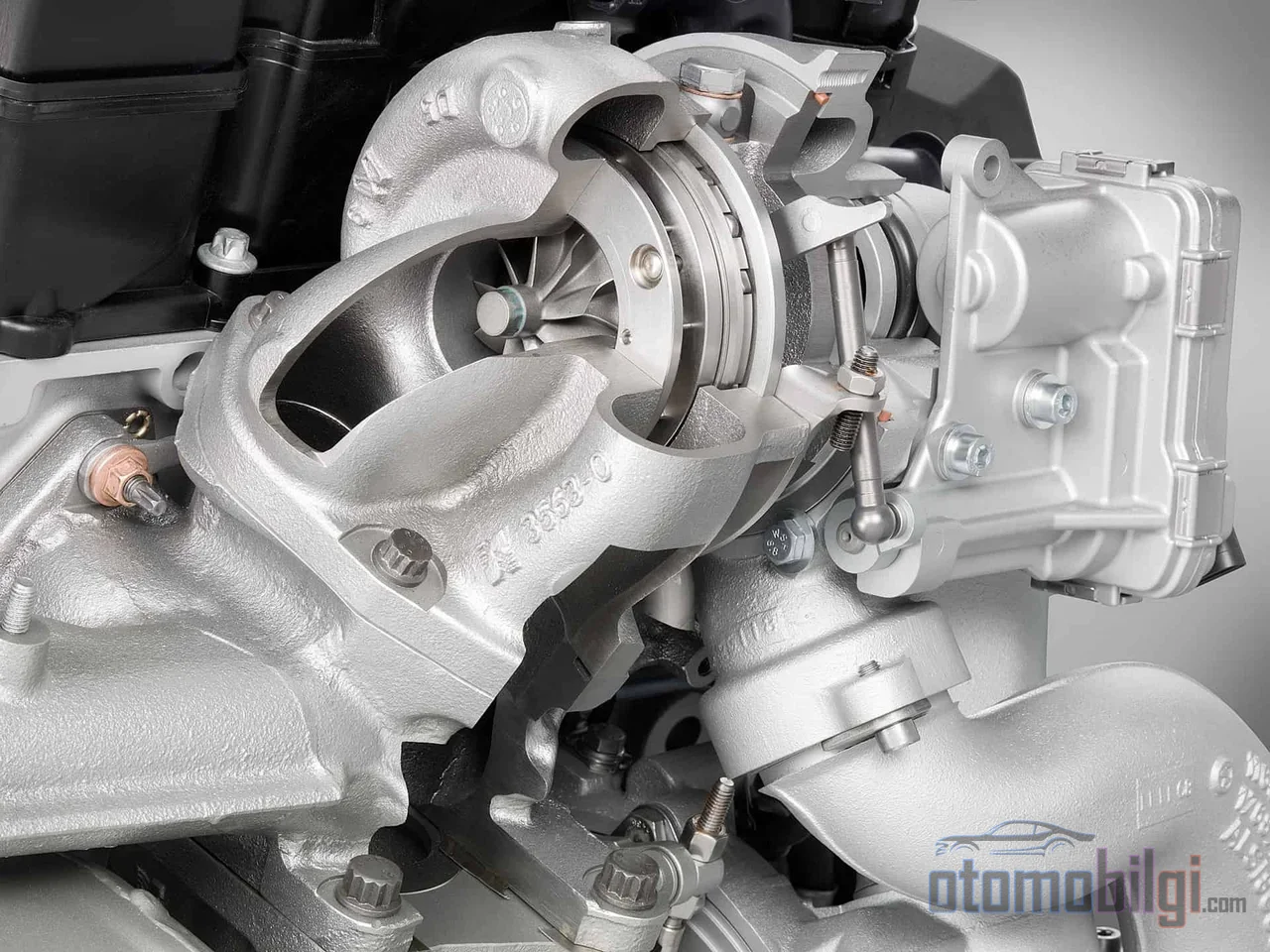
But the term twin-scroll often leads to misconceptions. There are no two compressor wheels, no two separate turbos, and no magical electronic unit. What is there is a single turbo, a single turbine wheel, and two separate exhaust channels leading to that wheel. In this article, we will explain step by step why a twin-scroll turbo splits the exhaust, how the cylinders are grouped, and how this architecture structurally reduces turbo lag.
What Exactly Is a Twin-Scroll Turbo?
A twin-scroll turbo is a turbocharger design in which the turbine-side inlet port is divided into two separate spiral channels. Each channel, that is each "scroll", directs the exhaust gas coming from its own cylinder group to a different region of the turbine wheel. The channels usually have different diameters: the larger channel is typically connected to the middle cylinders and sends gas to the outer edge of the turbine blade, while the smaller channel connects to the end cylinders and directs the gas to the inner surface, improving turbo response especially during acceleration.
The critical point is this: the system is not merely a split turbine housing. For the two scrolls to be meaningful, the exhaust manifold must also be designed with a split inlet architecture, and the correct cylinders must be routed to the correct channel. If you use a twin-scroll housing with an unsplit manifold, in terms of performance you effectively revert to a single-scroll system.
Another frequent confusion is the distinction between twin-scroll and twin-turbo. Twin-turbo means two complete turbo units; twin-scroll means two exhaust paths within a single turbo. In fact, an engine can even use two separate twin-scroll turbos. BMW's S63 V8 engine does exactly that: two turbos, four scrolls in total.
Why the Exhaust Can Drive the Turbine Inefficiently: The Pulse Interference Problem
To understand the origin of the problem, we need to look at the operating rhythm of the four-stroke engine. The crankshaft rotates 720 degrees, that is two full turns, for each cylinder to complete its four strokes. In a four-cylinder engine, a power stroke occurs every 180 degrees; in a six-cylinder engine this interval drops to 120 degrees, and in an eight-cylinder engine to 90 degrees.
In a single-scroll manifold, all of these exhaust pulses merge into a single channel. And this is exactly where the problem begins. When the high-energy exhaust gas of the next cylinder in the firing order opens into the manifold, the previous cylinder's exhaust valve may still be open. A pressure difference forms between the two gas masses, and the high-pressure new pulse pushes the low-pressure old gas backward. This backflow event pushes part of the intake mixture out of the cylinder, diluting the mixture and leading directly to a loss of power.
On the turbine side, the picture is as follows: the irregular, colliding pulses in the merged channel deliver a fluctuating, partially wasted flow to the turbine wheel instead of a steady, high-energy flow. The entire purpose of the twin-scroll design is to structurally eliminate this energy loss.
How Are the Cylinders Grouped?
Here lies the direct answer to the question in the article's title: the exhaust is split into two according to the firing order. The goal is to double the crank angle between consecutive exhaust pulses in the same channel, thereby ensuring that the valves of the two cylinders connected to the same scroll are never open at the same time.
Grouping in Four-Cylinder Engines
Nearly all four-cylinder engines use the 1-3-4-2 firing order. In this case, cylinders 1 and 4 are connected to one scroll, and cylinders 2 and 3 to the other. Thus, the interval between exhaust events in a single channel rises from 180 degrees to 360 degrees: one cylinder's exhaust valve does not open in the same channel before the other's valve closes.
Grouping is engine-specific and not a universal template; the firing order is always what determines it.
Grouping in Six-Cylinder Engines
In inline six-cylinder engines such as the RB26 and 2JZ, the firing order is 1-5-3-6-2-4. Here, cylinders 1, 2 and 3 share one scroll, while cylinders 4, 5 and 6 share the other. This arrangement also simplifies manifold manufacturing: the front three cylinders flow into one channel, and the rear three into the other. In single-turbo six-cylinder applications, there are also arrangements where two groups of three cylinders are connected to a single twin-scroll unit.
Highlights
- Twin-scroll doubles the interval between exhaust pulses in the same channel: in a 6-cylinder it rises to 240 degrees from 120, and in a 4-cylinder to 360 degrees.
- In a measured comparison, 21.1% more power and an additional 43.4 hp were achieved at 4,500 RPM.
- Reaching the 30 psi pressure target happened 400 RPM earlier; the 60-100 mph acceleration was reduced by 0.23 seconds.
- A turbine efficiency increase of up to 7-8% and a fuel consumption improvement of up to 5% were reported.
- A single turbo housing is not enough: without a matching split manifold, the system operates like a single-scroll.
The Difference in Turbo Lag in Numbers
So what does this architectural change deliver in the real world? Comparative test results conducted on the same engine with the same turbo housing sizes give a clear answer to the question. In a 2.4-liter turbocharged, E85-fueled experimental engine, single-scroll and twin-scroll manifolds were compared with housings of the same A/R ratio.
| Engine speed (RPM) | Torque / power gain | Percentage power increase |
|---|---|---|
| 3,000 | - | 4.8% |
| 3,500 | - | 11.5% |
| 4,000 | - | 16.3% |
| 4,500 | +50.7 lb-ft torque, +43.4 hp | 21.1% |
| 5,000 | +64.8 lb-ft torque, +61.7 whp | 20.7% |
| 6,000 | - | 4.1% |
| 7,000 | - | 0.2% |
The pattern emerging from the table is clear: the gains peak in the mid-rev range and start to fade at very high revs. The reason is simple: at high revs, pulses are already more frequent, and the timing advantage between the two scrolls physically shrinks. This is why technical evaluations on the manufacturer side limit the twin-scroll advantage specifically to low and mid engine speeds.
Response and Acceleration
Boost onset came noticeably earlier: the twin-scroll setup reached the 30 psi target at 5,100 rpm, while the single-scroll waited until 5,500 rpm. The time to reach the same boost target was about 0.6 seconds longer on the single-scroll side. In rolling accelerations from 45-80 mph, the twin-scroll managed 2.93 seconds versus 3.42 seconds for the single-scroll; from 60-100 mph, it measured 1.75 versus 1.98 seconds.
The most striking analogy summarizing the effect is in terms of displacement: the 2.4-liter engine produced torque like a 2.7-liter engine at 3,500 rpm and like a 2.9-liter engine at 4,500 rpm. In another test, the velocity difference between manifold channels in the twin-scroll setup stayed within 4 percent, while it reached 15 percent in the single-scroll. This is a direct indication that mixture losses were effectively eliminated and that maximum pulse energy reached the turbine wheel.
Advantages and Limitations
The list of gains from twin-scroll architecture is not limited to power alone. Among the system's documented advantages are faster boost response, an increase in low-rev torque, reduced pumping losses, lower fuel consumption, lower exhaust gas temperature, increased turbine efficiency, and reduced mixture dilution during valve overlap. In overall figures: a 7-8% increase in turbine efficiency and up to 5% fuel efficiency improvement have been reported.
The limitations are also real. The divided manifold and divided turbine housing are complex cast parts; their production and assembly costs are higher than those of the single-scroll. Moreover, the system requires a custom manifold designed according to the engine's cylinder layout; retrofitting only a twin-scroll housing onto an existing engine is of no use. Its superiority at high engine loads and high revs has not been proven; quite the contrary, if maximum top-end power is the goal, the simpler and cheaper single-scroll can be preferred.
A fine point for detail enthusiasts: if an external wastegate is to be used, the best performance is achieved with two wastegates, one for each scroll, instead of a Y-pipe.
Which Engines Is It Meaningful For?
Twin-scroll is the weapon of upper-segment gasoline engines that demand high torque especially at low revs. The ideal displacement range is considered to be between 1.5 and 2.5 liters; it is generally not preferred in three- and five-cylinder engines. Historically, Mitsubishi has been using this technology in the sportiest versions of the Lancer Evo since 1996. Applications such as the JDM Impreza of Toyota and Subaru also provide examples of the twin-scroll preference.
The technology is not new either: we are talking about a solution known as split entry, which was introduced roughly 30 years ago, then forgotten and later became widespread again. Today, variable twin-scroll designs that combine a variable geometry turbo with twin-scroll try to merge the advantages of both approaches by directing the exhaust flow into a single scroll when needed, with the help of a valve. There are also differences at the manufacturer level: some manufacturers, instead of conventional twin-scroll where the channels share a small common passage just before the turbine wheel, use a dual-volute design that provides more complete separation.
Short Answer: Why Does Twin-Scroll Split the Exhaust in Two?
The summary of the summary is this: in a four-stroke engine, when the exhaust pulses of cylinders that fire one after another merge in a single channel, they collide with each other, create backflow, and deliver irregular energy to the turbine. A twin-scroll turbo divides the cylinders into two groups according to the firing order and feeds each group into its own channel, doubling the interval between pulses. This way, the two valves connected to the same scroll are never open at the same time, mixing loss is eliminated, and the turbine wheel is driven by a more regular, more energetic flow. The result is measurable earlier torque and reduced turbo lag; it is not the disappearance of lag, but a comparative reduction within a well-defined system.
Looking at it from the purchase or project side, the decision criterion also becomes clear: if low and mid-range response, a wide usable torque band, and efficiency are the priorities, twin-scroll is a strong choice. On the other hand, if there is cost pressure, a simpler setup, or a goal of maximum power focused on high revs, single scroll is still a defensible engineering decision.
Sources
- The Great Divide | Twin Scroll vs. Single Scroll Turbo Test
- Twin-Scroll Turbo: What Changes and What Does Not
- What Is a Twin Scroll Turbo?
- Twin-scroll turbo - Autozine Technical School
- Single Scroll vs. Twin Scroll Turbocharger
- Turbo Lag: Causes, Effects and Solutions - Garrett Motion
- A Look At Twin Scroll Turbo System Design - MotorTrend