Why Are Door Handles Disappearing From Cars?
Share This Page
You walk up to an electric car plugged into its charger, reach for the door and... your hand is left hanging in the air. No handle. A second later it pops out with a click, then retracts back inside. It made me curious: Does a car become sleeker when its door has no handle, or are we going to start warming our doors with a hairdryer on a frozen winter morning? Over the past two years, door handles have become the most controversial part of the automobile - even China has issued a ban. Let's take a look at what has happened to this little piece of plastic.
Before the Design Glamour: Is the Handle a 70-Year-Old Dream?
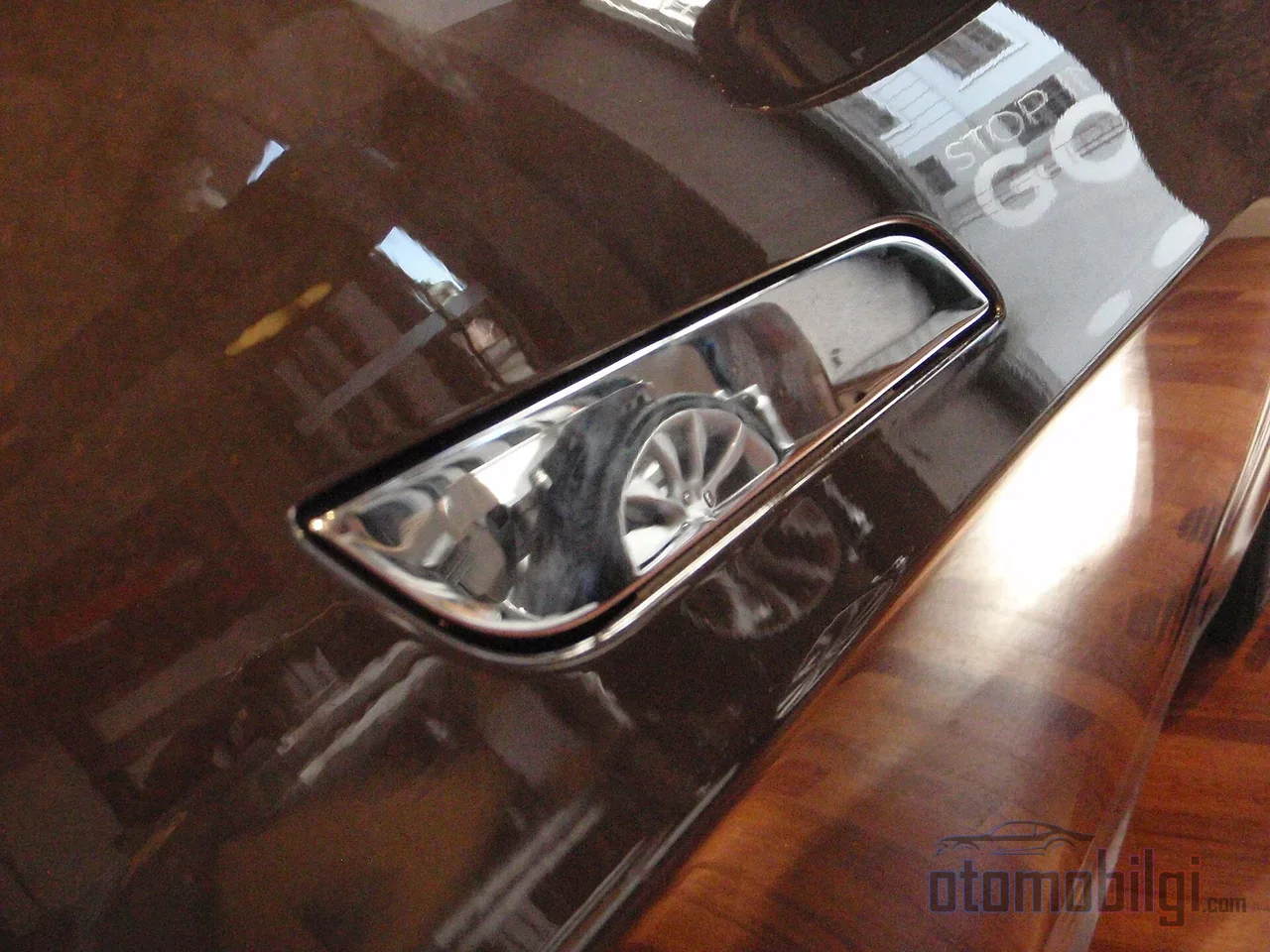
You'll be surprised, but the idea of a hidden door handle is not new at all. It first appeared in 1954 on the legendary gullwing Mercedes-Benz 300SL. Back then it was a showpiece: The handle was designed as a mechanical surprise meant to appear when you opened the door. In other words, it existed for design flair, not aerodynamics.
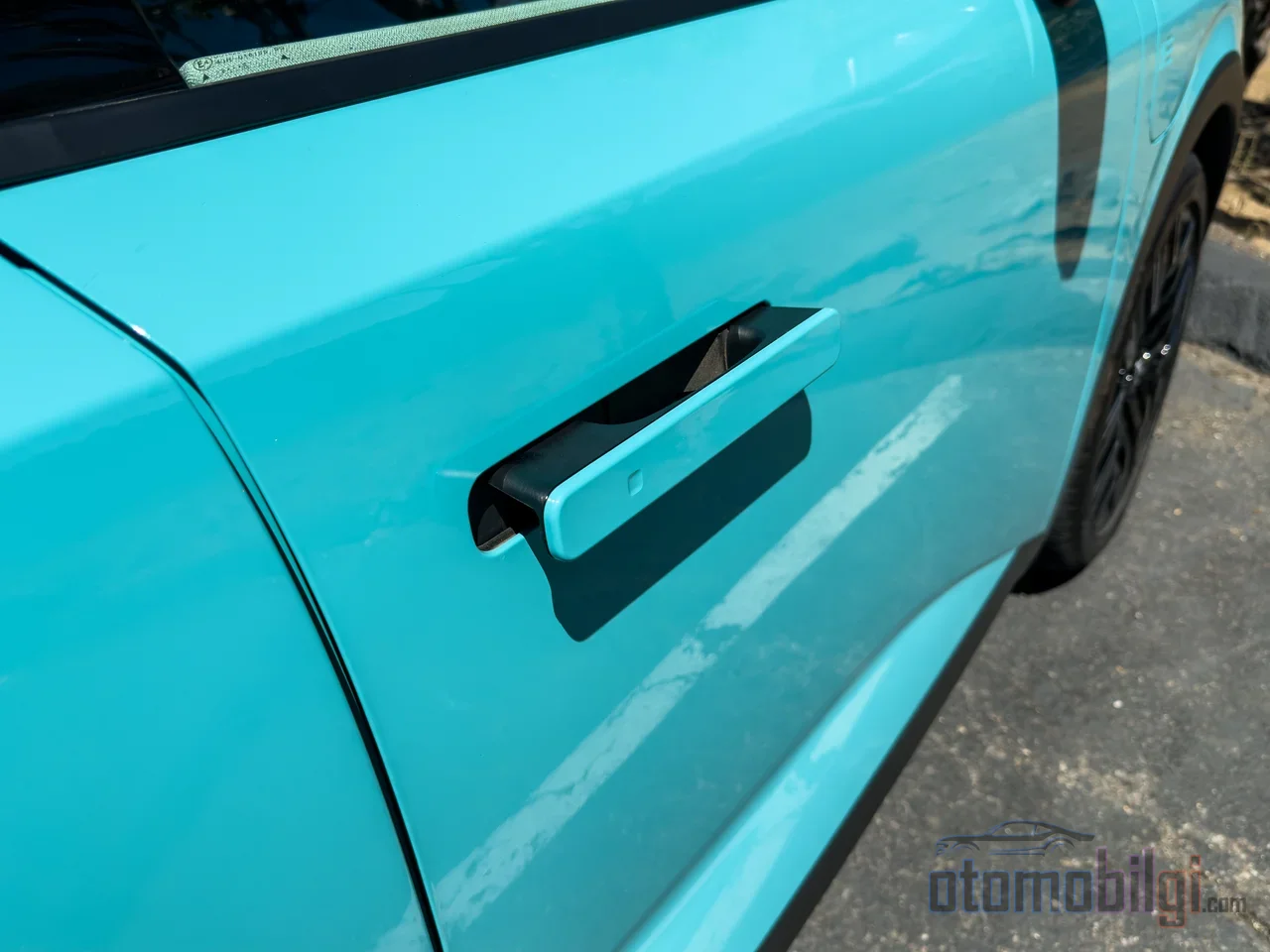
Then in 2012, the Tesla Model S took the stage and reinvented the handle: It tucked flush into the body while driving and extended electrically when the driver approached. This little touch was so impressive that, from the 2010s onward, it became the signature of nearly every new electric car. Today the Tesla Model 3, Model Y, Model X, Hyundai Ioniq 5 and Ioniq 6, Kia EV6 and EV9, BMW iX3 and countless Chinese models use the same solution. In the US market, meanwhile, hidden handles in various forms can be found on some models from Audi, BMW, Chevrolet, Fiat, Ford, Genesis, Lexus, Lincoln, Maserati and Volvo. The Lexus NX stands out as the first model to implement the brand's electronic door-opening system. In short, this is not a trend anymore - it's practically a standard.
Key Takeaways
- The first hidden door handle was used on the Mercedes-Benz 300SL in 1954.
- A protruding handle increases the drag coefficient by only about 0.001.
- Electric hidden handles add about 8 kg to the vehicle with extra motors and sensors.
- As of January 1, 2027, China will require mechanical door opening on all doors.
- In August 2026, a total of 4.27 million vehicles from nine manufacturers were recalled over this issue.
The Aerodynamic Truth: How Much Range Does That Little Handle Really Cost?
Engineers' excuse is always the same: air resistance. Let me explain simply. As a car cuts through the air, the air clinging to the body's surface creates vortices when it hits protrusions like door handles. These vortices act as if an invisible rope is pulling the car backward - this is called drag. In an electric car, the longer that rope, the faster the charge runs out.
So how much does a protruding door handle add to that rope? According to measurements in aerospace engineering literature, protruding handles increase the drag coefficient by only between 0.0003 and 0.0014. In a typical electric car, that means a range difference of about 1 km per charge. There are also estimates that take a broader view: hidden door handles can improve the drag coefficient by roughly 0.01; but to calculate the real effect, the vehicle's frontal area also has to come into play. So the figure changes depending on how you define the measurement, but the magnitude always stays in the same neighborhood: small.
On the other side, there is the cost. The motors and sensors in electric flush-folding handles add roughly 8 kg of extra weight to the vehicle - which can eat up the very range they save. Another interesting detail: manufacturers do not share exact figures on how much these handles actually contribute to range. Models like the Mercedes-Benz CLA achieve impressive values such as 0.21 Cd, and the hidden handles play a part in that; but it is also true that the handles alone are not worth filling the battery for. After reading the story of the handle frozen in winter, you will decide for yourself how sensible this trade-off seems to you.
Freezes in Winter, Won't Open in a Crash: What Happens in Practice?
The design may look perfect, but cars don't live in the office - they live on the street. The best-known problem of hidden handles comes with winter: When snow and mud fill the narrow gap where the handle sits flush with the body, the mechanism can lock up completely. Hyundai Ioniq 5 owners report that the handles get stuck in ice due to freezing, and that even the charging port fails to open. Opening them with a thick glove on, or one-handed, is a separate ordeal. And there is another detail nobody likes: every manufacturer makes you open the handle in a different way - there is no common standard.
The more serious side is safety. When the vehicle's power runs out or the electronic system fails, flush handles can stop functioning. In a crash, every second counts for the people inside to get out; if the handle won't open, those seconds are lost. Indeed, two fatal Xiaomi electric vehicle crashes in which the doors reportedly could not be opened after power loss triggered China's massive recall. When an electronic component turns the simplest action - opening a door - into a software matter, the consequences get heavier too.
Meanwhile, to be fair: there are also users in forums and owner groups who say they have never experienced the problem. But anecdotes cannot take precedence over regulations, especially in the safety debate.
China's Ban and the Recall: Regulators Take the Field
The center of developments is currently China. The country approved the GB 48001-2026 national standard, which makes safety technical requirements for door handles mandatory, on January 28, 2026; the standard will enter into force on January 1, 2027 and be fully implemented for all newly produced vehicles by January 1, 2029. The essence of the new rules is this: All doors except the trunk must be able to open mechanically from inside and outside, the exterior handle must have a hand operating area of at least 60×25×20 mm, and the interior emergency release must be located within 300 mm of the door edge and marked with a permanent marking of at least 10×7 mm.
Even more surprising was what came on August 21, 2026: A total of 4.27 million vehicles were recalled in China from nine manufacturers - including Tesla, Xiaomi, XPeng and Geely. This is the largest single recall in Chinese automotive history. Tesla's share is 2.98 million vehicles; covering the Model 3, Model Y, Model S and Model X produced between 2019 and 2026. Tesla's defect was that the interior emergency release mechanism was hard to find; the solution was warning labels and a software update that automatically lowers the windows at the moment of a collision.
Where Are the US, Europe, Japan and Korea?
On the US side, an investigation was opened in September 2025 regarding approximately 174,000 units of the 2021 Model Y; the complaint concerned electronic locks failing when the 12-volt battery weakened. Then on July 24, 2026, NHTSA began preparations for a new safety rule that will mandate a clearly identifiable emergency exit mechanism in all new vehicles - because the current federal door standard has been in effect since 1968, even before the Moon landing, and does not regulate the location of hidden handles at all. US Representative Robin Kelly also introduced a bill requiring a power-independent manual release device. According to a count reported by Bloomberg, at least 15 people lost their lives in 12 incidents where Tesla vehicle doors could not be opened after a power loss. The regulation is estimated to be completed only after 2030.
On the European side, UNECE has been running a working group on emergency door opening since 2025, and the revision of the UN R11 regulation was discussed at the February 2026 meeting; the continent is still at the pre-legislative stage. Japan is integrating UN R11 directly into its national legislation. The country has its own gesture as well: In the new Leaf going on sale in January 2026, Nissan implemented electric handles that retract inward when speed exceeds 25 km/h; they are meant to open when a collision is detected, but it is noted they may not open depending on the severity. In South Korea, there is not yet a standard specific to hidden handles; international discussions are being monitored.
"Are Cars Sleeker Without Handles?" - The Complaint of Aesthetics and Middle-Ground Solutions
Designers see it quite differently. A protruding handle is an obstacle that breaks the uninterrupted line of the side profile. Once the handle is gone, the body remains a single, clean surface, giving the car a genuinely "from the future" feel. This passion for surface cleanliness is so strong that some brands have removed the handle entirely, leaving only sensor-based opening. A note for the curious: There is also a more modest example - the Nissan GT-R has for years used mechanical flush handles that pop out from the other side when pressed; no electricity, no magic.
But not everyone is convinced. In user discussions, doors without handles are described as "strange, like a panel gap"; some say these handles are today's pop-up headlights - they look up at the sky, carry unreliability, and their real purpose is to look cool. The tech press, meanwhile, has openly called hidden handles the industry's newest safety problem. The middle ground that has emerged is also sensible: Mechanical semi-flush handles, like those on the Volkswagen ID.4, both look pleasing to the eye and can be operated by hand without electricity; they have no separate motor.
So the honest answer to the question "does the car look sleeker without handles?" is this: Yes, the surface is cleaner and the profile more elegant. But if the price of that sleekness is a mechanism frozen to the ice on a winter morning and giving up a mechanism that could save lives in a crash, then in my view that price is a bit steep. If you complicate the simple act of opening a door to gain about 1 km of range, that's the trade-off that needs questioning - and when a trend spreads across the whole industry, not every manufacturer's implementation quality is the same.
At the End of the Road: What Does the Future Hold for Door Handles?
Let me summarize. Hidden door handles are one of those rare design moves where aesthetics and aerodynamics sit at the same table and agree; their history goes back to 1954, too. But when the gain side is measured, the figure is small, while the risk side is now documented with bans and recalls involving millions of vehicles. China's mechanical release mandate takes effect on January 1, 2027, the US has begun preparing a new rule, and Europe and Japan are moving. In my view, here is the picture we will see in the near future: Handles will remain flush in appearance but carry behind them a mechanical backup that works in every condition - both sleek and in safe hands. And I ask you: Next time, when your hand reaches for the door of a sensor-laden, handle-less car, will you feel richer, or will you look for the handle? In my view, it could be either; the real issue is that the door opens under all conditions.
Sources
- Flush Door Handles: Did Automakers Sacrifice Safety and Convenience for Just 1 km of Range? - BigGo Finance
- Flush door handles are the car industry's latest safety problem - Ars Technica
- China will ban hidden door handles on cars starting in 2027 - AP News
- Tesla's door handles may spur new US safety rules - TechCrunch
- US to Begin Work on New Car Door Safety Rules - Bloomberg
- The Federal Door Standard Is Older Than the Moon Landing - vehicle-safety.org
- The Pros and Cons of Hidden Door Handles - 36kr
- Hidden Door Handle - Baidu Baike
- Controversial Car Door Handle Design and Safety - Kwik-Fit
- Six cars with hidden door handles - Carsales
- Are flush door handles the new safety problem of cars? - Chip.com.tr
- Hidden door handles on cars are being banned - Habertürk
- Hidden door handle alarm after fatal accidents - Evrensel
- Design and Manufacturing of a New Car Door Handle - Fırat University Journal
- Ioniq 5 frozen handle complaint - Reddit r/Ioniq5
- Thoughts on hidden door handles - Reddit r/cars
- Non-retractable door handles discussion - Hacker News