Why Is the Trend of Two-Tone Cars Back?
Share This Page
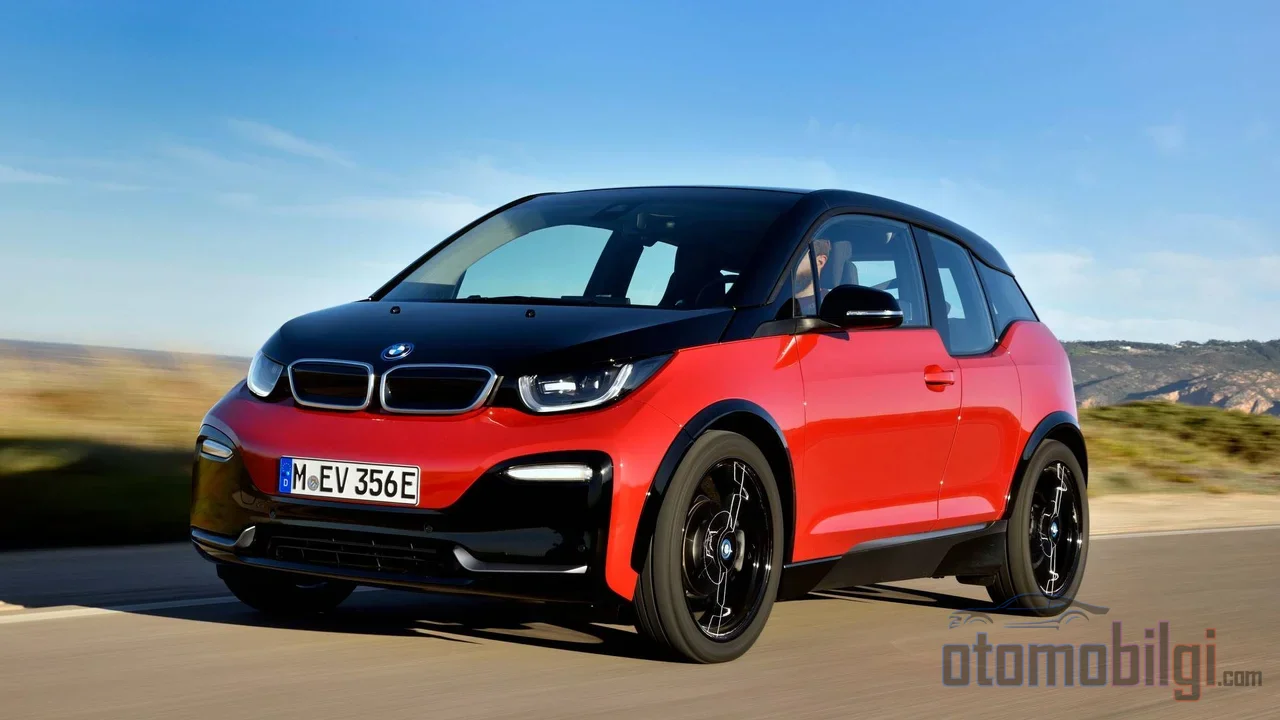
While stuck in traffic, look around: white, gray, black, silver... We are practically in a color famine. Then a car passes by on the other side of the road; its body is one color, its roof is a completely different color. You instantly turn to look, don't you? That surprise is exactly the magical power of a two-color body, in other words two-tone. So how did this style, which was considered nearly dead a few years ago, return to the showcase of the most expensive cars today?
The 1950s: The Golden Age of Two-Tone Cars
The idea of a two-color body did not explode out of nowhere in the 1950s; it was born in the very heart of that euphoric atmosphere of postwar American design. In the boom years, cars were no longer just a means of transportation; they were a showcase of success and adventure. For the first time, people truly began to personalize their cars: vivid yellows, blue-green tones, copper browns... Fashion was moving at full throttle, and two-tone was the most coveted part of that wave.
The numbers are enough to tell how colorful the era was: Even Daimler-Benz, in years when it produced more than 100,000 vehicles a year, was offering only 23 different two-tone paint schemes in 1956; the single-color option was 26. So even one of the world's most serious engineering brands had fallen under the spell of two tones.
In America, the situation was even crazier. The 1957 Chevrolet's combination of Sierra Gold with ivory is still counted among the classics of the era today. That warm tone, somewhere between copper and gold, practically glowed on a body divided by chrome lines. Some models, like the Packard Caribbean, even used three colors; three-tone vehicles lined the showrooms of Chrysler and Dodge. The accent color was first on the roof, then moved down to the body, and returned to the roof again in the early 1960s. It was practically a fashion, and it certainly behaved like one.
Highlights
- In 1956, Daimler-Benz was offering 23 different two-tone schemes in its single showroom lineup.
- A two-tone car spends about 8 hours in the paint shop today; 2 hours longer than a single color.
- Design and production for a Rolls-Royce can take up to 800 hours.
- In Türkiye, white's years-long leadership ended in the first quarter of 2026; gray took the top spot.
- The 2026 Range Rover SV comes with a special Bespoke color palette and two-tone themes.
Why Did It Suddenly Disappear? Fashion, Cost, and the Return to Single Color
Here comes the painful truth of the story: what killed two-tone was cost and the nature of fashion. Two-color paint was far more expensive and laborious than a single color; the body had to pass through the paint shop twice, and every color boundary had to be masked and protected by hand. So double the labor for every car. Manufacturers, of course, did not accept this easily.
There was also the fashion factor. In the mid-1950s, even Cadillac had meticulous charts about which color would pair with which; the combinations were a matter of serious expertise. But in lean years, controls loosened. The 1958 Studebaker hitting the roads in a color match outside even the 32 approved factory combinations is a classic example. So once amateurism got involved, the results became comical.
Then, when imported, plain, single-color cars appeared on the scene, American manufacturers quickly switched to single-color schemes too. There was a brief attempt at revival in the late 1970s, but throughout the 1980s the flame died out completely. By the time we reached the 1990s, the two-tone body had turned into an almost folkloric detail. Practical touches like the white roof (which made sense in an era when air conditioning was expensive and rare, keeping the cabin cool) also lost their meaning as technology advanced.
The Great Comeback: Why Did Rolls-Royce and Range Rover Choose Two-Tone?
A good question. The answer waiting in the wings is this: two-tone came back, but it is no longer a mass trend - it returned as a luxury and personalization tool. Considering that CNBC wrote back in 2018 that two-tone cars were returning to the scene, today's picture is that early signal fully matured.
Rolls-Royce has taken up the banner of this comeback. The brand presents each of its cars as a bespoke, hand-built work of art; for a single Rolls-Royce, 60 engineers, craftspeople, color experts and sculptors work, and the design-production process can extend to up to 800 hours. The hand-applied black-Monteverde green combination on the Phantom, the amber-inspired two-tone exterior counted among the best bespoke orders of 2023, and the two-tone Ghost Extended introduced as the first Private Office order of a Dubai-based company... The list goes on and on. Even on the brand's own Instagram page, it is emphasized that gradient, that is, gradually transitioning two-tone paint, is technically one of the most complex paint types. That claim is no exaggeration.
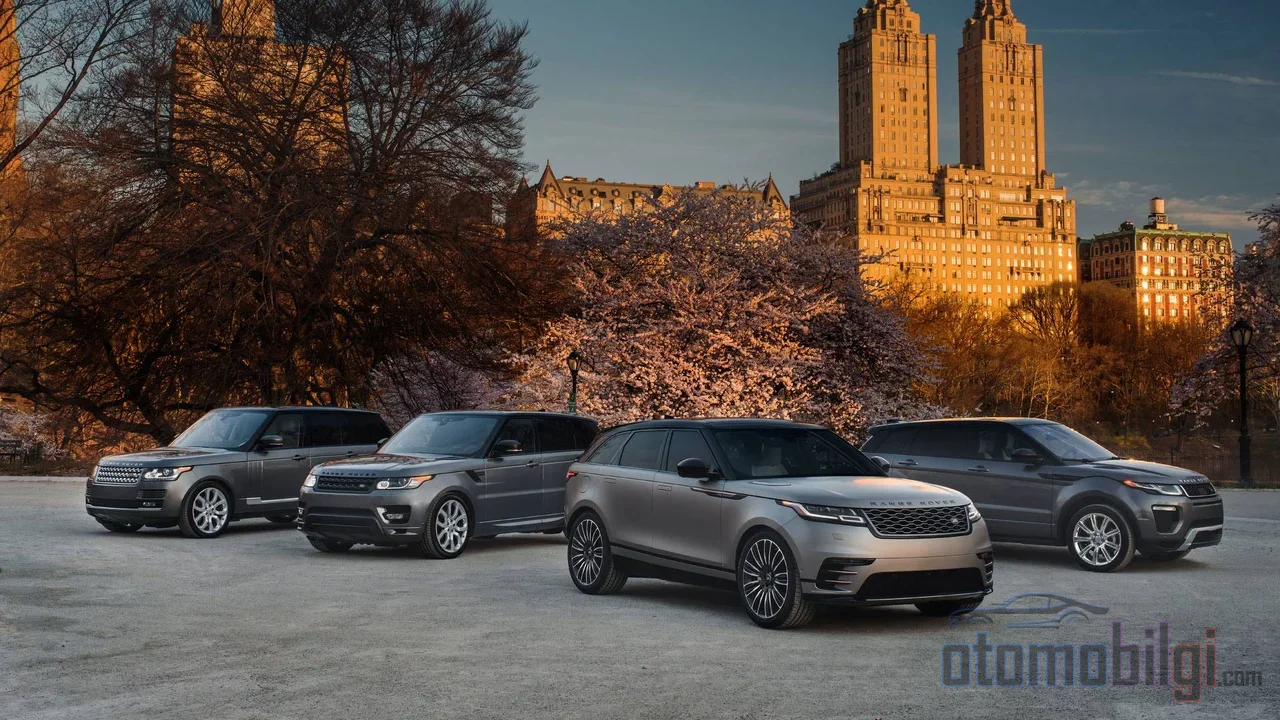
Range Rover, meanwhile, takes things one step further. The brand's special "Duo-Tone Fade" finish creates a seamless transition between two colors - not the classic chrome-lined separation, but essentially a gradient effect. The 2026 Range Rover SV, with its "Intrepid" and "Serenity" themes, offers two-tone palettes, ceramic controls, and access to Bespoke ultra-metallic colors. So two colors are no longer a cheap retro gesture, but a refined touch.
MINI, Toyota and the Two-Tone Renaissance of Small SUVs
So what happened outside the luxury segment? This is where MINI's role becomes critical. The brand brought the classic two-tone scheme of the 1960s back to the US market in the 2000s, and for a time it was the only manufacturer offering it. Then Toyota moved to two-tone with the C-HR; followed by similar options appearing in small SUVs from Kia and Mazda. In short, led by MINI, two-tone leapt from the luxury segment into the compact SUV world.
Nissan's two-tone version of the Juke is one of the best examples of this leap. On the production line, "a combination of craftsmanship and robots" works together: the doors are painted by hand, while robots handle the rest of the body. So two colors can now be the signature not only of luxury cars upholstered like a living room, but also of the ordinary models we see on the street.
How Is Two-Tone Paint Applied? The Hidden Burden of Production
Let's look at the technical side, because this is where things get really tough. In the classic method, the vehicle needs to pass through the paint shop twice; extensive manual masking is done for the color boundaries, and the double baking times place a huge burden on production. Painting a two-tone vehicle takes about 8 hours - 2 hours longer than a single-color vehicle. Paint equipment manufacturers openly state that this means serious cost, labor, time and energy. But technology has come to the rescue: Dürr announced a solution that for the first time makes fully automatic two-color painting possible; Renault is producing the two-tone paint on the roof and hood of the Renault 4 E-Tech electric in flawless quality with a new technology called "Jetprint Paint".
So the two-tone body used to be a production bottleneck; today, that bottleneck is being broken with robots and new painting methods. This is perhaps the strongest guarantee of the trend's sustainability.
The Color Chart in Türkiye: Where Two-Tone Stands as Gray Takes Power
Now let's turn the map to Türkiye. In the first quarter of 2026, the long-standing white car leadership in our country came to an end and gray color settled at the top. In the first 7 months of the year, gray took a 41.6% share of new cars. The picture is similar worldwide: black is the second most preferred color globally; according to Forbes, gray tones have followed a slow but steady rise over the past 20 years.
Where does the two-tone body fit into this picture? Here is the beautiful part: even in an environment where gray and white form a social wave of uniformity, two tones are returning at the top segment as a tool for "standing out". So the increasingly monotonous traffic is pushing two-tone even more toward luxury showcases. There is no direct source on current models offering two-tone in Türkiye, but based on the global offerings of small SUVs like the C-HR, it would be no surprise to see this style jump to models we will also see in our country.
Is the Fashion for Two-Tone Cars Back? The Answer Is Here
Yes, it is back - but not in its previous form. The two-tone of the 1950s was a mass fashion; today's two-tone is a luxury and personalization feature. Rolls-Royce and Range Rover make it part of hand-applied production processes that can extend to 800 hours; MINI, Toyota, Kia, Mazda and Nissan bring robot-assisted, more accessible versions to compact SUVs. The breaking of cost and production difficulty through robotic hybrid systems and innovations like Jetprint is the strongest clue that the trend will not fade again.
Still, let's add a note of caution: how long this style of design will last is uncertain. It might last a decade, then fade. But even then, we will not forget this: the closer expensive cars get to black, gray and white, the more color and two tones return at the top segment as a way to make a difference. Two colors, it seems, are not dying in car culture - they are just changing clothes.
Which modern model do you think looks best in a two-tone body? I have a very clear idea about my budget: The combination of Monteverde green and black, like that Phantom, still reigns supreme in my book.
Sources
- History of Automotive Colors | PPG Auto Coatings
- CC Color Commentary - Two Strange Two Tones - Curbside Classic
- Tired of being monochromatic? Two-tone cars stage a comeback - CNBC
- Two-Tone Cars and SUVs of 2025 and 2026 - KBB
- Discover Bespoke - Rolls-Royce Motorcars
- Rolls-Royce is Bespoke - Rolls-Royce Prague
- Rolls-Royce's 10 Best Bespoke Commissions Of 2023 - CarBuzz
- Two-tone Rolls-Royce Ghost Extended is company's first Dubai commission - Motor1
- 2026 Range Rover Colors - SV Bespoke palette
- Nissan combines craftsmanship with robots to deliver the two-tone Juke
- A two-tone finish - Automotive Manufacturing Solutions
- Dürr enables fully automated painting of cars in two colors
- BASF Coatings champions collaborative innovation
- Jetprint Paint - Renault Group
- Where Have All The Colorful Cars Gone? - Forbes
- The most preferred car color has been revealed (Turkish Statistical Institute) - OdaTV
- The world's second most popular car color - Yeni Safak
- Which colored vehicles sell the most on the second-hand market - Sigorta Gazetesi