Do Fuel Additives Really Work?
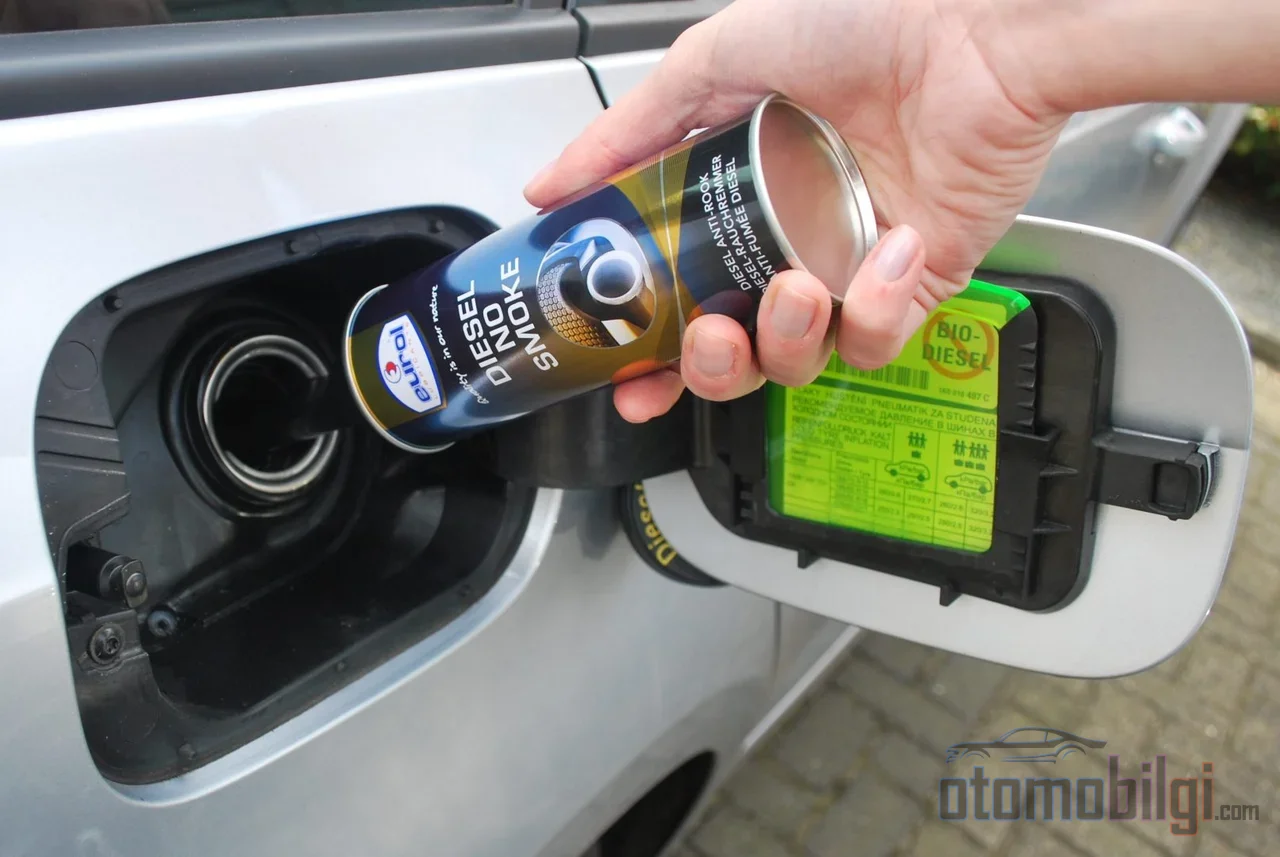
It's as if a small pincer has been set up between the shelf next to the fuel station's cash register and the market's auto corner: injector cleaner on one side, octane booster on the other, every label promising more power, lower consumption, and longer engine life. An average user stands in front of these shelves a few times a year and asks the same question: do these bottles actually do anything, or are they an entrenched habit sold at shelf price? The answer to this question is not a single word; it varies depending on the type of additive, the condition of the engine, and the size of the expectation.
What's on the Shelf: The Four Main Types of Fuel Additives
The products sold under the "fuel additive" heading on the market actually fall into four families that do quite different jobs. Most of the confusion arises from not making this distinction, because each type's effect and conditions for working are different.
- Injector cleaners: Detergent-based products aimed at dissolving carbon deposits accumulated in the injector and intake port. The most common category on the shelf.
- Octane boosters: Compounds that try to raise the fuel's resistance to knocking (octane number). They don't promise cleaning; they promise knock resistance.
- Diesel additives: With tasks such as improving lubricity, raising the cetane number, and preventing paraffin crystallization in winter, the technically best-documented group.
- Moisture and water removers: Products claimed to prevent the water in the tank from mixing with the fuel. The category with the least independent data available.
Highlights
- In independent dyno tests, 70% of fuel additives, below 1% provide measurable performance gains.
- The most effective cleaning chemical is PEA (polyetheramine); quality formulas contain 25-35% PEA by volume.
- The most verifiable benefit of diesel additives is the improvement in lubricity.
- Top Tier certified gasolines carry 2-5 times more detergent than the minimum legal requirement.
Do Injector Cleaners Work?
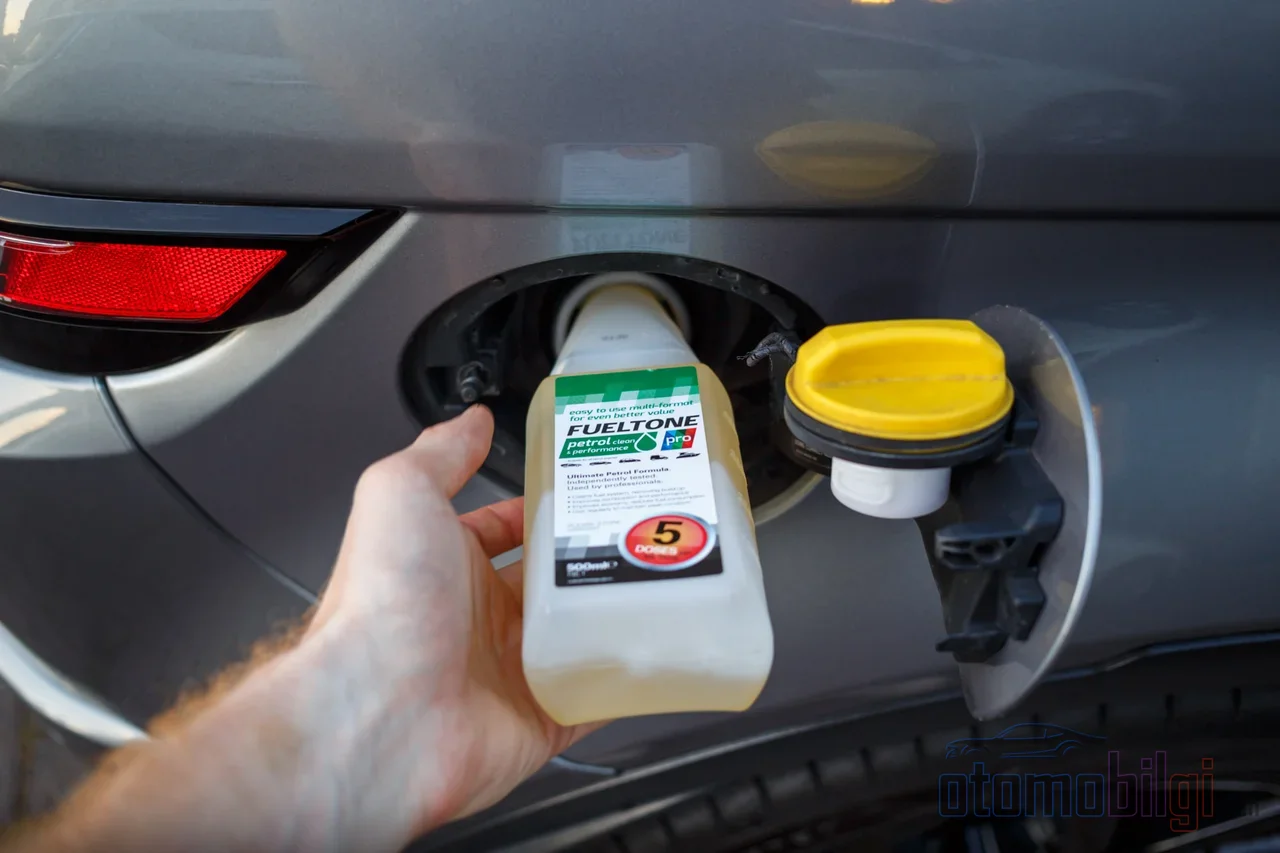
The most solid independent answer to this question comes from a laboratory study conducted with two high-mileage test vehicles. The injectors of a 210,000-kilometer Acura Integra and a 190,000-kilometer Turbo-II RX-7 were subjected to flow testing at an independent injector test laboratory. The result was unexpected: despite that mileage, the injectors were working so consistently that the test expert was in a position to question whether there was anything to improve. Pouring chemicals into a clean system, of course, produces no measurable gain.
The critical distinction here is this: cleaners cannot clean injectors that aren't dirty, nor can they repair a mechanically failed injector. In a low- to medium-mileage, regularly maintained vehicle, the money spent on bottle cleaners is most likely wasted. Even the additive manufacturers themselves partially admit this fact: with regular use, products can dissolve accumulated deposits and prevent new ones from forming, but the magnitude of the effect depends on fuel quality and the engine's age.
Legal detail: the strength of the chemical sold on the market
A second obstacle is a matter of chemistry that escapes the user's attention. Emissions rules effectively limit the strength of cleaning chemicals that can be sold for vehicles used on the road. Formulas capable of dissolving a truly deep and heavy deposit layer must be significantly stronger than what is sold in the bottle. In other words, the scenario where the product is claimed to provide the most benefit - a very dirty system - is exactly the scenario where the shelf product has the hardest time reaching. For long-term heavy deposits, additive manufacturers' own technical documentation notes that a higher concentration is required compared to pump gasoline.
Why PEA Is a Separate Category
This detail matters because the shelf products are not all the same. Polyetheramine, or PEA for short, is a solvent chemical that dissolves carbon deposits, and because it can withstand combustion temperatures, it is considered the most effective injector cleaning component capable of reaching deep deposits. Quality formulas with documented cleaning efficacy contain 25-35% PEA by volume. There is support on the academic side as well: Oil analyzed in a test engine using a PEA-based additive showed a 73% improvement in oxidative stability. It is also known that PEA is already added to quality gasolines at the factory - we will see shortly what this detail means.
Do Octane Boosters Really Increase Power?
The most common misconception around octane is the belief that high-octane fuel is more "energetic". The truth is this: the octane number measures the fuel's resistance to premature ignition - knocking - not the fuel's energy content. An octane booster raises this resistance; it does not clean the fuel system, does not improve fuel economy, and does not produce power on its own.
Power becomes noticeable only under this condition: if your engine's ignition timing has been retarded due to knocking and the booster suppresses the knock, the electronic control unit can recover the timing. In other words, the gain is the portion reclaimed from the engine's own restriction - it is not power produced from empty gasoline. Additive manufacturers also state this point explicitly: an octane booster is a fuel treatment, not a tuning tool, and should not be used as a substitute for proper engine tuning.
Compound selection is a separate matter. Probably the most effective among common boosters is MMT; but it leaves unwanted deposits and its use is not legal for road vehicles - it is suitable only for closed-course and off-road use. The practical calculation leads to the same conclusion: in a modest engine with a mild and occasional knock problem, the correct dose might make sense, but if there is a constant need, buying gasoline of the correct octane grade is both more effective and cheaper. In a rough comparison, the improvement an octane booster can provide may shift the tank by only half a point over a full day.
Diesel Additives: The Area Where the Claims Hold Up Best
Contrary to the claims on the gasoline side, diesel additives have measurable and verifiable effects. The best-documented benefit is the improvement of lubricity: lubricity improvers protect the fuel pump and injectors against wear. Since this is a mechanical protection against friction, it can easily be verified with laboratory and field data.
The second legitimate area is cetane improvers. Cetane is a measure that makes diesel ignition easier; fuel with a higher cetane number starts more easily and produces less noise and smoke during startup. There is also concrete work on the winter side: quality diesel additives delay wax crystallization, preventing the fuel filter from clogging in cold weather. This is a real operational difference, especially at low temperatures.
Still, the diesel side is not modest either. The relationship between the cetane number raised with additives and NOx emissions has been examined by environmental regulators using regression analysis; that is, the emission effect is not as clear as mechanical protection. Past concerns, such as some lubricity additives used for diesel fuel not being approved for aviation fuel, also show how sensitive a subject additive approvals are in the industry.
The Difference Between Factory Detergent and the Bottle Solution
Gasoline and diesel already come with a detergent package before leaving the pump. How much work this factory additive package does is the real core of the bottled additive debate. There is a meaningful measure here: the Top Tier certification. Brands that meet this program's requirements contain up to 2-5 times more detergent than the minimum legal requirement, and their additives are tested to minimize deposits. Independent studies show that Top Tier gasoline cleans injectors and reduces carbon deposits; although the figures discussed are less aggressive than those claimed by additive manufacturers, in some tests the deposit difference between the two fuel types can exceed tenfold.
The practical meaning of this picture is as follows: for a driver using quality, certified gasoline, buying an injector cleaner bottle as well is, in most cases, a pointless expense. The detergent package carried by the gasoline already does the work the bottled product could achieve. The common advice of experienced technicians in communities points in the same direction: sticking to a single quality fuel instead of mixing different detergents alternately is the strategy that yields consistent results.
| Additive type | Real work | Marketing claim | When it makes sense |
|---|---|---|---|
| Injector cleaner (PEA) | Dissolves deposits, prevents new ones | Power and consumption gains | In a high-mileage engine with heavy deposits, at high concentration |
| Octane booster | Raises knock resistance | Direct power gain | In an engine that occasionally knocks, at the right dose |
| Diesel lubricity additive | Reduces pump and injector wear | General performance | In a diesel using low-lubricity fuel |
| Cetane improver | Makes ignition easier | Power gain | If there is a cold start or smoke problem |
| Water remover | At claim level; insufficient data | Protection against moisture | A physical fuel-water separator filter is the more reliable solution |
Water Removers: The Least Known Category
Water getting into the tank is a real problem: since water is denser than fuel, it sinks to the bottom of the tank; leading to corrosion, injector damage, and performance loss. However, the independent test data surrounding the "fuel line water remover additive" claim is noticeably weaker compared to other categories. The measurable and fundamental solution to separating water from fuel is not chemical, but mechanical: fuel-water separator filters collect water by causing it to settle out through the density difference. It should not be forgotten that these filters also fill up and lose effectiveness over time and need to be drained regularly, but a separator medium that is never renewed is of no use at all. For diesel users, the practical order of priority is therefore clear: filter maintenance comes first, and only then the additive.
Where to Stop, Where to Use: An Honest Conclusion
To sum up the whole picture in a single sentence: the right additive works when used for the right problem and at a sufficiently strong concentration - but the result is neither fast nor dramatic. Expecting a noticeable improvement in fuel consumption or performance from an additive in a clean system is not supported by independent measurements; in independent dyno tests, the vast majority of additives leave a measurable difference below 1%. User reports are also inconsistent: while one group reports a slight improvement from 18 to 19 MPG, another says they felt no change at all, and the claims of 3-10% gains shared on social media cannot rise above the anecdotal level.
The practical decision rule can be summed up in three points. One: the first and cheapest answer to the need for cleanliness is choosing a certified high-detergent fuel; a bottle of cleaner should only be used if heavy deposits are suspected, with a PEA-based, high-concentration product, following a cure regimen. Two: an octane booster is of no use without a genuine knocking problem in the engine; if there is a constant need, gasoline in the correct octane grade is the cheaper solution. Three: on the diesel side, lubricity and cetane additives offer the most verifiable benefit of all categories - but what takes its place is fuel-water separator filter maintenance. The answer to the question asked in front of the shelf is this: most bottles do not do what the brands promise, a few do, and it is precisely those few that deliver value only when the engine genuinely needs it.
Sources
- Fuel System Cleaners - Fact Or Fiction - MotorTrend
- Does Fuel Injector Cleaner Work? - VP Racing Fuels
- Sludge and Varnish Evaluation of Polyether Amine Gasoline Fuel Additives - SAE
- How Does Fuel Injector Cleaner Work? The Science Explained - FuelOX
- You're thinking about Octane the wrong way - ETS Racing Fuels
- Are Octane Boosters Worth It? - Sunoco Race Fuels
- What Does an Octane Booster Actually Do? Myths vs. Facts - ABRO
- Octane Booster vs. Fuel Injector Cleaner - FleetRabbit
- Testing, Claims and Real-World Benefits of Diesel Additives - Engine Builder Magazine
- Diesel Fuel Additive Considerations - ExxonMobil
- Effect of Cetane Number Increase Due to Additives on NOx - EPA
- Diesel Fuel Additives - DieselNet
- What Is Top Tier Gasoline, and Why Should I Use It? - Cars.com
- AAA study finds Top Tier gas brands offer big advantages - AAA
- TOP TIER™ Approved Gasoline Brands - toptiergas.com
- Why Fuel Additives Won't Improve Performance - HowStuffWorks
- Do fuel additives work or are they a waste of money? - AMSOIL Blog
- Fuel Water Separator Filters: Function, Warnings and Safe Draining - Sparrowcar
- How does a fuel water separator work? - Steinberg