Can Cheap Fuel and Expensive Fuel Be the Same?
Share This Page
The real difference between two gasolines of the same octane rating lies not in the price tag at the pump, but in the detergent additive package included in the formulation. Octane measures the fuel's resistance to self-ignition; it does not measure its ability to keep the engine clean. For this reason, two brands selling the same 87 octane can perform very differently in injector and valve cleanliness, and this difference is reflected in consumption and maintenance costs over the years.
Highlights
- Octane rating is a measure of fuel stability, not cleaning power.
- In 2004automotive manufacturers established the Top Tier standard on the grounds that the legal minimum detergent standard was insufficient.
- Top Tier fuels contain 2 to 5 times more detergent than the legal minimum.
- In a 4,000-mile simulated drive, substandard gasolines left 19 times more carbon deposits than certified brands.
- Even a small buildup of deposits in the injector can reduce fuel efficiency by up to 10% .
Same Octane, So Where Is the Difference? Are Fuel Brands Really the Same?
The base gasoline that leaves the refinery is indeed largely the same; many stations sell fuel delivered from the same storage terminals. The difference begins at the tank-loading stage: each brand adds its own additive package, i.e. the detergent concentrate, to the base fuel in different dosages. This formulation difference causes two fuels from the same source to behave completely differently inside the engine. The difference in detergent levels between chains has also been measurably demonstrated in independent reviews.
So the answer is not binary: the base fuel, yes, is largely the same. The additive package, no, is not the same - and that is where the real difference lies.
What Is Top Tier and Why Does It Exist?
Legal regulations set a minimum threshold for the amount of detergent in gasoline. However, modern engines have become far more sensitive than in the era when this threshold was designed. In 2004leading automotive and heavy equipment manufacturers established their own quality standard on the grounds that the minimum standards were not sufficient to keep the engine clean in the long term: Top Tier Detergent Gasoline.
The list of manufacturers behind the standard leaves no room for doubt: it includes brands such as Audi, BMW, Ford, GM, Honda, Mercedes-Benz, Stellantis, Subaru, Toyota and VW. These are the companies that design their own engines and underwrite the warranty; it is easy to explain, from an engine engineering standpoint, why they care so much about fuel quality.
The difference between Top Tier and standard gasoline in numbers
- Top Tier fuels contain 2 to 5 times the legal minimum detergent level in additives.
- Metallic additives that could damage the emission system are prohibited in the standard.
- In an independent laboratory test, after only a 4,000-mile simulated drive, non-Top Tier gasolines left 19 times more carbon deposits in the injectors, intake valves and engine than certified brands.
- This extra protection averages 3 cents per gallon price difference at this level - the number is small, but the effect is cumulative.
It is stated that Top Tier certified fuel can also clean existing deposits within a few tanks; meaning the standard is not only protective, but to a certain extent restorative.
| Feature | Standard minimum gasoline | Top Tier gasoline |
|---|---|---|
| Detergent amount | Legal minimum | 2-5 times the minimum |
| Metallic additives | Limited restriction | Prohibited |
| Deposits after 4,000 miles | 19 times more buildup | Reference level |
| Cleaning existing deposits | No noticeable effect | Can clean within a few tanks |
| Additional cost | - | About 3 cents/gallon |
Why Does Carbon Buildup Occur Faster in Direct Injection Engines?
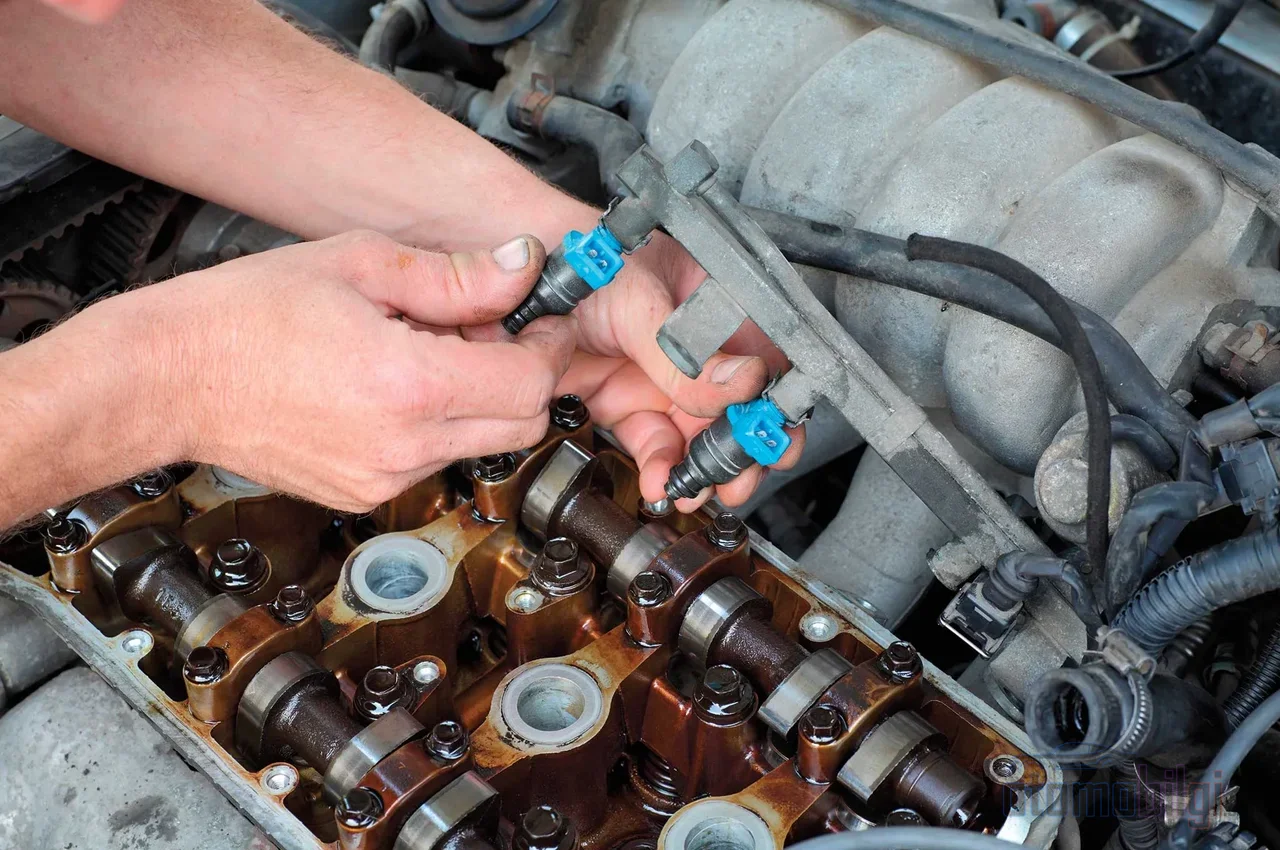
Direct injection (GDI) technology delivered a major gain in efficiency, but it produced one architectural consequence: fuel is now sprayed directly into the cylinder rather than behind the intake valves. In older port injection designs, as the fuel passed over the intake valves, its natural detergents effectively washed the valves. In GDI engines, the fuel and its additives never reach the valves.
In these engines, hot oil vapor from the crankcase settles behind the intake valves, partially burns, and solidifies to form carbon deposits. Once buildup starts, it feeds on itself: it disrupts the injector's spray pattern, combustion becomes inefficient, and the deposit accumulation accelerates. Incomplete fuel combustion also produces additional deposits as a byproduct. A fuel brand's power to slow this process is limited - if the detergent cannot reach behind the valves, it cannot work - but in terms of injector cleaning, high-detergent fuel still offers a decisive advantage. In GDI-powered vehicles, fuel quality is less a preference and more a protection strategy.
Premium Gasoline or Certified Regular?
This is where the most common confusion occurs: premium gasoline has a higher octane rating, but octane itself does not clean the engine. Octane is merely knock resistance; premium has no advantage when it comes to engine cleanliness. For this reason, there is a practical takeaway: a Top Tier certified regular gasoline is more effective for engine cleanliness than a premium that carries no certification.
The correct pairing is established like this: using regular in a vehicle whose manufacturer requires premium can lead to a loss of traction, that is, knocking, reduced power, and in the long term, increased wear. Conversely, putting premium in a vehicle designed to run on regular gasoline does not improve fuel economy; you simply spend money. Considering the average $0.50/gallon premium difference, premium can be considered a reasonable insurance only for occasional traction issues or long and steep climbs.
Deposits and Consumption: Small Buildup, Measurable Bill
Although deposit buildup seems like an abstract indicator of engine health, it reflects directly on your wallet. Even a small amount of buildup in the injector can reduce fuel efficiency by up to 10% can lower it and increase emissions. The logic chain is simple: a degraded spray pattern means a non-homogeneous mixture; a non-homogeneous mixture means incomplete combustion and waste.
Moreover, since modern engines operate at higher pressures and tighter tolerances, they need quality gasoline more than before. In high-mileage second-hand vehicles, high-detergent fuels are useful in reducing deposits left over from previous years. So the fight against deposits is on the agenda for both new and old engines; only the direction differs.
Do Aftermarket Additive Products Actually Work?
The answer to this question is the most debated part of the additive world, and both sides must be conveyed honestly. It is true that detergent-based additives aim to dissolve accumulated deposits and return the engine to its previous state, and that benefits such as reducing emissions, extending engine life, and lowering maintenance costs are claimed. Among the well-known products on the market, injector cleaners stand out: Liqui Moly Jectron, Chevron Techron Concentrate Plus and BG 44K are familiar names in this category.
The opposing side's argument is measurement-based: a peer-reviewed study dated 2019 showed that the detergent effects of the tested additives did not translate into a measurable reduction in fuel consumption. As consumer protection organizations have also reported, an aftermarket additive has a low chance of improving mpg. The practical synthesis is this: additives can serve a function as deposit removers, but they should not be purchased on the promise of fuel economy. Regularly using high-detergent fuel is a more efficient strategy in the sense of preventing problems before they arise - and it requires no intervention under the hood.
Decision Guide for Daily Use: Which Fuel Should You Choose?
To put all this data into a practical decision framework: the differences among mainstream brands are relatively small in daily use; the real divide is between uncertified unbranded fuels and certified ones. Quality gasoline contains cleaning agents that prevent the buildup that leads to rough idling and declining fuel economy.
- If the manufacturer requires premium, use premium; the octane requirement is not negotiable.
- If the manufacturer recommends regular, choose Top Tier certified regular - there is no need to switch to premium.
- If you drive a direct-injection vehicle, systematically choose high-detergent fuel for injector cleanliness; for the valve side, add periodic cleaning to your maintenance plan.
- In a high-mileage second-hand vehicle, high-detergent fuel from the very first tanks contributes to reducing existing deposits.
- Evaluate aftermarket additives when a deposit problem appears; do not buy them based on fuel economy promises.
Ultimately, the difference in pump price is the most visible but smallest piece of fuel's true cost. Between two fuels that look identical in octane, there is a measurable quality difference in the additive package; this difference shows itself in engine cleanliness, efficiency, and in the long run, the maintenance bill. The few liras saved at the pump with a low-detergent fuel are paid back with interest in deposits accumulating on injectors and valves.
Sources
- About - TOP TIER™
- AAA study finds Top Tier gas brands offer big advantages
- Gasoline explained - octane in depth (U.S. EIA)
- Gas Pump Fuel Types Explained (AAA Club Alliance)
- Top Tier Detergent Gasoline: Is It Really Better for Your Engine?
- Top Tier Gasoline Is Worth the Extra Price, Study Shows (Consumer Reports)
- Motor Gasolines Technical Review (Chevron)
- Carbon Deposits and Direct Injection Engines (Underhood Service)
- The Science of Gasoline Direct Injection and Carbon Buildup
- Should You Use Premium Gas? (KBB)
- Premium vs. Regular Gas (Mercury Insurance)
- Assessment of the effectiveness of a fuel additive (ScienceDirect, Tanco 2019)
- Best Fuel Injector Cleaners (MotorTrend)
- Fuel Additives: What Works, What Doesn't (Bell Performance)
- Why Fuel Additives Won't Improve Performance (HowStuffWorks)
- Does the Brand of Gas I Use Actually Matter? (Cars.com)
- Carbon Deposits: What is Carbon Buildup and How To Prevent It