Ethanol in Gasoline: Does E10 Fuel Increase Consumption?
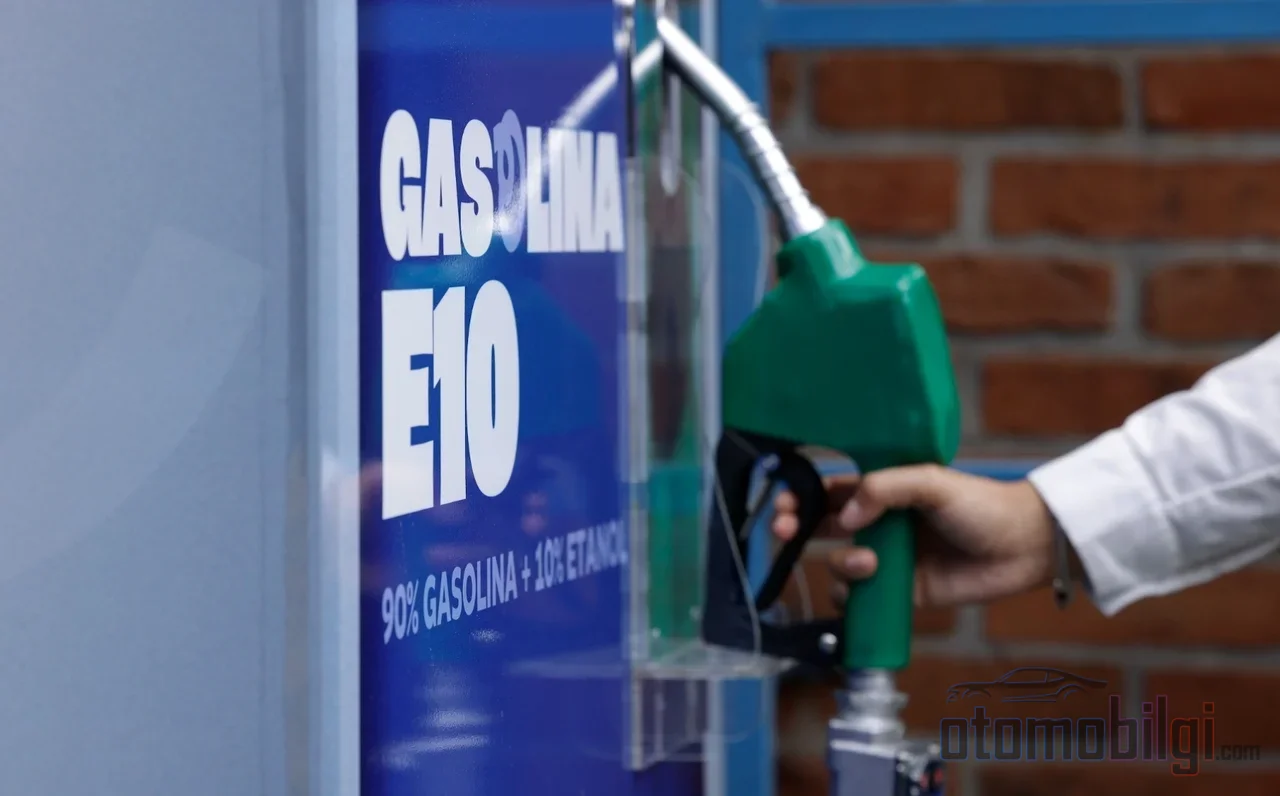
There are two options at the pump: E5 or E10? The price difference is almost nil, the name of the liter is the same; but the energy it carries per liter is not. As the ethanol content rises, the usable energy in the same volume of fuel drops, and the engine quietly compensates by consuming more of it. So how many liters does this compensation really cost, can your car handle this blend safely, and why is E85 not even a consideration for an ordinary gasoline engine?
What Are E5, E10 and E85: What Does the Ethanol Content of the Blend Mean?
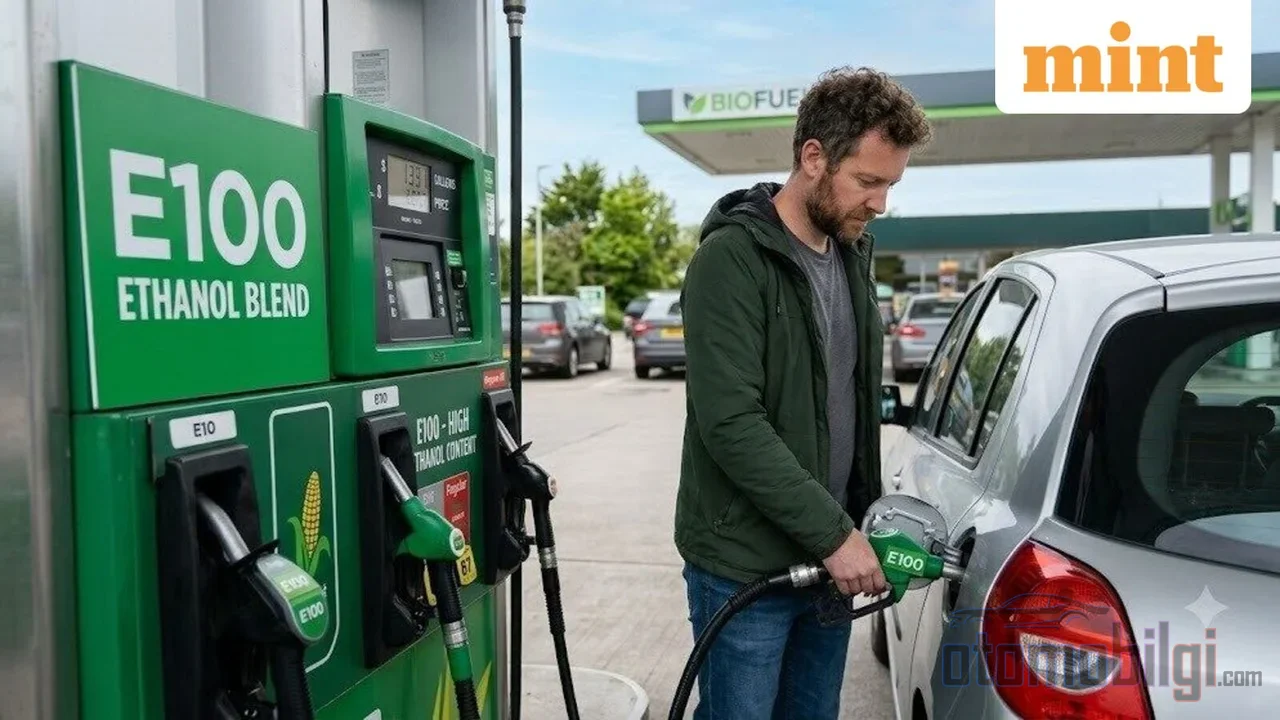
The code is a simple percentage label: E10 means 10% of the volume is ethanol and the remaining 90% is gasoline. E5 contains 5% ethanol, while E85 contains 85%. Ethanol is an alcohol of agricultural origin and is renewable; it is already present in small amounts in most gasoline installations in Europe and America. The label you see at the pump only tells you this blend ratio.
The critical issue is the energy chemistry of ethanol. In terms of volumetric lower heating value, 95-octane gasoline carries about 32.2 MJ per liter, while ethanol carries only 21.3 MJ - 33.9% less energy per liter. In other words, pure ethanol must be burned 51% more by volume and 61% more by mass to do the same work as gasoline. Ethanol's octane number is above 100 and its knock resistance is excellent; but octane does not mean energy. Octane defines the fuel's resistance to uncontrolled combustion, while heating value defines how much work-capable energy there is per liter. Ethanol has high octane but low energy, and consumption problems arise precisely from this distinction.
| Property | Gasoline (95 RON) | Ethanol (E100) |
|---|---|---|
| Heating value (MJ/liter) | 32.2 | 21.3 |
| Heating value (MJ/kg) | 43.2 | 26.8 |
| RON octane number | 95 | Above 100 |
| Stoichiometric air/fuel ratio | 14.57 | 8.94 |
| Latent heat of vaporization (kJ/kg) | 306 | 855 |
The last row of the table also explains ethanol's advantageous side. When transitioning from liquid to gas, ethanol absorbs about three times more heat than gasoline; at the end of the intake stroke, it cools the mixture in the cylinder far more than gasoline does. This charge cooling reduces knock tendency and allows the ignition advance to be increased adaptively; in addition, a colder, denser charge raises theoretical peak power. This is the technical answer to why ethanol is preferred in racing engines - but in the tank of a road car, it shows up as less energy in every liter.
Highlights
- Ethanol carries 33.9% less energy per liter than gasoline.
- Theoretical volumetric consumption increase: +1.7% for E5, +3.5% for E10.
- The measured real-world consumption increase remains about half the theoretical value in most vehicles.
- E85 can reduce fuel economy by 15-30% and can only be used in flex-fuel vehicles.
- In older vehicles, the weak links are rubber fuel lines, gaskets and injector O-rings.
How Much Does E10 Fuel Really Increase Consumption?
The theoretical calculation is transparent: the increase in consumption is determined by the blend's energy loss. In volumetric measurement, the expected increase for E10 is 3.5%, and 4.2% on a mass basis; For E5, these values are 1.7% and 2.1% respectively. The curve is not linear, because in the percentage calculation the denominator is the fuel's total energy content, and as the ethanol ratio rises, the denominator also shrinks. In other words, when the ethanol ratio doubles, the consumption penalty becomes slightly more than double.
What is interesting is the gap between theory and measurement. According to vehicle test compilations spanning many years, the measured mass consumption increase has remained at around only half the expected value in most studies: for E10, around 2% measured instead of the theoretical 4%. In the broadest test dataset, energy content fell by 3.4% while consumption rose by only 3.97%; it was accepted that roughly 60% of the energy change is reflected at the crankshaft in the consumption equation. The main reason for this is ethanol's physical properties, which partially offset its rich mixture effect, and the ECU adjusting injection times while maintaining the lambda target - but this compensation is never complete.
The gap between official figures and driver experience
Official bodies say that fuel economy may drop by about 3% with E10, and that switching from E5 to E10 can increase consumption by at most 1-2%. Real-world data paints a wider range: there are measurements showing consumption increases reaching 11% in small-engine vehicles, while in tests conducted under city traffic conditions, E85 consumed 18.79% more than E10. This width is not a contradiction, but a consequence of measurement conditions: engine displacement, load profile, temperature and ECU strategy determine the outcome. It is reasonable to summarize the average like this: with E10, expect a loss of between two and four percent in range, and factor in that it will be slightly above that in small, high-revving engines.
The environmental side of the energy balance sits on the same delicate scale: E10's exhaust CO2 is theoretically only 0.18% lower, because burning more fuel immediately cancels out the per-liter carbon difference. Ethanol's real substitution effect appears beyond the pump, in production and life-cycle accounting - the savings from petroleum are partially offset by the increase in consumption.
What Exactly Does a Manufacturer's E10 Approval Guarantee?
A vehicle being E10 approved means the manufacturer has verified that all materials in contact with the fuel - fuel lines, pump, injectors, tank, seals and gaskets - can withstand the 10% ethanol blend for an extended period. In Europe, all gasoline vehicles produced in 2011 and later were required to be E10 compatible; approximately 95% of gasoline vehicles on the road use this blend without issue. Manufacturer thresholds vary from country to country: some brands approve their Euro 4 vehicles from 2006 onwards, while one manufacturer was able to declare that all its models from 1997 onwards are officially E10 compatible. The manufacturer's own compatibility lookup page usually answers which group your vehicle falls into without a chassis number, using just the model year.
You need to read the scope of the approval correctly: E10 approval also means that the increased consumption is not covered under warranty. The manufacturer guarantees that the vehicle will not be damaged; a few hundred meters less range per kilometer is on you. The ECU automatically trims injection durations to maintain the stoichiometric mixture, so drivability and emissions are not affected - the average consumption shown on the display, however, shifts a few percent higher from the very start.
Ethanol Risk in Older Vehicles: Tire, Gasket, and Injector Compatibility
Where the approval ends, materials science begins. Ethanol is a powerful solvent: over time it swells, softens, and dissolves standard rubber and some plastics, leading to leaks. The points where risk accumulates in older vehicles are clear:
- Flexible fuel hoses and rubber lines - in carbureted vehicles, all rubber sections running from the tank to the carburetor must be checked regularly.
- Injector seals - even modern seals designed to resist ethanol have been reported to leak in a short time; this makes the area around the injector practically the weakest link.
- In-tank gaskets, o-rings, and plastic parts - damage progresses slowly and therefore goes unnoticed for a long time.
- Moisture buildup - ethanol is hygroscopic; increased moisture can multiply engine deposits, pave the way for corrosion, and noticeably degrade driving quality.
In the classic car world, the picture is even more cautious: while some sources say the only material with the potential to cause problems in ten- to twenty-year-old vehicles is polyurethane, mechanics and classic car communities point to cases of ethanol-related damage in hoses, gaskets, plastics, and certain metals. Independent verification of marketing claims that ethanol protective additives provide full protection is also limited. Conclusion: if your vehicle does not have explicit E10 approval from the manufacturer, treat the blend at the pump as a material compatibility issue - one that could end up far more expensive than the difference in consumption.
Why Does E85 Only Work in Flex-Fuel Vehicles?
E85 takes 85% of its volume from ethanol, and its energy density is only 73-83% that of gasoline per gallon. This corresponds to a theoretical consumption increase in the 15-27% range; real-world measurements are consistent enough to confirm that fuel economy can drop by 15-30%. The discount on the pump label does not necessarily make up for this difference: even if E85 is cheaper per liter, the cost per kilometer only turns into a saving if the discount rate exceeds the consumption increase. The scarcity of stations is the third variable chasing this equation.
A conventional gasoline engine cannot use E85 - this is not a suggestion, it is an architectural constraint. The stoichiometric air/fuel ratio of ethanol is 8.94; that of gasoline is 14.57. Nearly twice the volumetric fuel must be delivered to the cylinders to produce the same power, and for this, injector flow rate, fuel pump capacity, and even some materials must be resized. Flex-fuel (FFV) vehicles are produced with exactly this equipment; the ethanol content sensor detects the blend, and the ECU gradually adapts the injection map and ignition between E85 and pure gasoline. Since at high ethanol contents the fuel effect and the hardware effect cannot be separated from each other, the E85 debate must always be conducted together with the vehicle class.
E5 or E10 at the pump: A Decision Framework Not Based on Price
The decision is made not with the pump price but with three questions. First, compatibility: if your vehicle can use E10 with manufacturer approval, the cost of switching from E5 to E10 is limited to 1.7% in volumetric consumption, and the ECU absorbs part of this difference with its own trims; no measurable loss in the engine's running quality is expected. Second, usage profile: if your annual mileage is high, even a one percent difference turns into a significant fuel volume, while at low mileage the calculation becomes almost meaningless. Third, vehicle age: in the case of an unapproved or classic vehicle, the question of material compatibility takes precedence over the question of consumption, and the lowest possible ethanol content is preferred.
The answer that becomes clear with the numbers is this: In an approved modern vehicle, the difference between E5 and E10 is as measurable as the energy it carries per liter but limited - roughly two to three and a half percent extra consumption, in return for the renewable ethanol share in the blend; in an unapproved old vehicle, however, E10 is a deliberate material risk. E85 is a league of its own: its energy is low, the requirement for durable hardware is high, and its economy depends not on the pump price but on the energy per liter. The right question is not "which fuel is cheaper" but "with which materials and at what consumption does my vehicle digest this blend" - the answer stands ready in the manufacturer's approval and in the percentage table above.
Sources
- Fuel Properties Comparison - Alternative Fuels Data Center
- Assessment of the impact of ethanol content in gasoline on fuel consumption - CONCAWE report 13/13
- How much ethanol is in gasoline, and how does it affect fuel economy? - EIA
- Ethanol and your engine factsheet - ePURE
- E85 Guide: Everything You Need To Know About Flex Fuel - Kelley Blue Book
- Which Used Cars are E-85 Fuel Compatible? - Autoland USA
- E10 Suits All Petrol Engines - Ethanol Europe
- Carmakers confirm compatibility with E10 fuel - Toyota Vietnam statement
- Chevrolet E10 compatibility results - GOV.UK E10 checker
- Opinion: What the government doesn't tell you about E10 fuel - Hagerty UK