Does a Faulty Lambda Sensor Increase Fuel Consumption?
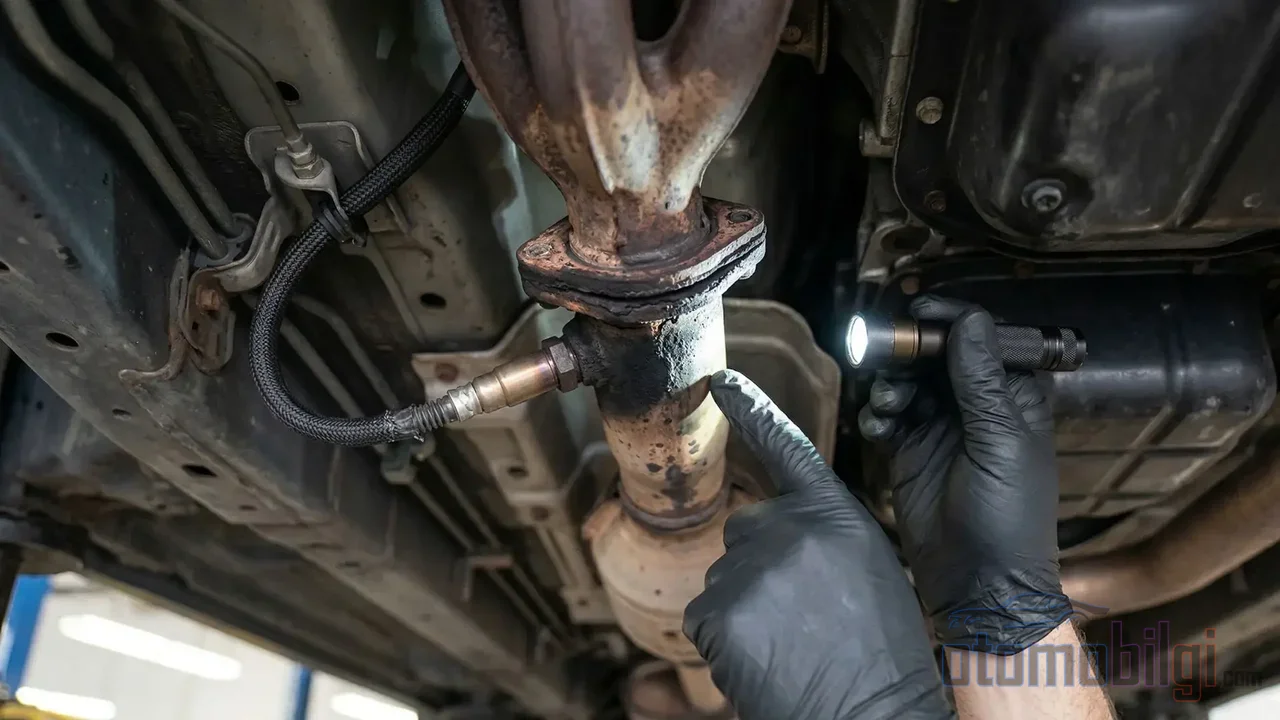
You have noticed you are visiting the gas station more often than usual. Your driving habits have not changed, the route is the same, and tire pressures are in order. Yet the average fuel consumption figure on the dashboard is quietly creeping upward. One of the most commonly overlooked culprits behind this picture is a part as small as a palm, nestled in the exhaust pipe: the lambda sensor, also known as the oxygen (O2) sensor. So, does consumption really increase when this sensor fails, or does the engine management system compensate for the situation?
The short answer is yes, it does. However, understanding the mechanism behind this increase, why it is not noticed right away in every failure, and when the sensor should be replaced is critical so that you can recognize the problem in your own vehicle rather than on a diagnostic bench.
What Does the Lambda Sensor Do and Why Is It So Critical?
The efficiency of an internal combustion engine depends on the precision of the air-fuel mixture entering the cylinders. The lambda sensor continuously measures the oxygen ratio in the exhaust gas and transmits this data to the engine control unit (ECU). Based on this feedback, the ECU adjusts the amount of fuel delivered to the injectors second by second. In reality, the sensor is the primary input of the system's closed-loop control: it reads back from the exhaust gas what is happening in the combustion chamber.
There is a reference point for this reading. The sensor's voltage output is based on a value of approximately 0.45 V: a signal above this value indicates a rich mixture (excess fuel), while a signal below it indicates a lean mixture (fuel shortage). By continuously balancing the signal around this threshold, the ECU tries to keep the mixture close to the ideal ratio. When the sensor slows down or sends an incorrect signal, this balance is disrupted and a chain of correction cycles begins.
Its Relationship with Other Sensors
The lambda sensor does not work alone. The readings of the mass air flow (MAF) and manifold pressure (MAP) sensors also factor into the mixture calculation. A faulty lambda sensor also undermines the ECU's confidence in these other sensors; an incorrect mixture calculation can trigger error codes that imply a failure in another sensor and can make diagnosis considerably more difficult. In other words, the fault is sometimes not where it is displayed. In modern vehicles, most engines typically carry two lambda sensors, one upstream and one downstream of the catalytic converter; this layout is standard on four- and six-cylinder engines. The two sensors have different roles and are not interchangeable in almost all modern vehicles.
Key Takeaways
- A lambda sensor failure can cause the engine to run a richer mixture than necessary and lead to a noticeable increase in fuel consumption.
- The sensor signal is interpreted on the 0.45 V axis: above it means rich, below it means lean mixture.
- For heated type sensors, the inspection/replacement interval is given in sources as 60,000-100,000 miles, corresponding to a range of 96,000-160,000 km.
- If unburned fuel reaches the catalytic converter, the converter may overheat and suffer permanent damage; this is the most expensive part of the picture.
- The vehicle keeps running with the faulty sensor; but consumption and emissions worsen, and there is a risk of failing the periodic inspection test.
How Does a Sensor Fault Increase Consumption?
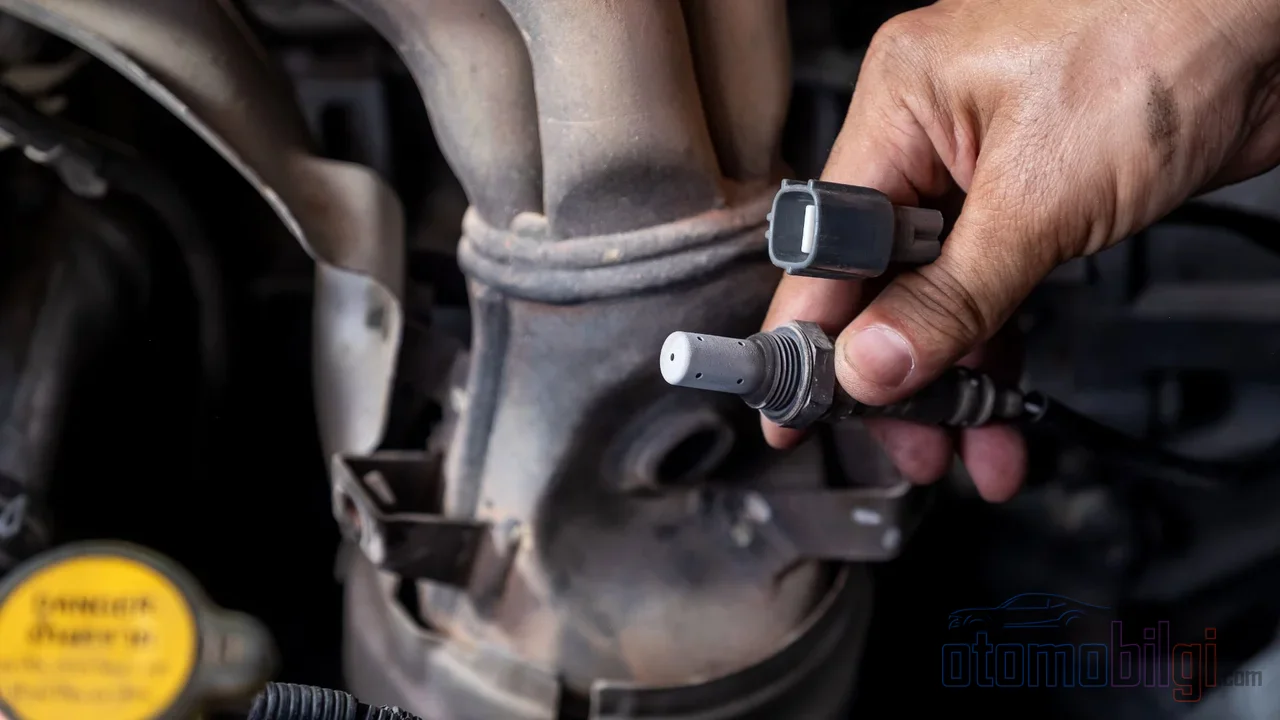
The process can be traced clearly through a chain of logic. As the sensor ages or becomes contaminated (excessive heat, oil leakage, coolant, or carbon buildup are the main sources of contamination), its response speed drops. When the ECU operates with late and misleading data, it shifts the mixture to the rich side as a safety precaution: injecting extra fuel to avoid the risk of overheating and misfiring that a lean mixture would cause is the system's preferred safe harbor. A rich mixture means that part of the fuel goes to the exhaust without burning. You complete the same journey over the same distance, using more fuel.
There is a nuance to note here: modern engine management systems can keep the mixture around λ=1 through precise load detection, even if lambda control is completely disabled. In other words, a sensor fault does not always create a visible consumption spike on the dashboard in every case. There are situations where the fault can remain silent; this increases the value of periodic inspection.
Symptoms of a Faulty Lambda Sensor
The fault usually reveals itself through more than one sign. Each symptom on its own can be explained by other causes; when they appear together, the suspicion of a sensor problem grows stronger.
- Rising fuel consumption and the accompanying poor fuel economy
- Illumination of the engine malfunction light; a rich mixture almost always triggers this light
- Rough idle, hesitation on the gas pedal, stumbling during acceleration, and power loss
- Engine misfires
- Dark, black smoke from the exhaust and a sulfur smell resembling rotten eggs
- High exhaust emissions and failing the emissions test
- Poor engine performance and irregular operation
When it comes to idle vibration, honesty is required: while the general consensus lists vibration as a possible symptom, some experienced technicians argue that the oxygen sensor does not directly cause vibration, and that the problem may come from other sources such as engine mounts. The healthiest approach is not to attribute the vibration to a sensor fault on its own. The diagnosis is confirmed by reading fault codes and testing the sensor.
How Is the Sensor Tested?
Whether lambda control is functioning can be checked with an exhaust gas analyzer: once the engine reaches operating temperature, false air is deliberately introduced into the system, and the lambda value is expected to recover within 60 seconds. If no recovery occurs, the control loop is not working. However, this test only shows the chemical response; it cannot reveal an electrical fault in the sensor. For a complete diagnosis, signal monitoring with a diagnostic device is also required. Whether the downstream sensor (after the catalytic converter) affects the idle is debatable; the primary task of this sensor is to monitor the converter's efficiency.
The Real Cost of Increased Consumption: Catalytic Converter
The most serious consequence of a rich mixture is not the increase in consumption itself, but the secondary damage it causes. Unburned fuel reaches the catalytic converter in the exhaust line and causes overheating there through oxidation. The converter suffers permanent damage over time; dark exhaust smoke, a sulfur smell, and excessive heat under the vehicle are the converter's danger signals. A massively expensive converter replacement is the result of postponing a sensor fault that could be measured in tens of dollars. A damaged converter also affects the readings of the downstream sensor, making the diagnostic process even more complicated. Stopping the problem at the sensor stage means intervening at the cheapest link in the chain.
When Should the Lambda Sensor Be Replaced?
Sensor lifespan figures vary over a wide range depending on the technology used and the age of the vehicle, and should not be presented as a single number. For modern heated-type sensors, the common inspection/replacement interval is 60,000-100,000 miles, i.e. approximately 96,000-160,000 km. Sensors in older vehicles have shorter lifespans; values such as 30,000-50,000 miles can be cited for this generation. Many manufacturers officially recommend no inspection interval at all; the sensor is typically replaced only when it fails.
In practice there are two approaches. The first is the reactive approach: not touching the sensor until the warning light comes on or symptoms appear. The second is the proactive approach: based on the fact that as the sensor ages its response slows down, and the drop in efficiency can be noticed without generating a fault code, carrying out planned replacement at intervals such as 50,000-80,000 km. It is known that replacing a contaminated or sluggish sensor often improves fuel economy. If you have owned your vehicle for a long time and the sensor has never been replaced, or if there is an unexplained increase in consumption, planned replacement is a reasonable investment.
Does Every Warning Light Mean a Sensor Replacement?
No. The warning light indicates the presence of a problem; it does not indicate what the solution is. An error code related to the sensor may indicate a genuine sensor failure, but it can also be the result of a wiring, connector, or exhaust system leak (false air). Other components affecting the mixture can also trigger the same codes. The correct step is to read the code, test the sensor and its supply line, and only replace the part once the diagnosis is confirmed. During replacement, it should also be remembered that in almost all conventional vehicles the pre- and post-converter sensors cannot be used interchangeably; replacing only one and leaving the other as it is amounts to an incomplete repair.
Is It Safe to Drive With a Faulty Sensor?
The vehicle continues to run with a faulty O2 sensor; the risk of being stranded is low. However, this is not a sustainable situation: performance drops, consumption increases, emissions rise, and the vehicle may fail the emissions test at inspection. More importantly, the catalytic converter damage described above progresses a little further with every kilometer. Short-term postponement is acceptable; neglect that drags on for weeks is a decision guaranteed to come with a converter bill.
Conclusion: Does a Faulty Lambda Sensor Really Increase Consumption?
Yes: a faulty lambda sensor causes the ECU to set the mixture richer than necessary, measurably increasing fuel consumption, and in the long run this cost is compounded by catalytic converter damage. The mechanism is simple: the sensor gives a wrong or delayed signal, the ECU injects extra fuel to stay on the safe side, and the unburned fuel burns both your wallet and the converter. Also be aware that the increase in consumption may not be immediately visible in every failure, because modern systems can keep the mixture close to λ=1. The concrete message to take away is this: when an unexplained increase in consumption, the check engine light, black smoke, or a sulfur smell come together, the lambda sensor should be at the top of your list. Correct diagnosis also prevents unnecessary part replacement; do not replace any part without code reading and signal testing.
Sources
- Lambda sensor testing and troubleshooting
- Bad Oxygen Sensor Symptoms
- Signs of a Bad Oxygen Sensor
- Can a faulty lambda sensor affect other sensors?
- What Is The Life Expectancy Of An Oxygen Sensor?
- When Should The Oxygen Sensor Be Replaced?
- When Should the Oxygen Sensor Be Replaced?
- Will a Car Run with a Bad O2 Sensor?
- 5 Symptoms of a Bad Oxygen Sensor
- When Should A Lambda Sensor Be Replaced?