Don Garlits and the Rear-Engined Dragster Revolution
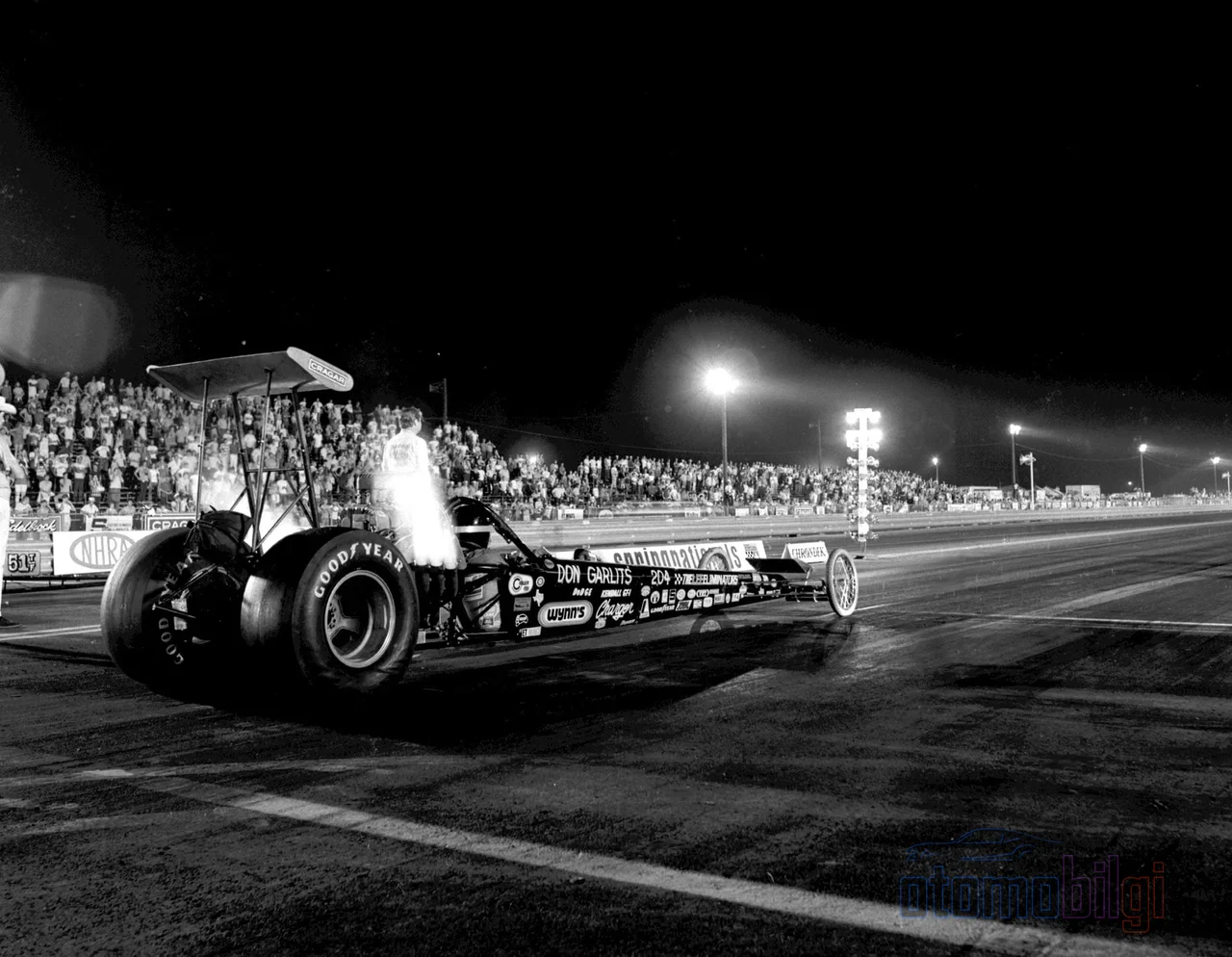
March 8, 1970, Lions Drag Strip, California. The transmission of that famous front-engine dragster standing in front of him explodes, and the car splits in two. The man behind the wheel, Don Garlits, survives but loses half of his right foot. Most people would have stopped there. Garlits, however, lying in his hospital bed with a bandage on his forehead, starts sketching the design of a rear-engine dragster. That is exactly how one of the greatest engineering breakthroughs in drag racing history was born. So why did one man's injury rewrite the architecture of an entire sport? Let's return to the quarter mile and watch this story together.
Why Was the Slingshot Layout a Time Bomb?
From the mid-1950s onward, the standard layout of Top Fuel dragsters was the front-engine design known as the slingshot: engine at the front, driver right behind it, with his legs alongside the transmission and drivetrain components. In other words, the driver was actually sitting just a few centimeters away from the engine and clutch. When the engine exploded, the clutch let go, or the bellhousing cracked, the first place all that energy went was the cockpit.
By the late 1960s, this problem had grown too large to be ignored. Engine and clutch failures kept causing injuries; Mike Sorokin and John Mulligan lost their lives. At the 1970 Nationals final, Jim Nicoll was launched out of the car by a clutch explosion and flipped over. So Garlits's crash was not an exception but a consequence of the system's very nature. The question was: who would change this layout, how, and when?
A Design Born in a Hospital Bed
Garlits conceived the new concept in his mind in his bed at Pacific Coast Hospital in Long Beach, and the car was physically built at the end of 1970. The logic here rested on two pillars:
- Safety: Once the engine moved behind the driver, an explosion, fire, or debris would be directed away from the cockpit. That transmission explosion that split the car in two would never again pass over the driver.
- Performance: Moving the engine closer to the rear wheels improved traction and weight distribution in the long, slender-bodied Top Fuel dragsters. The rear tires are already where the track grips; putting the engine's weight over them makes it easier to transfer power to the asphalt.
Think of it this way: If, while rowing a boat, you place the heaviest load in the middle instead of at the back, the bow lifts up. What Garlits did was move that weight exactly to where the grip was. Simple, yet no one had managed it before him.
Highlights
- Garlits's crash happened at Lions Drag Strip on March 8, 1970; the transmission explosion split the car in two.
- Swamp Rat XIV raced for the first time at the AHRA Grand American event at Lions on January 8-10, 1971.
- He won the 1971 Winternationals with a 7.03-second solo pass in the final, as his rival was unable to race.
- Within two years, the engine moved behind the driver in all Top Fuel dragsters.
- Modern Top Fuel dragsters are still built on the same rear-engine principle.
Swamp Rat XIV's Debut: A Second Place in the Shadow of a Record
The new car, Swamp Rat XIV, made its first test appearance at the AHRA Grand American event at Lions on January 8-10, 1971. The result? 6.60 seconds, just 0.05 seconds behind the track record. They finished second behind Gary Cochran, but the message was clear: this strange-looking car was serious. A week later, at the PDA event at Orange County International Raceway, they again finished second, once more to Cochran. In other words, the revolution could race from day one - not as a winner, but as a feared rival.
The 1971 Winternationals: The Weekend the Revolution Reached Its First Victory
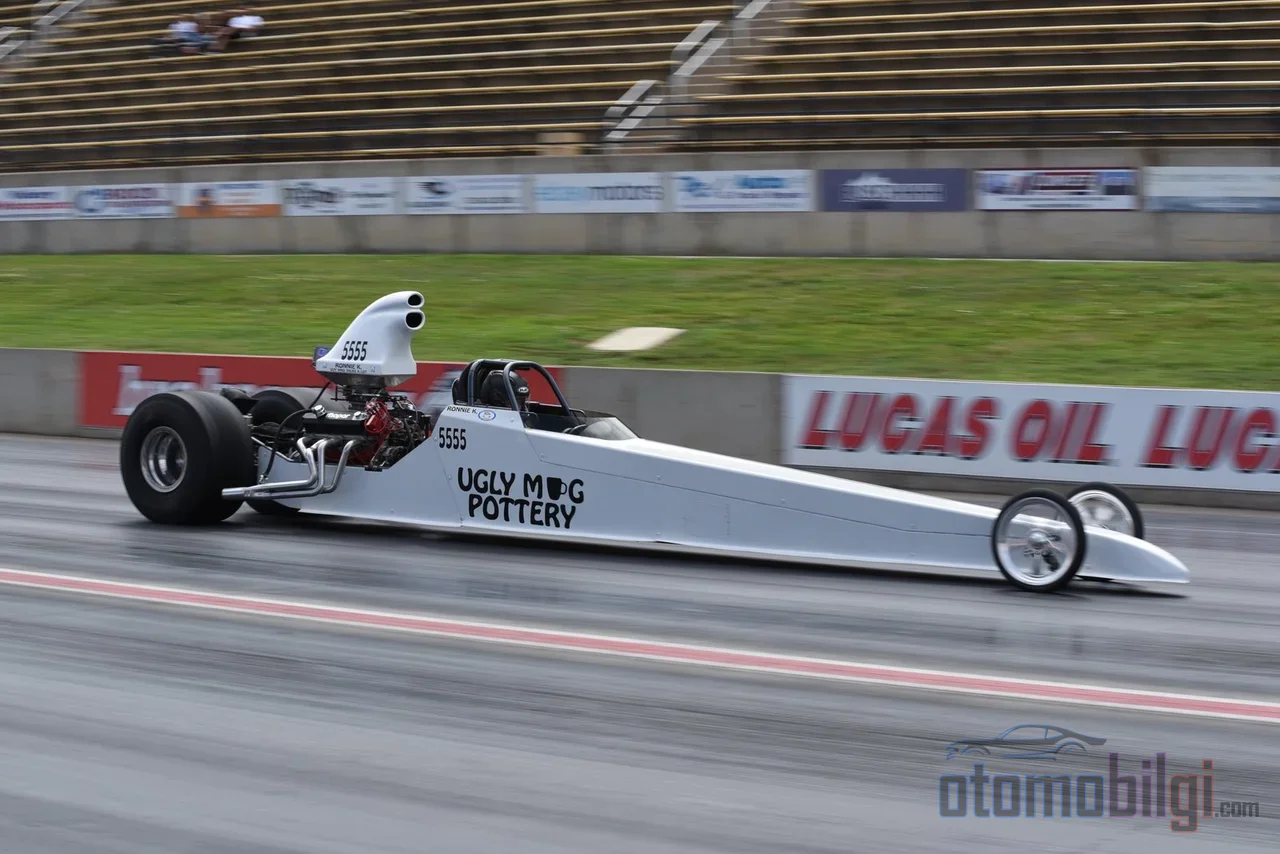
The 1971 Winternationals at Pomona was the turning point of this story. In an extremely tight 32-car field, Garlits only made the finals from 9th place - with a mid-6.80 run against Norm Wilcox's 6.70, a gap of about 0.10 seconds. But in the elimination rounds, the car got better with every pass:
- 6.85 against Tommy Allen
- Two 6.72 runs against John Nichols and Carl Olson
- 6.70 against Jim Dunn in the semifinal
In the final, Kenny Safford, driving Larry Bowers' car, could not race due to a clutch change between rounds, and Garlits ran his 7.03-second solo pass to claim the victory. This was the first major win for a rear-engine Top Fuel dragster - and the season did not end there: Garlits also won the IHRA Winternationals and the legendary March Meet that same year. Moreover, according to NHRA, within two years, the engine on every Top Fuel dragster racing in the field had moved behind the driver. This speed was no coincidence - it was design proving itself.
Did Garlits Invent It or Perfect It?
The honest answer to the question: he perfected it. Rear-engine dragster attempts existed before Garlits, but none of them had succeeded. His former partner Art Malone ran a rear-engine dragster for six months before Garlits; Bill and Dave Coleman, brothers from Coleman Bros Speed Shop in Maryland, had also made similar attempts before. Garlits' difference was developing the first fully competitive and safe version. In the early days, some track officials wouldn't even let the car race against others until it had been proven - such is the birth of a revolution: first doubt, then respect.
The Three Lessons That Made the Car Truly Raceable
Until Swamp Rat XIV could go as straight as an arrow, the team had to solve three critical technical problems:
- Steering ratio: The existing steering gear was too quick for this sensitive chassis; slowing the ratio made the car controllable.
- Open differential: Using an open differential at the rear end allowed the car to behave predictably on its racing line.
- Front wing: An airfoil mounted at the front stabilized the car at high speed by preventing the nose from lifting.
And there is one non-engineering detail that, in my opinion, is the sweetest part of the story: When the team was about to give up, Garlits's wife Pat Garlits made the decision to keep the project going. So Pat was, without question, one of the co-architects of this revolution.
How Did NHRA's Safety Rules Follow the Revolution?
The rear engine's safety benefit wasn't limited to keeping the driver away from explosions; the federation's own safety rules were also gradually built on top of this new architecture. For example, in 1982 supercharger restraints became mandatory in Top Fuel dragsters, and this rule was later extended to the Funny Car class as well. Wrapping the supercharger like a blanket with an overbend to prevent it from exploding - such layered safety measures took on meaning as part of an arrangement where the driver was now in front of the danger, not behind it.
So the picture is this: Garlits took the risk off the driver, and the rules reduced the remaining risks layer by layer. Speed never decreased over the quarter mile; only the architecture matured.
Rear-Engine or Mid-Engine? And the Revolution Today
A small terminology note: most of the automotive world calls this layout mid-engine, but drag racers prefer the term rear-engine - since the engine sits directly over the rear wheels and behind the driver, the second name is the one faithful to tradition. Even this detail is proof of how much the sport has preserved its own language.
The revolution's trace is still fresh. In 2021, NHRA chose this story as one of the sport's 60 best moments in honor of its th anniversary, chose this story as one of the sport's 60 best moments; and in 2026, Garlits's first rear-engine Top Fuel win made it into the top three of the published Top 75 Moments series. The Don Garlits Museum in Ocala, Florida updated its Swamp Rat gallery in October 2026: Swamp Rat 1-13 tells the slingshot years, and 14 and beyond tell the rear-engine era. And Garlits never stopped trying - in July 2019, at 87 years old, he set a quarter-mile record of 189.03 mph (304.21 km/h) with the battery-powered, 800 hp, 1,500-pound Swamp Rat 38.
So let's wrap up the answer to the question. Why did Don Garlits move the engine to the rear? First and foremost, to never experience a similar accident again - not to overturn the class. The performance gain (rear-wheel traction and weight distribution) was the bonus that made the revolution permanent. Swamp Rat XIV is exactly the story of how one person's pain, when it meets sound engineering, shapes the form of the dragster that has left every quarter mile for more than fifty years. In my view, this is the most beautiful side of the sport's history: speed is never a coincidence.
Sources
- NHRA's Top 75 Moments, No. 3: Don Garlits scores first rear-engine Top Fuel win
- Front to back: The rear-engine transition (NHRA)
- When did we start doing that? Tracking biggest changes - NHRA
- Don Garlits fueled an explosion in drag racing design - LA Times
- Video: Don Garlits Launches the Rear-Engine Dragster Revolution - Mac's Motor City Garage
- Don Garlits: Legacy, Career Records - Competition Plus
- Swamp Rat Gallery - Don Garlits Museum of Drag Racing
- Don Garlits - Motorsports Hall of Fame
- Don Garlits - Wikipedia