Electric Minibuses Are Transforming Urban Logistics
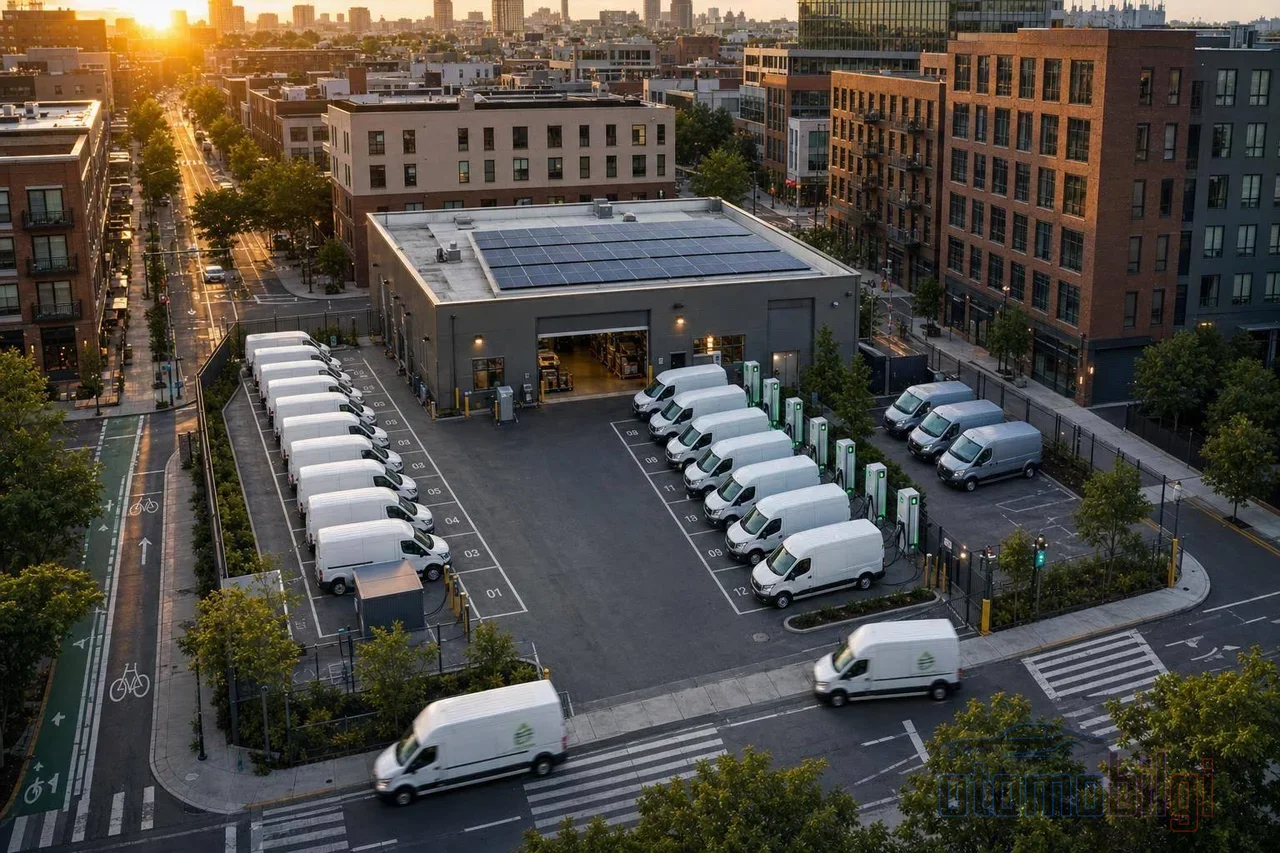
Think about the package that arrives at your door: it leaves the warehouse in the morning, endures hundreds of stop-and-go moments throughout the day, and returns to the same warehouse in the evening. This monotonous routine is practically tailor-made for electric vehicles. But then this question is worth examining: Are electric minibuses genuinely cheaper to run than diesel in last-mile delivery, or is there still a gap between the optimism of market reports and the reality in the field? Let's break down where the promise holds and where it doesn't.
Why Is Last-Mile the Most Logical Step in Electrification?
What we call the "last mile" in the shipping world is the final leg where the package leaves the warehouse and travels to your door. It doesn't sound bad, but here's the surprise: this very part is the most expensive piece of logistics. The last mile makes up more than half of total logistics costs, between 50% and 53%. Burning fuel in the city, straining the engine in stop-and-go traffic, and covering driver costs are the genuinely expensive side of the business.
This is where electric minibuses shine. A delivery vehicle's day is quite predictable: similar routes, similar number of stops, and similar distances every morning. The fear of "will my charge run out," the biggest nightmare of electric vehicles, loses its meaning here, because the route is fixed, the distance is short, and the vehicle is back at the depot in the evening. A minibus that charges while parked overnight sets off in the morning with a fresh battery. Electric motors are also structurally efficient at low speeds and in frequent stop-and-go cycles; energy consumption per delivery stays low. This picture makes the electric minibus one of the most ready candidates for electrification.
Key Highlights
- The last mile is the most expensive segment, making up 50-53% of total logistics costs.
- The global electric last-mile vehicle market is roughly USD 39 billion in 2026; it is projected to reach USD 139 billion by 2033.
- Amazon's fleet has more than 40,000 Rivian electric minibuses; the target is 100,000 by 2030.
- TCO savings estimates vary between 13% and 30% depending on the method.
As Market Figures Grow, the Weight of the Promise Increases
Looking at the numbers, the electric minibus is not a craziness but a rapidly growing industry. The global electric last-mile delivery vehicle market is estimated to be worth USD 33.7 billion in 2025, rising to USD 39.2 billion in 2026; it is expected to reach USD 139.4 billion by 2033. The annual growth rate is approximately 19.9%. Regional leadership lies in Asia-Pacific: about 38.9% of the market is in this region, with China alone in the leading position. There is also a more cautious estimate: it projects that the same market will grow from USD 30.2 billion in 2026 to USD 118.4 billion by 2034, at an annual rate of 18.6%. The figures differ by fractions, but the direction is always the same: upward.
The picture is similar on the minibus side. The electric minibus market rose from USD 17.9 billion in 2025 to USD 19.7 billion in 2026 and is expected to expand to USD 45.3 billion toward 2035. In the United States, the electric last-mile minibus market is projected to reach $14.2 billion by 2030, growing at roughly 23.9% annually, and over 46,000 zero-emission cargo vans are already on the road today. By 2030, around 6 million electric vehicles are expected to find a place in delivery and logistics worldwide. E-commerce is the fuel behind this growth: In the US alone, $310 billion in online sales were made in just the third quarter of 2025, and 22.4 billion deliveries were completed in 2024. These packages have to get somewhere; the question is, with which powertrain?
The Cost Equation: Does an Electric Minibus Really Work Out Cheaper?
This is the part everyone obsesses over. Total cost of ownership, or TCO, is not just the sticker price; it's the purchase, fuel, maintenance, and servicing all together. And here things are not as clear-cut as you might think. Estimates in circulation vary considerably: some calculations say a 13% lower TCO for light commercial EVs, some say around 30%, and others give a range of 20-30%. This difference is not a contradiction, but a difference in method: each calculation assumes a different vehicle class, different fuel prices, and a different type of operation. So there is no single answer to the question of "how much savings on what"; the operation itself determines the answer.
A more academic framework is a 2022 total cost analysis looking at six major European cities. The conclusion: battery-electric delivery trucks catch up with their diesel equivalents in most cities today, with current purchase incentives. But without incentives, parity is calculated to arrive only in the second half of the decade. The real blow is struck here: the purchase price is the biggest handicap in an EV's TCO. On the other hand, there is an optimistic picture too; since electric drivetrains consume far less energy per kilometer, they are less sensitive to electricity price fluctuations than diesel. Also, sizing the battery correctly according to daily mileage narrows the purchase price gap. In short: for an operation with routes under 100 miles per day and overnight depot charging, an electric minibus is a serious candidate today; for long routes and operations dependent on public charging, the equation is still challenging.
And there's a smart charging detail that most people overlook: depot electricity costs can be reduced by 35-55% with smart charging management. In addition, new financial models such as battery leasing, vehicle-as-a-service (VaaS), and pay-per-mile are easing the upfront investment burden. What softens the electric minibus's expensive entry door is not the vehicle itself, but the business model behind the purchase. And yes, it's important to know that it doesn't work everywhere: in markets where fuel prices are very low, such as about $0.62 per liter, the high purchase price significantly weakens the appeal of operational savings. Electrification is not a universal formula.
Payload Capacity and Range: The Price of the Battery
Now for the other side of the coin: the battery is heavy. And the weight eats into the load the vehicle can carry. For example, in the 3,500 kg gross weight class, a minibus with a curb weight of 2,400 kg can theoretically carry a load of around 1,100 kg; but once you add a refrigeration unit, the actual payload drops even further. Diesel minibuses generally offer higher payload capacity; for example, the electric Peugeot E-Partner accepts loads of up to about 780 kg. In parcel and e-commerce deliveries, this difference usually isn't a problem; but in segments where heavier loads are carried, it becomes a constraint.
On the range side, there's an interesting detail: in real-world commercial use, the load affects range less than expected. The real source of trouble lies elsewhere: the upfront cost is around £10,000 above diesel, and the public charging network on long routes is still sparse. The frequently voiced complaints are exactly these: charging time means direct downtime, and charging points along freight corridors are scattered like a patchy map. On the other hand, maintenance offers a completely different advantage for electric: mechanical items like oil changes, transmission, turbo and diesel particulate filter simply disappear in electric vehicles, which trims fleet maintenance costs.
Depot Charging: The Real Key to Electrification
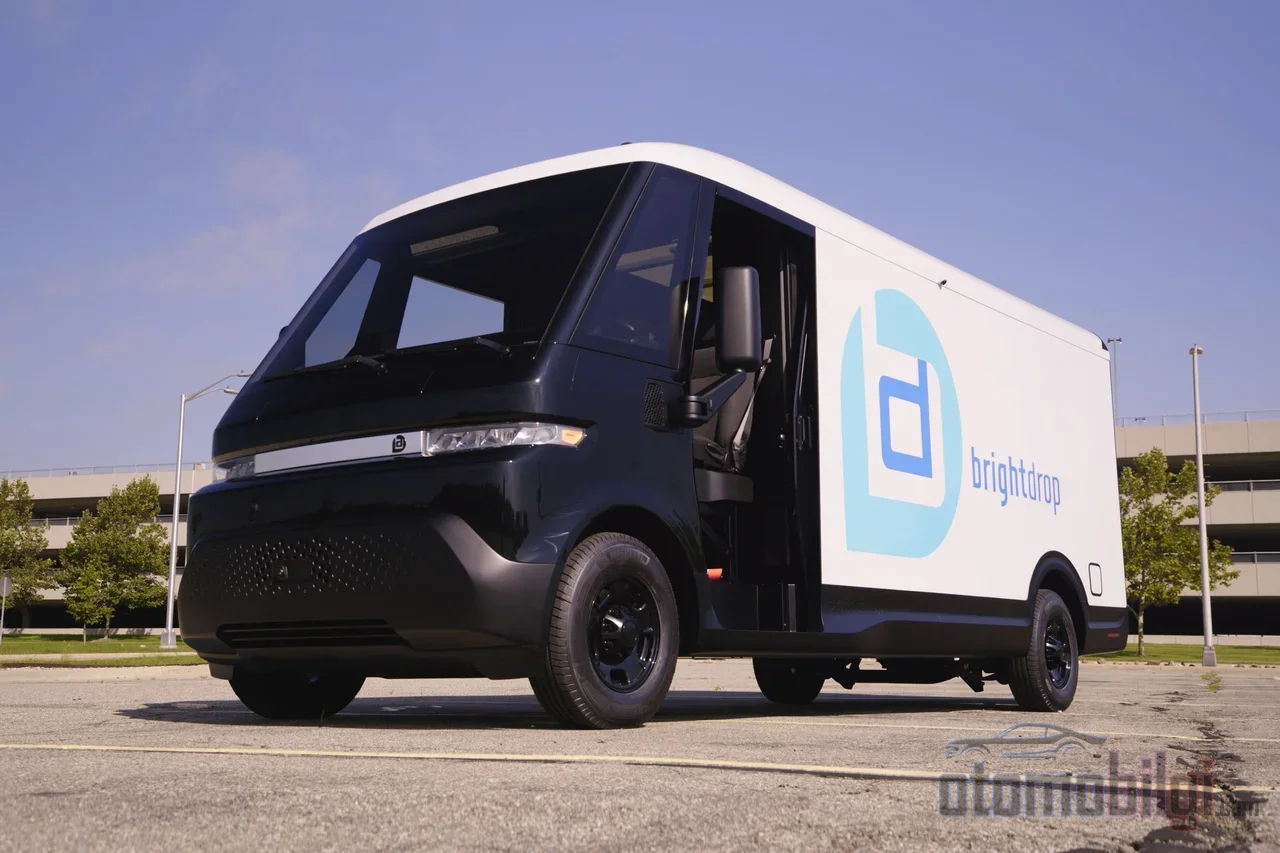
The most critical part of the electric minibus story is not the vehicle, but the depot. A vehicle that charges at the depot overnight doesn't need public chargers during the day; this is the key to the entire electrification plan. In practice, most depot operations have one charger for every 2-3 vehicles, and overnight Level 2 (7-19 kW) charging can be sufficient for a day's use. So it's not essential to install an expensive fast-charging station for every vehicle; most vehicles are slowly filled up overnight and are full by morning.
But there is a bottleneck here too: delays in depot charging infrastructure are particularly limiting the electrification of heavy-duty vehicles and are becoming critical for city bus fleets. The cost of the infrastructure is nothing to underestimate either: in 2026, depot charging infrastructure makes up 15-25% of the total acquisition cost of an electric bus fleet; this is a signal that can be directly transferred to minibus fleets as well. A development worth watching is wireless charging: automatic charging while the vehicle is parked reduces downtime and spreads infrastructure investment over time. Knowing that systems working in this field are already being tested with fleet operators shows that the charging experience of the future may not involve plugging in.
What Big Fleets Are Getting: The Cards of Amazon, DHL, FedEx and Walmart
So what are the giants doing? Amazon is the most spectacular part of the story: its fleet includes more than 40,000 custom Rivian electric vans; they have been in use in more than 100 cities since 2021, and the company aims to have 100,000 vans on the road by 2030. As of May 2026, DHL has reported more than 50,000 electric vehicles globally and aims to electrify 66% of its last-mile vehicles by 2030; DHL Express is deploying 89 Ford Transit 350HD Lightning vans in New York and California. On the FedEx front, the numbers should be read more cautiously: It is claimed that an order of 2,000 vehicles would save around $800,000 per year, and a small fleet of 20 vehicles is said to save around $20,000 per year in fuel; these calculations have not been verified one-to-one with publicly available data. Walmart, for its part, planned to purchase 4,500 electric delivery vehicles from Canoo in 2022.
| Company | Electric Fleet / Target | Status |
|---|---|---|
| Amazon | More than 40,000 Rivian vans; target to reach 100,000 by 2030 | Active in more than 100 cities |
| DHL | More than 50,000 electric vehicles | Target: 66% of last-mile delivery electric by 2030 |
| FedEx | Order of 2,000 vehicles, claimed ~$800,000 in annual savings | Expansion in Asia in 2026 |
| Walmart | Plan to purchase 4,500 vehicles from Canoo | Announced in 2022 |
How far do the Rivian vans actually go?
The technical sheet of Amazon's van is not ambitious, but realistic. The Delivery 500 version of the Rivian Commercial Van offers a range of 161 miles (about 259 km), while the Delivery 700 offers 153 miles. The payload capacity is 2,663 pounds; below the average for electric cargo vans. So the vehicle Amazon chose is not an overwhelming performance beast; instead, it is an honest package tuned for short city routes. The company is currently working on more powerful versions that would increase the range by roughly 30% and push real-world range above 200 miles. In short, even the largest fleet is still sitting at the "good enough" point; the final word has not been spoken.
The Side That Fails to Deliver: Why Is No One Switching at the Expected Pace?
While the figures above are very optimistic, there are also strong voices saying that adoption in the field is falling short of expectations. There is a gap between the bright picture painted by market reports and real field experience: payload loss, the operational downtime caused by charging, and concerns about battery health on the secondary market. While some operators argue that electric vans "don't hold up," the opposing view says 2026 is now the year of moving from pilot projects to real fleet expansion. The fact that both sides are partially right shows that the issue has no single answer.
The clearest dividing line is this: for an operation with access to depot charging, an electric van is a sensible choice today; for small businesses without access, it is still a tough exam. The "patchy" nature of the public charging network can reverse the equation, especially on long routes. It should also be taken into account that some foundational studies dated 2021-2022 will not exactly match today's battery prices; the field is changing fast, and yesterday's thresholds may look much lower tomorrow.
So What's the Verdict? Are Electric Minibuses Really Transforming Urban Logistics?
Our answer is clear enough to disappoint no one: yes under the right operation, not yet under the wrong one. For fleets with predictable city routes under 100 miles a day and overnight depot charging, the electric minibus has today drawn close to TCO parity with diesel, and can even surpass it with incentives. If it faces long routes, a lack of a depot, and dependence on public charging, the electric minibus remains a project for the future. The market's 19-20% annual growth, Amazon's and DHL's fleets of tens of thousands of vehicles, and the ease they provide in maintenance prove that the change is real; but the 13-30% range in TCO calculations also reminds us that this change is not happening at the same pace for everyone. The electrification of the last mile is no longer a promise; but it is not yet a reality reaching every door either.
Sources
- Electrifying last-mile delivery: A total cost of ownership comparison - ICCT
- Electric Last Mile Delivery Vehicle Market Report, 2026-2033
- Electric Last-Mile Delivery Vehicles Market Size
- The rapid rise of last-mile delivery trucks
- EV Last-Mile Delivery Trends: 2026 Summary
- Last-Mile Delivery Optimization Trends for 2026
- 2026 Rivian Commercial Van: What We Know So Far
- Global EV Outlook 2026: Electric vehicle charging - IEA
- DHL Express to Deploy 89 Electric Delivery Vans
- Electric Last Mile Solutions: How Canadian Delivery Fleets Save