Graham Hill: The Master Who Completed the Triple Crown with His Le Mans Victory
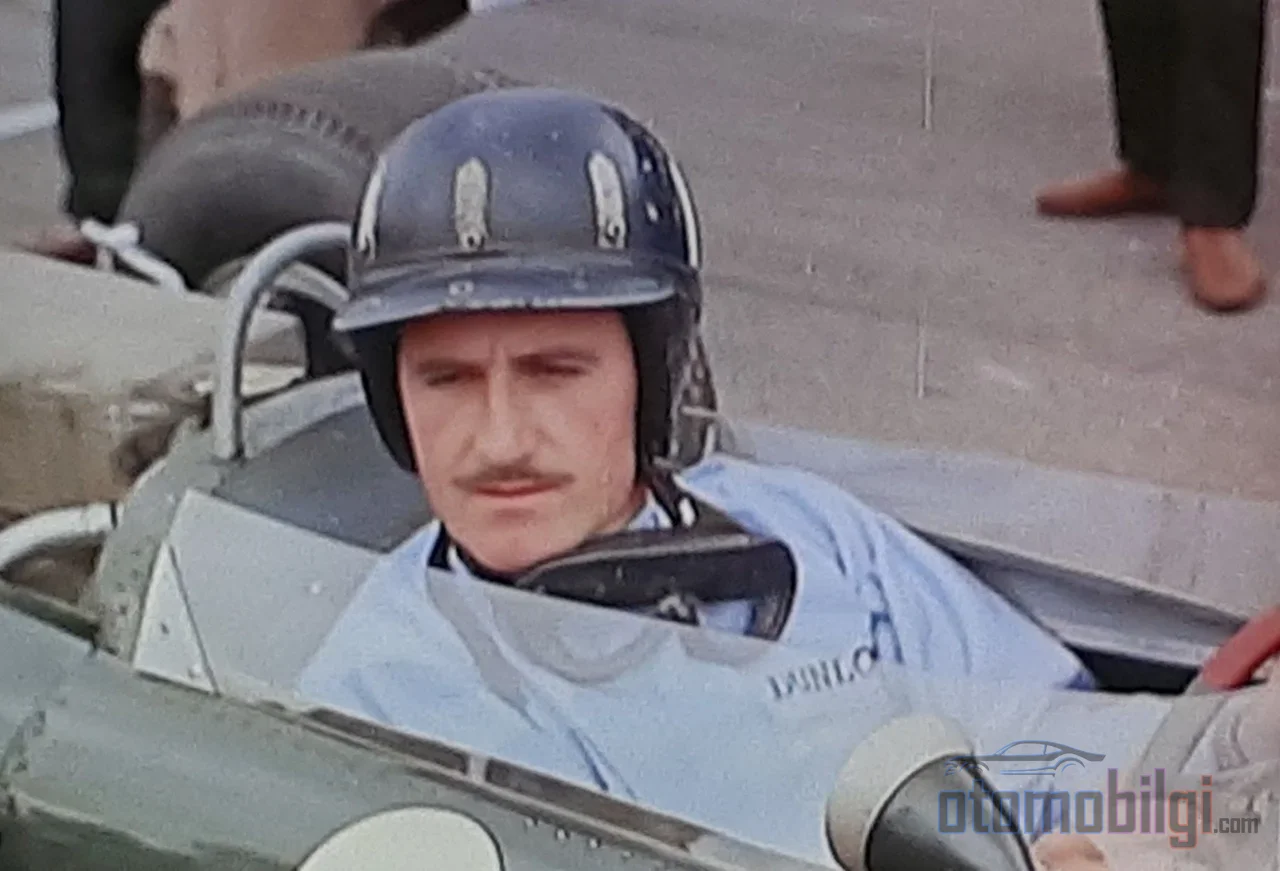
On the night of June 10-11, 1972, a mustachioed 43-year-old Englishman was sliding through the rain on a massive track in central France. A former Royal Navy sailor, two-time Formula 1 champion, the legend of Monaco... but he still had something missing. That night, at the wheel of the Matra-Simca MS670, Graham Hill was about to complete motorsport's least-achieved goal: the Triple Crown, consisting of the Monaco Grand Prix, the Indianapolis 500 and the 24 Hours of Le Mans. Imagine it - the same driver winning all three of these races. Looking back from 2026, no one has yet repeated it. How has this title rested on a single name for 54 years?
What Is the Triple Crown, and Why Is It So Hard?
One of motorsport's unofficial but most prestigious titles is the Triple Crown: the Monaco Grand Prix, the Indianapolis 500 and the 24 Hours of Le Mans. Three races, three different disciplines, three different worlds. The street circuit demands millimetric precision through tight corners; Indianapolis demands nerves of steel for hours at 350 km/h on the oval; while Le Mans tests the endurance of both car and human for 24 hours straight. It is nearly impossible for one driver to master all three - because usually everyone stays within their own community.
This is why Graham Hill's 1972 Le Mans victory is no ordinary win. By that point, Hill had won Monaco 5 times (1963, 1964, 1965, 1968, 1969), and in 1966 he finished the Indianapolis 500 not on paper, but on the track. In other words, two of the three were already on the shelf; the only thing missing was Sarthe's 24 hours. So why did this final piece take a full 6 years? The short answer: Hill's Le Mans record was never impressive, and things had not gone to plan by 1972.
Highlights
- Graham Hill is the only driver in history to complete the Triple Crown; as of 2026, the record is still his.
- The winning car, the Matra-Simca MS670: 2,993 cc V12, approximately 457 PS, 700 kg.
- Matra became the first French car to win Le Mans since 1950.
- The race was won by an 11-lap margin over teammates Cevert/Ganley.
- The winning car sold for 5 million euros at auction in 2021.
Matra's Seven-Year French Dream
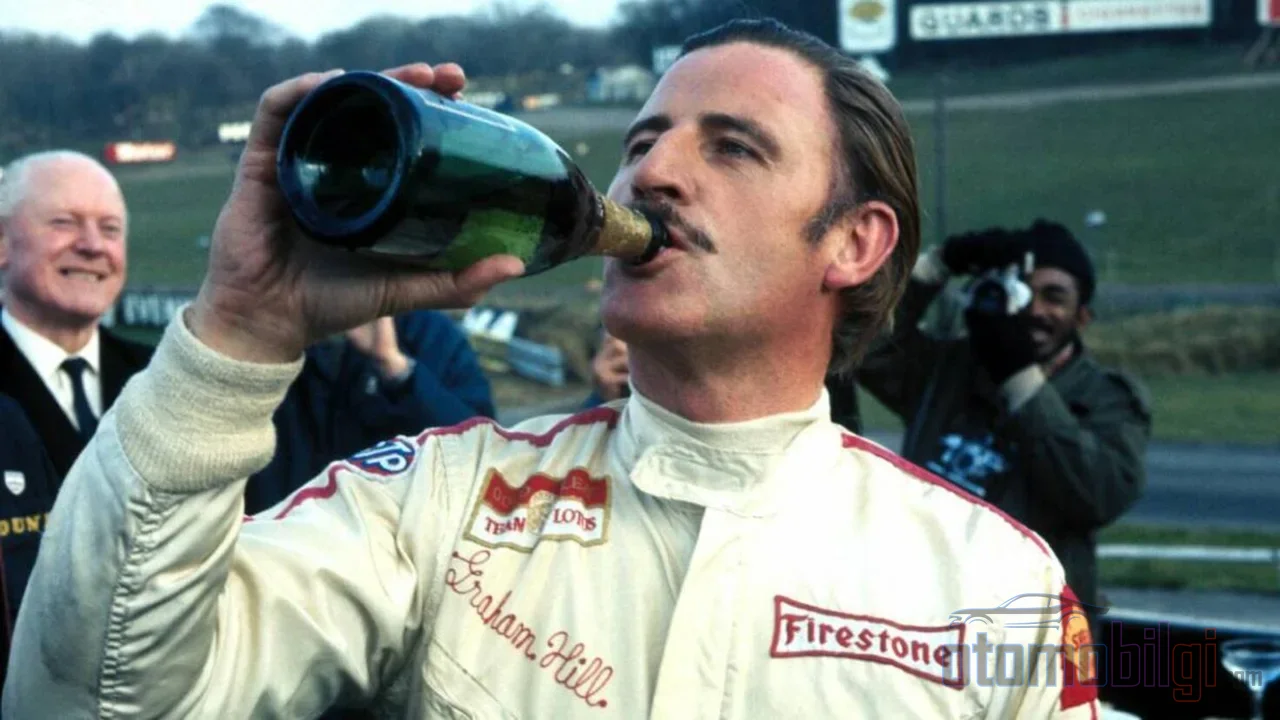
Before coming to Hill's story, let us meet the other side of the coin, because the 1972 victory was actually the intersection of two stories. Matra was climbing to the peak of a seven-year French endurance project under the leadership of Jean-Luc Lagardère. The team's Le Mans journey began in 1966-67 with BRM's 2-liter V8-powered cars, and evolved into its own prototypes after the regulation changes of 1968. France had been unable to win its own great race since 1950 - yes, a full 22 years. This hunger, which had become a matter of national pride for a country, explains Matra's full focus on Le Mans in 1972.
I use the word focus without exaggeration: Matra ran the MS670 only at Le Mans throughout the season; it devoted the rest of the championship season almost entirely to preparation for this single race. They came with four cars and filled the first three rows of the grid; Hill was joined in the squad by names like Francois Cevert and Jean-Pierre Beltoise. Luck also lent a hand: Even though Ferrari had won all of the first eight races that season, they never came to Le Mans due to durability concerns. The real rival was absent - but there was rain.
Rain, Night, and a Rejected Partnership
The character of the 1972 Le Mans was shaped by intermittent and unpredictable rain. One corner dry, another soaked - endurance racing's least favorite scenario. The funny (and slightly dramatic) part is this: Hill's teammate Henri Pescarolo didn't want this partnership at all at first. His reason was that he didn't want to take risky night runs in rain and fog. Then he changed his mind - and thank goodness he did.
Because when night turned to rain, the one who stayed calm was Hill. When Pescarolo later examined the lap times, he described the relief he felt at the sight before him: even in rain and darkness, the Englishman was shaving off lap after lap as if sniffing the air. The number 15 MS670 finished ahead of the team's Cevert/Ganley duo by 11 laps; Matra took all three podium spots, planting the French flag at Sarthe. For Hill, the post-victory program was quite glamorous too: a Moët et Chandon celebration and lunch with President Pompidou at the Elysée Palace.
The Matra-Simca MS670: A Dangerously Fast V12
Now let's take a closer look at the car, because the MS670 was not just a one-night stroke of luck; it was serious engineering from Bernard Boyer's pen. Introduced for the 1972 season as a Group 5 prototype, the car wore a fiberglass body over an aluminum monocoque chassis. And at its heart was a heart that ran on calculation, not on ear: a naturally aspirated, 60-degree V12 of 2,993 cc. Producing around 457 PS, the engine could carry the car to 195 mph (approximately 314 km/h) on the Mulsanne Straight - with a 700 kg body. Imagine a shopping cart of the same lightness, then bolt a V12 onto it; the math is frightening.
| Specification | Value |
|---|---|
| Designer | Bernard Boyer |
| Chassis | Aluminum monocoque + fiberglass body |
| Engine | Matra MS73, 2,993 cc, 60° V12, naturally aspirated |
| Power | Approximately 457 PS (336 kW) |
| Weight (1972) | 700 kg |
| Top speed | 195 mph (Mulsanne Straight) |
The MS670's career was not limited to this single victory either: it amassed a total of 15 wins and 16 pole positions in 20 races. Matra became consecutive constructors' champion in 1973 and 1974, and the 1972 victory launched a three-year French golden age with the 1973 (MS670B) and 1974 (MS670C/MS680) victories - after which it withdrew from motorsport at the end of 1974. After this victory, Pescarolo also became one of the most recognizable faces of Le Mans.
How the Monocoque Chassis Changed Endurance Racing
So what is this monocoque thing, and why does it matter? With a simple analogy: cars used to be panels draped over a skeleton - like the studs of a house, then its walls. In a monocoque, the body and load-bearing structure are a single shell. Think of an egg; the shell is both the outer surface and the support. This structure goes beyond being lighter and provides significantly higher torsional rigidity - meaning the chassis doesn't flex under cornering loads, and the suspension settings work on the track exactly as they were tuned for it. In a 24-hour marathon, in a race where every turbulence wears the chassis down, this is an inexhaustible advantage.
Matra developed this philosophy starting from the MS660s; the MS670 became the example that carried the aluminum monocoque to the top at Sarthe. The concept was inherited by vehicles that would redefine endurance racing in the following decades - legends like the Porsche 956, which rewrote both the ground effect and endurance rules with its aluminum monocoque chassis, are children of the same idea. So the technology Graham Hill sat in was a door opening to the future of motorsport.
Who Can Complete the Triple Crown Today?
What is most striking is that no one has managed to do it after Hill. Names with two of the components have emerged: Juan Pablo Montoya is the only other driver who, alongside Hill, has won both Monaco and the Indy 500 - but the Le Mans trophy never made it to his display case. Fernando Alonso approached from the opposite direction: He has Monaco and Le Mans, but his Indy 500 attempts came up empty. So the clear answer to the question is this: The only driver to complete the Triple Crown is Graham Hill, with his 1972 Le Mans victory, and as of 2026 that title still belongs to him. Half a century of generations have run into this wall.
For Hill, 1972 was the final major milestone of his career. On top of two Formula 1 championships (1962, 1968) and a 176-Grand Prix career, a signature no one has been able to replicate. That man with the "Mr Monaco" nickname and the Dick Dastardly mustache got what he wanted most in the hardest way possible.
The Bitter Farewell of the Winning Car
The chapter of the story 50 years later is also emotional. That legendary MS670, number 15, was on display at the Matra museum in Romorantin, owned by the Lagardère Group. In 2021, it was put up for auction at Rétromobile with an estimate of 4-7.5 million euros - Pescarolo considered it a kind of betrayal, stating openly that the car was a monument to world and French motorsport and should not be sold. The car ultimately passed to its new owner for 5 million euros (approximately 4.4 million pounds). Though the sale sparked controversy, one truth remained unchanged: that aluminum shell carries the final link in a unique trio in motorsport history.
The next time you follow Le Mans, remember this: no matter who wins, the real test is Hill's. This record, standing for 54 years now, may be motorsport's hardest wall to break - and atop that wall sits a mustached smile from the rainy night of 1972.
Sources
- The car that completed Graham Hill's triple crown | GRR
- 'Scandalous' sale of the Graham Hill & Henri Pescarolo 1972 Le Mans-winning Matra
- Matra-Simca MS670 - Wikipedia
- 1972 24 Hours of Le Mans - Wikipedia
- Graham Hill - Wikipedia
- Triple Crown of Motorsport - Wikipedia
- How Graham Hill completed motorsport's fabled Triple Crown - Motorsport.com
- Graham Hill and the Triple Crown (2) - Le Mans 1972 - 24h-lemans.com
- Le Mans-winning Graham Hill Matra sells for £4.4m - Hagerty