How Did Camp Culture at the 24 Hours of Le Mans Come About?
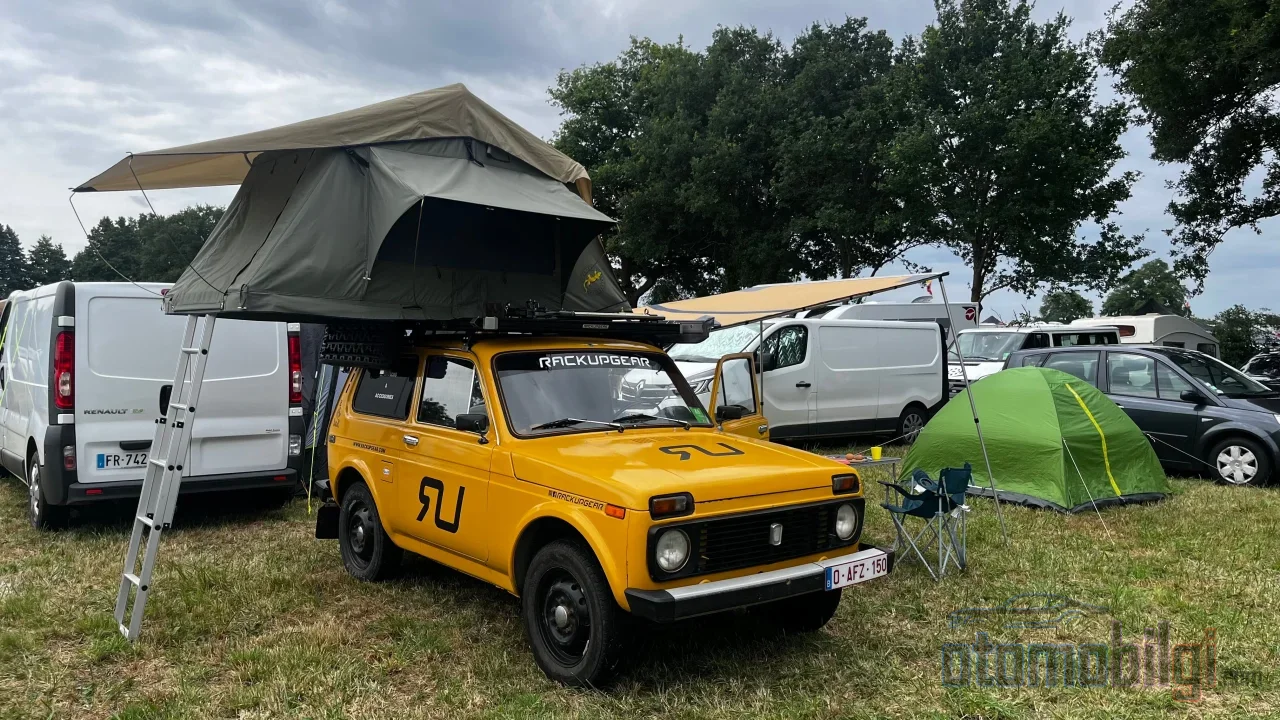
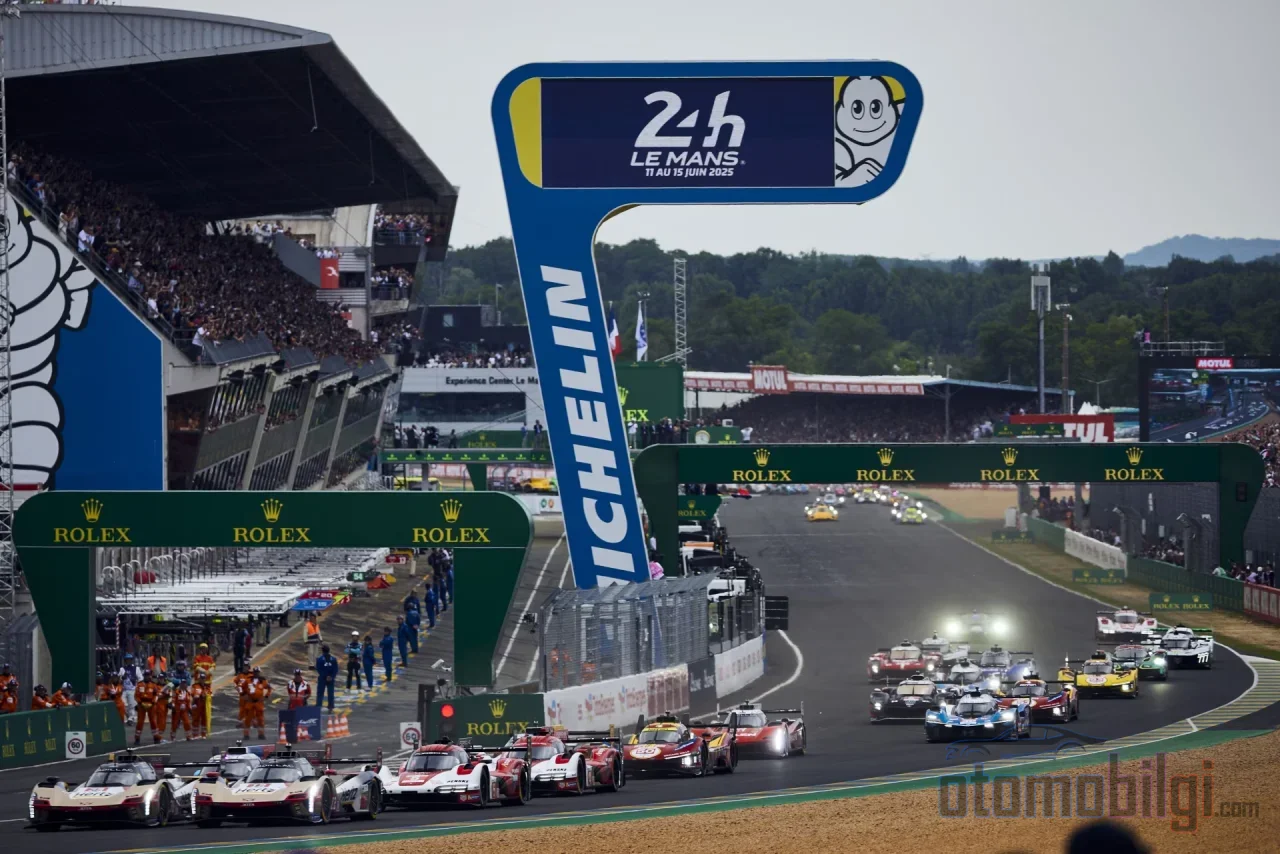
It's midnight, and you're sitting in a campground at the base of the Porsche Curves, beer in hand, listening to hypercars tear through the night a few hundred meters away. Around you: barbecue smoke, campervans, thousands of people speaking different languages. This is the edge of a racetrack, but it feels like a music festival. So how did the spectator camping at the 24 Hours of Le Mans become this? The answer is a story stretching from 1923 to today, one that began with a shortage of hotel rooms and evolved into fan zones, concerts, and an open-air cinema.
How the Camping Culture Began: Hotels Ran Out, Tents Filled In
The 24 Hours of Le Mans was first run on May 26, 1923; the idea emerged from a conversation between ACO Secretary General Georges Durand and tire manufacturer Émile Coquille at the 1922 Paris Motor Show. As the race grew, a problem emerged: hotel rooms in the city were never enough. By 1988, hotels were booking up years in advance for race week within a 30-mile radius. The solution was simple: people grabbed their tents and campervans and headed to the track.
Today, more than 250,000 spectators flock to the town during race week, and most of them stay in the campgrounds inside or around the circuit. The Circuit de la Sarthe is roughly 13.6 km long, and this massive track, rebuilt every year, is completely closed from 03:00 Wednesday morning until 18:00 Sunday evening throughout race week. That means someone coming to camp isn't just buying a 24-hour race, but nearly a week-long festival.
Highlights
- Over 250,000 spectators come to Le Mans every year, and most of them camp.
- The event's district-level direct economic impact is estimated at 82 million euros.
- The largest ACO campground, Beausejour, with a capacity of thousands of pitches, is usually the last to sell out.
- In 2026, an open-air cinema, Drive-In Paradiso, was added to the Concert Fan Zone.
- In 2026, the ACO celebrates the 120th anniversary of its founding.
The ACO Campgrounds: A Map of Houx, Maison Blanche and Beausejour
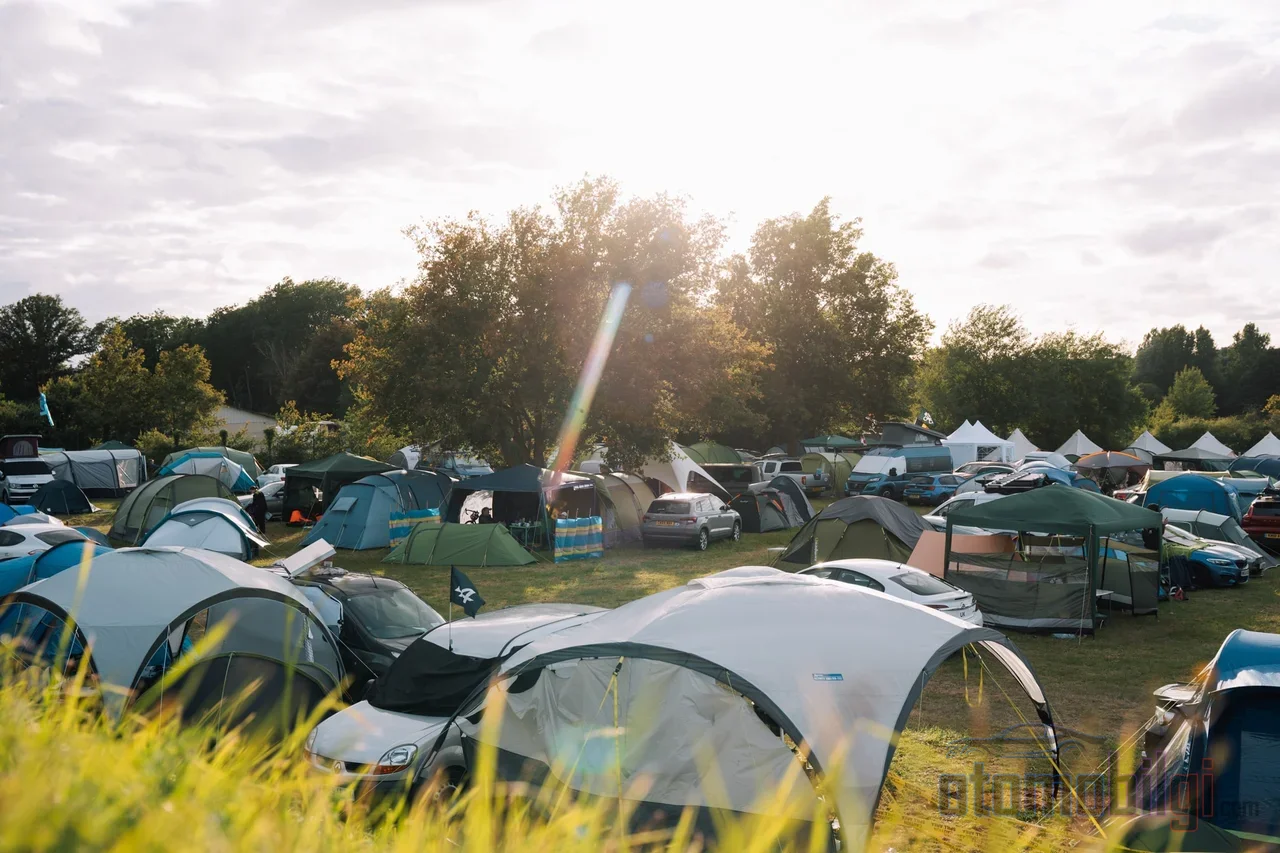
Most of the camps inside the circuit are run by the ACO (Automobile Club de l'Ouest). Each plot measures 7x5 meters; meaning the vehicle and tent must both fit in the same parcel. Shower and toilet blocks come as standard, and the price is set based on proximity to the start/finish straight. In 1988, the ACO's reservation areas were in the range of 12-20 pounds per week; since then, both demand and comfort have grown like an avalanche.
The Sellout Race of the Three Classics: Houx, Maison Blanche, Tertre Rouge
The three most popular ACO areas sell out months before the race. Houx is in the center of the infield, within walking distance of the village and the start line, and the only ACO camp offering electricity access. Maison Blanche sits directly adjacent to the track, just before the Ford Chicane; however, it shrank significantly with the construction of the Porsche Experience Center. Tertre Rouge, meanwhile, is a small area beyond the Dunlop Bridge, at the northern end of the track, overlooking the circuit. Those who miss out on these three mostly turn their eyes to Beausejour.
Beausejour: Massive Space with Thousands of Pitches
Beausejour, whose nearest track section is the Porsche Curves, is the largest ACO campsite with its thousands of pitches. The plots are unnumbered; meaning arriving early is essential to grab a good spot. The walk to the start line takes about 30 minutes, but in return the noisy, cheerful heart of Le Mans' largest camp community beats right there. The areas at the Arnage and Mulsanne corners offer beautiful views, but since they are outside walking distance from the rest of the circuit, they can feel somewhat isolated to first-time visitors. The ACO announced the renewal of the Arnage area, with improvements to roads, lighting and sanitation, as a new spectator zone.
Private Camps and Glamping: Luxury Patrol at the Porsche Curves
As camping culture has become institutionalized, a luxury wing has also opened up. Travel Destinations first introduced the private campsite concept more than a decade ago; at its area in the Porsche Curves it offers 24-hour security, serviced showers and toilets, a bar and a catering tent, TV screens, evening entertainment, and the only private spectator grandstand on the circuit. On the glamping side, there are spacious bell tents with carpets and mattresses; Flexotel Village rents pop-up hotel rooms in the heart of the circuit. Lycian Events sells a boutique camping experience called Village on the Curves at the Porsche Curves, and Porsche Club GB packages are also included in this camp.
One of the finest proofs of how serious an institution the camping tradition has become comes from 2023: Porsche CEO Oliver Blume joined the company's staff camp during the centenary celebrations, and only 200 tickets could be distributed among more than 1,200 applications. In other words, everyone up to the management lives Le Mans by camping.
Fan Zone, Concerts and Support Series: Not 24 Hours but 168 Hours
The race itself starts at 16:00 on Saturday, but the festival is already well underway. In 2024, five fan zones at the circuit were open from Tuesday onwards: Competition, Family, Concert, Porte Est and Panorama. Inside them are jumbo screens, dining areas, children's areas, a Pit Stop Challenge, a pit walk with 62 garages, driver autograph sessions, and hydrogen and manufacturer villages. Wednesday and Thursday are the ideal hours to tour the villages and look at the displayed cars.
The 2026 program took the festival spirit one step further: On Friday there is the Road to Le Mans race, the Drivers' Parade in the city center, and a nighttime Robin Schulz concert. The Drive-In Paradiso open-air cinema, set up by Peugeot and mk2, was added to the Concert Fan Zone; the aim is a true festival atmosphere with classic films and iconic automobiles. On race night, Magic System and Mosimann take the stage. The support series also set the tone of the week: the young drivers' series and action-packed transitions fill the days before the main race. As a journalist visiting for the first time put it, what happens here is not a 24-hour race, but a 168-hour festival.
The Spectator Economy: An 82 Million Euro Tent City
This festival also has a financial side, and it is big enough not to be underestimated. The event's direct economic impact at the district level is estimated at 82 million euros. The 2023 centenary event set a new attendance record, and record levels have been maintained in subsequent years. In the pandemic year, ACO President Pierre Fillon had openly stated that organizing a Le Mans without spectators was unthinkable; the spectator is written into this race's DNA. The same idea is repeated in the ACO's new brand identity announcement: Le Mans is more than a race, it is a collective experience that leaves a mark on every participant.
Chaos or Order: The Institutionalization Debate
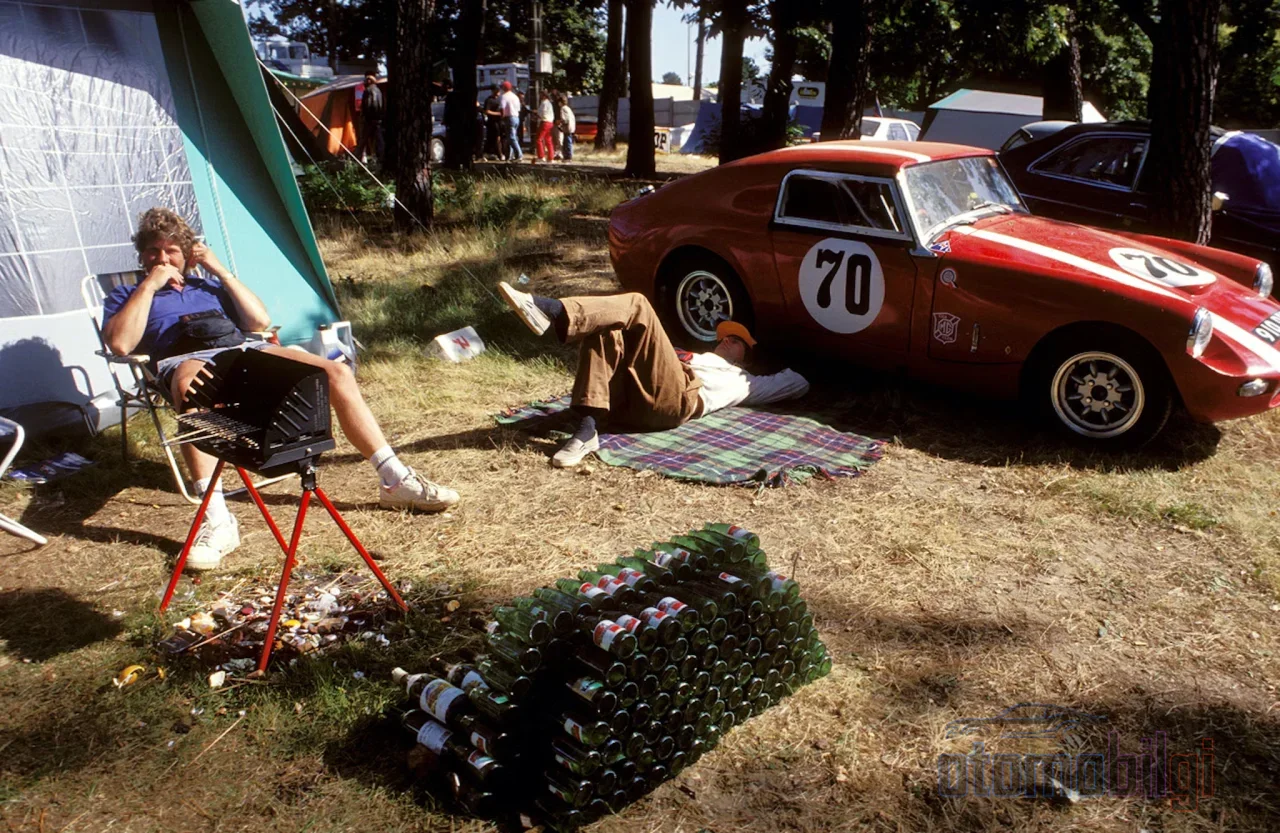
Of course, this transformation does not make everyone equally happy. According to thirty-year visitors, post-COVID financial imperatives turned the ACO into a much more corporate operation: camping areas shrank, and some were moved farther from the Village and the start straight. Tertre Rouge is gone; the future of Houx and Houx Annexe is also uncertain. The free-camping era of the 90s, with its fairground stalls, bizarre displays, and the culture of going to the municipal pool for a shower, was like the wild west; many long for that chaos.
But the other side of the coin is also real: today's Le Mans offers more amenities than most Formula 1 circuits. Excellent fan zones, far more TV screens, clean showers and toilets, an internal shuttle bus, and a tram. From 2024 onward, the ACO has been managing traffic by stopping exits from the camping areas a few hours before the race ends; those who seek solutions in advance plan to park their cars at spots like Mulsanne. The order that has replaced the old chaos is what ensures the event's growth and survival.
How the Spectator Survives: Practical Information
A few golden rules have formed for those who want to join the camping festival. The classic answer to the question of what to bring has not changed for years: spare clothes, a rain jacket, camping gas and a water heater, a sleeping bag, a flashlight. Food and drink inside the circuit are expensive; stocking up is wise. Arriving early is essential in unnumbered plot areas like Beausejour. And there is an unwritten protocol rule: bring your neighbor at least one box of beer. Online communities track who goes where every year; the camping areas have built their own social networks.
The Crowd Walking to the Podium: Why This Tradition Is the Heart of Endurance Culture
So what is the impact of all this tent city on the race's identity? The answer comes when the race ends: the start straight opens up and spectators gather around the podium. Le Mans's track invasion is a legitimate and sacred closing ceremony; tens of thousands of tired, happy campers enter the winners' photo frame. Nowhere else in the motorsport world do Glamour and controlled chaos meet, with the scents of campfires, race fuel, and beer intertwined. As one journalist described it, this is a motorsport Glastonbury with twice the crowd.
The spectator camp at Le Mans has become a festival because the race was never just on the track. When hotels ran out, the tent culture that began spawned its own traditions in the areas stretching from Houx to the Porsche Curves; fan zones, concerts, open-air cinema and support series turned this tradition into an official festival architecture. The spirit of the endurance race lives on not only in the prototypes on track for 24 hours, but also in the campsites that stay awake through the night.
Sources
- The Circuit de la Sarthe Is Its Own World Full of Unique Wonders
- Spectator guide: Le Mans 24-hours race
- Camping at Le Mans is the best way to experience the Le Mans 24 Hours.
- What is it like to be at the Le Mans 24 hrs Race?
- Le Mans Guide - Camping, Tickets & Survival Tips
- Le Mans 24 Hours
- 24 Hours of Le Mans & Camping
- 2026 24 Hours of Le Mans - Friday 12/06 Programme