How Did the Alpine A442 Claim France's First Victory at Le Mans?
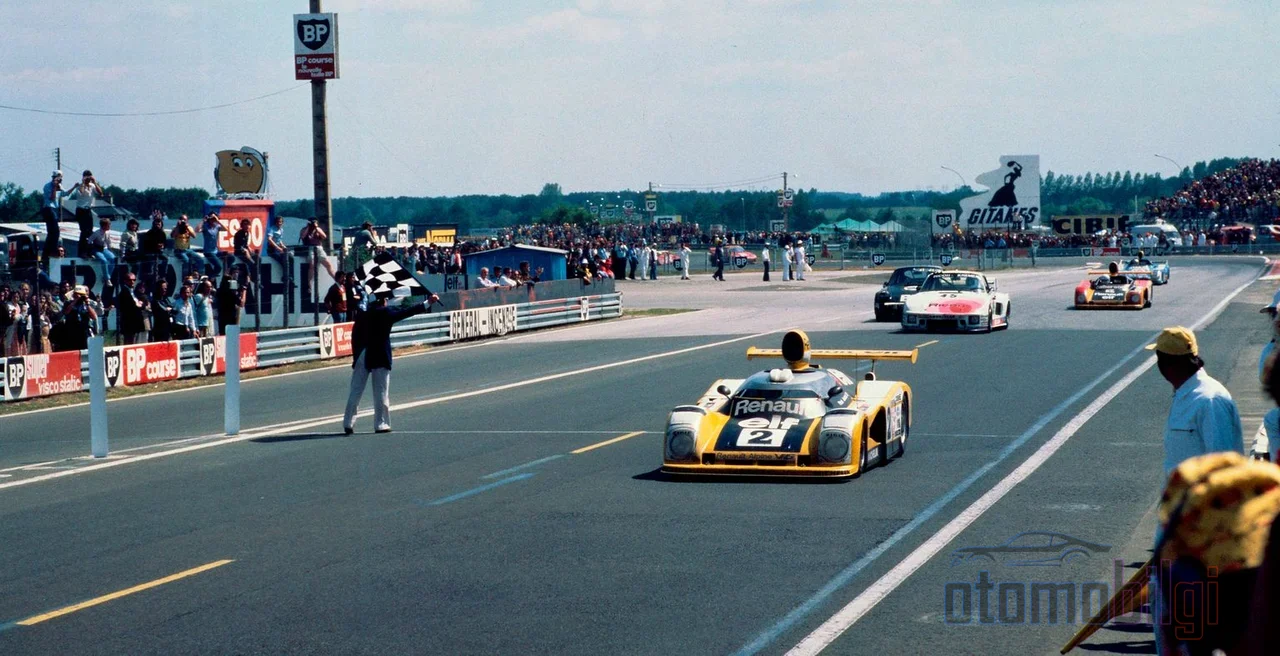
When you think of a car exceeding 300 km/h in the middle of the Mulsanne straight on a June night in 1978, Porsche or Ford probably comes to mind, right? But what if the sound tearing through the straight that night was that of a French V6, complete with the whistle of a turbocharger? This is exactly where the story of the Alpine A442 begins: One of only five cars built to win Le Mans, two years of painful failure, and finally that absolute victory arriving at the end of 24 hours. With a driver who barely had the strength left to lift the trophy.
On this page I will tell, step by step, the story of Renault-Alpine's 1978 Le Mans victory - the first outright win for a turbocharged engine at Le Mans - from the development of the A442 to the final lap of the race. If you know the legends of the Ford-Ferrari rivalry, Audi's dominance, or Mazda's Japanese victory, this is the missing French story in your collection.
Why Was Renault-Alpine Preparing for Le Mans This Way?
First, a bit of background. The relationship between Alpine and Renault grew increasingly close from 1971 onward, and by early 1975, when the A442 project was born, the two companies were almost completely intertwined. Renault fully acquired Alpine in early 1976. So the A442 was not the work of the small workshop in Dieppe, but a prototype backed by the full might of a giant French automotive manufacturer.
Victory at Le Mans was a major matter of prestige for Renault. A huge budget was spent, and to simulate the long straights of the Sarthe circuit, the cars were run for hours on airport runways. The team's sporting director, Gérard Larrousse, was an experienced name who had enjoyed two Le Mans victories in 1973 and 1974 as a Matra driver; his lead was clear: first Le Mans would be won, and then all attention would shift to Formula 1.
The A442 was a direct evolution of the already successful A440 and the championship-winning A441. So it was not a gamble designed from scratch; it was a proven chassis with a new weapon fitted onto it. I will get to what that weapon was shortly, because that weapon is the true hero of this story.
The Turbo Revolution: From 270 Horsepower to 490 Horsepower
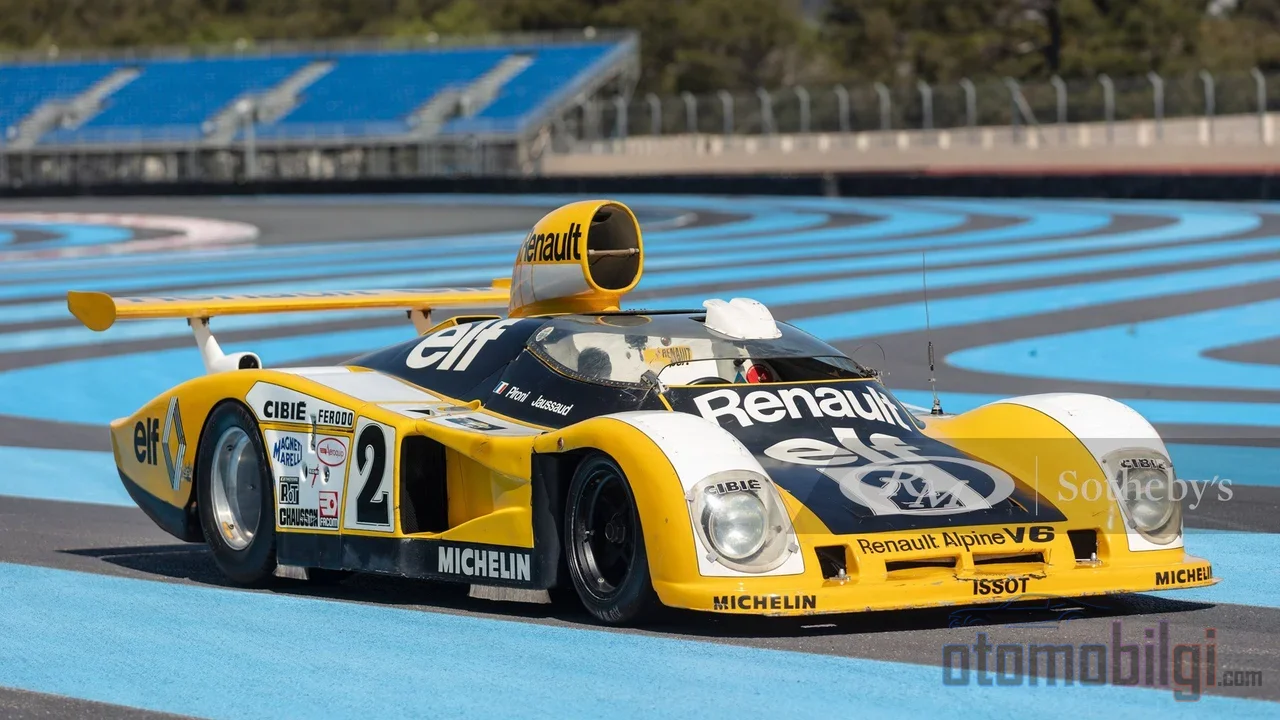
Now let's talk a bit of engineering, but don't worry, I will explain with analogies. At the heart of the A442 was a Renault-Gordini 1997 cc (2.0-liter), 90-degree, mid-mounted V6 engine. In naturally aspirated form, this engine produced around 270 horsepower. Then a large Garrett turbocharger entered the picture, and power nearly doubled to 490 horsepower (365 kW); within three years, development work pushed past the 500-horsepower mark as well.
Think of the turbocharger this way: instead of the engine's exhaust gases being thrown out wastefully, they spin a turbine, and that turbine pumps pressurized air into the engine. More air, more fuel, more explosions, more power. Which means significantly more power from the same displacement. This technology, which we consider ordinary today, was still new and risky territory in European endurance racing in the mid-70s, and Renault-Alpine shared the lead on that ground with Porsche. This rivalry between the two brands is known as the golden age of turbocharging.
Highlights
- 1978 Le Mans: Didier Pironi and Jean-Pierre Jaussaud won with 369 laps, four laps ahead of Porsche.
- The A442's turbo V6 engine produced 490 bhp; the naturally aspirated version made 270 bhp.
- The first absolute victory won with a turbocharged engine in Le Mans history.
- The A443 reached 380 km/h on the Mulsanne Straight in 1978.
- Only five cars (A442 and A443) were built with the sole purpose of winning Le Mans.
From A442 to A443: Three Brothers, Three Characters
The family grew: Introduced in 1978, the A443 was essentially the A442 chassis with a new 2138 cc engine producing 520 bhp (388 kW). The 2138 cc displacement was not chosen in vain; it was designed just below the theoretical limit for turbocharged cars (2142 cc). In other words, classic racing engineering - the work of engineers who read between the lines of the rulebook.
After wind tunnel tests in the fall and winter of 1977, the A442B and A443 took to the track with a partially enclosed roof made of acrylic glass called the "bubble". This bubble provided about 8 km/h of extra speed on the Sarthe circuit, but the interior was both hot and severely restricted visibility. When Patrick Depailler and Jean-Pierre Jabouille voiced that the bubble was claustrophobic, only the A442B raced with this roof. An aerodynamic comfort compromise, in the fullest sense.
| Specification | A442 / A442B | A443 |
|---|---|---|
| Engine | Renault-Gordini V6 turbo, 1997 cc | Renault-Gordini V6 turbo, 2138 cc |
| Power | 490 bhp (365 kW) | 520 bhp (388 kW) |
| Chassis | Aluminum-reinforced steel spaceframe | A442 chassis |
| Transmission | Hewland TL200, 5-speed manual | Hewland TL200, 5-speed manual |
| Body | Fiberglass, extended tail | Fiberglass, bubble roof |
| Fuel / Tires | Elf / Michelin | Elf / Michelin |
The chassis was an aluminum-reinforced steel spaceframe, and the fiberglass body and tail section were extended for high-speed efficiency on the Mulsanne Straight. The suspension was double wishbone at the front and rear. As for the 0-100 km/h acceleration figure, it was never disclosed in reliable sources; the manufacturer did not share any data on this.
1976 and 1977: Two Years of Broken Hearts in a Row
The best part of victory stories are the years before the victory. The A442 began its racing life with a surprise victory at the 1000 km of Mugello in March 1975, with Jabouille and Larrousse; winning its first race opened the series with hope. But Le Mans was a completely different beast.
In 1976, the two Renaults started from the front row at the Nurburgring but crashed at the second corner. After a string of mechanical failures, the team could only enter the 1976 Le Mans with a single car, and that car retired with an engine failure before half of the 24 hours. In 1977, Renault Sport fielded three factory cars, endurance legend Derek Bell joined the lineup, and a private A442 also took to the track. None of the four cars finished. This outcome, which turned into the expected success, was interpreted by the press of the time as a complete embarrassment. In those same years, Porsche's 936s and 935s were stacking up championships one after another.
But those two years did not go to waste. Together with Michelin, a test distance of around 30,000 km was covered, and the reliability problems of 1977 were solved one by one. Between the two Le Mans races, the Alpines finished second and third at Dijon-Prenois, and second at Monza. The car was fast; now it needed to be made durable. By 1978, that too was done.
The 1978 Le Mans: Anatomy of the 24 Hours
On June 10-11, 1978, for the 46th running of the race, the factory team entered three cars: the A442A, the bubble-roofed A442B, and the big brother A443. Renault's developing Porsche 936s had shared the first four rows of the grid; the Porsche 935/78 "Moby Dick" in third place, with 800 horsepower, could exceed 360 km/h on the straights - a horror film of its own.
As soon as the race started, the A443 was the star of the show; it was lapping under 3:40, and Jabouille held the fastest lap of the race at 3:34. By the end of the third lap, the French prototypes had already claimed the first three positions. But Le Mans is a race of endurance, not speed. In the early hours of the night, Bell's A442A retired with a gearbox problem. Toward morning, Depailler's A443, in the lead, had its engine fail at around 10:00. Both 936s suffered technical problems, and the third one crashed out at 11 in the morning.
One Renault remained: the No. 2 A442B, in the hands of Didier Pironi and Jean-Pierre Jaussaud. But the clutch of the bubble-roofed car had begun showing signs of weakening. And here comes the curtain-drop decision: Pironi did not get out of the car at all during his final two stints. He could not risk getting out, because every stop carried the risk of the clutch giving its last breath. The duo, who took the lead in the final few hours, carried it to the finish without letting go for even a second.
The result: 369 laps, more than 5,000 km of distance, an average speed above 210 km/h, and victory four laps ahead of Porsche. The private-entry Calberson A442A also finished fourth, behind the two 936s. Pironi was so exhausted that he had no strength left to climb the podium; Jaussaud collected the trophy alone. A man who gave everything for 24 hours being unable to stand at the trophy ceremony is perhaps the most human moment of this story.
So Where Does This Victory Sit in History?
Here is the clear answer to the question in the title: The Alpine A442B won the 1978 24 Hours of Le Mans with Didier Pironi and Jean-Pierre Jaussaud, and this was not only Renault-Alpine's first outright Le Mans victory, but also the result that made it the first team in racing history to win with a turbocharged engine - a thoroughly French victory: A French team, French drivers, French fuel (Elf), and Michelin radial tires climbing to the top of the Le Mans podium for the first time. On the greatest night of French motorsport, an entirely French outfit won. Matra, after all, was already a French brand that had won two outright victories between 1972-74; What made 1978 different was that the victory came with a thoroughly French package and a turbocharged engine from start to finish.
The engineering side is not unimpressive either: With its final trim setting and bubble canopy, the A443 reached 380 km/h on the Mulsanne straight. This still stands as the record for the fastest car Renault has ever produced, including Formula 1 cars. Turbocharging technology did not come to Le Mans alone; it threw the door wide open; after this victory, the turbo became the standard weapon of endurance racing and of great road cars.
Withdrawal Despite Victory: Why Did Renault Say Farewell?
Here comes the strangest part. Immediately after winning the trophy, Renault withdrew from sports car racing and shifted all its resources to Formula 1. This sudden departure was not without an answer: Larrousse's strategy, set from the very beginning, was to focus on F1 once the Le Mans goal had been achieved. And the investment bore fruit quickly: The A442's V6 turbo engine was further developed and carried over to Formula 1, going down in history as the first turbocharged engine to win a Grand Prix, with Jean-Pierre Jabouille. The lessons learned at Le Mans were transformed directly into a Grand Prix victory.
As for the cars: only five cars (A442 and A443) were built for this project whose sole purpose was to win Le Mans, and today only one is in private hands. An example of the A442 made headlines with a price tag of up to 4.25 million pounds at auction. The number 2 A442B, which ended in victory, is on display at the Le Mans museum today; it even took its place in the commemorative photo taken before the 6 Hours of Monza in 2026 alongside the team's A424 Hypercars. And here is history's twist: Alpine announced in February 2026 that it would withdraw from the WEC Hypercar category at the end of the season. Citing slow growth in the automotive industry, this decision sounds quite familiar with 1978's departing team, doesn't it?
Conclusion: The Missing French Line of the Legend List
For car enthusiasts who know by heart the Ford-Ferrari war, Audi's dominance, and Mazda 787B's Japanese victory with its rotary engine, the Renault-Alpine of 1978 still sometimes fails to find the place it deserves on their lists. Yet this story has everything: two consecutive years of painful failure, 30,000 km of stubborn testing, a record of 380 km/h, a tireless driver, a champion too exhausted to climb the podium, and an elegant farewell that came right after the summit. The turbo era's first outright victory at Le Mans was also the proudest night of French motorsport. Next time you think of the Mulsanne straight, also picture that blue-and-white Alpine of 1978; the whistle of the turbo still echoes in the memory of that straight.