How the Porsche 956 and 962 Locked Up Le Mans for Eight Years?
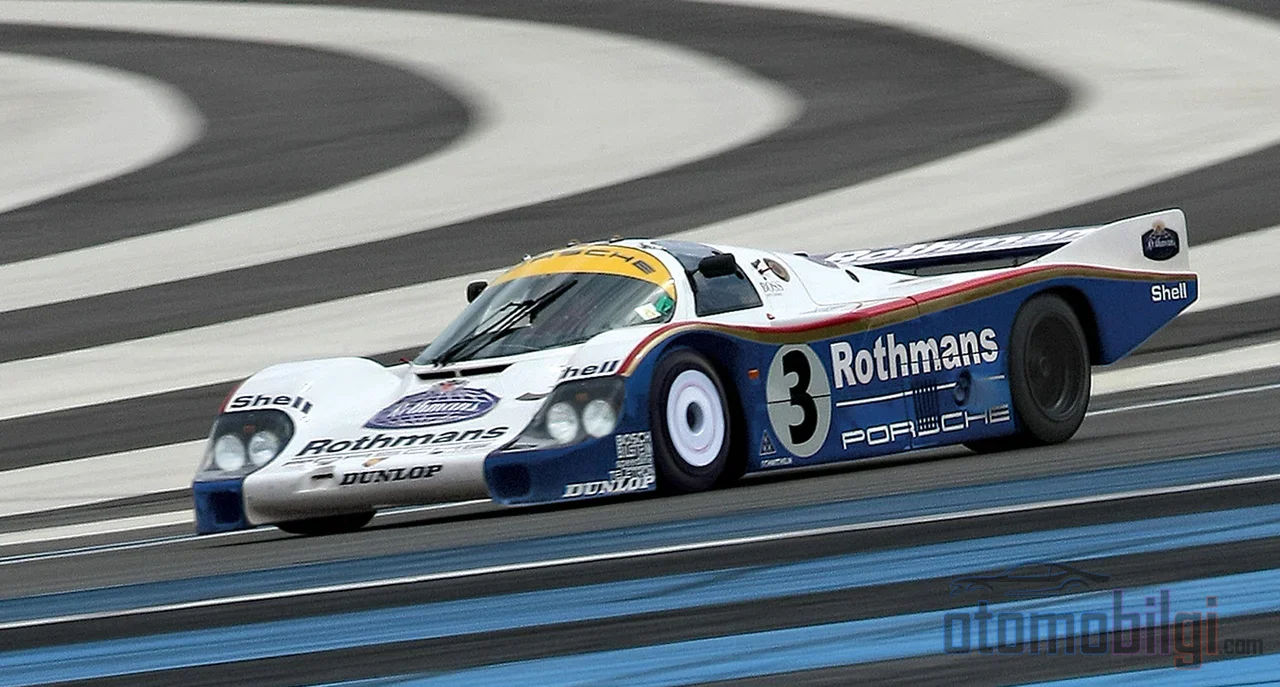
Perhaps the three white-and-gold Porsches lined up on the starting grid at Le Mans in the summer of 1982 did not look like favorites to anyone, but that day the rules of sports car racing were quietly changing. At the end of 24 hours, these three cars locked out the top three positions, and for the next six years no one could take the overall summit away from Porsche. How could a single design family lock out Le Mans for seven years in a row, from 1982 to 1987? The answer lies partly in aerodynamics, partly in fuel mathematics, and partly in the power of customer teams.
On this page we will not cover the legendary 917 or Porsche's general Le Mans career; we will focus directly on the dominance of the 956 and its extended offspring, the 962. If you are ready, let's go from ground-effect physics to the clever games played on the fuel gauge.
Group C: Volume Doesn't Matter, Fuel Logic Does
First we need to understand what was happening on the ground, because the story of the 956 cannot be told without the Group C regulations. In 1982, the FIA introduced an entirely new category based on fuel consumption rather than engine displacement: minimum weight was 800 kg, maximum fuel tank was 100 liters, and only five refueling stops were allowed in 1,000 km races. So simply building a powerful engine was no longer enough; that power had to be managed liter by liter. Imagine having a huge bag of money but a limited spending budget. That is exactly what Group C was.
This formula was practically an invitation for Porsche, with its deep experience in engine construction. The company gained a decisive advantage in this era with engine development that turned consumption-focused rules to its advantage. When the permitted average consumption was reduced from 60 L/100 km to 51 L/100 km starting from the 1984 season, most manufacturers struggled; Porsche answered on the field by developing its electronic fuel injection.
956: The Flat-Bottom Aerodynamics Revolution
The Porsche 956, designed by Norbert Singer, was created from scratch for these regulations in 1982 and brought two firsts: Porsche's first aluminum monocoque chassis and its first ground effect, i.e. flat-bottom aerodynamics. Ground effect is simply this: accelerated air under the car creates low pressure, and the car sticks to the asphalt like a giant vacuum cleaner. The downforce produced by the 956 was more than three times that of the Porsche 917 from a decade earlier.
On the engine side, there was a 2.65-liter Type-935 twin-turbo flat-six; it produced approximately 620-635 hp (the figure varies by version). An interesting detail: this engine was actually developed as an Indycar project, meaning a heart never planned for Le Mans went into it. The factory version could reach a speed of 360 km/h.
Highlights
- 1982-1987: The Porsche 956/962 family won at Le Mans seven years in a row
- 2.65-liter twin-turbo flat-six, approximately 620-635 hp
- The 956 finished 1-2-3 on its first Le Mans entry in 1982
- In the 962, the front axle was moved approximately 12 cm forward, protecting the driver's feet
- On the Mulsanne, a low-drag wing reached 362 km/h
A total of 28 units of the 956 were produced between 1982-1984; Richard Lloyd Racing even built an unofficial 29. chassis from spare parts. So you can guess the demand.
Special Setups for Le Mans
Le Mans' nearly 6 km Mulsanne Straight was a special engineering issue for the 956: a small low-drag rear spoiler was fitted here, and the grip lost in corners was compensated with the speed gained on the straights; the result was a top speed of around 362 km/h. While the factory Rothmans cars used a one-piece underbody, customer cars had a twin underbody; meaning the factory gripped a bit more than everyone else.
How Was the Seven-Year Winning Streak Built?
The first stone of the series was laid in 1982: the 956 finished 1-2-3 on its debut, with three factory cars taking the first three places led by Ickx and Bell's car. Then came 1983, 1984 and 1985; the 956/956B reached victory four years in a row. The critical detail is this: when the factory team boycotted Le Mans in 1984, the win went to the privateer team Joest Racing's 956B; and in 1985 the same team managed to beat the factory 962s outright with an old-generation 956 chassis. So the dominance was not only factory power, but the design itself being good.
In 1986 and 1987 it was the 962C's turn, and Porsche wrote seven full consecutive years of Le Mans victory to its own design between 1982-1987. The series ending in 1988 against Jaguar's more powerful and better balanced XJR-9 LM actually shows even better how long this dominance lasted.
From the 956 to the 962: Chassis Extended for Safety
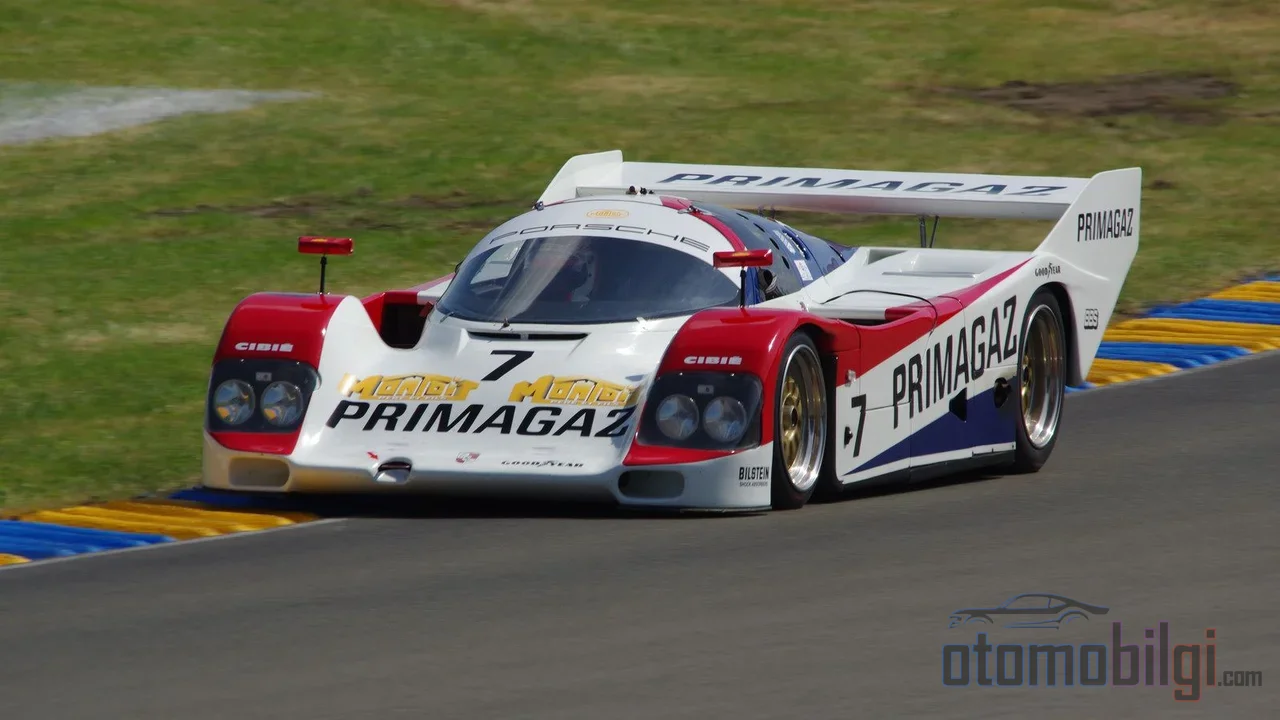
So why was a new car needed? The answer is not performance as you might expect, but safety. IMSA rules banned the driver's feet being ahead of the front axle centerline for safety reasons; so the 956 could not race in the USA. Porsche's solution was clear: move the front axle forward by about 12 cm. This extended chassis gave the driver's legs more room and much better protection for the limbs; that is how the 962 was born. There is also a visual clue: the 962 usually has a large air intake on the engine cover.
Stefan Bellof losing his life at the 1985 Spa 1,000 km in a crash involving a Brun Motorsport 956 and a factory 962 deepened safety concerns about the 956 and accelerated the teams' transition to the safer 962. The 962 became the official successor to the 956 in 1985; in 1987 Porsche crowned its Le Mans victory with a new, more durable and powerful 3.0-liter engine.
Factory and Privateer Teams: The Family Grows
Another secret of this dominance was that Porsche sold its cars. From 1983 onwards, customer 956s were delivered to teams such as Joest Racing, Obermaier Racing, John Fitzpatrick Racing, Richard Lloyd Racing, Kremer Racing and Brun Motorsport. The result: at Le Mans there were not just three factory cars, but plenty of other competitive Porsches, and mathematically the chance of winning multiplied every year.
Joest Racing's victories in 1984 and 1985 proved that privateer teams could keep the design competitive. In fact, chassis 956-110 was one of only two privateer 956s that could beat the factory Rothmans 956. As the family progressed, the 962 continued in the same vein: Derek Bell scored 21 victories with the 962 between 1985 and 1987, and the 956 experienced both its final win and its final race in the last round of the 1986 WEC season with Joest Racing.
Fuel Strategy: The 24-Hour Mind Game
At Le Mans, Group C regulations used a different fuel allocation than the 1,000 km quota, and this meant a silent war on the pit wall. Drivers watched the fuel consumption gauge and applied techniques like lifting off the throttle early at corner exits to extend their stints. What won was not setting the fastest lap, but driving the most distance per liter.
When the consumption limit was lowered in 1984, Porsche responded with the Bosch Motronic electronic system introduced on the 956B; this system significantly improved fuel efficiency. While rivals wrestled with engine capacity, Porsche was thinning out the liters with electronics.
The Legacy That Endures Today
The influence of the 956/962 family went far beyond Le Mans trophies. The PDK dual-clutch transmission we see in production Porsches today was first tested on the 956 in the early 1980s, then used on the 962 and reached the roads in 2009 with the 997 Carrera. In 1983, 956 chassis #107 became the test platform for the Porsche P01 Formula 1 engine that would carry the TAG badge; that engine won 25 Grands Prix between 1984 and 1987, bringing McLaren two Constructors' and three Drivers' championships.
And then there is that lap: In qualifying for the 1983 Nurburgring 1,000 km, Bellof completed the Nordschleife in the 956 in 6:11.13, setting a record that would stand unbroken for 35 years; until Timo Bernhard's 919 Evo finally beat it on June 29, 2018. And that famous question: Could the 956's downforce keep the car glued to the asphalt even in reverse through a tunnel? Sources do not give a definitive answer, but the very fact that the question can be asked gives an idea of the magnitude of the downforce generated.
Eight Years, or Seven? Getting the Count Right
Let us honestly address the "eight years" in the title, because the numbers here are delicate. What the records conclusively confirm is this: The 956 and 962 won at Le Mans for exactly seven consecutive years between 1982 and 1987, and the streak was only broken in 1988 by the Jaguar XJR-9. The same vehicle family signed a total of seven outright Le Mans victories spread over a period extending from 1982 to 1994. So the "eight-year lock" is a somewhat poetic expression; the solid figure is seven consecutive victories, plus later successes such as 1994, which came with the Dauer 962 LM based on the 962C, showing that the family had a much longer run. The length of the reign can be debated, but its impact is undeniable.
To sum up: the flat underfloor aerodynamics changed the physics of racing, fuel mathematics was added to the turbo engine, customer sales turned the grid into a sea of Porsches, and the safety-focused 962 transition kept the system going without interruption. Hearing another name mentioned at Le Mans in the 1980s might have been possible if these four pieces had not held together. But they held; and the result was one of the longest single-family reigns in sports car history.
Sources
- Porsche 956 - Wikipedia
- Porsche 962 - Wikipedia
- Group C - Wikipedia
- The milestones and developments of Group C - Porsche Newsroom
- The 936, 956, 962 C and 919: Porsche's "Fantastic Four" - 24h-lemans.com
- Porsche 956: Group C, Ground Effect and Le Mans History - Renn Driver
- Le Mans' greatest Group C battle: Jaguar XJR-9 LM vs Porsche 962 - Motorsport Magazine
- Porsche 956-110 - Historic Porsche