How Did Derek Bell Win His Five Victories at Le Mans?
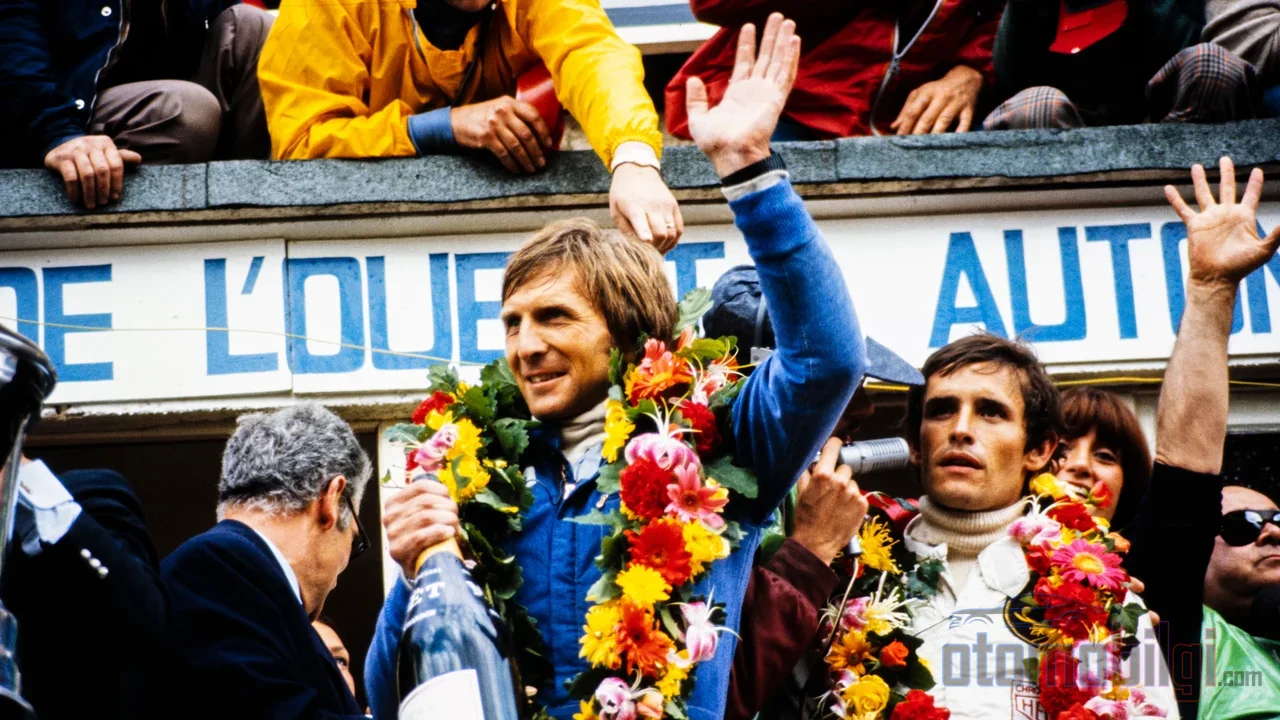
The Le Mans test day of 1971. A Porsche 917LH over the Mulsanne Straight, flying at a calculated 246 mph. That's not the goal, just a byproduct - because the man in that seat came to win more, and to win Le Mans a full five times. That man's name is Derek Bell, and the funny thing is, if you mention him today, many people ask "who?" Tom Kristensen's nine and Jacky Ickx's six victories are on everyone's lips; but the Englishman with five victories between them somehow stayed quiet. So how did the most successful British driver in Le Mans history end up in the shadow of the legends?
If you're ready, let's begin the journey of a farm boy all the way to the racing seat. Warning: The F1 part will be a bit painful.
From the Farm to the Piste: How Did Bell's Journey Begin?
Derek Reginald Bell was born on October 31, 1941, in Pinner, Middlesex, England. He grew up on a farm, and his connection to racing began in 1964 with a Lotus Seven, thanks to his stepfather Bernard Hender. In March of the same year, he even took his first victory at Goodwood. In other words, the kind that made people say "this kid has something" in his very first season.
Then he entered Ferrari's radar. In 1968 he made his Formula 1 debut with Ferrari at Monza - a debut that would not escape Enzo Ferrari's eye. But as it turned out, his F1 adventure was anything but brilliant: Between 1968–1972 and 1974, with teams like Ferrari, McLaren, Surtees and Tecno, he took the start only 9 times out of 16 grand prix entries, scored a single point, and his best result was the 6th place he took at the 1970 United States Grand Prix.
Sounds like disappointment, doesn't it? It really isn't. Bell's true identity emerged not in the F1 seat, but in the sportscar cockpit. When his F1 career ended in 1975, the real story was just beginning - and that story would be written with Le Mans for a lifetime.
The First Victory and the Man Who Never Left Le Mans
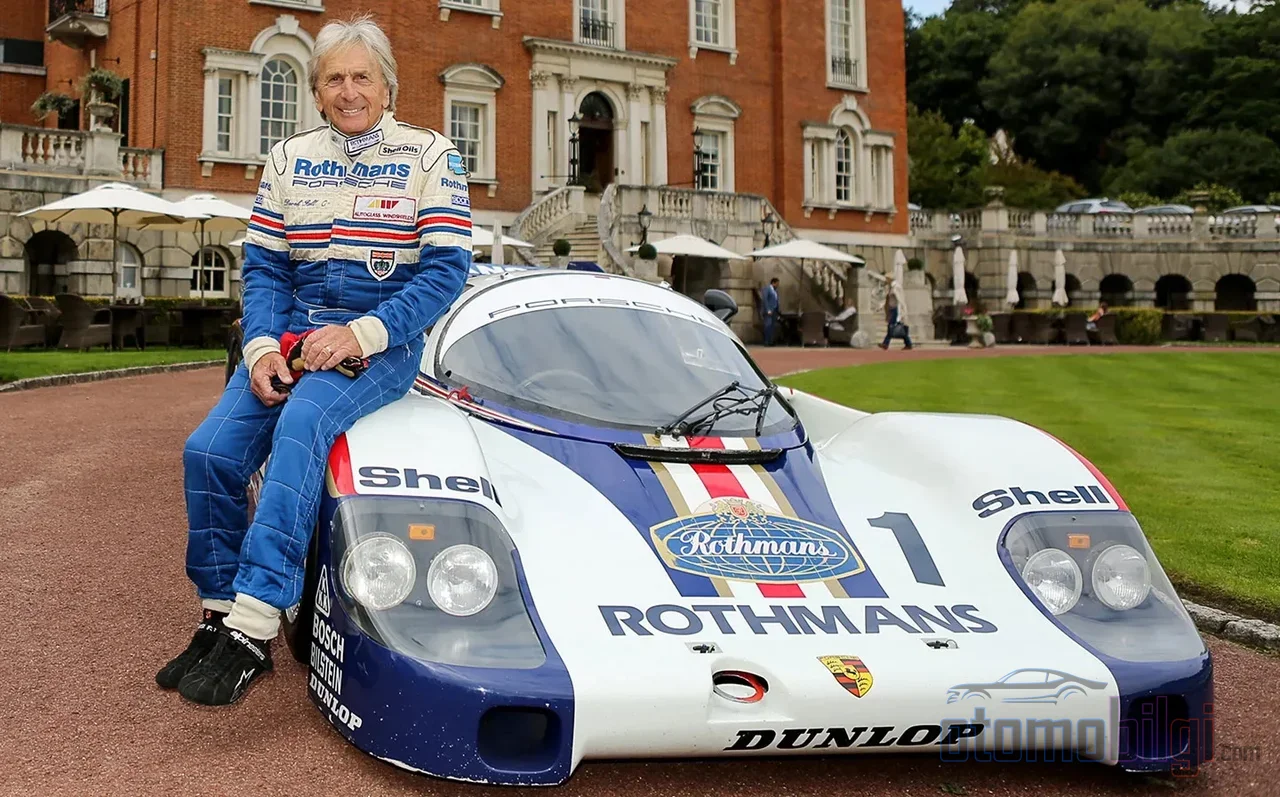
Bell's relationship with Le Mans began in 1970; with the Ferrari 512, and his teammate was Ronnie Peterson. That year, during the accident-aftermath filming, he also drove the Ferrari for Steve McQueen's legendary film - the car caught fire during filming and Bell escaped at the last moment. In the very first year, you'd brush shoulders with death and my car would catch fire; that's just too much.
Then in 1975 came his first victory: With the Gulf Mirage GR8, he took Jacky Ickx along and won the overall classification. And this is important: Four of Bell's five victories came in a Porsche seat - only the first victory in 1975 came with the Mirage. He competed at Le Mans from 1970 to 1996 (except 1984); the records show 26 or 27 starts, and he finished more than just two fourth places and one third place on multiple occasions. His last race came in 1996 with the McLaren F1 GTR - imagine, a 26-year Le Mans career, the full length of many entire careers.
Highlights
- Derek Bell's Le Mans overall classification victories: 1975, 1981, 1982, 1986, 1987
- Four of the five victories with Porsche - with 22 victories in the Porsche 962, the most successful driver in the brand's history
- In the all-time Le Mans list, in the top three alongside Ickx (6) and Kristensen (9)
- 1985 and 1986 World Sportscar Champion; Three wins at the 24 Hours of Daytona
- Awarded the MBE in 1986 for his services to motorsport
Dominance Established with the Porsche 956 and 962: The Heart of Group C
Now let's get to the technical side - but don't worry, I'll explain it with a simple analogy. Think of Group C; A new endurance category that began in 1982 with fuel consumption restrictions. In the very first season of this new order, Porsche finished 1-2-3 at Le Mans with the Porsche 956. It's like winning the championship, the cup, and the golden boot in your first match in football - and as a brand-new team, no less.
Bell was right in the middle of this era. In 1982 he won his third Le Mans victory with the Rothmans Porsche 956, and then added two more consecutive wins in 1986-1987 with the Porsche 962. According to Bell, the 956 is the most successful racing car in Porsche history - and in the history of the Porsche 962 as well, Bell holds the title of most successful driver with 22 victories. The Bell + Porsche 956/962 pairing is the engine of what we'd call the "quiet architect" story in English. These cars set the standard of their era; And Bell was the name at the head of that standard.
The 1986 victory was Porsche's 11th overall win at Le Mans. In the 1987 season as well, Bell's car reached the podium in every race it finished, and even took pole position at Le Mans. So this isn't a "lucky year" story; It's systematic dominance.
1984: Victory at the Nurburgring with Bellof
One of the unforgettable moments of this era was the 1984 Nurburgring 1000 km: Bell shared the Porsche 956 with Stefan Bellof, and the duo brought home the victory. He is also one of only two drivers who have won the Spa 1000 km on both the old and the new circuit - and who's the other one? Ickx, of course.
The Anatomy of Victories: With Whom, in Which Car?
Bell's five victories span three different eras, and the team dynamic is an integral part of the story. He won three times with Ickx (1975, 1981, 1982) and twice with Stuck and Holbert (1986, 1987). Now let's bring these together in a single table - because this kind of information is far more memorable in list form:
| Year | Car | Team-mate(s) |
|---|---|---|
| 1975 | Gulf Mirage GR8 | Jacky Ickx |
| 1981 | Porsche 936 | Jacky Ickx |
| 1982 | Porsche 956 | Jacky Ickx |
| 1986 | Porsche 962 | Hans-Joachim Stuck, Al Holbert |
| 1987 | Porsche 962 | Hans-Joachim Stuck, Al Holbert |
The Stuck and Holbert trio was the ideal team model from the endurance racing handbook: Three fast, consistent drivers who trusted one another. In 1986 and 1987, the same trio took back-to-back wins in the same car - doing that at Le Mans is as hard as a football team winning the championship two years in a row with the same squad. We also understand just how much this trio bonded from the fact that, years later, Stuck described Bell as one of the most beloved drivers of his generation.
Only Le Mans? The Breadth of Bell's Endurance Career
The five Le Mans victories are just the visible tip of the iceberg. Bell's endurance career spans a much wider spectrum: Three victories at the 24 Hours of Daytona in 1986, 1987 and 1989, two World Sportscar Championship titles in 1985 and 1986, and roughly 53 wins in his career according to the IMSA Hall of Fame. His career spanned more than five decades - from 1964 into the 2010s, and he even returned to Le Mans in 2012, after a 20-year break, driving the 962 in the Group C support race.
And his later years were not idle either: He led the Spectre R42 supercar project in 1996-97, consulted on the Bentley Speed 8 program in 2001 - Bentley won Le Mans in 2003 - and became a global ambassador for Bentley. He also served as grand marshal at the 2021 Le Mans. So the man never truly left racing.
A Moment Worth More Than Five Wins: Father's Day 1995
Here is the most emotional part of the story. If you asked "which of the five Le Mans wins matters most?", you would say 1982 or 1986... Not according to Bell. His proudest moment is not any of the five victories, but the third place he took in 1995 alongside his son Justin in the Harrods-backed McLaren F1 GTR. Standing on the Le Mans podium on Father's Day, in the same car as your son. Apparently even five overall wins fade beside that. When motorsport becomes a family affair, it takes on a whole different meaning; his son Justin and grandson Oliver are racers too.
How Did Derek Bell Write His Five Le Mans Wins? Answer
Let's return to the real question: How did Bell write those five wins? The short answer: with the right partners, the right cars, and boundless consistency. He opened the door in 1975 with Mirage alongside Ickx; when he moved to Porsche, he came back-to-back with the 936 in 1981 and the 956 in 1982; in 1986-87, with the 962, he added two more wins as part of the trio with Stuck and Holbert. During Group C's technological transition, in the years when turbocharged prototypes were redefining endurance racing, Bell was both inside the process and at its forefront.
On the all-time list, he stands third, just behind Kristensen's 9 wins and Ickx's 6 - the title of most successful British driver still belongs to him. He also showed a respectful stance when Kristensen broke Ickx's record; the finest form of competition is being able to appreciate your rival's success, after all.
Even Porsche, in 2026, on Bell's 85th birthday, honored him with his five Le Mans wins, the 956/962 Group C dominance and two world championships. The awards he received further cement the story: the MBE title in 1986, the BRDC Gold Star four times between 1984 and 1987, the Motorsports Hall of Fame of America in 2012, the Le Mans Drivers Hall of Fame in 2013, and the Motor Sport Hall of Fame UK in 2016. So the "quiet architect" label is no exaggeration - he is one of the names that built Porsche's golden age, and he is still counted in exactly the place he has earned.
Next time you mention Ickx or Kristensen, squeeze one more name in between: Derek Bell. A career written with five wins, a 246 mph Mulsanne speed and a podium on Father's Day - in my opinion, it does not deserve to remain quiet.
Sources
- Derek Bell (racing driver)
- Nine things worth knowing about Derek Bell
- Derek Bell's Last Le Mans Start, Legendary Status Endures
- Derek Bell's Le Mans-winning cars are legendary
- Derek Bell - Motorsports Hall of Fame
- 1986 24 Hours of Le Mans: a major trio for Porsche
- When Did It All Start? - Derek Bell MBE