How Did Jaguar Win Seven Victories at Le Mans?
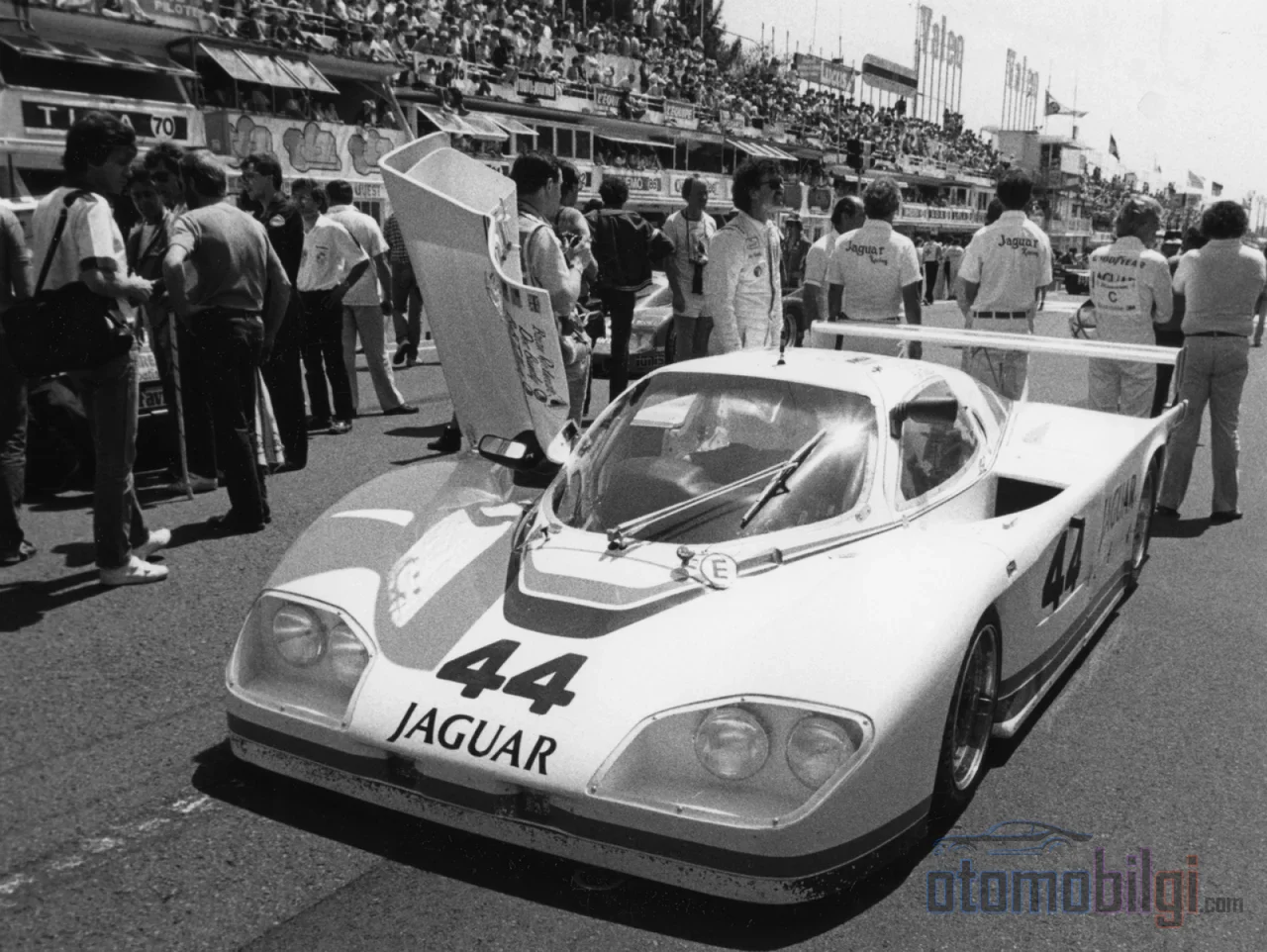
On the morning of the 1953 Le Mans race, technical inspectors stood in front of the Jaguar and took another look at the car. There was something resembling a brake, but it was not the drum brakes they were used to. Maybe it did not even have brakes at all, they thought. Yet what they had in hand was a technology that would change the course of racing, and this brand from Coventry was about to enter an era in which it would win five of the ten races on that year's calendar. Jaguar's Le Mans story is not just about a trophy cabinet; it is also considered the birth certificate of some of the technologies in the cars you drive today.
So how did this British brand win this crazy 24-hour endurance test exactly seven times? The answer does not lie in a single magic formula; there are three different cars, two different eras, and a long 31-year silence in between. If you are ready, let's begin, because this story unfolds both on the track and at the drawing board.
The First Victory Came in 1951 with the C-type
It all started in 1950 when William Lyons brought engineer Malcolm Sayer onto the team for a new race car. Just six months later, this car carrying the name C-type took the stage at Le Mans for the first time. Just imagine: half a year of development time, the world's most brutal endurance race. The plan, which sounded risky, exploded into results in 1951: the car driven by Peter Walker and Peter Whitehead won the overall classification, Stirling Moss broke the lap record by 6 seconds, and the runner-up finished a full 9 laps behind. That race was Jaguar's first Le Mans victory.
But while the team was savoring the victory, it was already chewing on a new problem: the brakes. The 1951 car had still raced with classic drum brakes, and against increasing speeds, this system was not durable enough to last 24 hours. And here, the story's first great technical revolution takes the stage.
Highlights
- Jaguar won 7 overall victories at Le Mans: 1951, 1953, 1955, 1956, 1957, 1988 and 1990.
- A car with disc brakes raced and won at Le Mans for the first time in 1953.
- The D-type reached victory three times in a row between 1955-1957.
- The victory that came with the XJR-9 in 1988 ended Porsche's 7-year winning streak.
- The 1953 winners set a first by averaging 105.85 mph over 24 hours.
The Disc Brake Revolution: The Secret Weapon of 1953
In the winter of 1951-52, Jaguar set out, together with Dunlop, to adapt a technology familiar from the aviation world to the race car: the disc brake. The critical issue was for the brake pads to last the entire 24 hours without wearing out. The first great fruit of the successful test came on June 29, 1952 at Reims; Stirling Moss won at an average speed of 98.18 mph, and a car with disc brakes won an international motor race for the first time.
For Le Mans, however, a tougher year was endured: in 1952, three C-types failed to finish the race due to engine overheating caused by body revisions. The broken calculations were set right a year later. In 1953, with a thinner and lighter aluminum body, plus Dunlop disc brakes, they returned like a complete secret weapon. These were the first disc-braked Le Mans cars to pass technical inspection; it's quite understandable that the officials initially doubted whether they even had brakes, right?
The Hare Tactic and a Record-Breaking Average
A detail also came up before the race: Duncan Hamilton and Tony Rolt had been disqualified over a shared entry number. Thanks to the insistence of team manager Lofty England and William Lyons paying a 25,000 French franc fine, the duo were reinstated in the race. On top of that, they showed up at the 4:00 pm start after a sleepless night spent having fun; Rolt even broke the lap record in the first half hour of the race. That's 1953 logic for you!
The race itself was a masterclass. Stirling Moss and Peter Walker took on the role of hares, forcing Ferrari into early and harsh braking; while the tires of rivals without disc brakes wore out, Jaguar lapped with total composure. The result: a 1-2-4 finish. Hamilton and Rolt covered a distance of more than 2,500 miles at an average of 105.85 mph, becoming the first winners to exceed a 100 mph average over 24 hours. Only a single Ferrari managed to finish the race, and it was 5th. in the race. After the victory, a telegram from the Queen arrived in Coventry. A total of 53 C-types were produced, and in 1954 it gave way to a new star.
Three Wins in a Row with the D-type: 1955-1957
Now let's turn a bit to the engineering side, because the D-type was no ordinary follower. Instead of a classic frame made of steel tubing, it used a magnesium alloy monocoque body. If you ask what a monocoque is: it's a construction in which the body itself is the load-bearing structure, much like in aircraft. Lighter, more rigid, and exactly what you're looking for on the race track. This approach, transferred from the aviation industry to the automobile, made the D-type one of the first racing cars to use a monocoque.
Aerodynamics were also worked on seriously: the long nose, the more enveloping windscreen, and the rear edge extending all the way to the tail improved the car's efficiency in the air. That famous fin on the tail was born as an iconic detail providing stability at high speeds. The result? Three wins in a row in 1955, 1956, and 1957. This era, in which Jaguar won five of the ten Le Mans races of the 1950s, is the brightest page in the brand's racing history.
31 Years of Silence and the Great Comeback in 1988
After 1957, things changed. Jaguar stayed away from the Le Mans scene for many years; in the shining 1980s of the Group C era, it returned with factory-backed efforts. The comeback process, which began in 1984, bore the signature of Tom Walkinshaw Racing (TWR). Midway through the 1985 season, the XJR-6 was raced in the World Championship, but the entry for that year's Le Mans was abandoned, as the cars were not yet considered ready. These were times of rebuilding that required patience.
And then 1988. Jaguar came to Le Mans with five XJR-9 s; all of them were powered by V12 engines. The car, which drew attention at the start of the year with an overall victory at the 24 Hours of Daytona, had left eight Porsche 962s behind together with the team that included Martin Brundle. Five TWR Jaguars entered a long battle against three factory Porsches at Le Mans. At the wheel were Jan Lammers, Johnny Dumfries and Andy Wallace. Not a band of musketeers, but a driver lineup; and these are the heroes of the story.
The XJR-9 Was a Purple Storm
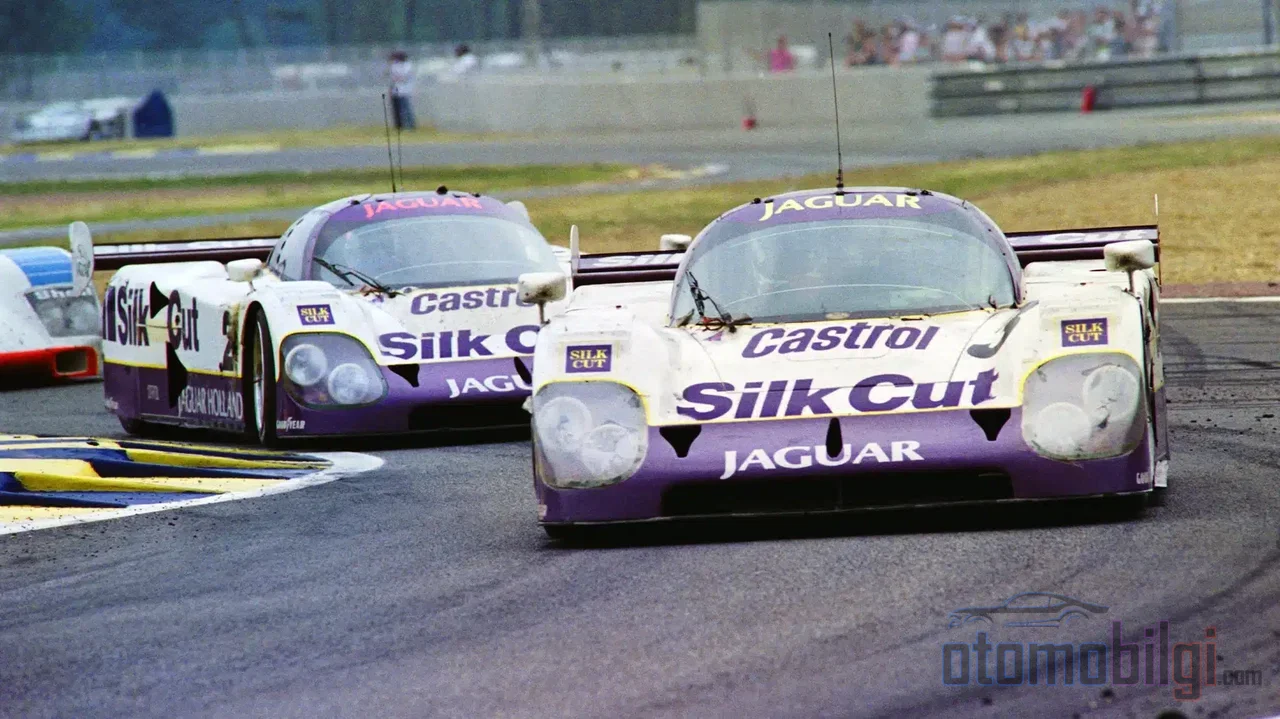
The XJR-9, covered in Silk Cut's purple violet livery, brought victory by covering 394 laps and 5,330.86 km. This result put an end to Porsche's seven-year winning streak at Le Mans and completed Jaguar's return to the top 31 years later. To give a clear figure for engine power, the records indicate that the 6.0-liter V12 units produced 650 horsepower; different measurements also mention higher values, but the main framework is clear.
The Seventh Victory and the Completion of a Legacy
The comeback continued at pace. In 1989 Jaguar claimed the championship; Sauber was in pursuit on the track and new regulations were at the door. In 1990, the XJR-12 with John Nielsen, Price Cobb and Martin Brundle took both first and second place, securing the fifth victory between 1988 and 1990 and raising Jaguar's total to exactly 7 victories. A story that began in 1951 turned into an adventure whose numbers were completed in 1990.
So what was the secret of these victories? The short answer: both fast cars and the right technology at the right time. Disc brakes settled into Le Mans from 1953 onward and became a standard found on every car today. The monocoque body approach remains one of the most efficient lessons transferred from aircraft to automobile in racing engineering. In other words, when Jaguar won, it gave something back; it is remembered not only for the trophies it won, but for its contribution felt in every braking on the streets.
And there is an emotional side too: The C-type was remembered anew in 2021, with a Continuation series of 8 units per the 1953 Le Mans specification. Legends are not forgotten; they are simply sometimes made to wait 31 years.
Jaguar's Le Mans Victories at a Glance
| Year | Car | Drivers |
|---|---|---|
| 1951 | C-type | Peter Walker, Peter Whitehead |
| 1953 | C-type (disc brakes) | Duncan Hamilton, Tony Rolt |
| 1955-1957 | D-type (three in a row) | Works and privateer teams |
| 1988 | XJR-9 (V12) | Jan Lammers, Johnny Dumfries, Andy Wallace |
| 1990 | XJR-12 | John Nielsen, Price Cobb, Martin Brundle |
When you take a look at the table, the pattern reveals itself: five victories in the 1950s, over thirty years of silence, and two more victories between 1988 and 1990. And keep this in mind: names like Jacky Ickx and Andy Wallace appear in this story, but none of them alone is the hero of the story; Jaguar's seven victories were, each time, the joint work of a team, of an engineering school of thought.
Sources
- JAGUAR C-TYPE RACING
- Jaguar C-type # 18, Roy Nockolds
- The Le Mans-winning Jaguar C-type that raced into the gloaming
- Jaguar Honors Its First Win at Le Mans with New C-Type Continuation
- Jaguar C-Type & D-Type
- Jaguar goes from five to seven wins between 1988 and 1990
- 1988 Le Mans winning Jaguar XJR-9
- About Jaguar | Jaguar Motorsport Moments