How Did Last-Row Starters Win the Indy 500?
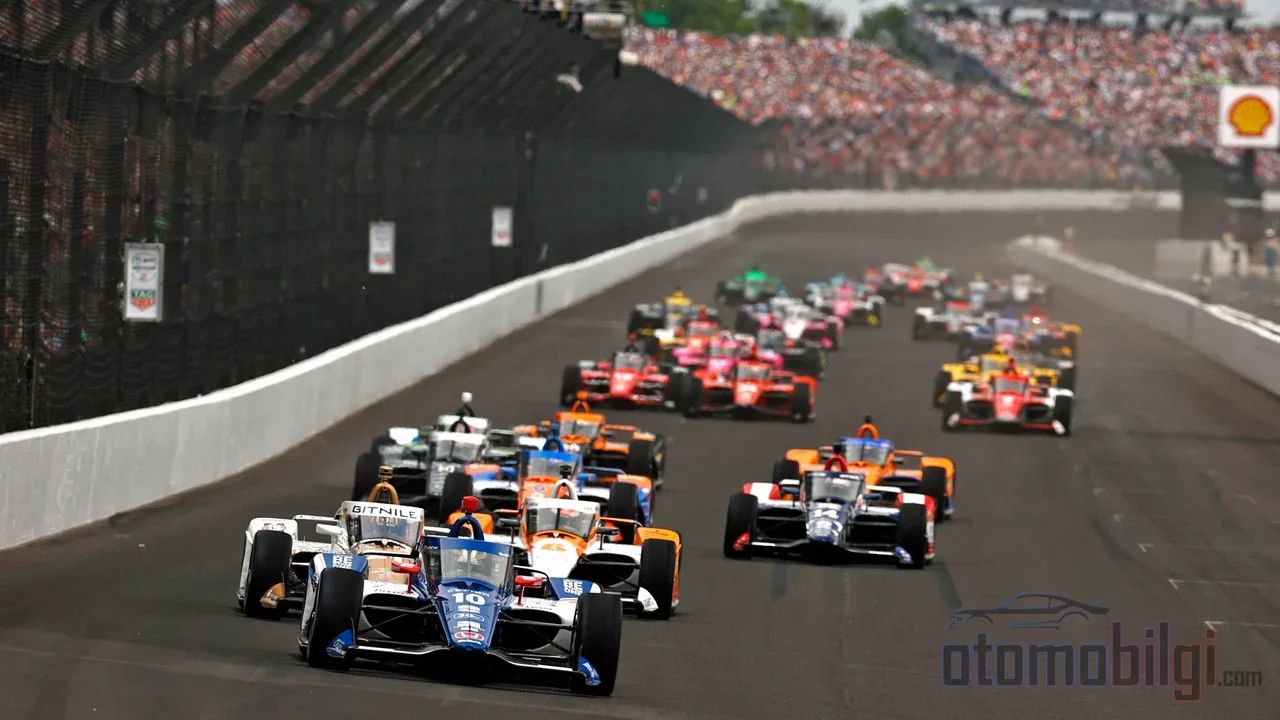
Have you ever looked at a driver's starting position and tried to predict the winner of the race? In the Indy 500, this game often surprisingly fails. 200 laps, 500 miles, a constantly shifting dance of 33 cars... and some of the greatest victories in history came from rows left entirely in the grid's shadow. So why does that difference measured in seconds during qualifying get erased so easily on race day?
Qualifying Day and Race Day Are Two Different Sports
First, let's clarify something: In the Indy 500, the starting order is not determined by a single fast lap like in Formula 1. Here, drivers are ranked according to the 10-mile average speed of four consecutive laps. So you can't land in the front row thanks to one lucky corner; you need to be consistent across all four laps. In the format of recent years, the fastest 12 drivers advance to the next round, from where an elimination chain runs all the way to the Fast 6. For the 110th running, this format was expanded slightly, and the three cars advancing from the Final 15 lined up for the start, ordered from slowest to fastest.
So how much does this spectacle actually guarantee? Looking at history, the answer is striking: Only about 26 percent of winners have come from pole position. That means the majority of victories, a 74 percent share, come from the other 32 positions. Sitting at the very front of the starting draw may make you a favorite, but it doesn't guarantee you the throne.
There is a technical explanation for this. During qualifying, the car is set up entirely for a single run: bold enough to slide around with low downforce, yet balanced enough to survive four laps. A few small variables, such as the corner apex, wind direction, and track temperature, can create differences of dozens of miles in average speed. On race day, a completely different game begins: fuel load, tire management, traffic, and a strategic chess match lasting all 500 miles. Just think: the person who gets the highest score on an exam on paper may not be the one who actually manages the project all year long. That is exactly Indy's dual structure.
Highlights
- Pole position has been the most successful starting position in Indy 500 history, producing 21 victories.
- Even so, roughly 74% of the victories came from the other 32 rows of the grid.
- Ray Harroun, winner of the first race, started from 28th position; Louis Meyer won from that same position in 1936 as well.
- Hélio Castroneves joined the four-wins club in 2021 after starting from 8th position.
- Al Unser, at 47 years and 360 days old, became the oldest winner of the race in 1987, winning from 20th position.
Those Who Came From the Deepest Ranks of the Grid: Record Positions
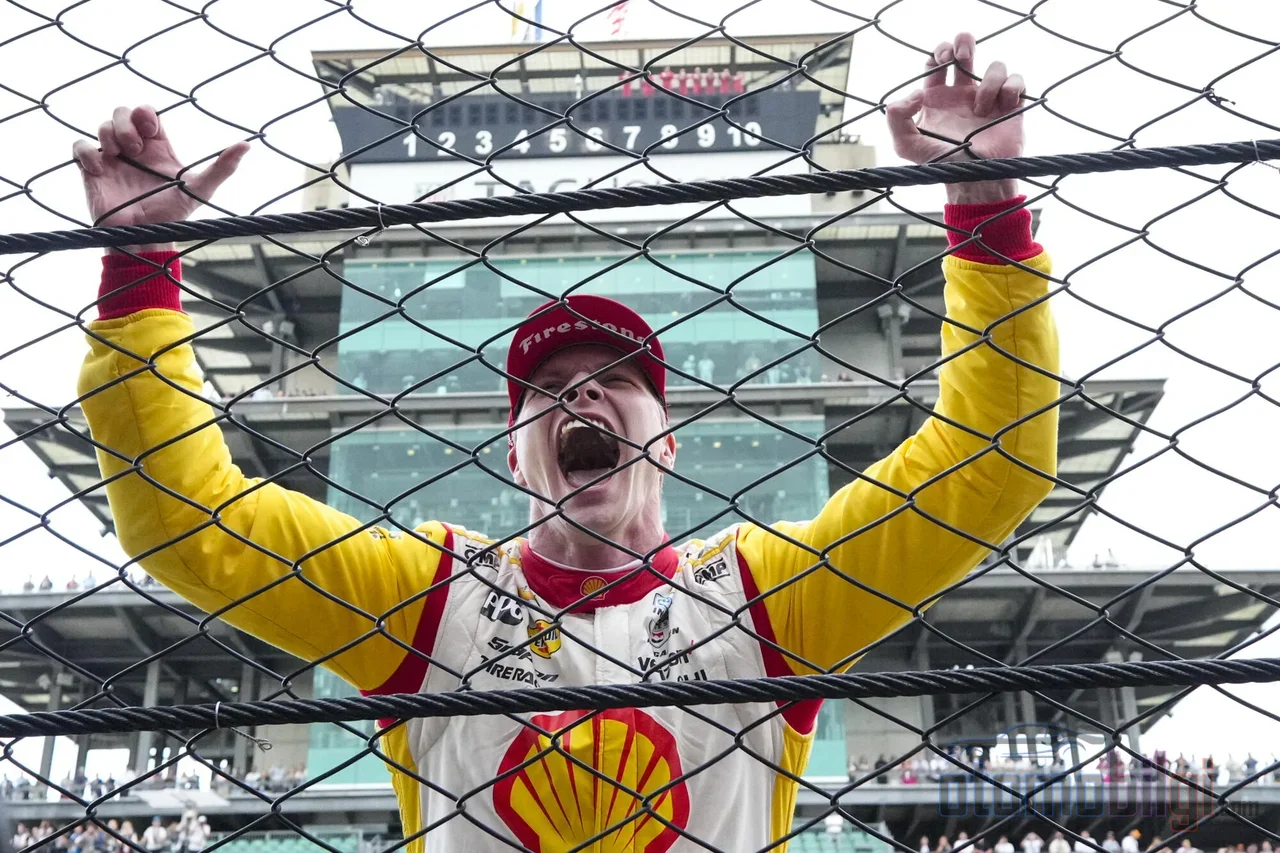
The official winners table of IMS also lists starting positions, and this column is a storybook in its own right. The deepest victories came from 28th position: Ray Harroun in 1911 and Louis Meyer in 1936. Harroun's story is also the irony of the century; the first winner of the race, the man who started it all, had not actually started from the front. Even with an average speed of 74.602 mph, he was ahead of his era's pace - the first proof of just how variable qualifying can be.
In the years in between, the picture was rich and full: Tommy Milton from 20th in 1921 place, Frank Lockhart from 20th again in 1926. place, George Souders from 22nd in 1927. place in 1932, Fred Frame from 27th place. Bill Vukovich started 19th in 1954. place in 1954 and claimed back-to-back victories. Do you see the pattern? The 500 miles is so long that it barely cares who sits at the front of the grid.
Joe Dawson and a 196-Lap Lesson in Patience
1912 offers perhaps the most dramatic early example of this. Joe Dawson had started from 7th place in a National Motor Vehicle Company car; he had averaged 86.130 mph in qualifying, but most of the race unfolded in the shadow of a single name. Ralph DePalma's Mercedes led so dominantly that it went down in the records that Dawson spent 196 laps behind the leader. Dawson, just 22 years old, won the race, which ended with a race average of 78.719 mph, becoming the first Hoosier - an Indiana native - to lift the trophy. The prize was $20,000; a huge fortune by the money of that era.
The beauty of this story is this: Dawson had no miracle trick that opened up a gap midway through. He simply stayed behind the leader, kept the pace, and at the end of 500 miles he was the only card left standing at the table. A victory of endurance, patience, and finishing. Even today, I think this story should be on the first slide of every race strategy class.
Jimmy Bryan: The Rock-Hard Comeback of 1958
In 1958, it was the turn of a different character. Jimmy Bryan started from 7th place in the Belond team's Offenhauser-powered car; his qualifying average was 144.180 mph, and he finished with a race average of 133.791 mph. This was a man who had been a three-time National Champion and was regarded as one of the toughest dirt track drivers of his era. He is said to have fought nose-to-tail with Jack McGrath, who started from the front row, for roughly 350 miles. 350 miles! That means roughly seventy percent of the race, without trusting the queue at all.
Unfortunately, this race has a big shadow too. On the first lap, a massive 15-car crash occurred and Pat O'Connor lost his life; it was also A.J. Foyt's rookie year, and the race went down in history as the last one in which fire suits and roll bars were made mandatory. Bryan's victory came amid all this weight, showing the harshest face of mid-20th century racing. A year later, he finished last; he kept his place even on the list of first and last finishers. In racing, the faster you rise, the more sudden your fall can be.
Castroneves 2021: From Eighth Place to a Fourth Cup
The most talked-about comeback victory of the modern era undoubtedly belongs to Hélio Castroneves. A small but important note: this victory is not exactly a "from way back" win; the Brazilian master started from 8th place, that is, from outside the front rows. But what tells the story is not the starting position - it was his 21st consecutive Indy 500, and he managed to run ahead of the leader only in the final 20 laps.
The closing stage of the 2021 race was a complete strategy explosion. Different teams got tangled up on the final ramp with different pit plans; the lead changed hands between Alex Palou and Castroneves, and Castroneves took the lead for the last time on lap 199. The man who pulled ahead with two laps to go and finished was Meyer Shank Racing's No. 06 Honda, averaging 190.690 mph; one of the fastest winning averages on the official chart. With that victory, he joined the four-win club of A.J. Foyt, Al Unser Sr. and Rick Mears; moreover, he put 20 years between his first win and his last. The longest spread on the chart. Do you think it's harder for a driver to win at the same track across two decades, or to beat everyone in a single day? Castroneves did both.
Al Unser and the Quiet Miracle of 1987
In 1987, Al Unser Sr. started from 20th place in the Penske team's March-Cosworth and won, going down in the record books as the oldest winner in the race's history at 47 years and 360 days. The beauty of this victory is that it relied on no extraordinary tricks: the right car, the right plan, and the discipline of never losing track position throughout the race. This is one of Unser's four victories; compared with his wins in 1970, 1971 and 1978, 1987 stands as proof of how strategy becomes even more critical with age.
Why Is Pit Strategy Sometimes Everything?
This is where qualifying and the race truly diverge. Every team, by rule, has 7 sets of tires excluding rain tires at its disposal, and spreading this limited inventory over 200 laps is like a math exam. Some teams tried the race with an aggressive 3-pit-stop plan and won; because breaking away on ovals is hard. The pole sitter can open an early gap with a good race pace, but in the turbulent air of the Indy oval, breaking away from the car ahead is far harder than on a street circuit. So everyone behind you stays right beside you, and takes over when you're spent.
That's why what we call the "pit stop difference" is really the sum of the whole day: when you change tires, how you capitalize on fuel during caution periods, and whether you can read your rival's plan. If average speed on qualifying day is an equation, the race-day equation has all these unknowns in it.
So What Does the Starting Order Actually Matter For, After All?
The counterargument deserves a hearing too: some argue that the pole sitter also sets the pace of the race and can pull away early. True, in recent years the link between pole and victory has weakened even further; in 2026 Alex Palou took pole position, but as experts noted, it hardly resembles anything anymore. Indeed, the winner of the 110th running, Felix Rosenqvist, started from 4th place and won the race averaging 162.021 mph; in the Meyer Shank team's No. 60 Honda. Rosenqvist was already a name flying the same team's flag after his 2021 victory. In a race whose grid included nine former champions, among them three multiple winners, predicting the winner in advance was of course impossible.
Let's not forget Castroneves either: 110th 110th running. was in the running and still races today. So some of these stories are still being written.
Then let's give the clear answer: In the Indy 500, starting position is a weak predictor of the winner. Although pole position is historically the single position with the most wins (21 victories), the majority of wins come from other positions. The reason is technical: qualifying is measured by the average speed over four laps and is a one-shot performance; the race, on the other hand, is a game of fuel, tires, pit strategy and endurance spanning 500 miles. On qualifying day, the fastest one wins; on race day, it's the one who sets the best strategy and stays in the game the longest. Two different skills, two different days - and the magic of the Indy 500 lies precisely in the collision of these two.
Sources
- Indianapolis 500 Race Winners
- Winning Combinations | Indianapolis 500 Race Stats
- 1912 Indianapolis 500
- Which Indy 500 starting grid position has produced the most winners
- List of Indianapolis 500 winners
- 2021 Indianapolis 500
- Helio Castroneves Celebrates His Record-tying Win
- 1958 Indianapolis 500
- Indy 500 history: Records, stats, all-time winners
- Indy 500 – Miscellaneous Records