Why Is Firestone the Sole Tire Supplier in IndyCar?
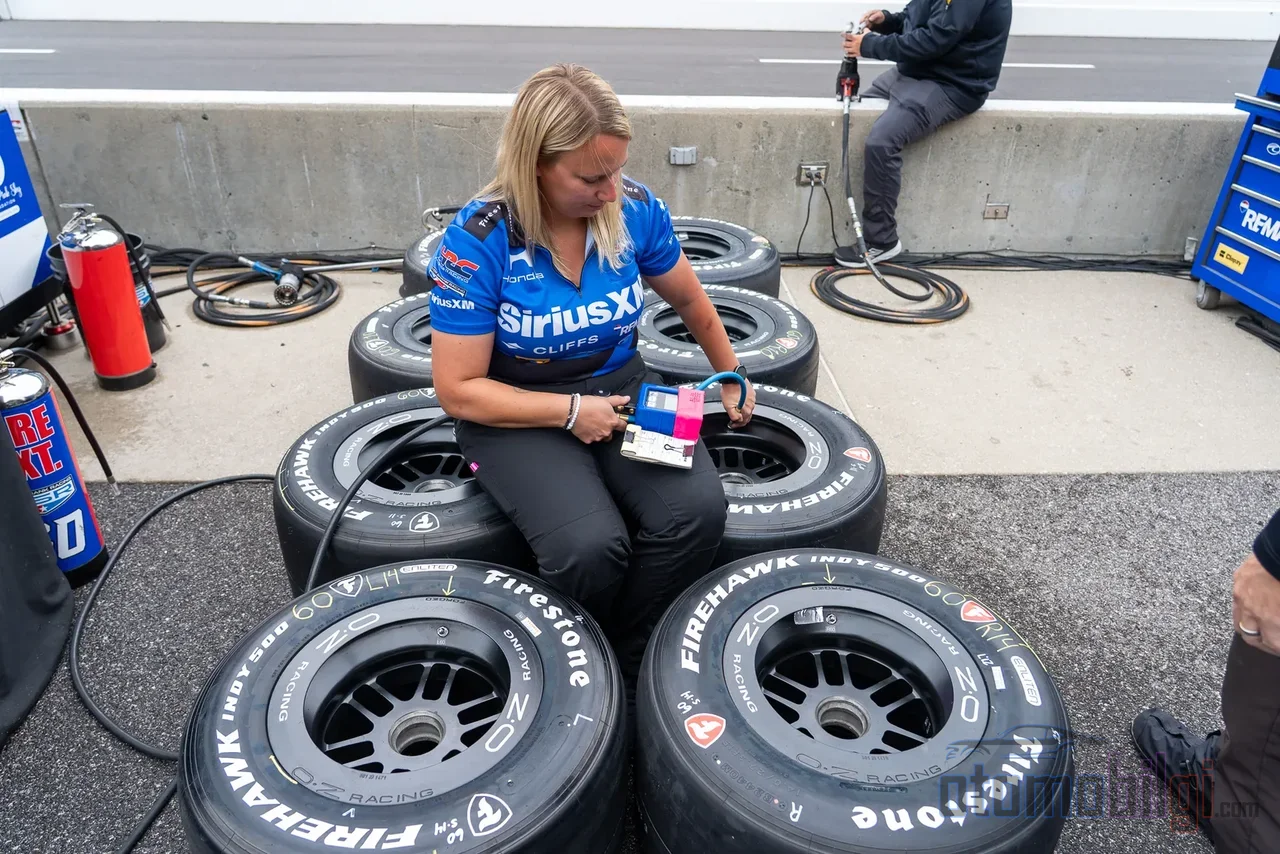
Have you ever thought about it while watching an IndyCar race: there are 27 cars on the track, different engines, different teams, different drivers, but underneath them all spins the same tire brand. How can it be that in one of the world's most competitive open-wheel series, there is a single name when it comes to tires: Firestone? The answer is a much older and much more dramatic story than you might think. Brand wars, a farewell in the 1970s, a bombshell comeback in 1995, and a deal in 2000 that changed everything. If you're ready, let's begin.
Firestone's Roots in American Open-Wheel Racing
Firestone is no newcomer to this business, quite the opposite: it has been there almost since the very beginning of American open-wheel racing. The brand won the first Indianapolis 500 in 1911 on Ray Harroun's car. In other words, even before the series had a proper name, Firestone was the winning tire. After that day, the brand accumulated more than 67 victories at the Indy 500 and was part of the race through every era up to its 100th running, and it was part of the race in every era.
There is also a legendary detail: Firestone became the first brand to win an Indy 500 on a single set of tires. For someone looking at today's pit stop logic, this sounds almost like science fiction, but it's true. The same feat was repeated 41 races later, again on Firestone tires. When you think about how many times we change tires during a race today, the durability of the tires in that era is an engineering epic in its own right.
But this long relationship was never uninterrupted. Firestone withdrew from American open-wheel racing in the mid-1970s and left the field to its rivals. For roughly twenty years, its name was absent from the list. So what happened that brought it back?
Highlights
- Firestone has been the sole tire supplier of IndyCar since 2000.
- The brand won the first Indy 500 in 1911 and has accumulated more than 67 Indy 500 victories in the series.
- In 1995, Firestone returned to racing and a fierce tire rivalry with Goodyear began.
- More than 60 tire specifications are produced in a single season.
- In 2026, ENLITEN technology and renewed-content compounds are coming to the Firehawk tires.
The 1995 Comeback and the Tire Rivalry with Goodyear
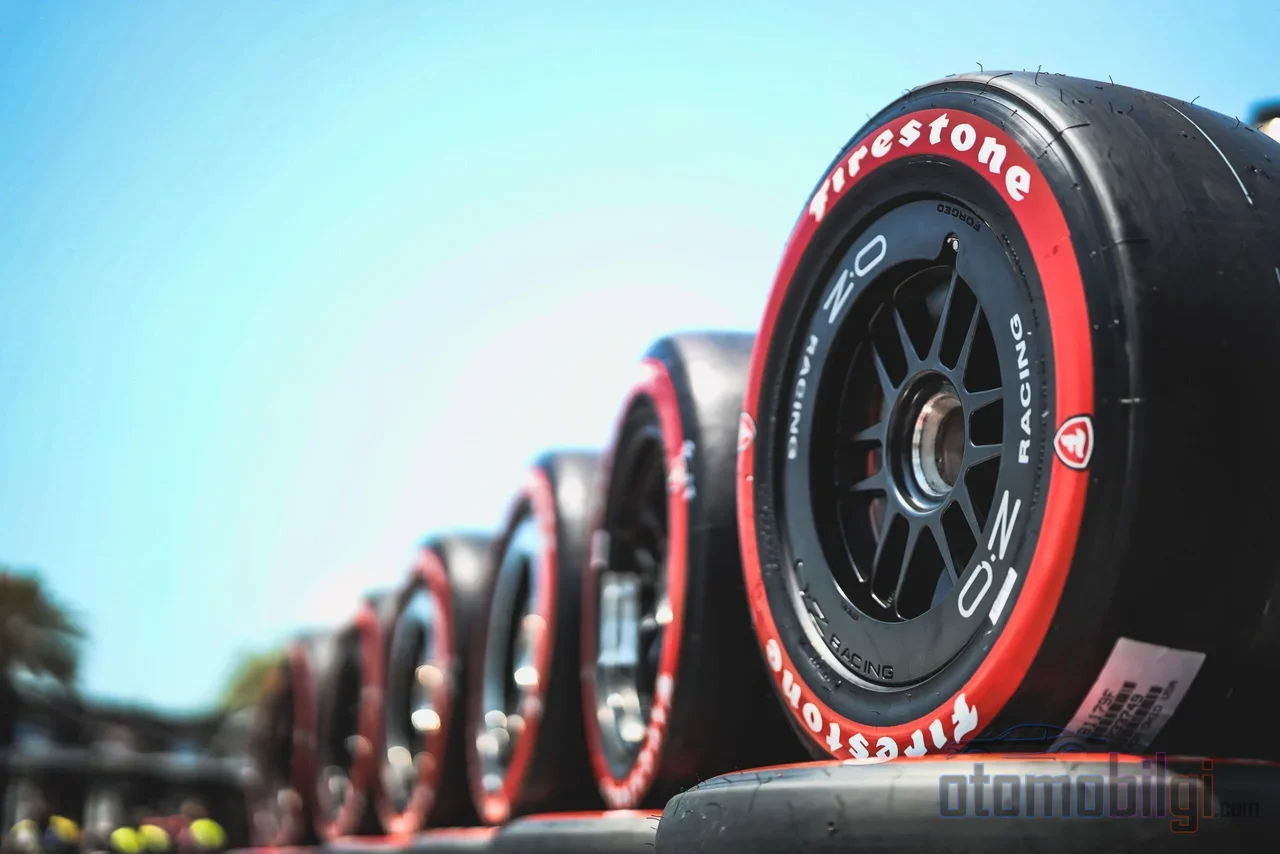
In 1995, after a roughly twenty-year absence, Firestone officially returned to open-wheel racing. And the comeback was not quiet but loud: it went straight into Goodyear's territory. The second half of the 1990s was a period of outright tire rivalry in American racing. Two giant brands were trying new compounds and new constructions every weekend to outdo each other. Firestone ran on both the CART and IRL sides, snatching victory after victory from Goodyear.
This period was also unforgettable for the engineers. Firestone engineer Dale Harrigle's memories of the 1999 CART season are intertwined with names like Greg Moore, Alex Zanardi and Juan Pablo Montoya. In other words, the most colorful years of the tire rivalry are closely woven together with the series' legendary drivers.
So if the tire rivalry was so exciting, why did it end? This is where things get interesting.
Why Is Tire Competition a Dangerous Game?
Sounds great, doesn't it? Two brands compete, technology advances, the best tire wins. In theory, yes. But in practice, things go wrong. When there are multiple suppliers, every brand is forced to push the performance limit; because if its rival releases a faster tire, it loses market share. That means the safety margin gradually thinning out.
Motorsport history is full of painful examples of this. At the 2005 United States Grand Prix, only six cars could race due to tire safety problems. The tire competition in MotoGP between 2002-2008 and the Goodyear-Hoosier battle in NASCAR also learned the same lesson: everyone pushing the limits means widespread tire failures and driver risk. That's why in many branches of motorsport, the single supplier model is not a fate, but a conscious choice of safety and fairness.
The 2000 Agreement: How Was the Single Supplier Decision Made?
Here is the turning point of the story. In 2000, the tire wars came to an end, and Firestone was chosen as the series' single supplier through an agreement designed to ensure racing fairness. The logic is simple but clever: if everyone uses the same tire, the variable of tire advantage disappears, and racing comes down to teams, drivers, and strategies.
Meanwhile, one detail: in the same year, the Bridgestone group (the structure that also owns Firestone) became the exclusive supplier on the CART side as well. So both series moved in a similar direction; while the IRL used Firestone from 2000 onward, Champ Car switched to Bridgestone in 2000. The open-wheel world's collective move to a single supplier actually started that year.
Firestone today is a brand of Bridgestone, and this partnership rests on a solid foundation: In September 2024, Bridgestone announced a long-term extension, with an agreement made with Penske, that Firestone would remain the sole supplier in all races (including the Indy 500) through the 2025 season. In short, this union is not a short-term fling, but a deep-rooted marriage.
How Are Special Tires Developed for the Indy 500?
So if everyone uses the same tire, how do these tires become so critical? The answer: Firestone does not produce a general tire; it produces special tires race by race. For the different needs of each of the 16 races in a season, a total of more than 60 different racing tire specifications are designed and produced. Yes, you read that right: more than 60.
Engineering Tailored to Indianapolis Motor Speedway
The Indy 500 is in a category of its own among these. Beyond the composition and construction of the tires, even the design itself is specific to this race. Each of the four tires a car uses is different: front and rear tires are produced in different sizes, and special compounds are also developed for this race. Firestone's racing tire engineering team even won a prestigious Indy 500 engineering award for this work. So those black rubber rings spinning at speeds approaching 230 mph are actually hand-crafted, race-by-race finely tuned works of engineering.
Primary or Alternate?
On the race calendar, ovals, street circuits and road courses each place very different demands. On street and road courses there are also wet-weather (rain) tires for the possibility of rain; on ovals, racing is not run in wet conditions. On current cars the front tires are 10 inches wide and the rear tires 14 inches, mounted on 15-inch diameter wheels.
On the strategy side there are two main tire types: the harder and more durable primary compound, and the softer and faster but shorter-lived alternate compound. In 2026 the rule changed: in six street races, drivers are required to use the faster alternate tire for two stints. The race format requires one primary set plus two alternate sets. A year earlier, IndyCar had changed its allocation rules, and Firestone had been asked to create a more distinct performance difference between the two compounds. The goal was clear: even with a single tire, strategy should remain multi-optioned.
What's New in 2026? ENLITEN and Sustainable Compounds
This season Firestone arrives at the tracks not only with new rules but also with new technology. In 2026, ENLITEN technology is being introduced to Firehawk racing tires. Even more striking is this: The Firehawk tires produced for the 2026 Indy 500 once again contain ISCC PLUS certified waste-derived butadiene and bio-styrene monomers. In other words, chemicals derived from old "doped" tires are, in a sense, returning to recycling at Indianapolis' fastest oval. In motorsport's sustainability era, compound content is now discussed as much as lap time.
So Doesn't a Single Supplier Kill the Competition of Racing?
Here is the clear answer to that question: In 2000, IndyCar chose the single-supplier model to put the tire variable on a fair footing; and Firestone has managed to keep the system competitive with tires developed specially race by race, the primary-alternate strategy, and constantly renewed compounds.
Of course there are two sides to this debate. Single-supplier supporters argue that the old-style tire wars are unsustainable today, and that a single brand is rational in terms of cost and safety. On the other side there is the view that competition between tire brands accelerates innovation. But the truth is that the world's major series are all looking in the same direction: Formula 1 has used a single supplier for years, MotoGP since 2009, and even Super GT is planning a move to a single brand. IndyCar's model is not merely an American choice; it is part of motorsport's global trend.
The conclusion? Firestone's dominance in IndyCar is no coincidence. From the first Indy 500 victory in 1911 to the farewell in the mid-1970s, from the noisy return in 1995 to the sole supplier agreement in 2000 and today's sustainable Firehawk tires, the line is proof that motorsport was shaped by tires as much as by drivers. The next time you look at an IndyCar, remember this: just like the car's gearbox, the four tires beneath it carry a century-old story.
Sources
- Firestone to Continue as NTT INDYCAR SERIES Tire Supplier
- Firestone Extends Long Term as Exclusive Tire Supplier
- Firestone Racing to Introduce ENLITEN Technology in IndyCar
- Firestone To Introduce ENLITEN Technology in Firehawk
- Indy 500 tires, the crucial link between asphalt and speed
- IndyCar to mandate two stints on alternate tires for street races
- Tire war
- Our Heritage - Firestone Tires
- Firestone's winning Indianapolis 500 history parallels that of the series
- War Stories: A Firestone Legend Recalls the Unforgettable 1999 CART Season