How Did Lewis Hamilton Rise from GP2 to F1?
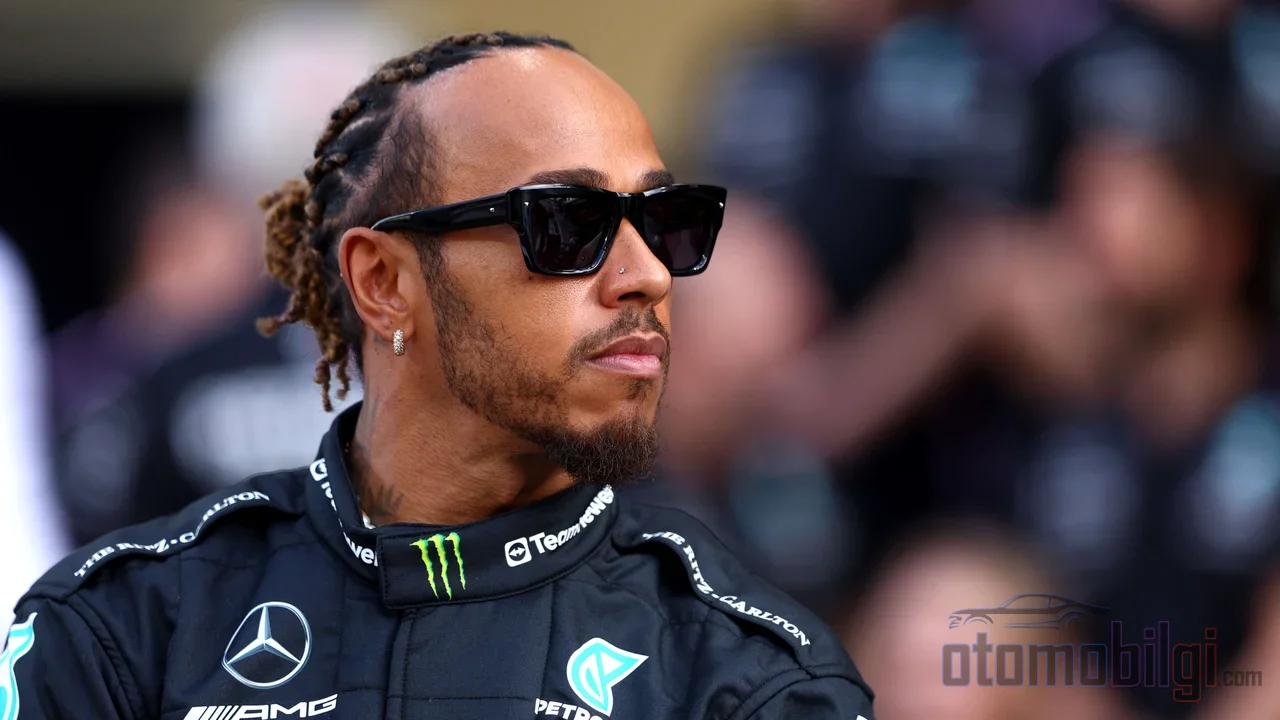
Think of a driver: who has never raced in GP2 before, arriving in the series fresh off a Formula 3 championship. Few people give him much of a chance. Yet when the season ends, he is sitting at the top of the points table. That driver is Lewis Hamilton, and that season was 2006. So how did Lewis Hamilton rise from GP2 to F1, and why did that championship carry him straight into a McLaren seat? Let's relive 2006 from start to finish, because this story is truly like a movie.
First, Let's Set the Scene: What Exactly Was GP2?
The GP2 Series was founded in 2005 by Bernie Ecclestone and Flavio Briatore and became F1's leading feeder series, in other words its talent pool. It replaced the old feeder series that had long been F1's door knocker. You could call it the ancestor of today's FIA Formula 2, or F2. The logic was simple: race in cars closest to F1, show you are the fastest, climb the ladder.
2006 was the series' second season. The calendar began on April 8 in Valencia and ended on September 10 at Monza. Each race weekend featured one Feature (long) race and one Sprint race. The top 8 scored points in the Feature race while the top 6 scored in the Sprint; moreover, pole position in the Feature was worth 2 points. In other words, getting the whole weekend right paid off more than a single brilliant race. The cars were equipped with the Dallara GP2/05 chassis, a 4.0-liter naturally aspirated Mecachrome V8 engine, and Bridgestone tires. Think of a series with power close to F1 but a far more modest budget; that is exactly why F1 teams could not sleep without watching it.
And onto this stage stepped a young Briton who had finished the Formula 3 Euroseries as champion: Hamilton stepped into GP2 with ART Grand Prix. Facing him was the famous ART seat vacated by 2005 champion Nico Rosberg, and the most serious rival on track was Nelson Piquet Jr. Featured Highlights
Highlights
- Hamilton won the 2006 GP2 championship with 114 points, ahead of Piquet Jr.'s 102 points.
- The season spanned 11 race weekends; Hamilton became champion in his first year.
- ART Grand Prix won the teams' championship with 180 points.
- The championship was mathematically secured on September 9, 2006, at Monza.
- Rosberg, Scott Speed, and Kovalainen. A Season That Started Like a Storm:
Victories and One Disqualification At the opening weekend in Valencia, Piquet Jr.
won, and Hamilton took second place on the podium. In other words, the rival wanted to send the newcomer rookie a message right from the start: "sorry, this is not your backyard." In other words, the rival wanted to send a "sorry, this is not your backyard" message to the rookie who was new to the series right from the start. But at Imola things got complicated: Hamilton was disqualified from the first race for overtaking the safety car and received no points. he was actually following the Campos Racing cars that had overtaken him. A demoralizing start for a rookie, right? And this is where Hamilton's character took the stage.
At Nürburgring he won both races; He won both races at Nürburgring; Even if Piquet took pole, Hamilton suffered a major crash after the malfunction and scattered his points to the winds. In Barcelona he made contact with his teammate Alexandre Prémat on the final lap; Prémat won, but Hamilton wasn't content with second place and kept pushing. Then he won three races in a row; Monaco was part of that streak. Then came his home round at Silverstone, and Hamilton won both the Feature and the Sprint there. His pass on Clivio Piccione and Piquet in a single move in the Sprint was one of the most memorable moments of that season. Winning both races at one circuit, I think, stamped him as "this kid is ready" in F1's eyes.
Piquet's Counterattack and the Turning Point at Istanbul Park
Of course, Piquet Jr. wasn't someone who just sat and watched. At the Hungaroring in Hungary, Hamilton spun during qualifying and dropped to the back of the grid. Piquet, meanwhile, spent that weekend flawlessly: pole, two wins, two fastest laps. It was the first perfect weekend in GP2 history, and the championship fight reopened in an instant. A classic example showing how a gap can evaporate in a moment.
Then the calendar took the series to Istanbul Park on August 26-27, and my favorite part begins. Piquet won the Feature from pole and seemed to be twisting the championship battle in his favor. But Hamilton responded by finishing second in both races; despite an early spin in the Sprint, he recovered and made the podium again. Piquet, however, could only manage fifth in the Sprint, which Andreas Zuber won. That very weekend is still remembered as a turning point in his career; years later, Hamilton rewatched and assessed this Turkiye performance in Formula 2's official video. In other words, even without winning a race, you can keep the championship path alive; sometimes the most valuable victory is not losing the race you lose.
The Monza Finale: How and When Was the Championship Secured?
Hamilton entered the season finale with a 10-point lead. Piquet took pole and cut the gap to 8, and everyone was on the edge of their seats at Monza. Giorgio Pantano won the Feature race, Piquet finished second, and Hamilton had to settle for third. Then a subtle but deadly detail came into play: Pantano's fastest lap was canceled for ignoring the yellow flags, and that 1 point passed to Hamilton. With that point, the championship was mathematically secured. In the Sprint, Pantano started 8th and passed his way to the lead before the first corner to win, but Hamilton finished second, closing the season with a 12-point lead. The championship was declared at Monza on September 9, 2006, and the expression on young Hamilton's face during the ART celebrations told it all.
There's also a nice detail: Hamilton brought not just the drivers' championship but also the teams' championship to ART Grand Prix; with 180 points he overtook Piquet Sports' 115 and iSport's 101. That is exactly the story of carrying a team to the top with a single driver.
How Did the GP2 Championship Open the McLaren Seat?
Now let's return to the main question: how did this championship open the door to F1? Timing was worth gold here. Juan Pablo Montoya's departure from McLaren had left a seat vacant at McLaren-Mercedes, and Hamilton's GP2 performance fit that vacancy perfectly. McLaren announced it would promote the 21-year-old rookie to F1 in 2007, and Hamilton in March 2007 was indeed on the grid. In hindsight, it was a bold move: most teams would offer a driver who had won a feeder-series title in a year a test driver role and tell him to wait another year. McLaren chose not to wait.
Behind the scenes, there was a much older story: In 1995, at the age of nine, Hamilton met Ron Dennis at an awards ceremony and told him he wanted to race for McLaren one day. At the age of 12 he signed up for McLaren's development program and became the youngest driver ever to sign an F1 contract. So the GP2 championship opened a door, but the house behind that door had been under construction for years.
The Super License Matter: What Was the Situation in 2006?
Today, an FIA super license is required to race in F1, and the system is clear: you need to collect 40 license points within three seasons. The F2 champion is guaranteed the license with a full 40 points in a single season; finishing in the top three in F2 also brings 40 points, while the F3 champion is awarded 30 points. Additionally, driving at least 100 km in F1 free practice sessions earns 1 point per event, with a cap of 10. A nice question might come to mind now: Did Hamilton get his license under this points system? No. The points-based system in use today was introduced later; Hamilton obtained his super license in 2006 under the conditions of that era. So his story should not be read through today's rules, but the message is the same: reaching the top of a feeder series is the fastest route to an F1 license.
The Rosberg Connection: A Line Running from Karting to Mercedes
Here is the sweetest part of the story: In 2006, Hamilton joined ART in exactly the seat Nico Rosberg had vacated. Rosberg had moved to Williams immediately after his 2005 GP2 championship. Moreover, the duo's journey had begun long before that: In their early teens, they were karting teammates, shared hotel rooms, and both dreamed of racing for the same F1 team. Whichever reached it first would call the other one day.
That day came, and the dream turned out far harsher than they had imagined. During the Mercedes era between 2013 and 2016, the pair experienced one of the fiercest intra-team rivalries in F1 history: In that period, Hamilton out-qualified Rosberg 42 times, with 32 wins and 55 podiums; Rosberg answered with 22 wins and 50 podiums. The rivalry occasionally exploded, and the contact at the 2014 Belgian Grand Prix was one of the most painful moments. But the other side of the coin is this: GP2 served as a showcase powerful enough to carry one champion to Williams in the same year, and the boy who replaced him to McLaren. The series did exactly its job.
How Strong Is F2 as a Talent Pool?
Let's look at the numbers. In 2006, three names moved from GP2 to F1: 2005 champion Rosberg (Williams), Scott Speed (Toro Rosso), and Heikki Kovalainen, who moved to Renault test driver duties. Three F1 promotions in a single season show the pulse of the feeder series. GP2 was renamed FIA Formula 2 in 2017, and the chain never broke: the first F2 champion was Charles Leclerc, and Leclerc along with Sergey Sirotkin were the first names to move from the series to F1 in 2018. The list of subsequent champions reads like today's F1 grid: 2018 George Russell, 2019 Nyck de Vries, 2020 Mick Schumacher. Following Hamilton's trail is almost the same thing as touring today's F1 grid.
Let's add a caveat, because honesty matters: A GP2 or F2 championship is not an automatic guarantee of an F1 seat. There are also names who won the championship but could not make it to F1. So what was Hamilton's difference? On top of the championship came perfect timing, a deep-rooted connection with McLaren, and undeniable performance. The ladder exists, but you are the one climbing it; even now, it is enough to look at Hamilton to remember what an F2 championship means.
So What Is the Final Lesson of This Story?
Then let's wrap up the clear answer to the question. Lewis Hamilton rose from GP2 to F1 by winning the 2006 GP2 championship at his first attempt: Despite the disqualification at Imola and the flawless Piquet weekend in Budapest, he embraced the championship with the recovery second places at Istanbul Park and mathematical certainty in the Monza finale, by a margin of 12 points. That success coinciding exactly with Montoya's departure carried him directly to McLaren's F1 seat in 2007, and he nearly closed his rookie season with a championship; his first victory came at Montreal 2007. The line stretching from that point to today runs all the way to the record shared with Michael Schumacher with 7 world championships and the Ferrari era. If you ask how a feeder series can carry a talent to the top, the answer is a single name: Hamilton. My personal favorite lesson is this: In Istanbul 2006 he kept the championship path alive without winning a single race. If it had been you, could you have made the podium in the Sprint after a spin?
Sources
- 2006 GP2 Series
- GP2 Series
- Lewis Hamilton
- Hamilton–Rosberg rivalry
- FIA Super Licence
- FIA Formula 2 Championship
- Istanbul 2006: The GP2 race that saved Lewis Hamilton's career
- Hamilton and Vasseur recall GP2 title and 'most impressive race ever' 20 years on
- GP2 Champions 2005–2016: Where They Are Now
- Lewis Hamilton: The birth of a legend