George Russell's Legendary Championship Season in F2
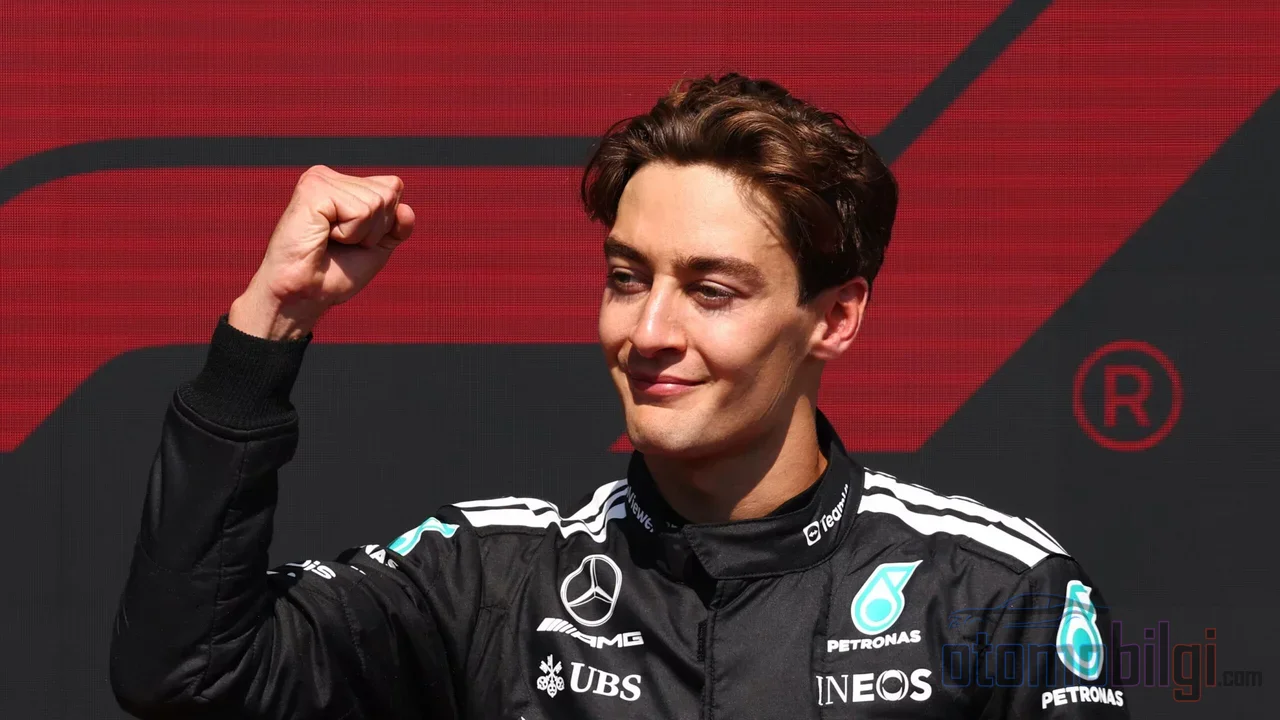
Yas Marina's lights are on, but all eyes are behind the grid - in the twilight of Abu Dhabi, there is one name: A 20-year-old young man, sitting in ART's orange-and-black car, with a single task in hand - sealing the championship. The 2018 FIA Formula 2 season went down in history as the year that bore George Russell's name. But was this season really that legendary? Let's relive it from the beginning; trust me, it will be worth reading to the end.
How did George Russell win the 2018 F2 championship?
The short answer to the question: consistency, speed, and a pinch of composure. Out of the 24 races he contested with ART Grand Prix, Russell won 7 of them, stood on the podium 12 times, and closed the season with 287 points. The gap to Lando Norris, who finished second? A full 68 points. Over a 24-race season, such a margin means a dominance that left rivals with nothing to smile about.
What is even more striking is this: Russell achieved this championship as a rookie, that is, in his first year in F2. He became the fifth driver in GP2/F2 history to accomplish the same feat - Nico Rosberg, Lewis Hamilton, Nico Hulkenberg, and Charles Leclerc had been on that list before. Not a bad lineage, is it?
Highlights
- George Russell won the 2018 F2 championship with 287 points; his gap to Norris was 68 points.
- Throughout the season he took 7 wins and 12 podiums - equaling a season record shared with Vandoorne and Leclerc.
- He secured the championship by winning the Feature race in Abu Dhabi.
- He became the fifth driver to win GP2/F2 as a rookie.
- The championship opened the door to F1: Formula 1 with Williams in 2019.
A new car, new rules: The stormy start of 2018
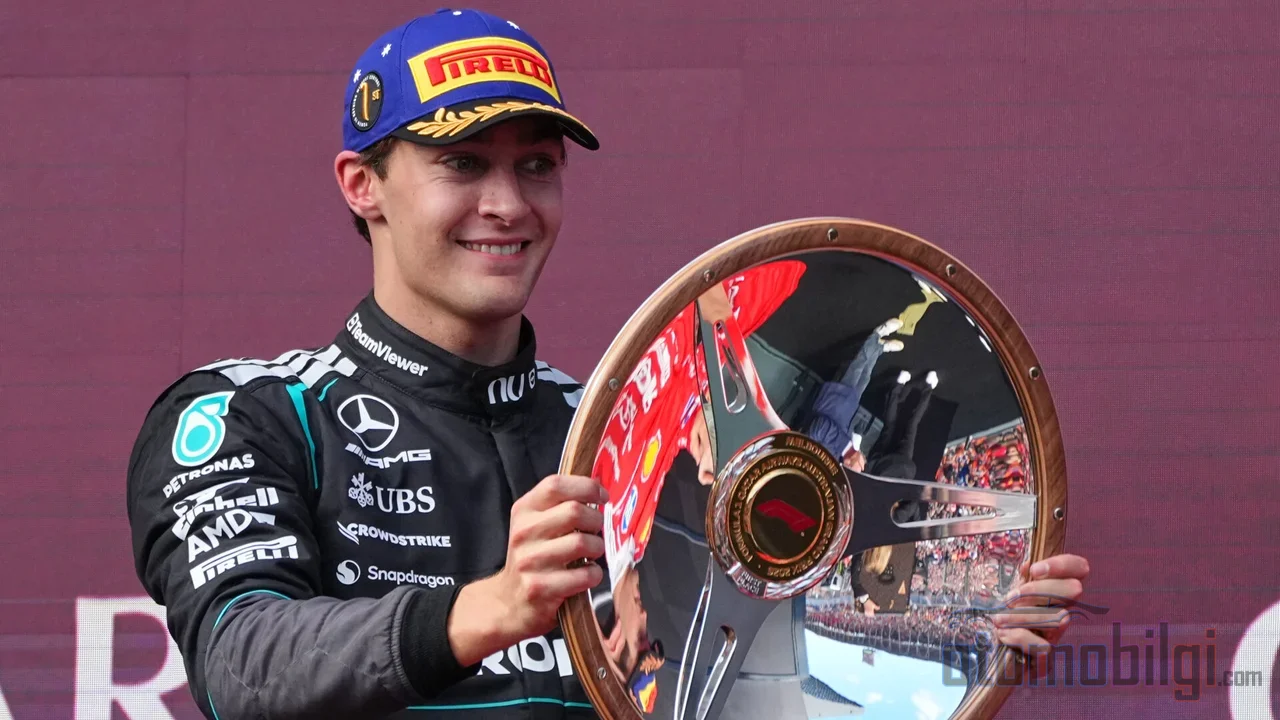
To understand the season, we first need to look at the car. 2018 was the second season of FIA Formula 2, and it was also a major technical leap: The Dallara GP2/11 was retired, replaced by the Dallara F2 2018. Under the hood, the 3.4-liter Mecachrome V634T V6 single-turbo engine was fed by direct injection. The cockpits also came with a new requirement: the halo.
But the new package caused problems from its very first days. The car's start procedure was so challenging and reliability issues so frequent that the championship temporarily moved to rolling starts for a period. So Russell's championship was not like a marathon run on a perfectly smooth track, but more like a climb over occasionally rugged terrain. In my view, that is a detail that makes the achievement even more valuable.
The season format was as familiar as it is today: 12 rounds, each accompanying an F1 Grand Prix. It began in Bahrain and passed through Baku, Barcelona, Monaco, Paul Ricard, the Red Bull Ring, Silverstone, the Hungaroring, Spa, Monza, and Sochi before ending at Yas Marina. Each weekend featured a Feature race and a Sprint race with a reversed grid; the Feature winner was awarded 25 points, while a maximum of 15 points could be scored in the Sprint. So dominating the Feature races was at the heart of the championship math - and Russell did exactly that.
The story of the season: slumps, explosions and the Baku spark
No legendary season starts out perfect. Russell's Bahrain weekend was one of those: a 5th place in the Feature was not bad, but coming away empty-handed from the Sprint, starting from 19th, was enough to dent a rookie's morale. What's more, he failed to even finish either race in Monaco; two retirements made it the darkest weekend of the season.
The turning point came in Baku. Russell started the Sprint race from 12th and saw the checkered flag first - his first F2 victory. Think about it: winning from the mid-field in the reversed grid format, where you cannot fully exploit the advantage given to the fastest cars. It was proof not just of speed, but of the courage to make moves on track.
From there, things snowballed:
- his first Feature victory in Barcelona,
- back-to-back Feature wins at Paul Ricard and the Red Bull Ring,
- a pair of 2nd places at Silverstone,
- another Feature victory at Monza,
- a Sprint victory in Sochi,
- and the season finale in Abu Dhabi.
Seven victories in total: matching the most wins in a season, a mark set by Stoffel Vandoorne in 2015 and Charles Leclerc in 2017. Russell was now a name mentioned in the same sentence.
Who were the rivals? Norris, de Vries, Albon and the others
A championship is never a one-man game. The 2018 grid had 24 drivers, and over the season, fully 10 different names won races - which is what made the series "one of the most unpredictable and entertaining seasons in recent years" that year. The top of the overall standings took shape among four names:
| Driver | Team | Position | Points |
|---|---|---|---|
| George Russell | ART Grand Prix | 1 | 287 |
| Lando Norris | Carlin | 2 | 219 |
| Alexander Albon | DAMS | 3 | 212 |
| Nyck de Vries | Prema | 4 | 202 |
| Artem Markelov | - | 5 | 186 |
Lando Norris was a phenomenon who had become FIA Formula 3 European champion a year earlier, and in his rookie F2 season with Carlin he took two victories and secured second place. Nyck de Vries had slipped into Leclerc's vacant Prema seat; taking three wins in his second F2 year yet only finishing fourth was a result full of dissatisfaction for him. Alexander Albon, meanwhile, fought for third with DAMS, taking four victories.
Beyond the top four, the scene was crowded: Markelov took three wins, Fuoco two, and Norris, Aitken, Gunther, Latifi and Makino one apiece. The reversed-grid Sprint format created an environment where everyone feared everyone. Russell was the least wavering name amid that chaos - and championships usually reward consistency, not chaos.
The teammate and ART factor
One must not skip the role of ART Grand Prix in Russell's story. The team was the side that carried him into F2 after his 2017 GP3 title and sent him out with a confident project. In the seat next to him was Jack Aitken, whom he had raced alongside since GP3. It should also be added: the teams' championship that year was won not by Russell's team but by Norris's team, Carlin - 31 points ahead of ART. In other words, Russell did everything individually, but this was not a personal endeavor, it was a collective journey.
The championship moment: Sealed in Abu Dhabi
The championship was officially secured one race before the end of the season, at the Feature Race in Abu Dhabi. Russell won that race; and in the final Sprint he finished fourth while setting the fastest lap, closing out the season. So the title came not in the mood of a reckoning, but of a celebration. That he told those who asked about his feelings after becoming champion that he felt great relief shows what a 24-race pressure really means. The series' official roll of honour describes him as a meticulously hardworking, flawlessly dedicated, and immensely talented driver; the underlined part is that he faced the fierce competition of names who moved up to F1.
How did the F2 championship open the door to F1?
This is where the beauty of the system comes into play. The FIA Super Licence is the document required to race in Formula 1, and F1 requires at least 40 super licence points. Finishing the F2 championship in first place grants exactly 40 points - meaning it is the fastest route to collecting enough points for the licence in a single season. Russell's victory in Abu Dhabi opened the door to F1 on paper that very day.
And behind that door stood Mercedes. A member of the Mercedes Junior Team since 2017, Russell announced, right in the middle of his championship battle and while still leading, that he had signed with Williams; in the same period he also took on the roles of test and reserve driver. In 2019, he stepped into F1 as teammates with the experienced Robert Kubica - his first race was the Australian GP.
The first year was not easy. Russell joined during one of the most difficult periods in Williams' long and glorious history. But here is another detail from his rookie season: he kept the experienced teammate Kubica behind him throughout the entire season, in all 21 Grands Prix. We all know what came next: in 2022 he transferred to Mercedes-AMG Petronas and claimed his first F1 victory that same year. The rungs of that ladder stretching from F2 to F1 - GP3, F2, Williams, Mercedes - worked exactly as designed.
Why is the 2018 season still talked about?
The answer is simple but powerful: George Russell's 2018 F2 championship is the template for how a rookie year should be perfectly managed. A new and troublesome car, demanding start procedures, occasional reliability crises, reverse-grid Sprints, and rivals talented enough to reach F1 like Norris, de Vries, and Albon... In this picture, Russell became the most consistent name with 7 wins and 12 podiums, secured the championship one race early, grabbed the 40 super licence points, and was on the F1 grid the following year. If the answer to the question "How do you move from F2 to F1?" is still being sought today, this is one of the first seasons to look at - and in my opinion, the most enjoyable one too.