How Did Ralph Lauren's Passion for Ferrari Turn Into a Museum?
Just think about it: one of the most famous names in fashion, a man who has devoted years to fabric and color options... and one day, in that same man's garage, sit Ferraris with a total value reaching hundreds of millions of dollars. Ralph Lauren's passion for Ferrari is not just a rich man buying expensive toys; it is the story of how a passion turned into a museum archive, even an art collection. So how did this transformation begin, what is in the garage, and in which museums around the world have these cars been exhibited? Let's open that garage door together.
The Passion Started with a Mercedes in the 1970s
Ralph Lauren, born Ralph Lifshitz on October 14, 1939, is the founder of Ralph Lauren Corporation. What made him a global brand was fashion, but his relationship with cars runs far deeper than most people would guess. Even its beginning is warm and personal: the 1971 Mercedes 280SE 4.5 convertible he bought in the 1970s was the first spark of the collection.
Lauren saw cars not as an investment vehicle, but as works of art. Moreover, they were not just display pieces for him; he genuinely wanted to use these vehicles. If you love a car, you can't sell it to someone else, right? It is precisely for this reason that the collection kept growing and today has become an archive of more than 70 vehicles, considered one of the most valuable private collections in the world.
The Highlights
- The collection includes more than 70 vehicles; value estimates range from 350 to 950 million dollars.
- Star piece: the 1962 Ferrari 250 GTO, of which only 36 units were produced (chassis 3987GT).
- Museum exhibitions were held at the Museum of Fine Arts, Boston in 2005 and in Paris in 2011.
- The yellow Ferrari F50 ordered by Lauren sold in 2025 for 9.245 million dollars, setting an auction record.
- The collection is not a showcase: the vehicles are maintained to be driven.
What's in the Collection: From Ferrari to the McLaren F1
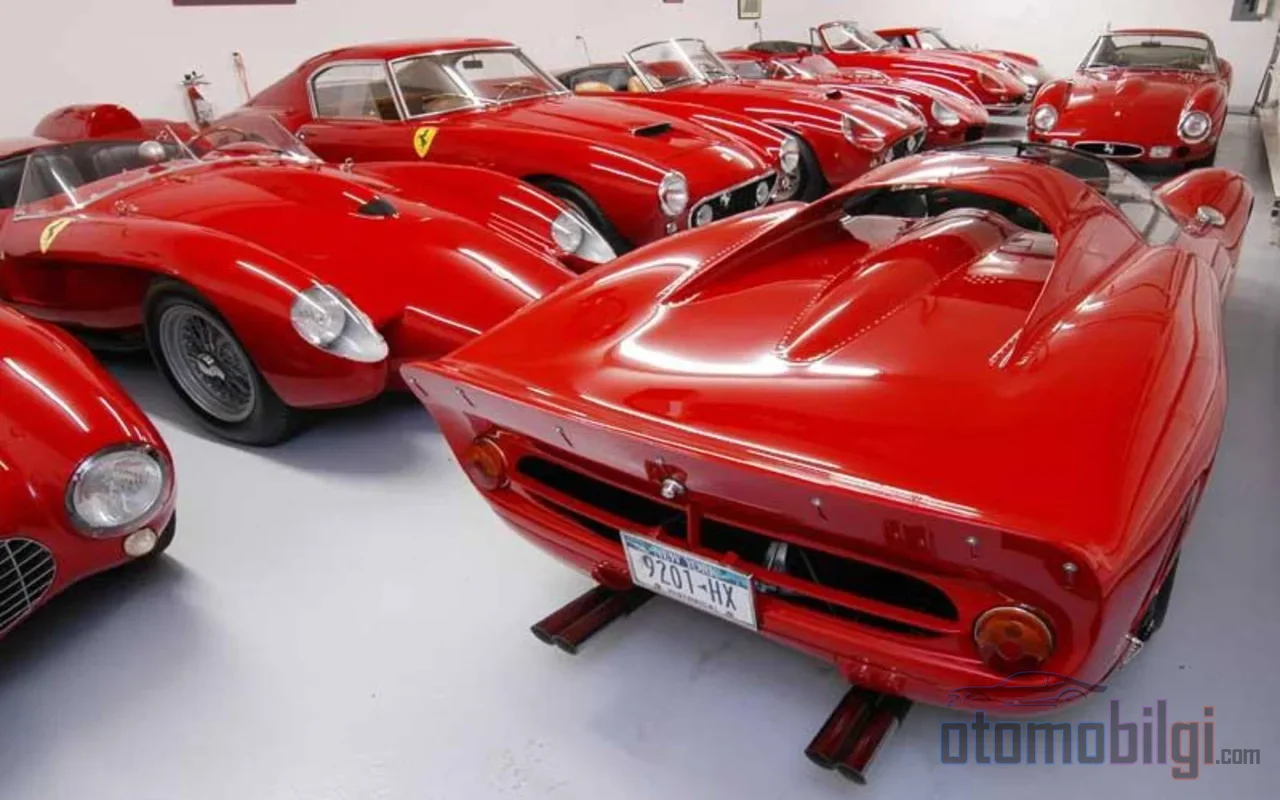
Let me make a small but important correction here, because the stories circulating online are sometimes exaggerated: Lauren's collection is not made up of Ferraris only. In the garage there are also pre-war Bentleys and Bugattis, Mercedes-Benz icons, racing Jaguars, rare Porsches, Lamborghini supercars and the legendary McLaren F1s. So the picture is broad; but the Ferrari section within it is so strong that it can be said the heart of the collection beats there.
So how much is it worth? This is where it is hard to give a precise figure, because the value of private collections varies significantly depending on the valuation method. Estimates range across a wide interval from above 350 million dollars up to 950 million dollars; the most common assumptions hover around 600-700 million dollars. Even though the figures seem boundless, you will understand why when you hear the name of just one car in the garage. The next section exists precisely for that.
Which Are the Ferrari Stars in the Garage?
Now let's get to the most enjoyable part. Lauren's Ferrari collection is the kind that would make a car museum jealous. Let's get to know its most important pieces one by one; the story of some of them reads like a novel.
1962 Ferrari 250 GTO: The Crown Jewel of the Collection
The most valuable car in the collection is most likely the Ferrari 250 GTO (chassis 3987GT). The reason this car is a legend is very clear: in total only 36 units were produced, built between 1962 and 1964 for FIA Group 3 homologation, and each one hit the road with Enzo Ferrari's approval. Its 3.0-liter Colombo V12 engine produces 296 horsepower. One example found a buyer for 70 million dollars in a private sale; so this car in Lauren's garage is considered the most valuable piece of the collection. Here's another fact you can tell your high school friends: The GTO is the rarest and most sought-after model in the same marque's racing history.
1960 Ferrari 250 GT SWB Berlinetta Scaglietti: Where Elegance Meets Speed
SWB stands for "Short Wheelbase," meaning a short chassis. Lauren's example (chassis 2035GT) is one of the lightweight aluminum-bodied examples and carries an extensive racing history in Portugal. As a dual-purpose grand tourer, it was elegant enough for the roads and capable enough for racing; with its disc brakes and Ferrari V12, it is often referred to as one of the most beautiful Ferraris ever made. In other words, it's not a car bought at a market - it's a monster you could drive in the city on weekdays and take to the track on weekends. Can you imagine?
1954 Ferrari 375 Plus: One of Only Five
With only 5 units produced, the 375 Plus produced 325 horsepower with its Lampredi V12 engine, and its racing career was practically a list of victories: wins at the 24 Hours of Le Mans, Carrera Panamericana, Buenos Aires 1000km, Agadir GP and Silverstone. In 2014, one example sold at auction for over 18.3 million dollars. An interesting detail: Lauren has been working on replicas of this model for about 20 years; so the passion isn't limited to the real car alone.
1958 Ferrari 250 Testa Rossa Spyder: The Red Head Legend
Testa Rossa means "red head" in Italian; the name comes from the engine's red camshaft covers. The Spyder in Lauren's possession (chassis 0734TR), known for its pontoon-fendered body and Colombo-designed V12, is a legend of which only 34 units were produced. It is also known that Lauren has a 1961 250 TR/61 Spider in his collection as well. In 2011, a prototype chassis sold for a price of over 16 million dollars; rarity speaks in money here.
Other Notable Ferraris
The list doesn't end here. Also in the garage are the 1967 Ferrari 275 NART Spider, produced at the request of a North American Ferrari dealer, the legendary classic F40, and the LaFerrari, the modern face of the collection. The LaFerrari is the first vehicle in which Ferrari used its HY-KERS system: In addition to its 800 CV V12 engine, it adds more than 150 CV of electric power, reaching a total of about 950 horsepower. Lauren's example, with its glossy black body, has a rarely seen look; It is seen as the modern counterpart of the 250 GTO and Testa Rossa. The 250 LM, which also carries Scaglietti's aluminum body, is among the other Ferrari treasures of the collection.
How Did Passion Turn Into a Museum?
Here lies the answer to our title. Lauren's cars were kept for years, hidden away from the outside world in a special structure that guards its secrets closely, an ordinary-looking garage. The collection is preserved as a coherent group of about 60-70 vehicles, with the logic of a true museum, but not behind a glass case: the vehicles are kept maintained for use. In other words, this collection is not a dead display case, but a living, breathing archive.
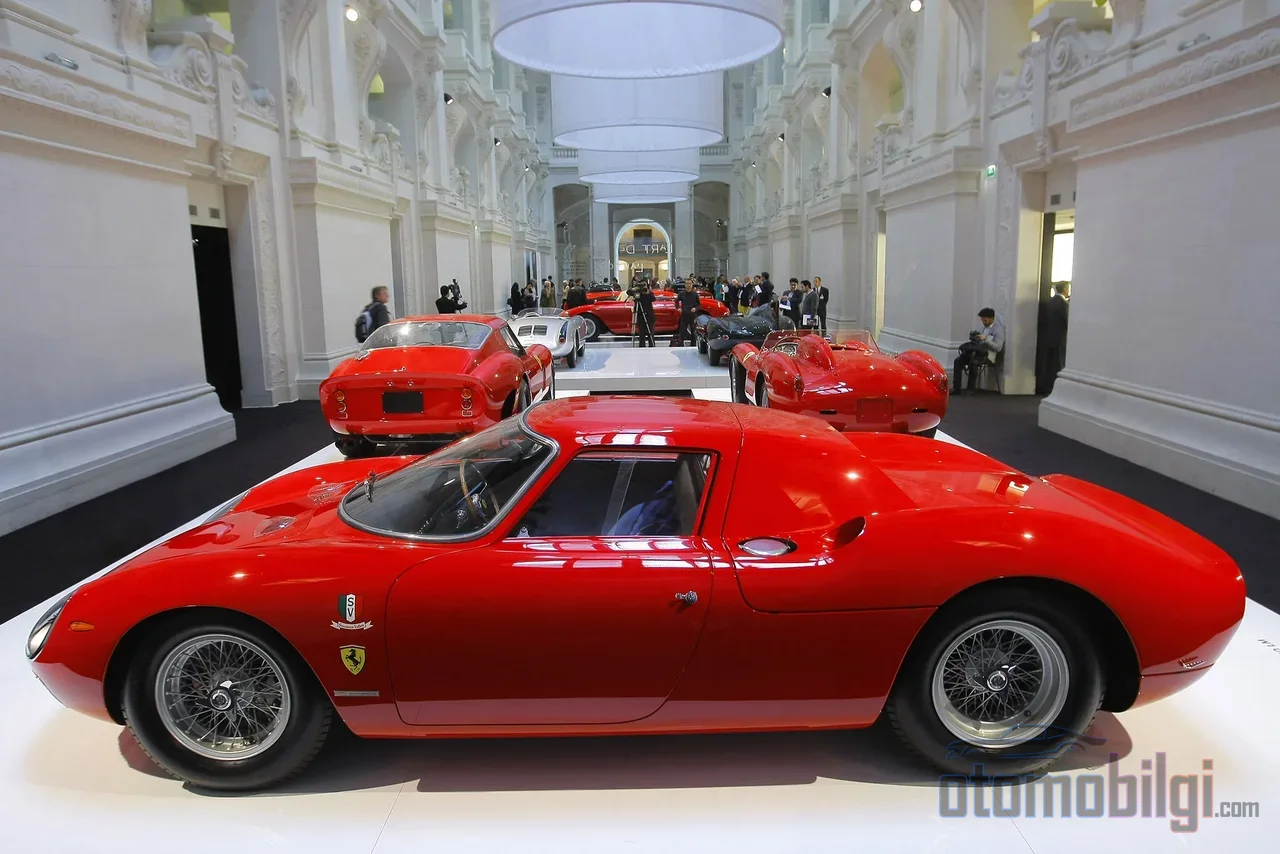
Its first major public appearance came in 2005: At the "Speed, Style, and Beauty" exhibition held at the Boston Museum of Fine Arts, 16 vehicles from the collection were displayed for their design and historical significance. Having the cars of a figure from the fashion world exhibited in an art museum was an important moment in terms of the automobile being accepted as a work of art.
The main big stage was set in 2011: In Paris, at the Musée des Arts Décoratifs adjacent to the Louvre, 17 vehicles met the audience at "The Art of the Automobile" exhibition. Ferraris exhibited in the world's fashion capital, in a museum of decorative arts... The meeting of Lauren's two passions, style and the automobile, in the same frame could not have been told more beautifully than this.
In the fall of 2017, the season's fashion show was held directly in Lauren's private car garage; models walked the runway past the 250 GTO, Bugatti Type 57SC Atlantic, and McLaren F1. In this garage, where guests were invited for the first time, the collection sat at the center of the brand's creative universe. In the concours world, too, Lauren's name is written in golden letters: The Bugatti Type 57SC Atlantic won the Pebble Beach Best of Show award in 1990, and the Mercedes SSK "Count Trossi" in 1993, joining Lauren to the very small group of collectors who own more than one Pebble Beach winner.
Why Does Ralph Lauren Provenance Create Value?
An event in 2025 clearly demonstrated the market power of this collection. A Ferrari F50 in Giallo Modena, meaning yellow, which Lauren had ordered new years ago, was unseen for a long time after being sold in 2003. It found a buyer at RM Sotheby's Monterey auction for $9.245 million, setting the auction record for a Ferrari F50 at that moment. The critical point here is this: would it have fetched that price if the same model had been in someone else's hands? "Ralph Lauren provenance" adds an extra layer to the vehicle's value. A car's history, who chose it, and how it was cared for, is now part of the price in today's collector market.
Meanwhile, Lauren is not at all in the background: He received the US Presidential Medal of Freedom in January 2025, was named CFDA "American Womenswear Designer of the Year" the same year, is among the CFDA Menswear Designer nominees for 2026, and still serves as the company's Executive Chairman and Chief Creative Officer. In 2024, he also served on the jury of the Peninsula Classics Best of the Best Award. In other words, his passion and his work have always been deeply intertwined.
Why Is This Passion So Special?
Let's also honestly look at the other side of the coin. Some compare the value of Lauren's collection with the Sultan of Brunei's estimated massive collection of roughly 7,000 cars exceeding $5 billion or the private archive on display at a museum in Germany, worth about $1.5 billion. In sheer numbers, Lauren is not the biggest. But size is not everything; Lauren's collection stands apart for its selectiveness, its coherence built around a single aesthetic vision, and its story of turning into museum exhibitions.
According to Lauren, a great car is a complete sensory experience: shape, sound, smell, the feel of the steering wheel, and the emotion that driving evokes. This perspective captures the essence of our question. Ralph Lauren's Ferrari passion turned into a museum because he never saw those cars as investments; he chose them like works of art, kept them ready to be driven, and had them exhibited in the world's art museums. Let us also add a note about the general assessments of the collection: some circles raise questions about how certain vehicles are displayed and about their ownership history; in addition, the claim that Lauren almost never visits his cars is voiced from time to time. In response, he and those close to him emphasize that the cars are kept to be driven.
Is It Possible to See the Collection?
The honest answer: under normal circumstances, no - the garage is private. But there are exceptions: the 2005 Boston and 2011 Paris exhibitions were two significant windows that opened the collection to the public. Auction events, such as the 2025 sale of the F50, also allow pieces leaving the collection to be seen in public again. So it is worth following; because every car leaving this garage carries a page of automotive history to the auction hall.
What it takes for a collection to become a museum is something beyond money: a perspective. Ralph Lauren captured that perspective with a Mercedes in the 1970s and turned it into an archive that today regards the world's most beautiful Ferraris as works of art. Passion, handled the right way, can truly be lasting; and that is exactly what this story reminds us.