How Did the Pace Car Tradition at the Indy 500 Begin?
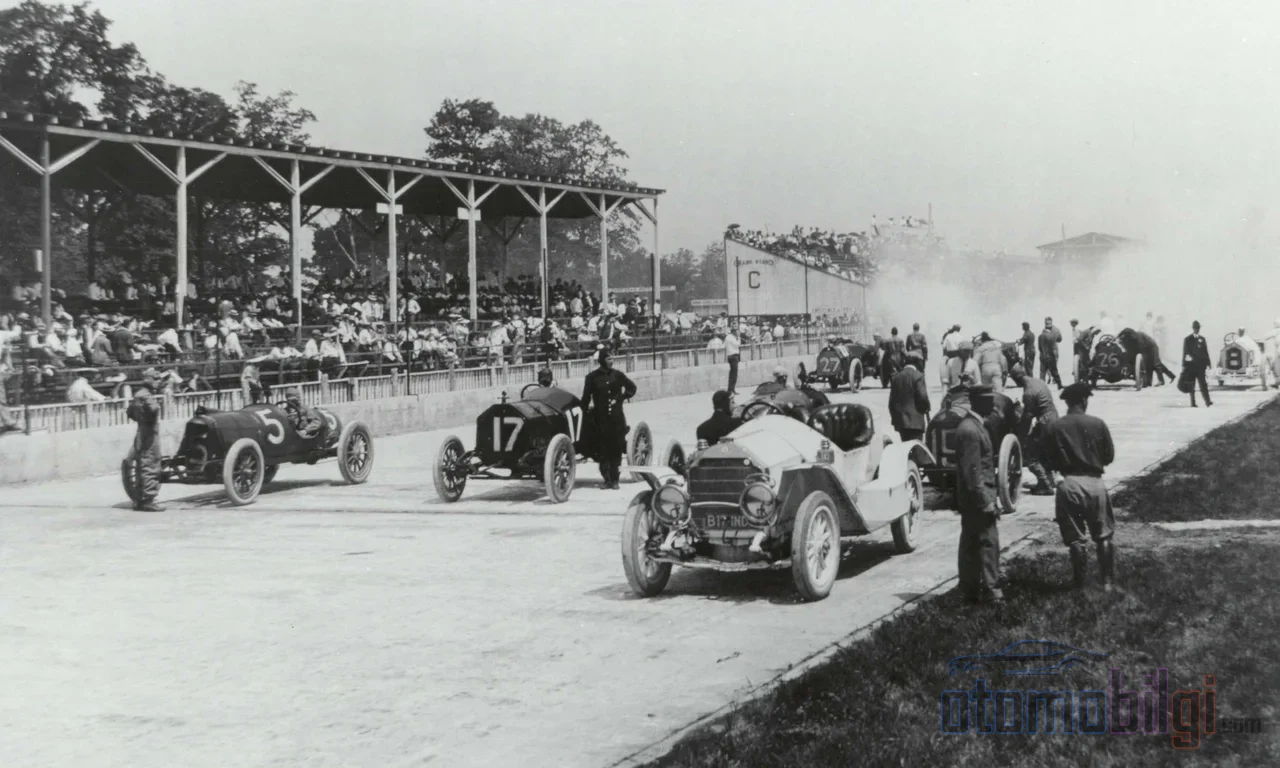
May 30, 1911, Indianapolis. There are minutes until the race begins, and the track's owner Carl G. Fisher gets behind the wheel of an ordinary-looking passenger car. In his hand is a flag, behind him are 40 race cars, and in his head is an idea no one has ever tried before: starting the race not from a standstill, but while in motion. The pace car tradition, today one of the most recognizable faces of the Indy 500, was born that very day, with that Stoddard-Dayton. So what exactly is this car's job, and why is every automaker competing with each other for this seat? Come on, let's dive into this century-old story.
What Exactly Does a Pace Car Do?
Let me explain it simply first: a pace car is a vehicle that does not compete but sets the rhythm of the race. Its duty is divided into two. First, before the race begins, it drives the warm-up laps in front of the grid at a certain speed and releases the peloton at the right moment, at the right speed. The warm-up lap is a rehearsal that prepares the tires, the engine, and the driver for race conditions before the green flag waves; the pace car is the conductor of this rehearsal. Second, it comes into play during yellow flag - that is, caution - periods during the race: gathering the peloton at a reduced speed and positioning itself in front of the leader. There's a crash, there's debris on the track, everyone has to slow down; at that moment, the boss of the track is the pace car.
The interesting part is that this second duty was a later addition to the tradition. Until 1978, the pace car was used only at the start; from 1979 onward, it began to be called into duty during caution periods as well. Today there are two different driver profiles: at the start, a ceremonial figure - a celebrity, a former athlete, a legendary racer - takes the wheel, while during cautions, a trained, professional driver serves. In other words, that eye-catching name is seen only in the first laps, after which the real work of the track is handed over to someone who knows it. Makes sense, doesn't it?
Highlights
- First pace car: Carl G. in 1911. The Stoddard-Dayton driven by Fisher
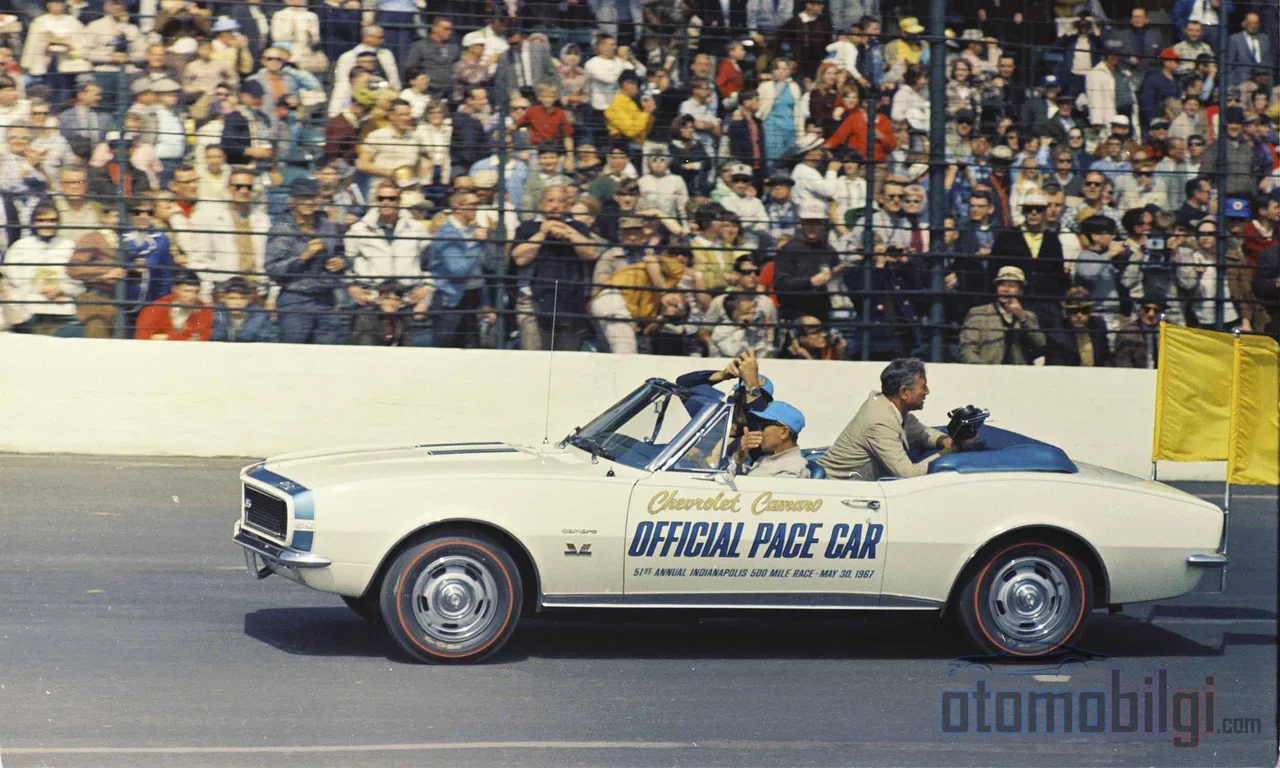
- Model that has served the most: Corvette, 19 times; Camaro follows it with 8 times
- The Corvette first became a pace car in 1978; in 2026, the hybrid Corvette ZR1X was chosen
- Since 1936, that year's pace car (or a replica of it) has been gifted to the race winner
Carl G. Fisher and the First Pace Car in 1911: Stoddard-Dayton
Carl G. Fisher is the founder of the Indianapolis Motor Speedway and also most likely the person behind the idea of the 500-mile race. In 1911, all the major races in the world used a standing start - meaning the cars were stationary and launched when the flag dropped. Instead, Fisher tried something different: a passenger car would go ahead of the race cars, lead the peloton, and release the start at an appropriate speed. This is what we today call a flying start or rolling start, and it was a serious departure for that era; the reason was safety. The launch chaos of a large grid waiting stationary was eliminated with a moving start.
The name of that historic vehicle was Stoddard-Dayton and it was James Allison's personal car; it led the peloton at roughly 40-45 mph. The 1911 Indianapolis 500 went down in history as the first major event known to have used a pace car in a race. And here's the beautiful detail: that first pace car is still alive today - it's on display at the IMS Hall of Fame Museum. Fisher held this duty until 1915; his last pace car was a Packard.
From One Lap to Four: The Evolution of the Role
The pace car's job has grown steadily over the years. In the early years, a single warm-up lap was enough. It was increased to two laps in 1957, three laps in 1977, and four laps in 2012. Why? Beyond warming up the engine, oil, and tires, the tradition of taking the peloton on a show lap in front of the spectators in the main straight grandstands gained increasing importance. These ceremonial laps, known as parade laps, are the most photogenic moments of race morning.
A note for those fond of details: In 1957-58, after new pit construction, the grid was released from the pit lane in single file and confusion ensued; in 1959, the 11 rows x 3 cars arrangement on the main straight was restored. In the 1990s, the peloton's scattered movement during parade laps drew criticism, and from 2010 onward the three-abreast row formation was made mandatory. So every rule you call "an insignificant detail" exists somewhere because an accident or controversy once happened.
Speedway president Tony Hulman himself would get into the pace car right after the start command each year and manage the start; in some years, even operating the film camera in the trunk was his job. There were two reasons why most early pace cars were convertibles: both the perception of luxury and the ease of managing the start from an open top.
The Corvette's Throne: Competition Among Manufacturers and Models
Being the pace car is a showcase matter for a brand; that's why the history of these models is practically a mirror of American automotive history. Between 1915 and 1930, Packard, Marmon, Duesenberg, Chrysler, Stutz, and Cole took the duty; between 1931 and 1956, Cadillac, Lincoln, Hudson, Buick, Nash, Oldsmobile, Mercury, and Studebaker lined up in neat order. In 1941, a completely custom-bodied, one-off vehicle took the stage: the Chrysler Newport roadster.
The undisputed king of the modern era, however, is the Corvette. It has served as pace car 19 times, more than any other model - starting with the C3 in 1978, and since 1978 nearly half of the vehicles in the pace car role have been Corvettes. In second place is the Camaro with 8 times. After 1997, GM solidified its position as exclusive supplier; and since 2002, Chevrolet has held an exclusive pace car contract with IMS. Before that, from 1997 to 2001, Oldsmobile had the same arrangement. In 2005, for the 50th anniversary of the Chevrolet V-8, a restored black 1955 Bel Air one-off served the duty - it's on display today at the Auburn Cord Duesenberg Museum. The most recent footprint is from 2026: the Corvette ZR1X hybrid will lead the field at the Indy 500. A year earlier, Michael Strahan drove the Corvette ZR1 on track under the title of "the fastest and most powerful American pace car ever built."
The 1991 Dodge Stealth Crisis
One of the best stories showing why the pace car is a serious symbol of prestige comes from 1991. The Dodge Stealth was initially chosen as the pace car; but the UAW and traditionalists objected - because the Stealth was built in Japan by Mitsubishi. The result? The Stealth was demoted to the festival vehicle and was replaced by a Dodge Viper RT/10 pace car that had not yet entered production. In other words, the "pace car must be American-built" principle can bench a car. Prestige has such hard rules.
Celebrities at the Wheel: Victory, Crash and Controversy
Pace car driving is one of the most coveted seats of honor at Indianapolis. In the early days of history, legends like Barney Oldfield, Eddie Rickenbacker, Edsel Ford and Louis Chevrolet took on this duty. Later years saw names like James Garner (1975, 1977, 1985), Chuck Yeager (1986), Carroll Shelby (1987 and with the Viper in 1991), Colin Powell (2005), Lance Armstrong (2006), Guy Fieri (2012), Jeff Gordon (2015), Dale Earnhardt Jr. (2019), Danica Patrick (2021) and Ken Griffey Jr. (2024). The list goes on for pages, but one name stands out: former Indy winner Jim Rathmann drove the pace car exactly six times.
In the caution driver role, two names stand out: Johnny Rutherford held the role until 2016, after which Sarah Fisher - with nine Indy 500 starts and the first woman to win pole position on the track - took over. Since 2010, a two-seater Indy car - the "Fastest Seat in Sports" - has been leading parade and pace laps with a former race driver and a celebrity guest on board.
1971: The Pace Car's Dark Day
Like every fine tradition, this one has a painful chapter too. In 1971, Indianapolis Dodge dealer Eldon Palmer drove the pace car at roughly 60 mph into the photographers' stand at the south end of the pit area; people were injured in the crash. After this, the organization entrusted the pace car seat only to experienced race drivers for years. The return of famous names came later, blended with a race-driver-leaning preference - Foyt in 2011, Franchitti in 2014, Gordon in 2015, Earnhardt Jr. in 2019, for instance.
Let's not pass without mentioning: not every name accepts the role. Greg Norman, selected in 1998, gave up his place to Parnelli Jones at the last minute due to shoulder surgery. Donald Trump, selected in 2011, returned the honor amid presidential race speculation and fan backlash. The pace car seat can sometimes create controversy with a heat that even politics cannot enter.
Why Is Being the Pace Car So Important for a Manufacturer?
Now let's come to the marketing side of the business. At one of the world's largest single-day sporting events, on a broadcast watched by millions, your brand's fastest - or most prestigious - automobile is lapping the track ahead of the race cars. This is an coveted honor for manufacturers and practically a marketing showcase for the model in question. From the mid-1990s onward, manufacturers even began producing replica pace cars sold to the public. On the real duty vehicles, though, things get serious: strobe lights, roll bars, multi-point harnesses, TV camera mounts, two-way communication rigs... even the air conditioning gets removed. In other words, it is not the "showroom car" you see in that glass case, but a lightly modified track vehicle.
The tradition extends not only to manufacturers but also to the winning driver: Since 1936, almost every year, the race winner has been gifted that year's pace car or a replica of it. The Milk Lane tradition is understandable, and receiving a car as Indianapolis's "host's gift" to the racer makes perfect sense.
How Was It Born, How Did It Grow? A Brief Summary
Let's wrap it up: The Indy 500 pace car tradition was born in 1911 when Carl G. Fisher started the rolling start practice by leading the peloton with a Stoddard-Dayton; its role took shape as managing the warm-up laps before the race and, from 1979 onward, rounding up the peloton during yellow flag periods; with 19 assignments, the Corvette became the immutable star of this role, while being a pace car turned into a prestige showcase watched by millions for manufacturers. Long story short: the next time you watch the Indy 500, give a nod to that car up front at the start - that vehicle is the latest incarnation of an idea over a century old.