How Does Diesel Freeze? Paraffin, CFPP and Solutions
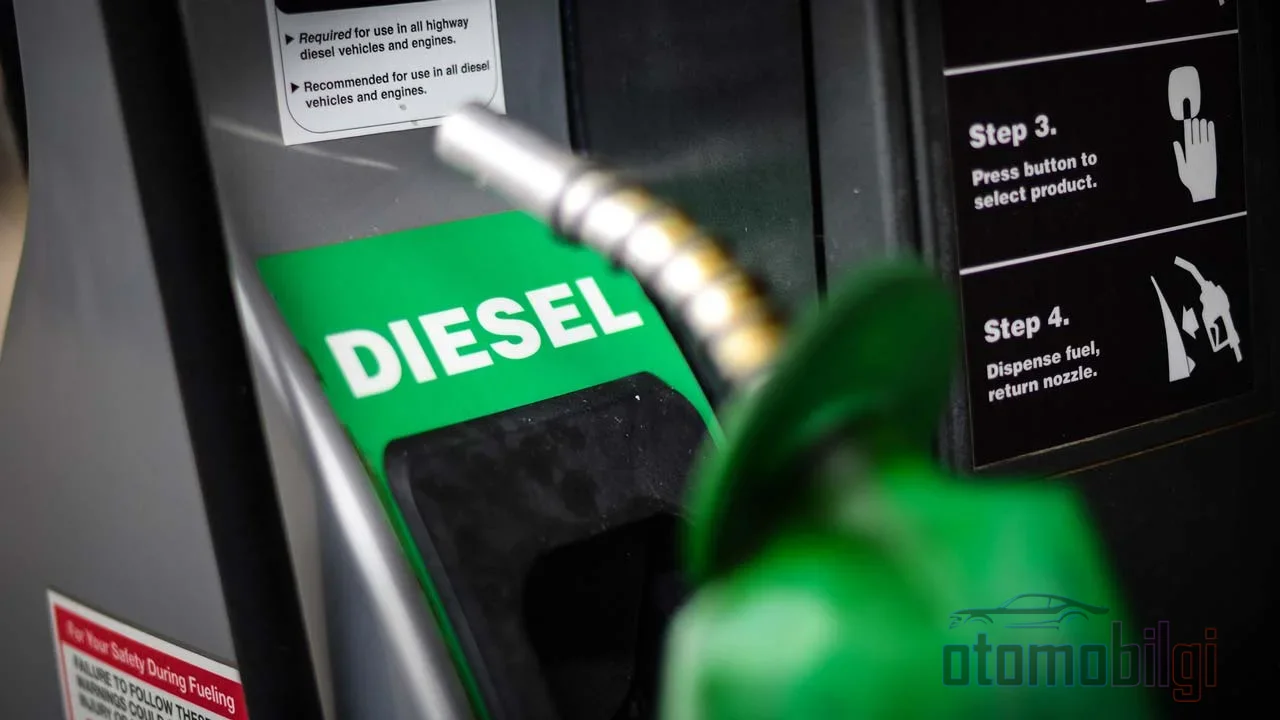
You turn the key on a cold winter morning; the engine cranks but doesn't fire, or coughs and stalls a few seconds after starting. The battery is strong, the glow plugs are new, everything looks normal. The problem is often not in the engine, but in the tank: as diesel fuel cools, it physically changes and below a certain temperature it is no longer pumpable. The answer to why winter diesel causes trouble in the cold lies in the dance of paraffin, a wax chemistry, with temperature. In this guide, we will walk step by step through the entire chain, from cloud point to cold filter plugging point, from the difference between winter and summer blends to the real working principle of anti-gel additives.
Paraffin: Diesel's Strength and Weak Point
Diesel fuel naturally contains paraffin wax. This component is not a flaw; on the contrary, it is a property that contributes to the fuel's energy density and its fluidity at normal temperatures. Paraffin is part of the molecular structure that supports the efficient operation of the diesel engine. The trouble begins when the temperature drops: paraffin molecules start to crystallize, the fuel first turns cloudy, then thickens and takes on a gel-like consistency. When heated, it returns to a freely flowing liquid; when cooled, it solidifies again. This is not irreversible degradation, but an entirely physical and reversible phenomenon. In other words, the fuel in the tank does not "spoil" over the winter; it simply loses its fluidity outside the right temperature range.
Three Critical Thresholds: Cloud Point, CFPP and Pour Point
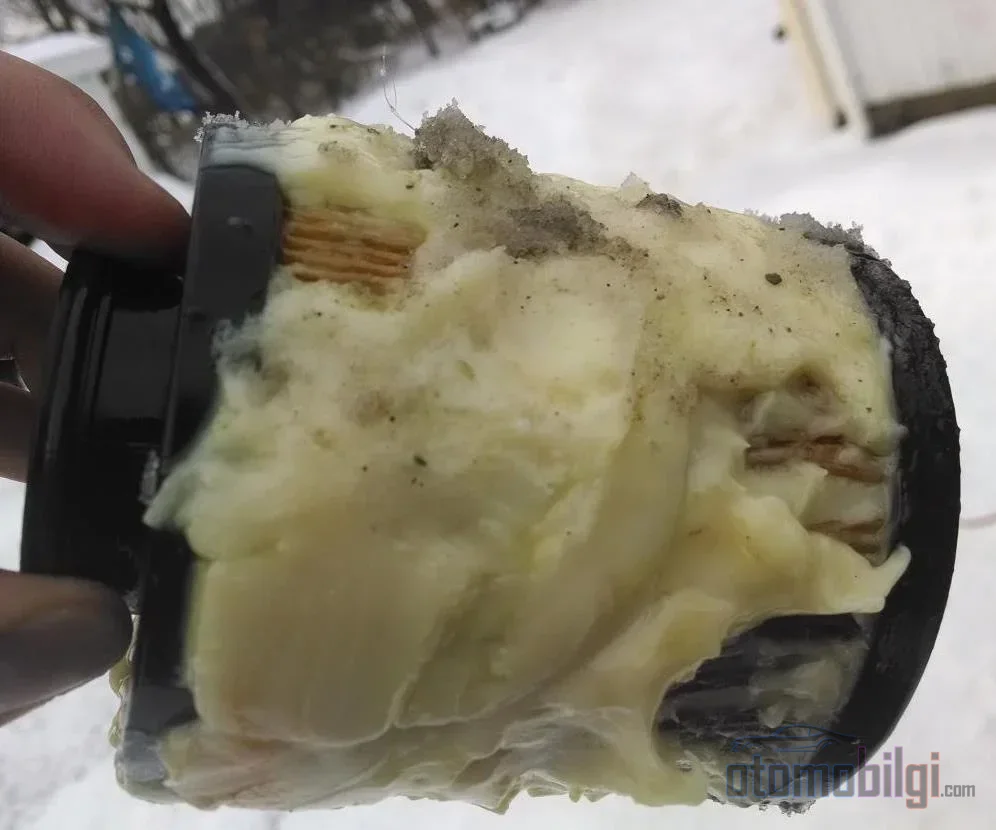
Three temperature thresholds are used in the engineering literature to describe the cold behavior of diesel fuel, and distinguishing these three is enough to understand the source of the problem.
Cloud Point
It is the first visual sign of paraffin crystallization: it is measured when solid components in the fuel begin to form a cloudy appearance. Typical values are in the range of 0°C to -12°C; for standard No. 2 diesel, clouding generally begins at around approximately -7°C. When clouding begins, the fuel still flows; this is only the first warning signal.
Cold Filter Plugging Point (CFPP)
This is the truly critical threshold. CFPP gives the lowest temperature at which the fuel flows without trouble: it is the temperature at the moment when paraffin crystals accumulate in the fuel filter and grow large enough to block the fuel from passing. The test method is defined by the ASTM D6371 standard, and in Europe it is the primary criterion for the winter operational requirements of the EN 590 diesel standard. In practice, this is the event that disables the vehicle; even if the fuel in the tank is still partly liquid, if the filter is clogged with crystals, the engine cannot receive fuel. For most standard diesels, CFPP occurs a few degrees below the cloud point.
Pour Point
It is the temperature at which the fuel ceases to flow entirely, usually about 3-5°C lower than the cloud point. In standard No. 2 diesel, gelling, i.e. complete solidification, typically occurs at around -12 to -9°C. However, operating problems experienced in this range are most likely not paraffin but an ice problem caused by water in the fuel freezing; the two conditions have different remedies.
Key Takeaways
- Standard No. 2 diesel gels at around -12 to -9°C; in No. 1 arctic diesel this threshold is below -40°C.
- Maximum CFPP under the EN 590 standard: -5°C for summer blends, -15°C for winter blends.
- Anti-gel additives do not block crystals; they alter their shape so that they can pass through the filter.
- If the difference between the cloud point and CFPP exceeds 10°C, the CFPP value alone may not be a reliable indicator.
- Winter diesel can be used year-round; summer diesel poses a flow risk in winter.
What Is the Difference Between Winter and Summer Diesel?
The EN 590 standard, widely used in Europe, classifies diesel fuel according to climate conditions. Density is defined in the range of 820-845 kg/m3 at 15°C; cold performance is regulated by a CFPP limit: the standard allows a maximum CFPP value of -5°C for summer blends and -15°C for winter blends. The cloud point of winter diesel is typically around -12°C. In Northern European countries, fuel dispensed at the pump in winter is expected to operate without wax crystal problems down to at least -15°C.
In North America, classification is done by number. No. 2 diesel is the standard blend, contains more paraffin, and begins to gel at approximately -12/-9°C. No. 1 diesel, known as arctic or winter diesel, is a fuel with less paraffin whose gelling point is often below -40°C. Winterized station blends consist of No. 1 and No. 2 diesel combined with an anti-gel additive and mostly resist down to -29°C. When cold weather sets in and the temperature drops below 2°C, a blend of roughly 70 percent No. 2 plus 30 percent No. 1 with a flow improver is common engineering advice.
So why isn't winter diesel always used? Because there is a trade-off between the two blends. Summer diesel is optimized with higher viscosity; it provides more energy and better lubrication. The winter blend is more volatile, evaporates more easily at low temperatures, and this evaporation behavior makes cold starting easier. There is no technical obstacle to using winter fuel year-round; only a small price is paid in terms of energy content. It is also possible to lower the gelling point by mixing kerosene at the gas station, but this method negatively affects fuel efficiency and consumption; in commercial vehicles with large tanks, homogenizing kerosene throughout the entire fuel line can take an hour of idling.
What Does the Vehicle Do When the Fuel Gels? Symptoms
The good thing about gelling is that its symptoms are consistent and recognizable. The chain usually works like this: first the filter becomes partially clogged, then it shuts down completely.
- Hesitation, slow cranking, and declining fuel economy are the first signals.
- The idle becomes irregular; the engine intermittently runs on one cylinder or stalls.
- Especially below 0°C, very hard cold starting and serious power loss under load occur.
- White smoke during acceleration and the engine dying when you press the throttle at idle are typical.
- In later stages, the engine will not start at all despite the starter; this means the CFPP has been reached and the fuel has gelled.
As the paraffin crystals accumulated in the filter restrict the flow, the fuel pump is also strained; this enlarges the risk of pump damage in the long run. If the fuel sample looks cloudy or sludgy, the diagnosis is almost certain. When fuel cannot reach the filter, the engine can do nothing even if the engine itself is sound.
Why Does the Engine Struggle to Start in Cold Weather and How Should It Be Warmed Up?
Diesel engines depend on the high temperature generated by compression for ignition; this dependence naturally makes them harder to start in cold weather than gasoline engines. On top of the gelling problem, this mechanical disadvantage is added. The range of solutions is clear: glow plugs, block heaters, heated fuel filters, and fuel heaters.
A block heater warms the engine coolant, keeping the oil fluid and making compression temperature easier to achieve; it requires electricity and is the most practical long-term solution when a heated garage is not available. Heated fuel filters and fuel heaters are also counted among the permanent solutions. In an emergency, a heated blanket can be wrapped around the tank. When applying heat, there is only one rule: avoid open flames and excessive heat; controlled, indirect heat is the safest. A battery kept warm also noticeably increases cold-starting power. Whether warming up the engine with prolonged idling is harmful is a matter of debate; there are views that the correct procedure varies according to the outside temperature.
What Do Anti-Gel Additives Actually Do?
There is a common mistake here: anti-gel additives do not prevent paraffin crystals from forming. The mechanism is cleverer. The additive changes the shape and size of the crystals that form: instead of large, flat plates, needle-like, porous structures form. This porous structure allows the fuel to pass through the crystal deposits inside the filter at much lower temperatures. In other words, the crystals are still there, but they are no longer a clogging barrier; they become a permeable bed.
The critical rule of use is timing: the additive must be added while the temperature has not yet dropped too far and the fuel is still liquid. An additive added beforehand can manage crystallization; but no standard anti-gel additive can bring gelled fuel back. For this situation there is a separate category of emergency rescue additives: they thaw frozen filters and can reliquefy gelled fuel in about 15-30 minutes. When choosing an additive, it is sensible to prefer products that also offer water dispersion, lubricity, and cetane improvement, not just fluidity. The cost of an anti-gel additive is a small insurance premium compared to the cost of one towing experience and emergency service.
How to Verify the Quality of the Fuel Coming from the Pump?
It is not always possible to tell whether the station is selling winter or summer diesel by reading the pump; labeling varies from country to country. Instead, indirect verification methods are more reliable. The fuel's compliance with the standard can be checked by measuring its density at 15°C within the 820-845 kg/m3 range; cold-region standards have made it possible to request the CFPP value in writing. The simplest practical test is to cool a fuel sample in the refrigerator and observe its clouding behavior. Also, keeping the tank at least half full, ideally completely full is a direct quality measure: in cold weather, moisture condensing in the empty tank volume enters the fuel system, freezes and contributes to gelling, and leads to corrosion, bacterial growth, and clogged filters and injectors.
Short Answer: Why Does Winter Diesel Cause Problems in the Cold?
As diesel fuel cools, the paraffin in it crystallizes; the fuel first becomes cloudy at the cloud point, then at the cold filter plugging point (CFPP) the crystals clog the filter and the engine cannot take in fuel. For standard No. 2 diesel, the gelling threshold is approximately -12 to -9°C; winter blends and anti-gel additives lower this threshold to -29°C, and arctic No. 1 diesel to below -40°C. If gelling has occurred, the vehicle should be moved to a warm environment, the fuel system should be heated with controlled and indirect heat, an emergency additive should be applied if necessary, and a completely clogged filter should be replaced. When the heat returns, the fuel liquefies on its own; if the problem is managed without being stranded on the road, it leaves no permanent damage. The real lesson of the cold season is this: winter diesel does not cause problems; an unprepared diesel does.
Sources
- What Temp Does Diesel Fuel Gel? | How to Ungel Diesel Fuel
- What Happens to Diesel Fuel in Cold Weather?
- How To Ungel Diesel Fuel: Quick Fixes & Prevention Tips
- Guide to understanding Cold Filter Plugging Point (CFPP)
- Winter Blend vs Summer Blend Diesel Guide
- What is the EN590 specification for diesel fuel?
- Winter operability - Infineum Insight
- Diesel gelling and how to stop it this winter