How to Check Battery Health in a Used Hybrid?
A second-hand hybrid standing in front of you at the market looks flawless on the dashboard: the charge bar moves, the engine is silent, the air conditioning is cold. The seller doesn't smoke, the mileage is reasonable, and the price is above the line. Yet the single question behind this picture determines the vehicle's true value: the remaining life of the high-voltage battery. The dashboard doesn't answer that question; the answer lies hidden in correctly read data and correctly listened sounds.
This page focuses exactly on that decision: how to determine battery health before buying a second-hand hybrid. Reaching the health percentage from the vehicle's own diagnostic data, knowing which sound during a test drive signals a fault, and querying the battery's history from service records is not a process that takes hours - done in the right order, it takes less than half an hour.
SOH and SOC Are Not the Same Thing: Make Sure of What You're Measuring
First, let's clarify the terminology. SOH (State of Health) is the state of the battery's current capacity compared to its original; in other words, it tells how much life the pack has left. SOC (State of Charge), on the other hand, is the current charge percentage - this is the percentage value on the dashboard. The seller may show you a vehicle charged to 100%; this does not mean the battery is healthy. A fully charged but worn-out pack looks the same on the dashboard as a fully charged but vigorous one.
The second critical distinction: a hybrid vehicle has two batteries. The high-voltage hybrid pack above 100V-300V (NiMH or lithium-ion) that powers the electric motor is the main subject; but the 12V auxiliary battery that starts the hybrid system and powers the electronics is just as decisive. A dead 12V battery can create the picture mistaken for a high-voltage pack failure - you should always start the inspection with the 12V battery, as it is both the cheapest and the fastest suspect to eliminate.
Fault codes alone are not enough either. DTC codes belonging to the hybrid system are stored in the hybrid ECU, and the triangle warning light on the instrument panel hardly reflects this information at all. Deciding that the system is healthy because the light is off is the second most common mistake.
How to Read Hybrid Battery Health via OBD?
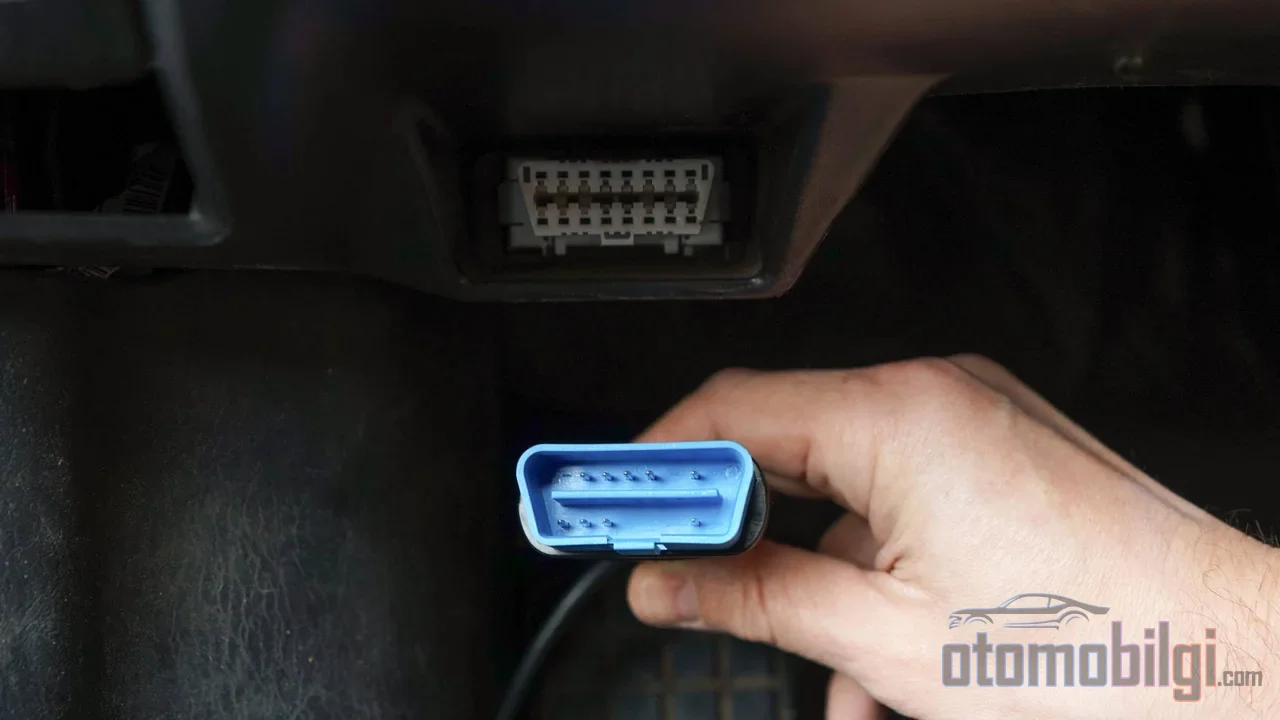
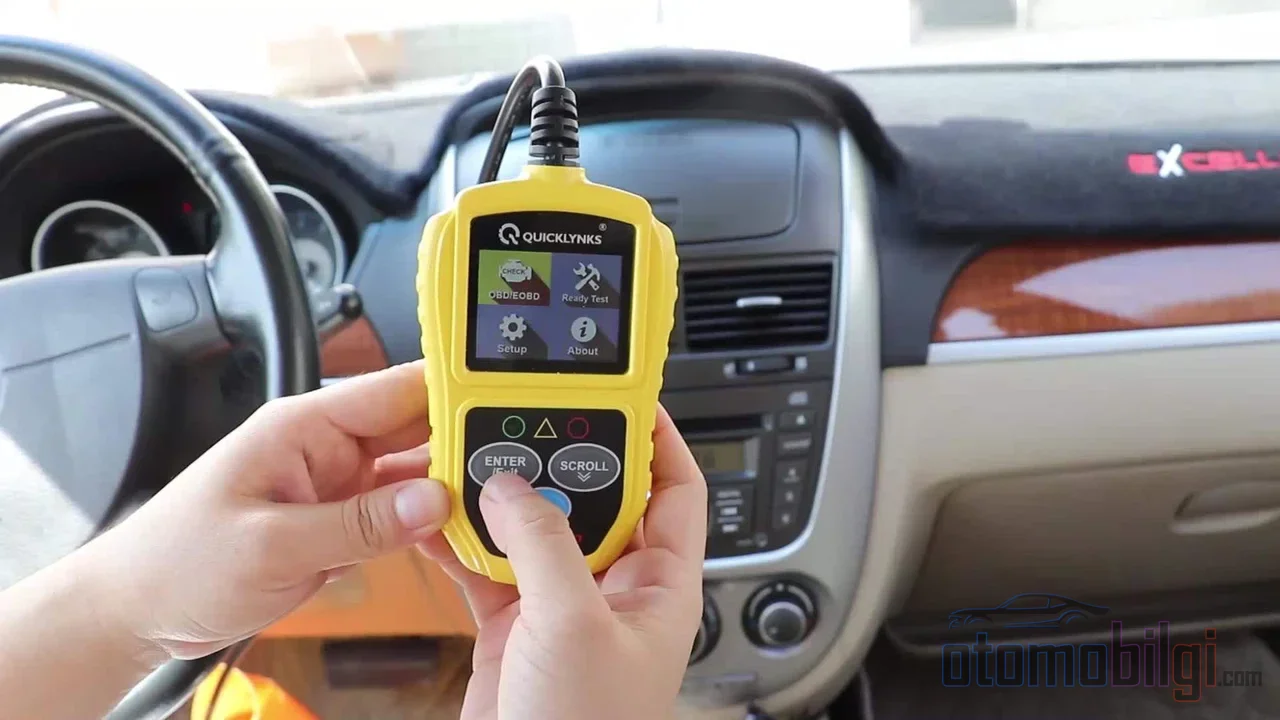
The most practical way to reach the battery's real health data is to read the vehicle's own BMS and hybrid ECU data through the OBD-II port. Locate the port under the driver's seat, plug in a reliable adapter, and enter the hybrid ECU or BMS module from the module selection screen. Read the pack voltage, module voltages, SOC, cell temperatures, and cooling fan status from the live data list; then perform a full system scan and record the codes. The whole process takes 15-30 minutes with an experienced eye and does not require starting the vehicle.
Which App and Adapter?
Basic code readers only pull generic engine codes; they do not show module voltages, cell temperatures, or SOC data. A solution that supports manufacturer-specific protocols is essential. For Toyota and Lexus, Dr. Prius (Dr. The Hybrid) app offers NiMH pack diagnostics and capacity testing, while Hybrid Assistant on Android lists block voltages in detail. Torque Pro and OBD Fusion are general-purpose alternatives; OBDeleven, on the other hand, includes a direct reading menu for the hybrid battery. On the hardware side, reliable adapters such as the Vgate vLinker series and OBDLink MX+ prevent conflicting data stream issues.
Voltage Delta: Stored Diagnostics in Odd Numbers
The most valuable output of the reading process is the difference between the highest and lowest module (block) voltage - the voltage delta. In a healthy pack, all blocks are at roughly the same voltage, and the bars in the live data graph appear at the same height. As the difference between block voltages grows, weak cells become tangible. Let's summarize the critical thresholds and codes:
| Value / Code | Comment |
|---|---|
| Block voltage difference below 0.3V | Healthy pack |
| Block voltage difference 0.3-1.0V | Early warning; a weak module may be starting to form |
| Block voltage difference above 1.0V | Indicates faulty modules |
| P0A80 code | Pack replacement recommendation; logged when the difference exceeds 1.2V for longer than 30 seconds |
| P3000 code | Battery ECU fault or abnormal voltage fluctuation |
| Delta SOC above 30% | The vehicle completely disables hybrid mode |
The block structure must also be known to interpret the readings: 3rd and 4th generation Prius and Lexus CT200h packs have 28 cells, 14 blocks; models such as the Aqua, Prius C, Yaris Hybrid and Sienta have 20 cells, 10 blocks, and each block produces a nominal 14.4V. In systems operating with a zigzag arrangement of low and high blocks, a single block reading low at around 1.4V usually points to a single weak module.
One limitation of consumer-grade reading must also be accepted: this method cannot measure the true remaining capacity under load. A module that appears normal at rest may experience a sharp voltage drop under controlled discharge. For an exact capacity figure, a professional load test - that is, a measurement by an independent hybrid specialist - is required.
Key Takeaways
- SOH indicates permanent capacity, SOC the instantaneous charge; the two must not be confused.
- In a healthy pack, the block voltage difference is below 0.3V, and the fault threshold is above 1.0V.
- The P0A80 code is logged when the difference exceeds 1.2V for longer than 30 seconds.
- Hybrid batteries typically last 8-15 years under normal conditions; heat is the number one enemy of lifespan.
- The high-voltage pack is the vehicle's most expensive component and the strongest bargaining lever.
How to Listen to Battery Sound During a Test Drive?
OBD data gives you numbers; a test drive shows what those numbers mean on the road. Monitoring the battery's charge-discharge behavior while driving is the most important stage of buying a used hybrid. Focus on four things:
- Regenerative braking: Slow down gently and watch the system engage. A soft or spongy brake pedal, the brake warning light and a noticeable drop in fuel economy are signs of trouble in the regenerative system.
- Electric mode transitions: If the car drops out of EV mode earlier than expected, or the petrol engine kicks in more often than usual at low speeds, the battery pack may not be delivering the requested power.
- Cooling fan: While parked, listen for the fan running continuously or noisily inside the cabin. This may indicate that the pack is working harder than normal to maintain a stable SOC - a silent harbinger of cell failure or a voltage delta problem.
- Fuel consumption: Compare the readout with the manufacturer's figures for the same model. Falling economy without a change in driving habits is the battery's first complaint.
Delayed acceleration, reduced power and an erratic charge indicator are also part of the same list. If a "Check Hybrid System" type message appears on your display, it is not a matter for negotiation - it must be handled like a production-line issue.
Service Records and Warranty: The Battery's History on Paper
No matter how strong the numerical data is, only service records tell the battery's history. There are three groups of records that should be requested: hybrid system workmanship, battery repair or replacement records, and especially battery cooling fan and filter maintenance. On Toyota hybrids where the cooling intake is located in the rear footwell or trunk, this maintenance is a frequently overlooked line item; a blocked intake or a faulty fan makes the pack run hotter than it was designed for and shortens its life rapidly. Heat is the number one enemy of battery life, and in hot climate regions the pack's lifespan is noticeably shorter than in temperate zones.
On the warranty side, a written specification is required. Most manufacturers provide a separate and longer warranty for the hybrid battery; for example, Hyundai covers the hybrid battery pack and main high-voltage components for 10 years / 100,000 miles. However, two subtle details can change your decision: capacity loss is generally not covered unless it falls below 70-80%, and the warranty does not automatically transfer to a subsequent owner in every case. Also, work performed at a third-party service without high-voltage qualifications can affect the warranty's validity. Requesting the vehicle-specific warranty terms in writing is the only way to resolve this uncertainty.
Keep your eyes open when it comes to the inspection as well. There are inspection packages that measure capacity and charging performance with professional equipment and cover cell balance, the motor, the inverter, regenerative braking and software checks; but many standard inspection programs do not include a battery and hybrid system check. The most reliable approach is to have the car examined by an independent hybrid/electric vehicle specialist and request a health report - and do not judge the odometer on its own either: a car with 80,000 highway kilometers may be healthier than one that has spent 40,000 kilometers in stop-and-go traffic.
How Does an Unhealthy Battery Affect Second-Hand Prices?
The high-voltage pack is the vehicle's single most expensive component - yet it is a well-known fact that its condition is rarely reflected in the sale price. It is precisely this mismatch that gives the buyer leverage in negotiation. If the delta is between 0.3-1.0V and there are no fault codes, what you are raising is an early warning: the pack works today, but the replacement negotiation should be conducted based on the worst-case scenario cost. Replacement costs are not incremental; a new OEM pack is the most expensive and fully warrantied option, a remanufactured pack is mid-range, while a reconditioned pack with module replacement and a single module swap are the lowest-cost options. The trap here is poor reconditioning: a pack built with mismatched cells that have different self-discharge characteristics quickly returns to voltage imbalance. So the fact that a pack has been installed in the vehicle is not an exemption from your checklist, but an additional reason for scrutiny.
Checklist Applicable at the Moment of Purchase
Here is the list to be applied in order, which can even be followed over the phone at the moment of decision:
- Before starting the engine, read hybrid fault codes with OBD-II.
- Check module voltages with a hybrid-compatible app; note the delta (flag anything above 0.3V in NiMH).
- Examine the condition and age of the 12V battery.
- Listen to the cooling fan for noise and continuity.
- While driving at low speed, monitor how often the gasoline engine kicks in.
- Compare the fuel consumption indicator against the manufacturer's values.
- Compare the mileage with the battery age; do not judge it on its own.
- Ask for the hybrid system service history and, if available, the battery replacement record.
- Get the warranty specification in writing; verify the transfer conditions.
- If in any doubt, request a health report from an independent hybrid specialist.
Which Threshold Cancels the Purchase When Making a Decision?
Let's tie the numbers to a decision logic. If the block voltage difference is below 0.3V, the pack is considered healthy and normal negotiation continues. The 0.3-1.0V band is an early warning: it does not cancel the purchase, but it opens the price negotiation based on replacement cost and delays the signature until the pack history is clarified. A delta above 1.0V points to faulty modules; if seen together with a recorded P0A80 or P3000 code, this vehicle is not bought without a serious replacement expense. The delta exceeding 30% of SOC is a separate category: the vehicle shuts off hybrid mode on its own, meaning what you are buying is effectively a gasoline vehicle.
The equipment needed to read these thresholds goes no further than two apps and an adapter; the time cost is under half an hour. Compare: even the cheapest option for a pack replacement costs thousands of times more than this half hour. When buying a second-hand hybrid, battery health is a precondition that no signature should be given without checking the facts - and you now know how to measure it.
Sources
- How to Check Hybrid Battery Health: A Practical Guide - KMC Electric
- Toyota Hybrid Battery Problems: Codes, Causes and Fixes - Hybrid EV Engineering
- Diagnosing Prius Hybrid Battery Pack (PDF) - Automotive Tech Info
- Toyota Hybrid Battery Health: Warning Signs - Toyota Insider
- How to check your car's hybrid battery - OBDeleven
- 5 Signs of Regenerative Braking Failure in Hybrids - Kettering Motorist Centre
- Questions to Ask About a Used Hybrid's Battery - FNF Motors
- The Truth About Hybrid Battery Replacement & Warranties - Greentec Auto UK
- Demystifying the Hyundai Hybrid Battery Warranty - Herrnstein Hyundai
- Inspection guide for hybrid and electric vehicles - Yavuzlar Oto Ekspertiz