Is Hybrid Car Maintenance Cost Really Low?
Share This Page
The maintenance cost of hybrid cars is roughly the same as or lower than that of gasoline vehicles for routine items; the difference accumulates in brake pad life and oil change intervals, while hybrid-specific cooling system checks and potential battery costs must be factored in as a separate line item. In short: hybrids come out ahead in the annual routine budget, while the picture for major repair risk depends on warranty coverage.
Highlights
- Thanks to regenerative braking, hybrid brake pad life extends by up to 2-3 times; in city use, the 80,000-100,000 km expected value.
- Oil change interval on hybrids is 12,000-16,000 km; on gasoline vehicles, 8,000-12,000 km.
- Corolla 1.8 Hybrid periodic maintenance at an independent shop: 7,000 TL + VAT; authorized service examples are at the ~25,000 TL level.
- The 2026 vehicle inspection fee for cars is 3,288 TL.
- Hybrid battery warranties start from a limit of 8 years / 100,000 miles, extending to 10 years on some models. extending to 10 years on some models.
Brake Pad Life: The Measurable Gain of Regenerative Braking
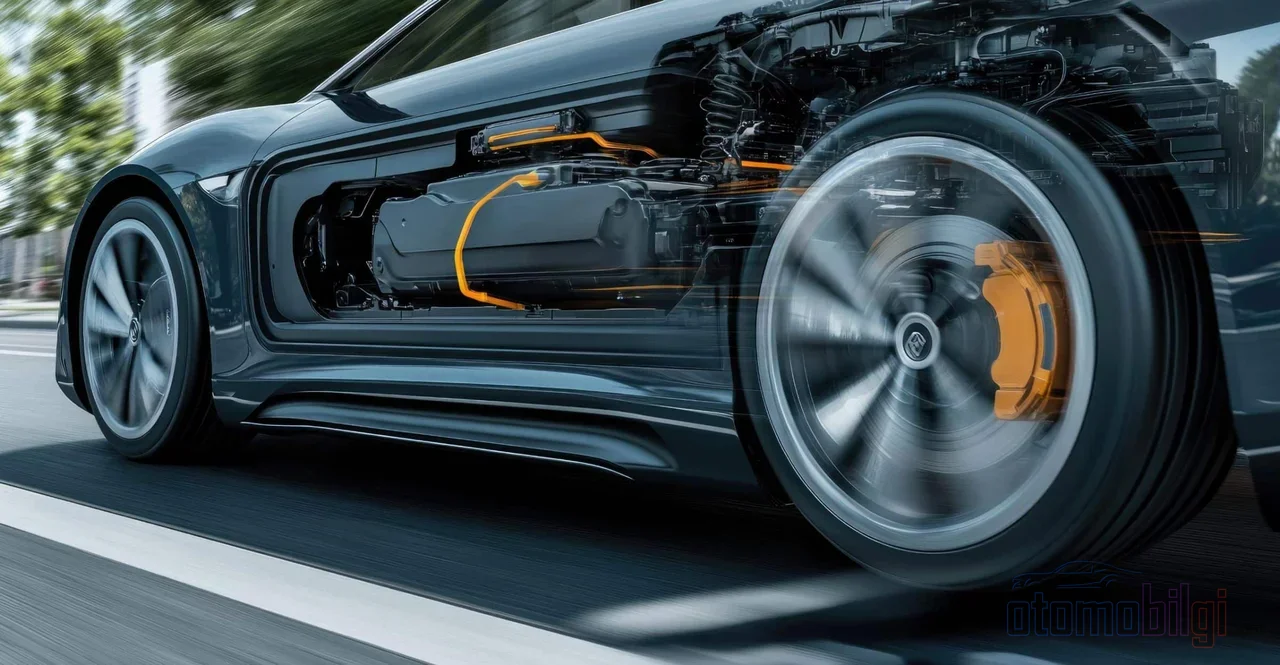
The clearest advantage in the hybrid maintenance equation is on the brake side. The electric motor takes on a significant portion of the deceleration work; the friction brakes engage only during hard stops and at low speeds. This means deceleration is achieved by pumping part of the kinetic energy back into the battery instead of converting it into heat by pads rubbing against the disc - same physics, less wear.
The numerical counterpart is this: in city use, pad replacement on hybrids and electric vehicles is expected around 80,000-100,000 km , while on a gasoline vehicle the same interval is 30,000-40,000 km. In other words, pad life extends 2-3 times. Some hybrid owners report using their original pads beyond 100,000 miles, i.e. roughly 160,000 km. In a market where pad replacement costs between 150-400 dollars, this difference alone means savings of several hundred euros over the vehicle's lifetime.
Let's add two engineering notes. First: because the pads are used so little, they may suffer more from contamination and corrosion than from wear; rust can form on the disc surface. There are also assessments stating that regenerative braking has some drawbacks for the pads - but these are not an effect that shortens their life; rather, they relate to the maintenance needs of brakes that go unused for long periods. Second: the more powerful the regenerative system, the less the friction brakes work; for this reason, the pads of a hybrid driven in traffic and city use last noticeably longer than those of a gasoline vehicle used mostly on the highway.
Oil Change: If the Engine Works Less, Maintenance Becomes Less Frequent
A hybrid's internal combustion engine does not run in every driving condition; the electric motor engages at startup and low speeds, and the engine shuts off or shares the load. This is directly reflected in the maintenance schedule: the oil change interval on hybrids is typically 7,500-10,000 miles, i.e. roughly 12,000-16,000 km; on a gasoline vehicle, this interval is around 5,000-7,500 miles (8,000-12,000 km).
The interesting part is that one-time costs are nearly identical. In both groups, the oil change 30–80 dollars range; air filter 20–50 dollars. The gain comes not from the price tag but from the frequency of repetition. A driver covering 15,000 km a year goes in for two oil changes on a gasoline car, while this interval can extend on a hybrid; since the engine oil sees fewer heating cycles, it degrades more slowly. By similar logic, the air filter may be needed less often in hybrids.
An honest warning is needed here: this advantage depends on usage patterns. Someone who mostly drives long distances at high speed may have to keep the oil change schedule the same as a gasoline car in a profile where the engine runs constantly. The hybrid's maintenance gain mainly materializes in city and mixed use.
Cooling System: What Are the Hybrid-Specific Extra Items?
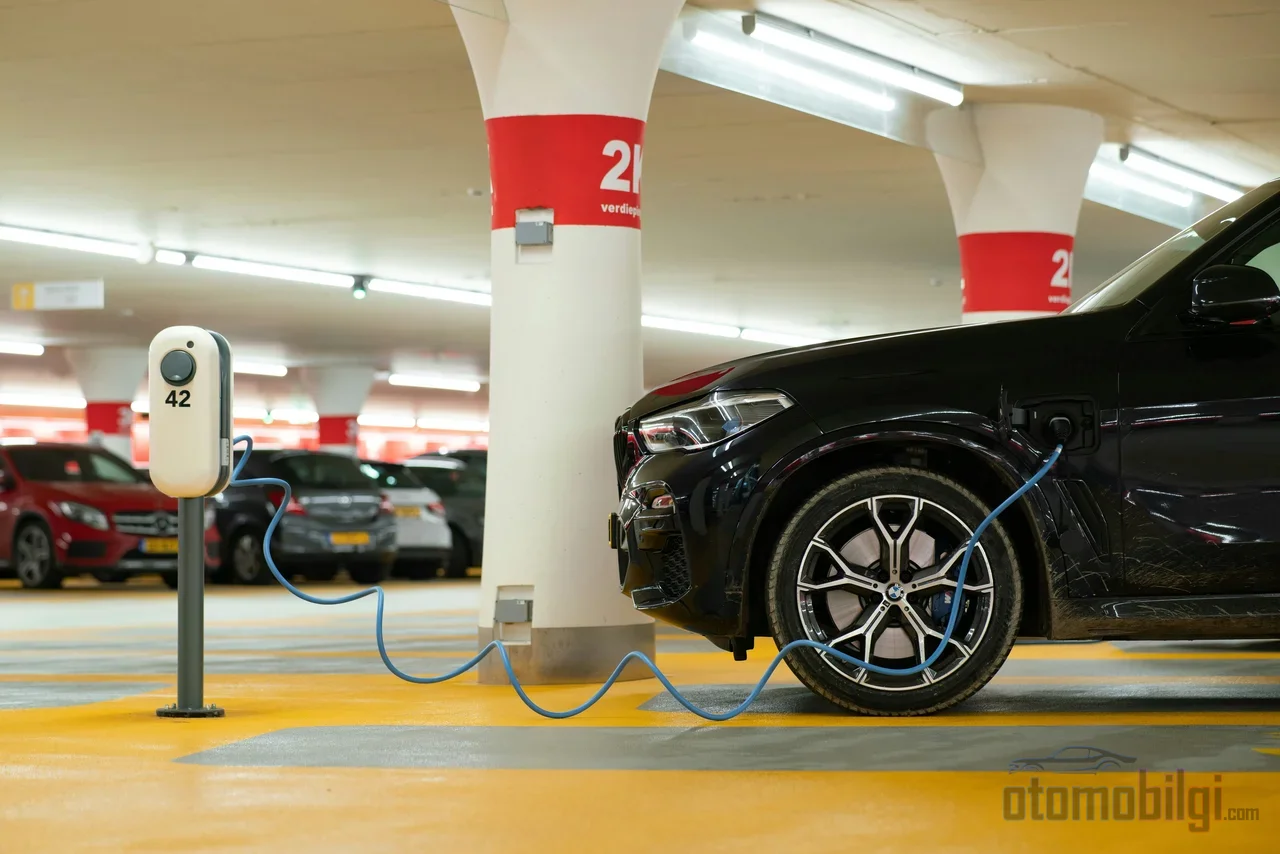
Set against the hybrid's maintenance advantage is the price of two cooling circuits absent from a conventional gasoline car: battery cooling and inverter (power electronics) cooling. These mean periodic inspection and fluid replacement that should not be postponed. Manufacturers' maintenance programs call for a comprehensive cooling system check at every interval; diagnosing the battery without waiting for a warning light is a habit that directly extends component life.
Electric vehicle data gives an idea of the size of these items: battery cooler once every 4–6 years and around 100–170 dollars; brake fluid once every 2 years (~60 dollars); air conditioning system once every 2–3 years and 60–120 dollars in service - an item that should not be neglected since the A/C circuit also affects battery cooling. The battery system check in hybrid-specific routine service, meanwhile, is priced at around 100–200 dollars . If the system is maintained according to the service program, component life is extended; in other words, this extra cost is an expenditure in the nature of insurance.
Major Repair Items: How Real Is the Battery and Inverter Risk?
Two items at the tail are what push the hybrid ahead in routine maintenance; at the head stand two items: the battery and the inverter. Hybrid battery replacement costs 3,000–6,000 dollars; the inverter or electric motor is rarely replaced, but if necessary it is at the level of 2,000–4,000 dollars . On the other hand, these components are designed to last with minimal maintenance over the vehicle's lifetime: batteries 150,000–200,000 miles (240,000–320,000 km) are designed for.
The mechanism that manages the risk is the warranty. In most hybrid models, the main hybrid components - battery, inverter and DC-DC converter - are covered by warranty for approximately 8 years / 100,000 miles ; in some Toyota models this extends to 10 years / 150,000 miles in certain markets. Warranties are mostly transferable, which pulls up the second-hand value. In Kia hybrids, the battery warranty kicks in when charge capacity drops below 70%. It is worth remembering: misuse or poor maintenance can void the high-voltage battery warranty. Northern European data showing that a well-maintained battery retains over 85% capacity after 200,000 km indicates that this item is a reasonable risk when used correctly.
Hybrid Maintenance in Türkiye: Authorized Service, Private Service and Inspection
The price spectrum on the Türkiye side is wide. For a Toyota Corolla 1.8 Hybrid periodic maintenance including oil, oil/air/pollen filter and labor is around 7,000 TL + VAT at private services, while in user posts the same vehicle's 90,000 km maintenance is quoted at ~25,000 TL from authorized services and ~13,000 TL from private services. Also in user complaints, a Toyota Yaris Cross 30,000 km maintenance costing 7,000 TL while the 40,000 km maintenance rises to 20,000 TL shows how kilometer-based package differences seriously affect the budget.
For comparison with a gasoline vehicle, current comparison figures are as follows: annual service costs for a gasoline vehicle are 12,000-18,000 TL; on top of that, a timing belt replacement every four years can add 15,000-25,000 TL . On the hybrid side, in addition to major periodic items like the timing belt, the cooling system checks we listed above also apply. As for inspection, the picture is common: in 2026 the car inspection fee is 3,288 TL (it was 2,620.80 TL in 2025; an increase of 25.49%), and the exhaust inspection is 460 TL including VAT. No inspection difference specific to hybrids is specified in the current official pricing. There is also a practical advantage: Toyota's official maintenance package is valid at all authorized services and adds to second-hand value - on the day of sale, the existence of this package is a bargaining chip.
Annual Maintenance Budget: How to Make a Realistic Calculation?
When we put the numbers together, a reasonable framework emerges for the maintenance side of hybrid ownership. The table below puts routine items side by side with a gasoline vehicle:
| Item | Hybrid | Gasoline |
|---|---|---|
| Oil change interval | 12,000-16,000 km | 8,000-12,000 km |
| Cost of a single oil change | $30-80 | $30-80 |
| Brake pad replacement interval (city) | 80,000-100,000 km | 30,000-40,000 km |
| Hybrid-specific routine checks | Battery check $100-200 | None |
| Annual service cost (Türkiye) | Private service package ~7,000 TL + VAT | 12,000-18,000 TL/year |
| Additional item every four years | Cooling system fluids | Timing belt 15,000-25,000 TL |
| Inspection (2026) | 3,288 TL | 3,288 TL |
According to this table, the annual routine budget of a hybrid in city and mixed use comes out the same as or a few thousand TL lower than a gasoline vehicle; the reduced frequency of brake pad and oil changes creates this difference. In return, additional items of $100-200 are paid each year for cooling system inspection and battery checks. The conclusion is common in most comparisons: hybrid maintenance is very close to gasoline, slightly cheaper in the long run; closing the price difference with fuel savings can take up to 5 years depending on the model and mileage. Keeping the low-probability but high-amount risk, such as battery replacement, within the warranty period is the most important rule of the budget.
Let's add one line to the checklist for those buying a used hybrid: monitoring the gauges and warning lights for battery health before purchase, testing whether the electric mode engages on a long drive, and obtaining an inspection report that includes a certified battery diagnosis makes the biggest potential expense visible from the start.
Conclusion: The Answer Is the Sum of the Differences in the Table
The honest answer to the question is not a simple "yes" or "no," but a distribution: the hybrid clearly wins on brake pads and oil changes, pays a small premium on cooling system checks, and carries a safe risk on battery and inverter depending on warranty duration. For a driver who uses the car mostly in the city, services it according to schedule, and has the battery health measured before the warranty expires, a hybrid's annual maintenance budget is lower than or equal to that of a gasoline car. That is exactly what the numbers say.
Sources
- Demystifying Hybrid Vehicle Maintenance
- Electric car maintenance costs vs. gasoline cars
- Are Hybrids Cheaper to Maintain? Real Costs
- Hybrid Maintenance Schedule: 30k, 60k & 100k
- Hybrid Battery Health: 7 Pro Tips
- Battery FAQs
- Toyota Maintenance Packages
- Toyota Corolla 1.8L Hybrid Vehicle Maintenance Price
- Vehicle Maintenance Cost Comparison 2026
- Vehicle Inspection Price List
- Vehicle Inspection Fees 2026
- Check Hybrid Battery Health Used Car: Buyer's Guide