Common Misconceptions About Driving a Hybrid Car

Share This Page
The most common misconceptions about hybrid cars; the myths that the battery has a short lifespan, that maintenance is very expensive, that they don't work in winter, and that they don't save fuel. Real data shows that hybrid batteries generally last in the range of 160,000-320,000 km, that most maintenance items remain the same as gasoline vehicles, and that fuel consumption drops noticeably especially in city driving.
Highlights
- Hybrid batteries are typically designed with a lifespan of 160,000-320,000 km; warranties at most brands range from 8-10 years.
- If battery replacement is needed, the average is $2,000-8,000; but for most drivers it is never needed over the vehicle's lifetime.
- Winter consumption increases by 5-15% or more depending on the model; efficiency is largely preserved.
- Thanks to regenerative braking, brake pads last longer in hybrids than in gasoline vehicles.
- In city driving, consumption can drop by 20-35%.
Do hybrid batteries really have a short lifespan and need frequent replacement?
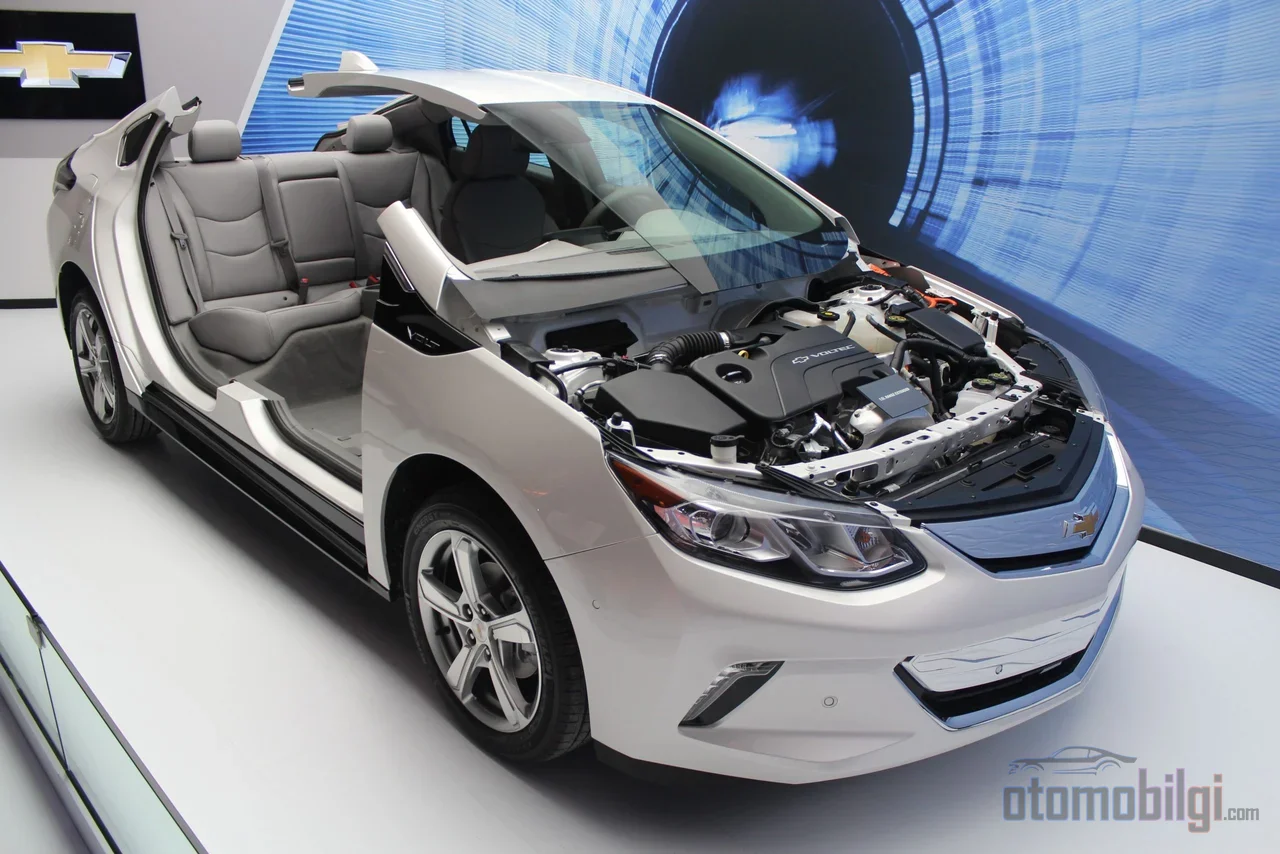
This myth is the oldest of the hesitations about hybrid ownership. Yet the scale is clear: Hybrid batteries are typically designed for a lifespan of 100,000-200,000 miles, i.e. approximately 160,000-320,000 km. There is no comprehensive battery lifespan study yet; but almost all educated estimates land in the same range, and manufacturers mostly design the battery to last as long as the vehicle itself. In other words, the battery retires along with the car's body and engine.
Warranty terms support this picture. In the US, federal regulation mandates a minimum 8 years / 80,000 miles emissions warranty for hybrid and electric batteries; in some states this period rises to 10 years / 150,000 miles. Toyota goes beyond the requirement, offering a 10-year / 150,000-mile warranty on its hybrids, Hyundai covers hybrid components for 10 years / 100,000 miles, and Honda offers a limited warranty of 8 years / 100,000 miles on the high-voltage li-ion battery. Turkish sources paint the same picture: while high-voltage battery warranties for hybrid and electric vehicles vary by brand and country, they are 8 years and above; at some brands the warranty can be extended up to 250,000 km.
So what happens if the battery one day has to be replaced? If needed, the replacement cost varies greatly by brand and model, averaging $2,000-8,000; in the UK market a range of £1,000-4,000 is given. The critical point is this: This need is rare. For most drivers it is never needed over the vehicle's lifetime; perhaps only once for users who drive very high mileage. If it falls under warranty coverage, replacement is done free of charge.
Does the battery die suddenly, or can a failure be detected in advance?
The second common fear is that the battery will die one morning without warning. From an engineering standpoint, the picture is different: Battery packs usually degrade gradually. Early failure actually stems from predictable causes of its own: accident-related physical damage, extremely hot or cold environments, manufacturing defects (these usually show up in the first years), leaving the car unused for long periods or constantly making very short trips - because the battery only charges while driving.
A failing battery announces itself with its symptoms:
- A noticeable drop in fuel economy.
- The gasoline engine engaging earlier and at higher revs than normal.
- The charge indicator staying low, or the vehicle failing to reach a full charge.
- The engine not starting - the high-voltage battery is the component that starts the engine.
- Warning lights illuminated on the panel.
When one cell fails, the others take on a heavier load; a problem in the control electronics can also negatively affect the entire pack. Excessive heat is the most significant environmental factor accelerating aging. That is why manufacturers calibrate the battery to use only a portion of its capacity and to avoid overcharging/over-discharging. What needs to be done on the user side is simple: take the warning lights seriously (ignoring them can void the warranty in some cases), do not leave the battery at a very low or full charge for long periods, avoid sudden starts and hard braking - regenerative braking recovers energy through smooth deceleration - and if possible, do not park the car outdoors in extreme heat or cold. Those buying a high-mileage used hybrid are advised to get a pre-purchase inspection that includes a battery diagnostic test.
Do hybrids not work in winter? How much does cold weather affect consumption?
The belief that hybrids become unusable in winter is widespread, but there is a gap between it and reality. Cold weather genuinely increases hybrid fuel consumption; the main mechanism behind it has also been scientifically explained: In cold climates, the internal combustion engine frequently kicks in to heat the cabin, and this lowers fuel economy. On the battery side, efficiency also decreases in the cold because the internal chemical reactions slow down. However, the sum of these does not eliminate the hybrid's efficiency advantage - it is largely preserved.
The numerical framework is as follows: Winter consumption increases can be 5-15% and above depending on the model and heating usage. To give a concrete example, a consumption of 60 mpg dropping to 45-40 mpg in the cold months is considered normal - meaning the deterioration is visible but limited. There are also two contexts to keep in mind: Winter fuel blends have a somewhat lower energy density, and snowy or wet road surfaces negatively affect the fuel economy of all vehicles, including non-hybrids. This is not a weakness specific to hybrids, but a common denominator of physics.
Is hybrid maintenance really more expensive than gasoline?
Fear of maintenance costs is the most commonly raised objection to hybrid ownership. The data shows the opposite: According to consumer reliability data, hybrid vehicles report noticeably fewer failures on average than gasoline cars; that is, their reliability is above that of gasoline vehicles. Also, hybrids generally require less routine maintenance. Turkish sources reach the same conclusion: hybrid maintenance is not more expensive than gasoline; oil and filter items remain similar, while brake pads last noticeably longer thanks to regenerative braking. In mild hybrid engines, overall maintenance costs are not very different from gasoline and diesel.
To scale brake pad life, it is enough to look at gasoline reference values: In a standard passenger car, brake pads last 30,000-70,000 km and brake discs 40,000-80,000 km; stop-and-go city use shortens this life, and hard braking habits can reduce pad life by up to 30%. In hybrids, regenerative braking significantly reduces the mechanical pad-disc load, so wear slows down - what you gain is the lifespan of parts you wear out less.
| Maintenance item | Gasoline vehicle | Hybrid vehicle |
|---|---|---|
| Oil and filter change | Routine, at standard intervals | Similar items, similar intervals |
| Brake pads | 30,000-70,000 km | Longer life with regenerative braking |
| Brake disc | 40,000-80,000 km | Lower mechanical load |
| Failure frequency | Average reference | On average, fewer reported failures |
Do hybrids really save fuel, and under what conditions?
This is the part of the myth closest to the truth, because the savings are conditional. Hybrids can cut fuel consumption by 20-35%; the combination of gasoline and electric power does not compromise efficiency. However, the advantage does not look equal in every scenario: In city, heavy-traffic, frequent stop-and-go use, the hybrid's electric motor and regenerative recovery reach their full potential; whereas on long journeys at constant high speeds, the gain shrinks, and some drivers report that consumption does not drop noticeably on the highway. This is not a contradiction, but the natural result of the usage profile.
Field data also comes from Türkiye: A user who switched to a hybrid from a 1.5-liter gasoline vehicle reports that their consumption dropped from 9-10 liters to 4-5 liters. Also, the seamless acceleration provided by the electric motor - without traditional gearbox gear shifts - makes a tangible difference in comfort as well. The performance misconception should also be corrected: Combining gasoline and electric power is chosen not only for savings, but also for acceleration, as used in some manufacturers' performance models.
Hybrid ownership in Türkiye: warranty, insurance, and second-hand realities
To understand how misconceptions affect ownership decisions, it is necessary to look at the concrete framework in Türkiye. Two developments stand out on the regulatory side: In September 2024, the Ministry of Trade imposed strict conditions on the import of plug-in hybrid vehicles from some countries, including China; And in December 2023, electric vehicle importers became required to establish at least 20 authorized service stations across Türkiye.
On the insurance side, there is nothing to fear: Hybrid and electric vehicles do not require a special type of insurance; they are insured with standard coverage. As with all vehicles on the road, Mandatory Traffic Insurance is required; comprehensive insurance is not mandatory but is recommended.
In the used car market, three factors determine value loss: battery health (SoH - State of Health, meaning the ratio of the battery's current capacity to its factory capacity), warranty transfer, and range. Since damage outside the battery can still create a perception of risk on the used market even when repaired, a reliable inspection report including the SoH percentage is the most critical point of a used purchase. A strong point is that warranties can usually be transferred to subsequent owners - the used car buyer is also protected. According to 2026 decision guide data, hybrid battery warranties are around 10 years, real service life is 12-15 years, and with regular use over 200,000 km; leaving the car in excessive heat or cold outside a garage shortens this life.
Not myths, mileage: For whom does a hybrid make sense?
An honest analysis also includes the counter data point. An academic cost comparison calculated that at current fuel prices, the payback of the hybrid premium occurs, in the best-case scenario, at 0.73 million kilometers. So a driver covering low mileage per year may not easily offset the extra amount paid for the hybrid premium through fuel savings. The economic logic of a hybrid is based on honestly calculating annual mileage and usage profile (city-oriented or long-distance-oriented) - not on myths.
It is also clear that battery life estimates are not precise: There is no comprehensive lifespan study, and estimates cluster in the 100,000-200,000 mile range. But this uncertainty, while being an unfounded fear, is in practice a manageable risk thanks to warranties and gradual degradation symptoms. The practical formula for the decision is this: For drivers with high annual mileage who drive predominantly in the city, the hybrid's math clearly works; whereas the low-mileage, predominantly long-distance user must weigh the hybrid premium against the economic rationale separately.
Conclusion: Which misconception should really affect your hybrid decision?
We examined the four major myths one by one and none of them survived contact with the data: The battery is designed to last the life of the vehicle and is protected by warranty; degradation does not come suddenly, it comes with symptoms; consumption increases in winter but efficiency is preserved; and maintenance is not more expensive than gasoline cars - in some items it is cheaper. The real criterion is not myths, but your mileage and usage profile. If buying used, put a battery health inspection report on the table; if buying new, put the warranty transfer conditions on the table - the decision becomes clear everywhere else.
Sources
- How Long Do Hybrid Car Batteries Last - Mazda USA
- What's the Average Life of a Hybrid Car's Battery? - Car and Driver
- How Often to Replace a Hybrid Battery - DCH Kay Honda
- The Truth About Hybrid Battery Replacement & Warranties in the UK - GreenTec Auto
- Analysis of fuel economy reduction factors of hybrid electric vehicles - Choi et al., 2024
- Winter consumption: electric car vs. hybrid vs. petrol - Endesa
- How Winter Affects Hybrid Battery Performance in the UK - GreenTec Auto
- Are Hybrid Cars Good In Cold Weather? - Wiscasset Ford
- Exploring the Lifespan, Benefits, and Cold Weather - Modern Toyota
- How hybrid vehicles are proving more reliable than gas cars - How-To Geek
- Comparison of Conventional and Hybrid Cars Exploitation Costs - ResearchGate
- Debunking common myths about hybrid cars in India - Ayvens
- Ten Hybrid EV Myths - SEAT
- Türkiye imposes curbs on hybrid car imports - The Arab Weekly
- New Electric Vehicle Import Regulations in Türkiye - Gün + Partners
- Do You Need Special Auto Insurance for Electric and Hybrid Cars? - Powell & Meadows
- How long does a hybrid vehicle battery last? - Otokoc İkinciel
- When Does a Hybrid Vehicle Make Sense? 2026 Decision Guide - Otomerkezi
- Guide to Second-Hand Value Loss in Electric and Hybrid Vehicles - Otovak
- How Many Years Does an EV Battery Last? Warranty and Cost 2026 - Araclo
- Hybrid vehicle maintenance: intervals, cost, and battery life - ototasdik.com
- Hybrid Vehicle Maintenance: What Changes, What Stays the Same? - Konsey Özel Servis
- When Should Brake Pads Be Replaced? 2026 - Otocrew
- How Long Is the Lifespan of Brake Pads? - Acamar
- Brake Maintenance - Bosch Car Service
- What Is the Lifespan of Mild Hybrid Engines? - Webtekno
- Friends who drive hybrid / electric vehicles... - DonanımHaber
- Toyota hybrid or petrol - Facebook car group