Should You Have Your Hybrid Serviced at an Authorized Service Center or an Independent Shop?

Share This Page
The clear answer to the question of whether hybrid maintenance should be done at an authorized service or an independent service is this: while you are under warranty, a compliant independent service (TSE-certified, issuing invoices, using the correct parts and correct intervals) will not void your warranty; however, any work touching the high-voltage system requires a team trained in hybrids. So the real question is not "authorized or independent" but rather "authorized, or a hybrid-specialist independent" depending on the type of work. On this page we break down the cost difference, the warranty rules, and where you can have each type of maintenance done, with clear figures.
Highlights
- According to the Block Exemption Communiqué in force since 2017, maintenance at a competent independent service does not void the warranty.
- In 2026, the same periodic maintenance costs 12,000-25,000 TLat an authorized service, and 4,000-8,500 TLat a TSE-certified independent service.
- The high-voltage battery warranty is typically 8 years/160,000 kmon the market.
- Any intervention in the high-voltage system is a job carrying a life-threatening risk requiring an MYK Level 4 certified maintenance and repair technician.
Does Maintenance at an Independent Service Void the Warranty? The Legal Reality
Many hybrid owners accept the statement "if I have the car serviced elsewhere, the warranty burns" as a reality. Yet the legal framework paints a very different picture: the warranty is the manufacturer's responsibility, and the authorized service merely implements it. The Group Exemption Communiqué No. 2017/3 issued by the Competition Authority - known in the industry as the Block Exemption - published in the Official Gazette on February 24, 2017, clearly states the following: maintenance performed at a competent independent service in accordance with the manufacturer's technical standards does not void the warranty.
But this freedom is not unconditional. There are four conditions that protect the warranty, and you must meet all of them at the same time:
- TS 12047 and/or TS 13168 service competence certificate,
- original or genuinely equivalent parts (not every "equivalent" part counts as equivalent),
- adherence to the manufacturer's recommended oil type, viscosity, and maintenance intervals,
- a detailed invoice listing parts and labor separately.
The last item is the detail most people overlook: if no causal link can be established between the fault and the independent service's work, the vehicle cannot be excluded from warranty coverage. An unrelated electronic fault appearing after an oil change cannot be considered outside warranty coverage - but if you don't have an invoice to prove this, your defense weakens. If the warranty is denied, your recourse is clear: the Consumer Arbitration Committee or the Consumer Court.
Is a familiar mechanic a safe option?
Having maintenance done by an uncertified mechanic working off the books is, in practice, a risk during the warranty period. Without an invoice, you cannot prove procedural compliance; without a TS certificate, you may not even qualify as a "competent service." The relationship with a trusted mechanic is valuable, but postponing that relationship until the warranty expires and choosing a certified business is the rational decision from an engineering standpoint. Keep the invoice, work order, and maintenance record in every circumstance.
How Big Is the Cost Difference? 2026 Figures
The increase in labor and spare parts prices in 2026 widened the gap between authorized service and private service even further. For the same maintenance item, the difference is often 2x, and for some jobs it goes up to 2-3x. For reference, a few concrete examples: the 10,000 km periodic maintenance is in the 12,000-25,000 TL range at the authorized dealer, while at a TSE-certified private service it is 4,000-8,500 TL. Front brake disc replacement is around 12,000 TL versus about 4,500 TL. Oil, four filters, and labor package is in the 2,800-6,000 TL range at a private service.
| Maintenance item | Authorized service (approx.) | Certified private service (approx.) |
|---|---|---|
| 10,000 km periodic maintenance | 12,000-25,000 TL | 4,000-8,500 TL |
| Front brake disc replacement | ~12,000 TL | ~4,500 TL |
| Oil + 4 filters + labor | - | 2,800-6,000 TL |
Real ownership examples also confirm the picture. A Toyota Corolla Hybrid owner at 130,000 km paid 12,000 TL at the authorized dealer and 6,000 TL at a private service for the same maintenance; in a social media group post, the comparison appears as 12,000 TL versus 4,000 TL. The international comparison shows the same direction: in some markets, authorized service labor rates are in the 150-250 dollar per hour range, while independent services charge 90-140 dollars; a difference of 25-40 percent.
Looking at the initial price is not enough: the total cost equation
What the authorized service defends is not empty when viewed from within: a poor-quality part failing early can take back the difference you saved in the short term over the long run. An "authorized service maintained" history increases resale value, and access to software updates remains an advantage of staying with the authorized dealer. The experience shared by a forum user is striking: the savings accumulated at a private service lost its meaning in the face of a transmission failure that emerged right after the warranty ended. For some owners, staying with the authorized dealer during the warranty period on vehicles with expensive equipment serves as insurance. The conclusion of this debate is this: quality depends more on the service itself than on the "authorized/private" label - satisfaction with experienced mechanics who provide invoices and unsolved problems both exist on both sides.
Hybrid-Specific Risk: Touching the High-Voltage System
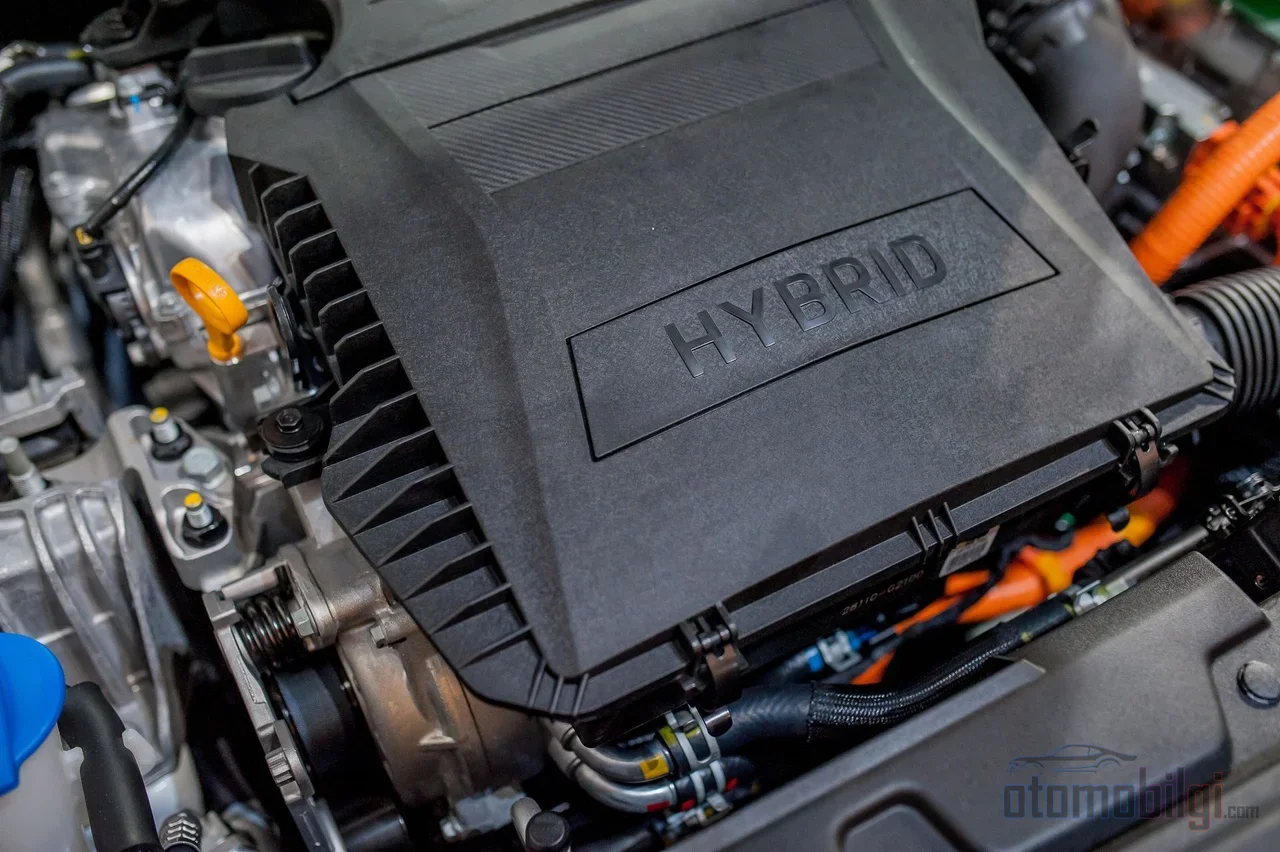
Everything we have described so far also applied to a conventional vehicle. Hybrid reveals the real difference here: high-voltage components and cables carry the risk of fatal electric shock, fire, and explosion. This is not an exaggeration; intervening in the hybrid system is a job that falls within the scope of the Vocational Qualifications Authority's "Battery Electric and Hybrid Vehicle Maintenance and Repair Technician Level 4" national occupational standard - it requires managing the risks of gas leakage, thermal runaway, and electric shock. One of the routines of authorized hybrid services is to perform insulation/leakage tests on orange high-voltage cables and connection points; a generalist mechanic's toolbox does not contain this test equipment.
In hybrids, service choice is not made based on price alone; high-voltage work should not be entrusted to anyone other than a Level 4 certified team. What's striking is this: even the segment running private hybrid services shares this view. In other words, even within the professional divide, the common ground is that no one should intervene in a hybrid without battery management and ECU experience. The real debate is not "authorized or private" but the question of "hybrid specialist or not."
Which Maintenance Can You Outsource? A Job-Based Guide
A hybrid vehicle has an internal combustion engine; therefore, oil changes, exhaust, and fuel line maintenance continue. Most of these jobs can be done without touching the hybrid's high-voltage system - meaning the right private service is a legitimate option even during the warranty period. In contrast, battery pack, inverter, dc-dc converter, and battery cooling system work means high-voltage intervention.
- Safe zone (a specialist private service can handle): oil and filter change, brake pads and discs, suspension, air conditioning, 12-volt battery, tires.
- Caution zone: software updates - access is mostly with the authorized service; battery cooling system checks require hybrid experience.
- Red zone: high-voltage battery, inverter, orange cables - only authorized service or a Level 4 certified hybrid specialist team.
How does regenerative braking change brake pad life?
Brakes are the maintenance item where a hybrid gives you the most relief. While brake pad life in the general population falls in the 30,000-60,000 km band, because regenerative braking reduces the load on pads and discs, this period on hybrids typically extends to 80,000-120,000 km. Still, you should not stretch the inspection intervals: a basic brake check every 10,000-15,000 km and brake fluid replacement every 2 years are recommended. These are entirely outsourcable, low-risk jobs.
Battery Warranty: The Most Critical Item That Changes the Decision
The most expensive component of a hybrid is the battery; warranty conditions therefore directly affect your service decision. At Toyota, the hybrid system is covered for 5 years/100,000 km under the Toyota Repair Assurance System; if a paid Hybrid System Check yields a successful result, the hybrid battery warranty is extended by 1 year/15,000 km, and this can be continued up to the vehicle's 10th year. The general market practice is an 8-year/160,000 km warranty for the high-voltage battery. After the warranty, with regular use, the battery can exceed 200,000 km and last 12-15 years.
The picture changes on the second-hand side too: battery state of health (SoH) reports have become a standard pre-sale due diligence tool, and independent battery certifications stand out as the single biggest determinant of second-hand value. An uninterrupted, invoiced maintenance history pays off here - the buyer looks not only at the battery but also at the vehicle's history.
Decision Framework: Choosing Based on Your Vehicle's Age and Your Budget
We can distill all this data into a practical rule of thumb. If you are within the warranty period, you have two legitimate options: an authorized service, or an independent service that is TS 12047/13168 certified, hybrid-certified, and provides invoices. If your warranty has expired, you can confidently entrust jobs like periodic maintenance, brakes, suspension, and air conditioning to a specialist independent service; however, high-voltage and battery work requires a Level 4 certified team regardless of the vehicle's age.
- New vehicle + hybrid under warranty: authorized service or certified independent service; always insist on invoiced work.
- Hybrid with expired warranty: independent service for periodic and brake work; specialist team for battery/high-voltage work.
- Tight budget: separate the maintenance items - have cheap jobs done cheaply, and never touch risky work.
- In case of a dispute: apply to the Consumer Arbitration Committee with your invoice and work order records.
One final note: the "goodwill guarantee" is not a legal obligation but a business decision - it is more likely to be applied to owners with an unbroken authorized service history when major failures occur shortly after the warranty expires. You do not have to choose between saving money and safety; by having the right job done at the right place, you can have both.
Sources
- Authorized Service or Independent Service? Warranty and Cost
- Toyota Warranty System
- Toyota Hybrid System Inspection and Hybrid Battery Assurance
- VQA Level 4 Occupational Standard for Battery Electric and Hybrid Vehicle Maintenance and Repair Technician
- Renault Battery Life and Warranty
- What Is a Brake Pad & When Should It Be Replaced?
- Brake Maintenance - Bosch Car Service
- Electric Vehicle Maintenance Guide - Bridgestone
- How Is Hybrid Vehicle Maintenance Done?
- Authorized Service or Private Service? The Right Choice for Toyota and Lexus Owners
- Authorized Service or Private Service? The Best Choice for Your Vehicle
- How long does a hybrid vehicle battery last?
- When Does a Hybrid Vehicle Make Sense?
- Hybrid and Electric Vehicle Service
- Dealership vs Independent Mechanic
- Battery health & resale value - Midtronics