Long Distance in a Hybrid Car: Why Does Efficiency Drop on the Highway?
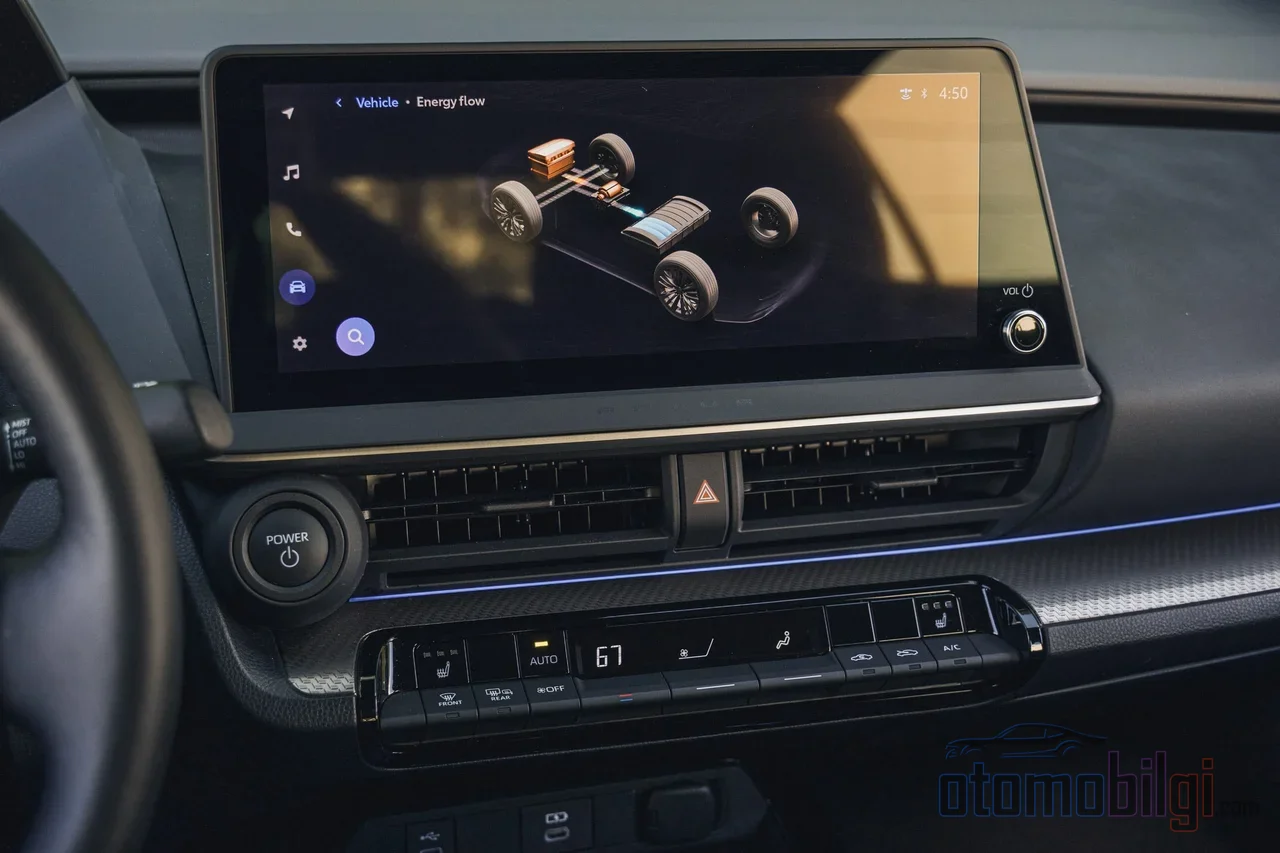
Why does your hybrid car, which kept your fingers on the fuel pump in the city, start burning more fuel than you expected after an hour of steady 120 km/h cruising on the highway? This question is one of the things hybrid owners find most puzzling. When you look at the system's design logic, the answer is actually quite clear: a hybrid is an engineering solution that selects the right conditions, and the highway is where conditions are the most predictable.
In this article, we break down the technical reason for the efficiency drop, explain why the electric motor takes a back seat on long journeys, and list driving and preparation strategies that can genuinely improve highway consumption.
Why Is City Driving the Hybrid System's Natural Home?
The concept needs to be reduced to a simple physical balance. The internal combustion engine is strong at high revs, but weak at producing torque in moments that require low revs, such as pulling away. The electric motor, quite the opposite, delivers its maximum torque from zero rpm. This asymmetry is precisely the reason the hybrid system exists: assigning each unit to the job it is efficient at.
In modern series-parallel hybrid systems, this division of labor rotates among three modes. In EV mode, the vehicle moves on startup and at low-speed city driving solely with the electric motor fed by the battery, with no gasoline used. In hybrid mode, the engine acts as a generator feeding the electric motor; when sudden acceleration is needed, the battery also comes into play. It should be added that in Toyota hybrids, EV mode works at roughly speeds up to 40 km/h - meaning this mode is actually designed for parking maneuvers and city-center speeds, not for the highway at all.
In stop-and-go traffic, a third factor also comes into play: constant deceleration. Every stop is an opportunity for regenerative braking to harvest kinetic energy and write it back to the battery. In this sense, city driving is a cycle in which the system constantly recharges itself.
Highlights
- In Toyota hybrids, EV mode works at speeds of roughly up to 40 km/h; it is not designed for the highway.
- A 10% reduction in aerodynamic drag improves highway consumption by about 5%, but city consumption by only 2%.
- At high-speed cruising, the hybrid system connects the gasoline engine directly to the wheels, eliminating the electricity conversion loss.
- At steady highway speeds, braking events decrease, so regenerative braking's chance to recover energy also drops.
What Changes on the Highway: The Gasoline Engine Takes the Wheel
Steady high-speed cruising lies entirely outside the low-rev range where the electric motor is strong. At this point, the hybrid system makes the rational decision: it brings the gasoline engine into play. For example, in Honda's e:HEV system, at high-speed cruising the engine is connected directly to the shaft via a lock-up clutch. This uses a gear ratio equivalent to top gear in a manual transmission, delivering energy to the wheels in a single step instead of generating electricity and spinning the engine again - it completely bypasses conversion losses.
In a pure series hybrid setup with no direct connection, the picture is even more challenging: the engine is forced to maintain high revs even at highway speeds and keep generating electricity. Since the engine is only efficient at mid-range revs, this means a noticeable efficiency loss during high-speed cruising. Honda states that by adding a direct mechanical connection at exactly this point in its own system, it targets both fuel consumption and quietness; and since it is the manufacturer's own source, one naturally has to account for a marketing component in this claim.
As a result, on the highway your hybrid effectively turns into a well-tuned gasoline car. The electric motor, the source of savings in city driving, finds very little to do at a constant 120 km/h.
Why Doesn't Regenerative Braking Kick In on the Highway?
The second pillar of hybrid consumption is energy recovery. Regenerative braking converts the kinetic energy the vehicle loses while slowing down into electrical energy and stores it in the battery. In the Honda e:HEV, this happens during deceleration and downhill descents: the rotation of the wheels spins the traction motor like a generator, and the energy is written to the battery. This is also why brake pads wear far later than in gasoline cars - most of the slowing down is handled not by conventional brakes but by the electric system.
This is exactly where the problem with the highway scenario emerges. Cruising at constant speed means, by definition, few deceleration events. Every time you braked, the regenerative system would have work to do; but on a straight highway, you may go hours without braking. The energy recovery cycle is a critical part of how the system operates in the city, and it effectively falls silent on the highway. The only exceptions are long descents - there, regenerative braking both collects energy and protects the brake pads from overheating.
Aerodynamic Drag: The Force That Eats Into Consumption as Speed Rises
As speed increases, air resistance becomes the dominant force facing the vehicle. Drag does not follow speed; it grows with the square of speed, meaning when you double your speed, the cost of battling the air quadruples. Even the step from 90 to 100 km/h means roughly a twenty percent increase in drag - the exact value of these figures varies with the vehicle's frontal area and shape, but the ratio is inherently quadratic.
The effect of this drag on consumption also varies with speed. On the highway, aerodynamic improvements deliver significantly larger gains than in the city:
| Condition | Role in drag | Consumption gain from a 10% drag reduction |
|---|---|---|
| Highway driving | Dominant force | Approximately 5% |
| City driving | Secondary force | Approximately 2% |
The asymmetry in the table is also a warning: on the highway, the vehicle's body shape and cruising speed create a baseline cost that sits above the hybrid system's efficiency advantage. Small details like unnecessary load on the suspension and open windows cost you more than you think at high speed.
Driving Strategies That Genuinely Improve Highway Consumption
If the cause of the efficiency drop lies in the system, the solution also lies in the driver's speed and mode choices. Strategies that work are open-ended:
- Use cruise control. Speed holding eliminates micro-accelerations and unnecessary throttle openings; a constant speed means constant resistance. Adaptive Cruise Control (ACC) softens stop-and-go situations by adjusting speed according to the vehicle ahead. ACC's effect on real-world consumption is still a subject of academic research; some hybrid users report that with ACC on, the vehicle switches to EV mode less often and the range estimate seems optimistic, but there is no independent data yet confirming these observations.
- Lower your speed band. Due to the quadratic increase in resistance, driving at 100 km/s instead of 110 km/s makes a measurable difference over the same distance. The upper speed band is the region where the hybrid loses its city gains the fastest.
- Accept the limits of EV mode. Forcing EV mode above roughly 40 km/h goes against the system's design intent; on the highway, the direct engine connection is more efficient.
- Use regenerative braking on long descents. Release the throttle, and let the system write energy to the battery while resting the brake pads.
The research literature also contains an advanced technique: in plug-in hybrids, the pulse-and-glide strategy - accelerating at high speed and then coasting by releasing the throttle - is being studied to optimize energy efficiency. This is not a method most drivers will apply daily today, but it forms the theoretical basis for why a fluctuating speed profile can sometimes be more efficient than a constant speed.
Pre-Trip Checks and Fuel Planning for Long Journeys
Preparation determines consumption just as much as driving style. The pre-departure checklist is short but effective:
- Bring tire pressure to the manufacturer's values - low pressure directly increases consumption.
- Check the condition of the air filter; a dirty filter raises fuel consumption.
- Make sure periodic engine maintenance is up to date.
- Reduce the load: unnecessary luggage and roof racks are costly at high speed.
Fuel planning follows a simple logic: since your hybrid relies on the gasoline engine on the highway, the range estimate should be read more conservatively than values calculated according to your city driving habits. Structuring your break plan around refueling points solves both safe driving intervals and the consumption budget at once.
Summary: Why Is a Hybrid Car Less Efficient on the Highway?
Hybrid vehicles are noticeably less efficient on the highway because both of the system's advantages are specific to the city: the electric motor works at low speeds and during acceleration, and regenerative braking requires deceleration events. At a constant high speed there is little work left for the electric motor, the system connects the gasoline engine directly to the wheels, and aerodynamic drag, which increases with the square of speed, is added on top of this. On the highway, the goal is not to expect savings from the hybrid; it is to minimize the loss with Cruise Control, a reasonable speed band, and proper maintenance.
Sources
- e:HEV - Original Honda Hybrid System
- Toyota EV Mode Explained: Camry, Prius & RAV4 Hybrid
- The Effect of Aerodynamic Drag on Fuel Economy
- Confusion About How Toyota Hybrid-Electric Vehicles EV Mode Works
- Aerodynamics and its role in enhancing fuel efficiency in automotive engineering
- Effect of adaptive cruise control on fuel consumption in real-world driving
- Optimizing energy efficiency of plug-in hybrid electric vehicles via pulse-and-glide
- What Is Regenerative Braking? When Should Pads and Discs Be Replaced?
- How to Save Fuel on Long Trips