How to Properly Use EV Mode and Regenerative Braking in a Hybrid Car
Share This Page
In a hybrid car, EV mode is a low-speed operating state in which the vehicle moves solely on the electric motor while the gasoline engine stays off; regenerative braking, on the other hand, is an energy recovery mechanism that converts the kinetic energy produced during braking into electrical energy and sends it back to the battery. Using these two correctly, at the right time and in the right way, ensures that the hybrid system works as its designers intended and measurably reduces daily fuel consumption. This guide explains, step by step, the operating logic of both mechanisms and how they apply in concrete scenarios, from city driving to hilly roads.
Highlights
- EV mode typically engages below 40-65 km/h and when the battery has sufficient charge
- According to Toyota's official statements, maximum speeds in EV mode can range from 50-65 km/h
- When pulling away, it is enough to lift your foot off the brake pedal; when you release the accelerator, energy is recovered
- On long downhills, avoiding overcharging the battery preserves the system's efficiency
- In plug-in hybrid models, battery capacity can deliver an average fuel saving of 70%
When does EV mode engage and under what conditions does it operate?
When you start a hybrid car, the first system to engage is the electric one; with exceptions such as cold weather or a completely empty battery, the gasoline engine does not start when you turn the key. The vehicle pulls away using only the electric motor. Within city speed limits the electric motor is active, when you accelerate the two motors work together, and on the highway the load shifts mainly to the internal combustion engine.
Three basic conditions must be met for EV mode to be selected automatically: a sufficient battery charge level, low speed, and gentle acceleration. According to the experiences of owners, having the battery charged above about 50%, driving below 40 km/h, and keeping throttle opening around 10% are typical threshold values. According to manufacturers' official data, maximum speeds in EV mode can vary between models in the range of 50-65 km/h. These figures do not contradict each other; the first shows the average window the system looks for when selecting automatically, while the second shows the upper limits that manufacturers announce on a model-by-model basis.
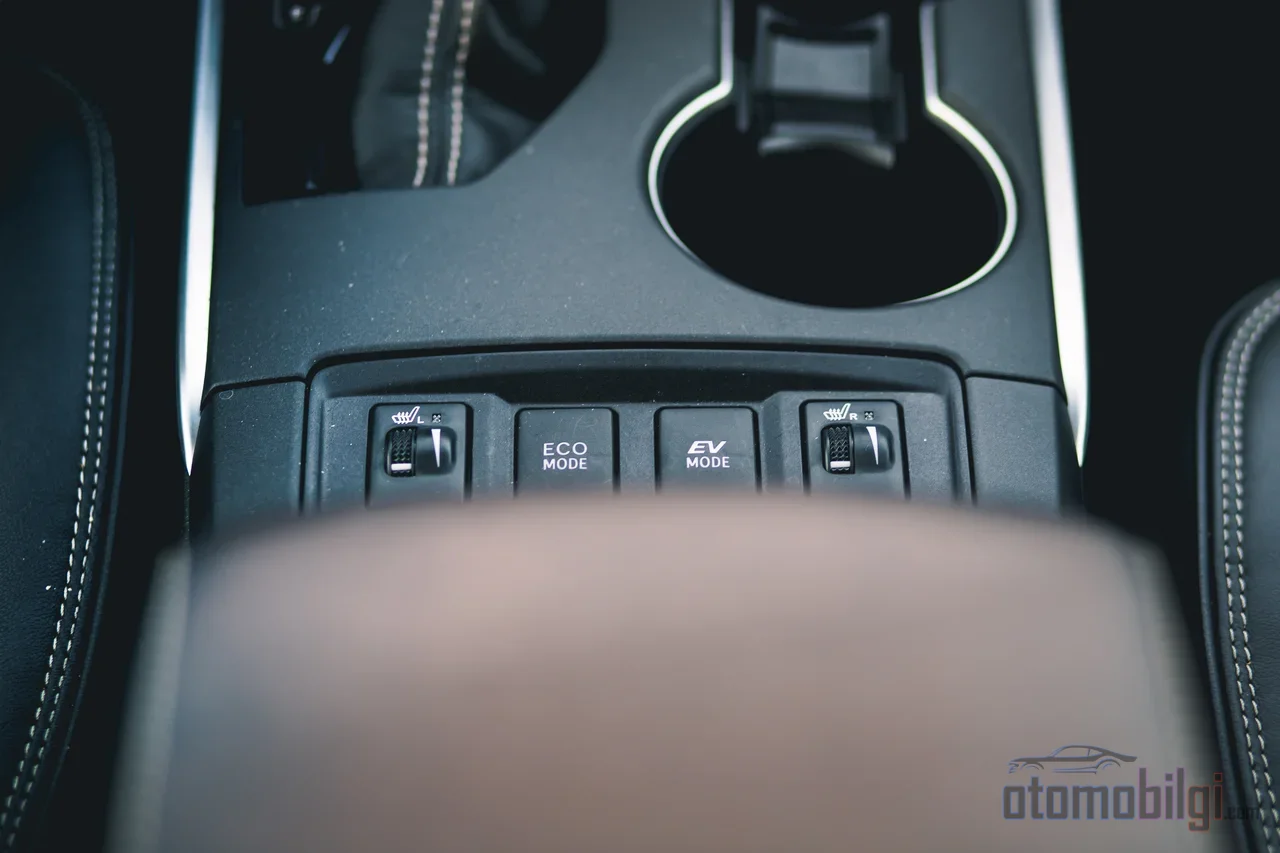
In some vehicles, especially plug-in hybrid (PHEV) models, there is a button on the console that manually selects EV mode. This button aims to maximize the distance that can be covered with the available electrical energy. However, pressing the button does not mean you have unlimited right to use the battery's power: if cabin heating demand is high, the 12-volt battery is weak, the battery is overheated, or the system is performing a correction on the battery, automatic EV mode may not engage. This is not a sign of a fault, but a normal prioritization the system applies to protect the battery.
How do you trigger and extend EV mode?
There is a single variable that extends the operating time in EV mode: the power requested by the accelerator pedal. As also emphasized in Toyota's usage recommendations, pressing the accelerator consistently and smoothly extends electric operation. As long as you keep the needle showing power flow on the hybrid information display below the ECO zone, the system continues to benefit from electric power. Pressing the accelerator gradually and leaving low-speed acceleration entirely to the electric motor is the practical application of this logic.
On the other hand, there is also a warning voiced in the field, especially in ownership forums: forcing the car to drive on electricity for long periods heats up the hybrid battery, and a heated battery's current delivery capacity drops; eventually the internal combustion engine may not shut off. What is striking is that the official recommendations and the forum experience meet at the same point: balanced throttle. The right goal is not to force electric driving, but to drive with a gentle demand that will not heat the battery.
- Keep the accelerator pedal in the ECO zone, at a steady and low angle if possible
- Periodically check the power flow on the hybrid display; if the needle is above the ECO band, reduce the demand
- If the cabin is hot, turn off the air conditioning and cool it by opening the window; if air conditioning is needed, prefer the interior recirculation mode
- Reduce unnecessary headlight and wiper load; electrical consumers draw energy directly from the battery
When the battery charge level falls below the critical threshold, the system automatically starts the gasoline engine. In the experiences of Corolla Hybrid users, the engine fires up when the battery capacity drops to around 25%, and the theoretical EV range stays around 11.2 km. So EV mode is not a mode where you race to drain the battery; it is a way of spending the surplus energy in the system within the city.
How does regenerative braking work, and what does it bring to the car?
When you brake in a conventional vehicle, kinetic energy turns into heat through friction and is dispersed into the environment; only heated brake discs remain. In hybrid systems, when the accelerator pedal is released or the brake is pressed, the electric motor takes on the role of a generator: the rotational energy of the wheels is converted into electrical energy and sent to the battery. Slowing down itself becomes an energy gain.
The practical outcome of the system can be summarized under two headings. First, efficiency: the energy recovered is used as extra propulsion power when you accelerate again or drive uphill. Second, maintenance: since the mechanical brake components work much less, brake pad life extends and maintenance costs drop. This is not a feature to be modified, but an energy recovery cycle the car offers as it comes from the factory; the driver's job is only to ensure this cycle operates for as long as possible.
Blended braking: when does the mechanical brake kick in?
In modern hybrids, braking is not done with a single system. In the blended braking approach, the regenerative system takes on the majority of the deceleration on its own; the hydraulic braking system only kicks in when the force required for a full stop demands it. Energy regeneration continues in the background even if your foot is on the brake pedal. However, if you brake hard, the friction brakes become dominant, and regeneration decreases or is completely disabled when ABS or ESC intervention is needed. So the same deceleration motion sends either no energy or maximum energy to the battery depending on whether it is done hard or gently.
Everyday scenarios: traffic, lights, deceleration zones and downhill driving
To turn theory into daily driving, it is enough to go through four common scenarios one by one. Each of them creates a noticeable consumption difference at the point where the two mechanisms meet.
Driving in stop-and-go traffic
The ground where hybrids are strongest is urban stop-and-go traffic; manufacturers report consumption figures of around 48-60 MPG under these conditions, and there are academic measurements showing that plug-in hybrids achieve fuel savings of up to 70% in city driving thanks to battery capacity support. The practical application looks like this: at takeoff it is enough to lift your foot off the brake pedal; without ever touching the accelerator, the car moves on the electric motor alone. Every gentle and early brake you make by anticipating traffic charges the battery faster and keeps you in electric range longer. Staying in EV mode at a constant speed directly reduces consumption compared to the gasoline engine revving unnecessarily.
At traffic lights and short stops
The most common mistake at short stops at lights is shifting into neutral (N). A car that is not moving cannot generate electricity; in neutral, energy continues to drain from the battery but no regeneration occurs. The correct method is to keep the car in D mode and avoid unnecessarily long idling. Lightening the car's load serves the same goal: unnecessary use of the air conditioning, headlights and wipers increases energy consumption; if you need to use the air conditioning, running it in recirculation mode cools the cabin with less energy.
Deceleration zones and approaching intersections
When approaching an intersection, a gas station or a deceleration zone, press the brake pedal gently rather than hard and keep the stopping distance as long as possible. A longer deceleration period extends the time the motor will work as a generator and increases the amount of energy sent to the battery. The driver's gain often comes from this simple timing: the same intersection becomes a battery-charging zone if you lift your foot off the accelerator 100 meters earlier, but a loss point that turns energy into heat if you brake hard in the last 10 meters.
Hilly roads
Long descents are the most efficient ground for regenerative braking, but uneven use can backfire. The most prominent warning from owner experiences is to avoid overcharging the battery during the descent: when the battery reaches its upper limit or heats up, its capacity to accept current drops and the system may not shut off the internal combustion engine. So it is the right approach to lift off the accelerator early on descents and charge the battery in a controlled way, then use the energy stored during the descent as extra propulsion on the climb; trying to pass the entire stretch at the highest possible state of charge reduces system efficiency. On intercity roads, however, the picture changes: a hybrid is usable on long journeys, but since the electric range is limited, the internal combustion engine stays engaged longer and the savings rate drops noticeably compared to city driving.
Which mistakes increase fuel consumption?
Incorrect use can reverse the design gains of the hybrid system. Each of the following behaviors leads to measurably higher fuel burn:
- Shifting into neutral for short stops: the vehicle cannot generate electricity, energy drain from the battery continues, and fuel is spent later to recharge the engine
- Hard braking: friction brakes dominate, regeneration decreases or cuts out; the energy that could be recovered turns into heat
- Forcing electric driving: the battery heats up, its current delivery capacity drops, and the system cannot shut off the gasoline engine
- Unnecessary electric consumers: heavy use of air conditioning, headlights and wipers rapidly drains the battery charge
The common denominator of all of these is interfering with the system's own decisions. A hybrid powertrain works with a management unit that optimizes energy flow hundreds of times per second; the driver's added value is to prepare the right conditions so the system can choose the electric side, not to force the technology. Gentle throttle, lifting off early, and staying in D mode: these are the three pillars of hybrid efficiency.
Conclusion: not forcing the system, but preparing the conditions
EV mode and regenerative braking are the two sides of a hybrid vehicle: one aims to spend the battery's energy in the right place, the other aims to turn every deceleration into charge. What extends EV mode is a gentle throttle, what increases regeneration is early and gentle braking, and what protects the battery is avoiding strain. A driver who waits at a traffic light in D mode, approaches an intersection lifting off the accelerator 100 meters in advance, and passes descents at a controlled state of charge gets the result closest to the hybrid system's design value. The rest of the job belongs to the system itself.
Sources
- How Do Hybrid Cars Work? | Lexus Türkiye
- How to Use Hybrid Vehicles? - Toyota Türkiye Blog
- What Is Regenerative Braking? - Toyota Blog
- Hybrid driving tips for best fuel economy - Toyota UK
- Regenerative Braking in Hybrid Cars - SEAT
- PHEV Driving Modes - Land Rover Türkiye
- Hybrid Driving Tips - GreenCars
- Why Do Hybrids Get Great City Gas Mileage? - Kelley Blue Book
- Examination of Hybrid Vehicle Types in Terms of Technical Parameters and Energy Efficiency - ResearchGate
- Regenerative braking system - Bridgestone Türkiye
- Regenerative Braking: Which Vehicles Use It and What Does It Do - Lassa
- Regenerative braking - Wikipedia
- Automatic EV mode not engaging - ToyotaClubTR
- What Is a Hybrid Car and How Is It Used? - OilMarkt
- What Is a Hybrid Car? - Otokoc