Do Hybrid Cars Get Extra Inspection at the Periodic Technical Inspection?
Share This Page
Short answer: hybrid cars do not undergo any extra inspection during the periodic technical inspection; since they have a gasoline engine, they go through the exhaust emissions test and pass all other checks in the standard way. There is no separate inspection item or additional fee due to the high-voltage battery; the process is essentially no different from what you would expect for a gasoline vehicle. The difference can only emerge in a practical detail: the emissions measurement is taken at the moment the hybrid's gasoline engine is running.
Highlights
- Hybrid vehicles go through the exhaust emissions test; fully electric ones are exempt
- 2026 car inspection fee: 3,288 TL (VAT included)
- Exhaust emissions measurement fee: 460 TL (VAT included)
- There is no hybrid-specific inspection fee item in the tariff
- Late penalty: 5% is added to the fee 5% for each month
What Is Done Differently to a Hybrid Compared to a Gasoline Car During the Inspection Process?
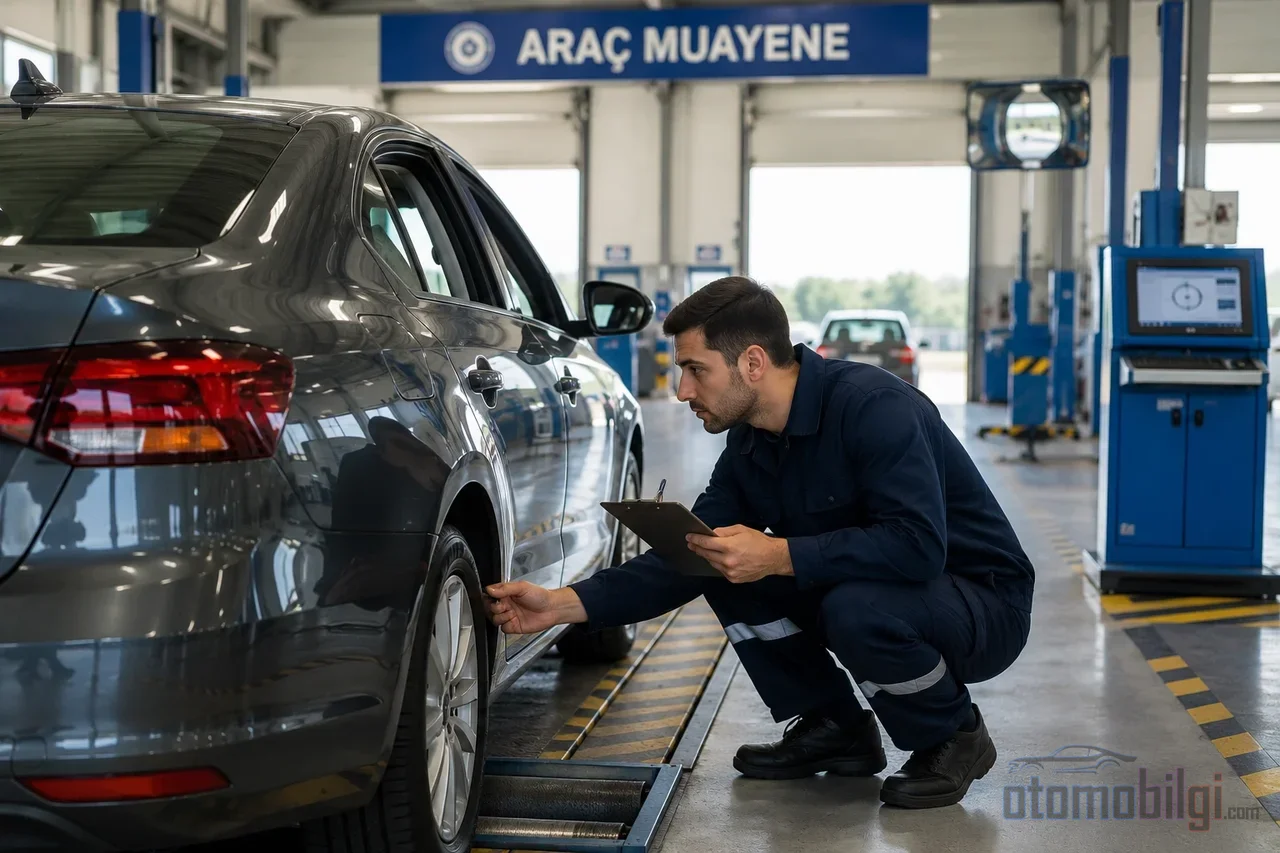
Periodic inspection, based on the Traffic Law and EU directives, is carried out in inspection stations, the sole authorized institution in Türkiye, with a network of stations across all 81 provinces. The inspection headings are the same for every vehicle: vehicle identification, brakes, steering, visibility, lamps and electrical equipment, axle-tire-suspension, chassis, mandatory equipment, and noise pollution. There is no heading called "hybrid system test" on this list.
There is a practical reason for this. A similar approach is adopted in international inspection practices: the technician guide prepared for the UK's MOT test explicitly states that hybrid and electric vehicles do not pose more risk than conventional vehicles. In other words, the high-voltage system is not seen as an element that changes the testing process for the tester; intervention in the battery, inverter, and charging system is not part of the inspection anyway.
On the electric side, the inspection logic works differently: in fully electric vehicles, checks of the oil, fuel tank, and exhaust system are not performed; instead, high-voltage lines and battery safety come to the fore. A hybrid stands at the intersection of these two worlds - since it has a gasoline engine and exhaust, it is subject to all the checks of the gasoline side.
How Is the Exhaust Emissions Test Performed on a Hybrid?
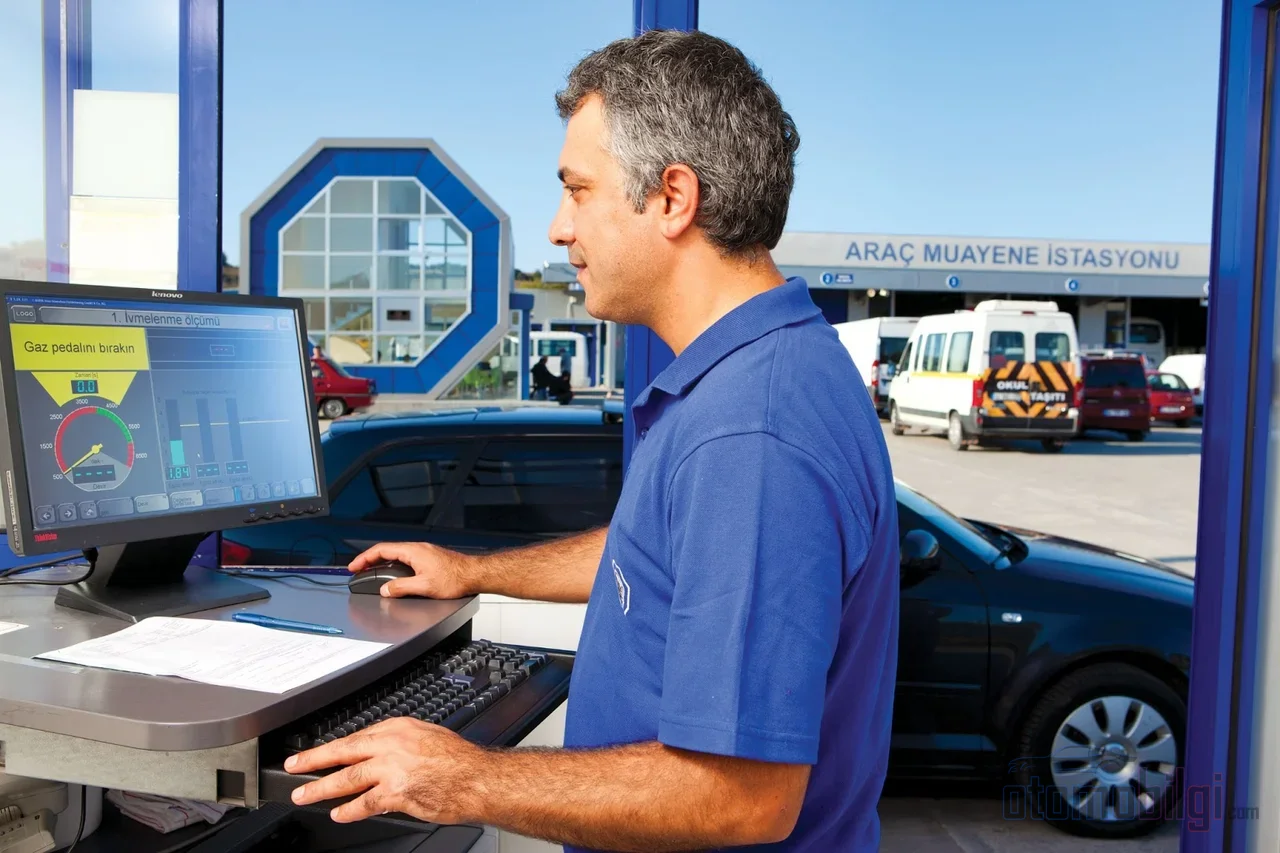
Emissions measurement on a hybrid vehicle is carried out to cover the section where the internal combustion engine is running. Since the vehicle moves solely on electricity, the gasoline engine needs to engage in order to feed a value to the measuring device. This is the most debated point of the test: a hybrid with the probe attached while the engine is off cannot provide measurement data, and the station technician applies a method to start the engine.
Field practice shared on international platforms points in the same direction: in strong hybrids, the vehicle can be put in park (P) and the engine can be made to engage by gently pressing the accelerator. It is emphasized that a hybrid with a faulty battery may struggle to pass the emissions test; because the system manages the gasoline engine through relays powered by the 12-volt battery, and if a link in this chain breaks, the engine may not start when requested.
To be honest here: there doesn't appear to be a detailed, official implementation document on exactly how the emission test will be applied to hybrids in Türkiye. There are user reports indicating that having "Benzin-Elektrik" (Petrol-Electric) written in the "FUEL TYPE" field of the vehicle registration certificate can affect the exhaust inspection procedure, but these are not based on official confirmation. Complaint platforms also contain records signaling inconsistencies in application between stations. For this reason, before going to the inspection, the safest preparation is to make sure that the petrol engine of your hybrid can be started easily for the exhaust measurement.
Two rules to remember: exhaust gas emission measurement can be performed at all fixed stations, and if the exhaust measurement is missing at the inspection, this counts as a "serious defect." The measurement is required before the inspection and can be done without an appointment - bring the original of the traffic registration certificate with you.
High Voltage Safety: Is There Any Additional Procedure at the Inspection?
The inspection station does not open, measure, or test the hybrid's high-voltage battery. The tester's job is to verify the vehicle's roadworthiness - its brakes, steering, lighting, and undercarriage; the battery's cell balance is not within this scope. A separate occupational standard has been defined for the maintenance and repair of electric and hybrid vehicles (a "Level 4" qualified technician profile working on battery systems), but this qualification concerns the service and maintenance side, not the periodic inspection.
It is more meaningful to track the battery's condition not at the inspection but through the manufacturer's own check process. For example, for vehicles that successfully pass the hybrid system check, the hybrid battery warranty can be extended up to 1 year/15,000 km; Renault hybrid batteries, on the other hand, come with an 8-year/160,000 km factory warranty. If you are worried about battery health, these checks do not replace the inspection station, they complement it.
Is the Inspection Fee Different for Hybrids? 2026 Figures
There is no hybrid-specific fee item in the tariffs; the fee is determined according to the vehicle's class, purpose of use, and legislation. In other words, a hybrid in the automobile category pays the same fee as its equivalent petrol model. The 2026 automobile inspection fee including VAT is 3,288 TL - compared to the 2,620 TL figure in 2025, an increase of 25.49% . Minibuses, light trucks, off-road vehicles, and special-purpose vehicles are in the same group; tractor and motorcycle fees are 1,674 TL.
| Item | 2026 Fee (including VAT) |
|---|---|
| Automobile inspection | 3,288 TL |
| Roadworthiness Inspection | 2,223 TL |
| Roadworthiness (together with the inspection) | 1,644 TL |
| Exhaust emission measurement (all classes) | 460 TL |
| Late penalty (per month) | 5% surcharge on the fee |
The late-penalty math is also simple: if you miss your inspection, 5% is added to the fee for each month. In sample calculations, the late fee for 2026 is shown as around 2,719 TL. Tying the deadline to your calendar is the cheapest way to avoid the penalty.
In Which Cases Do You Fail the Inspection? Serious Defect List
A red verdict usually comes not from the hybrid system itself but from classic mechanical and equipment defects. Frequently seen serious defect examples by category are:
- Brakes: oil leak, ABS not working, brakes failing to hold
- Steering: incorrect alignment, unsafe steering wheel
- Mirrors and glass: missing side mirror, missing wipers
- Lighting: fogged headlights, parking light or turn signal not working
- Undercarriage: axle damage, incorrect wheels or tires
- Other: faulty clutch, non-working horn, fuel tank leak
- Chassis/body: damaged bumper beam, sharp body attachments
Exhaust emissions are also a natural member of this list: in a hybrid, the gasoline engine failing to start or measured values falling outside the limit means a serious defect. Behind a hybrid's struggles in the emissions test often lie simple and affordable failures such as spark plugs, air filter, O2 sensor, or a weakening 12-volt battery - the battery pack does not have to be the culprit.
Pre-Inspection Preparation Checklist
The checklist that applies to gasoline vehicles applies to hybrids in exactly the same way. Dividing it into two groups makes your job easier: documents and equipment, and technical preparation.
Documents and mandatory equipment
- Vehicle registration certificate and ID
- Valid traffic insurance
- First aid kit, fire extinguisher, warning triangles (2 pieces), spare tire
- No debts: no appointment is given for vehicles with traffic fines, motor vehicle tax, or highway debts
- An appointment is mandatory; stations are closed on Sundays and open weekdays between 08:00-20:00
Technical preparation
- Brake pad and disc wear, handbrake performance
- Headlight adjustment and all lights working (turn signals, brake lights, license plate light)
- Oil, brake fluid, and coolant levels
- Tire condition and tread depth, spare tire inflated
- Extra item for hybrids: make sure the gasoline engine runs smoothly; it will be needed for the emissions measurement
Having general maintenance done before the inspection measurably reduces the risk of a red verdict. Pad and disc wear and headlight adjustment are the most common and easiest-to-fix defect items.
Frequently Asked Questions
Will my hybrid vehicle undergo the exhaust emissions test?
Yes. The emissions check is carried out to cover the internal combustion engine; only fully electric vehicles are exempt from exhaust control. Even if the battery is completely depleted, the hybrid can continue running on gasoline alone, so the measurement is technically possible.
Can I have the inspection without an appointment?
An appointment is mandatory for the inspection. The exhaust emissions measurement, however, can be done without an appointment; the original of the traffic registration document is sufficient, and the measurement must be completed before the inspection.
If the battery is faulty, can I still pass the inspection?
The inspection itself does not test the battery, but the gasoline engine must engage for the emissions measurement. Since the chain controlling the engine operates through the 12-volt battery and relays, a fault in the system can make the test impossible. The real problem is usually not the battery but easily fixable sub-components.
Conclusion: A Hybrid Owner's Inspection Strategy
Don't enter the inspection worrying "my car is a hybrid, will it get special treatment"; the answer to that question is no. But don't just show up unprepared: have the emissions measurement done in advance, make sure the gasoline engine runs, check the brakes and lights, and complete all documents and equipment. Note the debt inquiry and appointment date in your calendar. These five steps cover every scenario, including the hybrid owner's only difference from a gasoline car at inspection - the requirement that the gasoline engine must run on test day.
Sources
- Vehicle Inspection Guide 2026 - Toyota Türkiye Blog
- Vehicle Inspection Price List
- Exhaust Gas Emission Measurement
- Frequently asked questions about hybrid vehicles
- Toyota Hybrid System Check and Battery Warranty
- Electric and Hybrid Vehicle Inspection
- Hybrid, electric and hydrogen fuel cell systems (MOT guidance)
- Battery Electric and Hybrid Vehicle Maintenance and Repair Technician Level 4
- Pre-Inspection Check
- Vehicle Inspection Fees and Late Penalty Calculation 2026
- Vehicle Inspection Preparation: Step-by-Step Checklist
- Hybrid EV-mode pollution tests
- Exhaust Gas Emission Measurement Monitoring System