How to Read Battery Health When Buying a Used Hybrid?
Share This Page
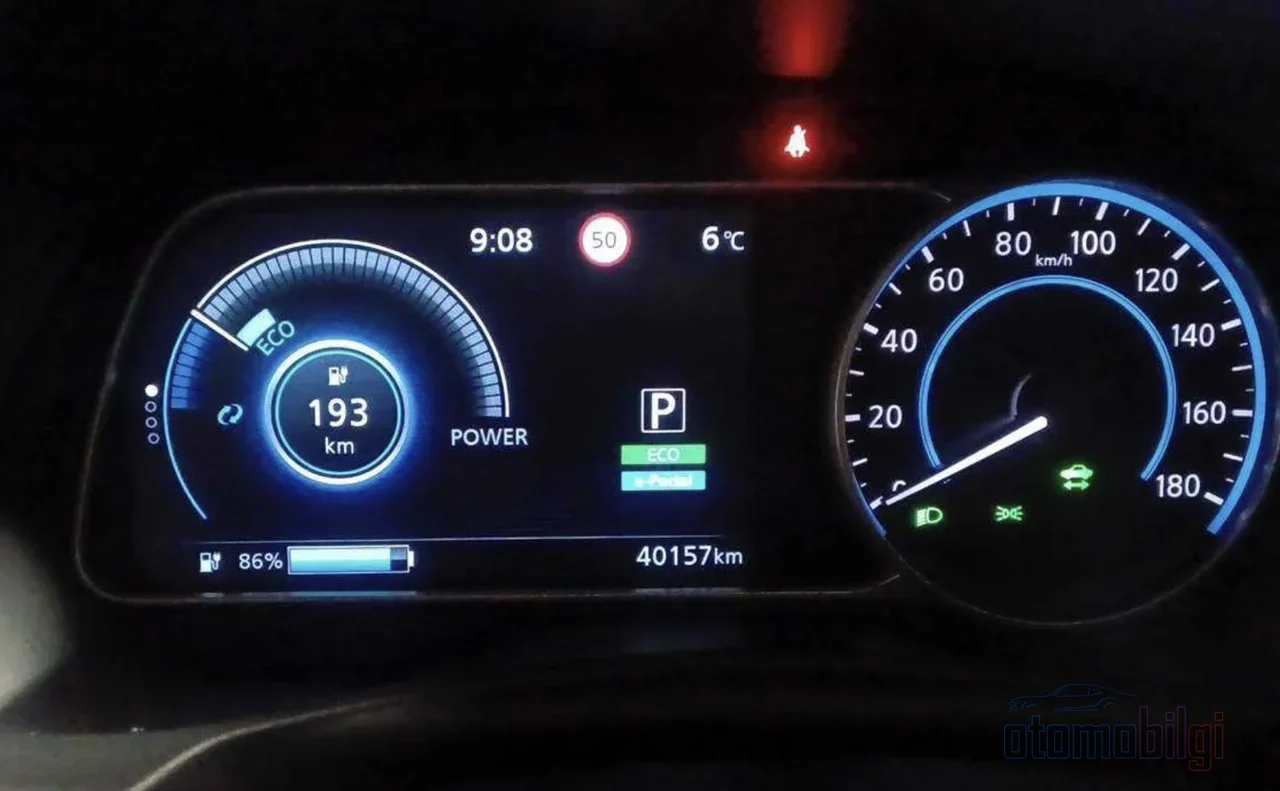
When buying a used hybrid, battery health is the single most important technical figure that determines the vehicle's true value; that is why it must be measured before making the purchase decision. Battery health (SOH) shows what percentage of the original capacity of the high-voltage hybrid battery is still retained: a new pack is 100%, and this ratio drops with use. The charge level (SOC) shown in a vehicle, on the other hand, is merely the current fill level; without reading the SOH, you cannot know whether the vehicle is selling at its rightful price or whether you are getting an overpriced approval job.
Highlights
- Modern hybrid batteries normally lose about 1-3% of capacity per year.
- In NiMH packs, if the module voltage difference exceeds 0.3V imbalance is suspected.
- Hybrid battery replacement ranges roughly 2,000-8,000 USD in cost.
- For vehicles that pass the hybrid system check in Türkiye, Toyota extends battery coverage by 1 year/15,000 km.
- The statement "no warning light" alone does not mean the battery is healthy.
What Is SOH and How Does It Differ from the Charge Indicator?
SOH (State of Health) measures the battery's shrinking "tank" over time; SOC (state of charge) is like a fuel gauge, telling you how much energy is in the tank at that moment. Confusing the two is the most common reading mistake: a battery showing 80% charge may have lost 20% of its capacity. To give a practical example, when a 65 kWh pack drops to 60 kWh, the SOH is about 92%; a vehicle with 80% SOH delivers roughly 80% of its original range.
Let us clarify from the start that a hybrid vehicle actually has two separate batteries. The first is the high-voltage (HV) hybrid battery operating at 100-300V - it has NiMH or Li-ion chemistry and is the truly expensive component. The second is the 12V auxiliary battery that starts the hybrid system. A dead 12V battery, when the vehicle will not start at all, is easily mistaken for an HV battery failure; the correct order of diagnosis is always to begin with the 12V. In fact, a weakening 12V battery can, independently of the main battery, cause the vehicle not to start at all.
How to Test Battery Health in a Used Hybrid?
Reading SOH via OBD: Strengths and Limitations
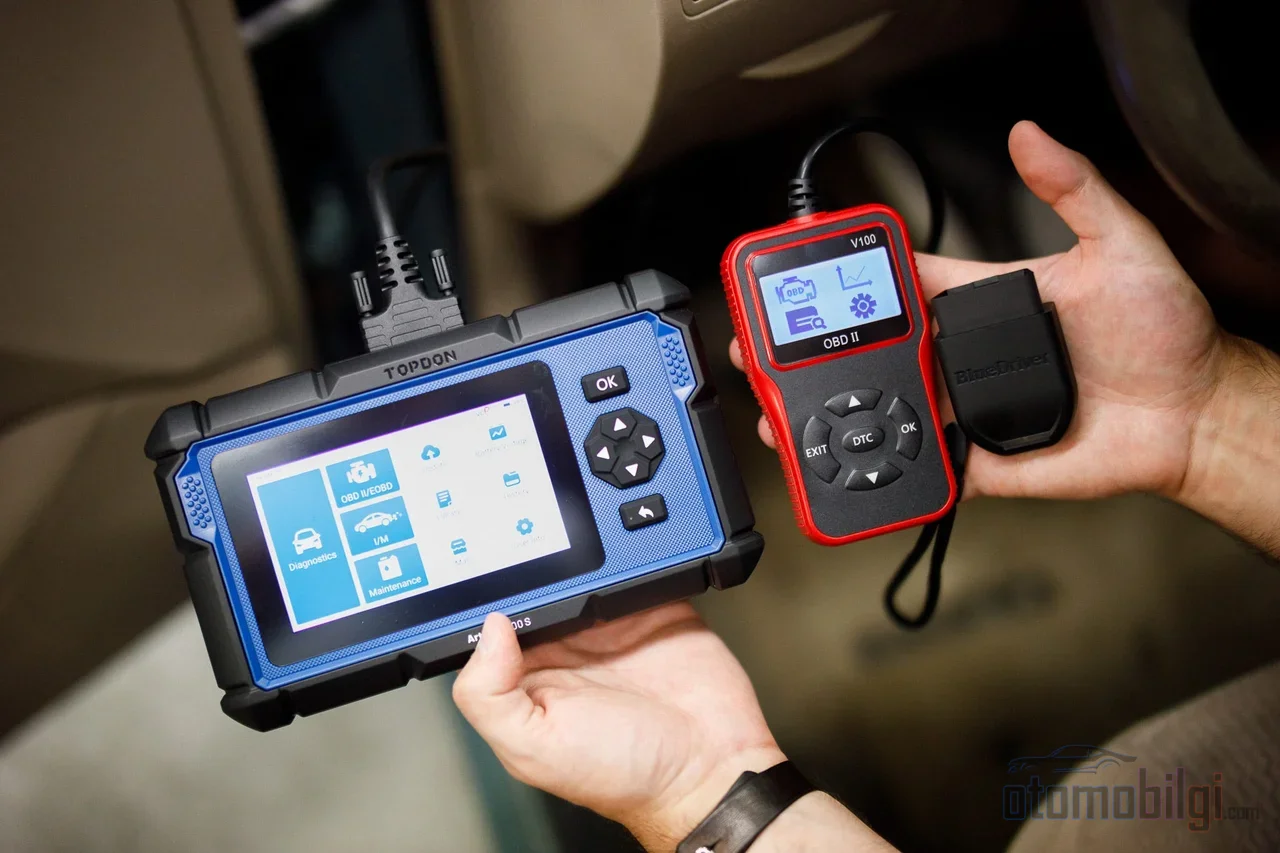
The first tool for the home user is OBD-II diagnostics. A hybrid-compatible scanner is plugged into the OBD2 port under the dashboard on the driver's side; the pack voltage, individual module voltages, SOC, battery temperature and cooling fan data are read from the hybrid ECU/BMS module. During the same session, a trouble code (DTC) scan should be performed on all modules. For Toyota and Lexus, Hybrid Assistant (Android) and Dr. Prius / Dr. Hybrid - which offer a health score and capacity test - are common choices; among reliable adapters, the Vgate vLinker series and OBDLink MX+ can be mentioned.
After reading, the critical criterion to check is the voltage delta: the difference between the highest and lowest module voltage. In a healthy pack this difference is very small; in NiMH packs a value rising above 0.3V should be considered a sign of imbalance. It should also be known that basic OBD-II readers only show generic engine codes and cannot read module voltages or cell temperatures. Therefore OBD reading is genuinely useful as an early warning; however, an accurate capacity measurement requires a professional load test - consumer-grade devices cannot perform a real load test.
Professional Testing and SOH Certification
The difference with professional diagnostics is that it performs a load test with a controlled discharge: a module that appears normal at rest betrays itself by degrading under load. Experts also analyze voltage imbalances between modules. Third-party systems such as AVILOO plug into the OBD port and produce an independent SOH report with a PDF certificate through a measurement requiring a test drive or a full charge. These certificates are not mandatory; there is also data that softens the concern to some extent - a large fleet study shows that electric vehicle batteries retain more than 93% capacity even after 70,000 km. However, this statistic is an average; what matters is the measurement of the specific vehicle you are considering.
Behaviors During a Test Drive That Betray a Weak Battery
A weak hybrid battery leaves clues in driving dynamics before it reaches the dashboard. During the test drive, look for the following:
- A noticeable drop in fuel economy even though driving habits have not changed - one of the earliest clues.
- The gasoline engine engaging unusually frequently.
- Power loss or hesitation at takeoff.
- The charge gauge fluctuating erratically or getting stuck at the extremes.
- The battery cooling fan running constantly or being noisy - this could be a sign of cell failure.
- The hybrid system taking longer to warm up in cold weather and a "Check Hybrid System" message.
Performing the checks before and during the drive in order also gets the job done with certainty: Read the fault codes before starting the vehicle; during the drive, watch how frequently the gasoline engine engages at low speeds; compare the gauge against factory consumption values; pay attention to whether there is any jerkiness during the electric-gasoline transition; ask about the condition and age of the 12V battery; request the hybrid battery's service history. One final engineering note: compare the mileage against battery age rather than vehicle age - highway mileage wears the battery far less than stop-and-go city use, so mileage alone is not a good indicator.
Does the Warranty Transfer to the Second Owner?
Capacity loss generally falls under warranty only when it drops below the manufacturer's threshold (commonly 70–80%). The transfer issue, on the other hand, is not an automatic right and varies significantly from brand to brand. Toyota has extended its hybrid battery warranty to 10 years from first use starting with the 2020 model year; at Hyundai, it is known that the 10-year/100,000-mile powertrain warranty and the lifetime hybrid battery warranty are not transferred to the second owner, while other rights are transferred. In Kia's case the picture is even more complicated: while there are reports that the 10-year/100,000-mile battery warranty is not transferable on non-certified (non-CPO) used vehicles, some buyers were told they would get 3-year/36,000-mile coverage. Another critical detail: intervention by a third-party service without high-voltage training may affect the warranty. That is why, before purchasing, request a written breakdown of the hybrid component coverage.
In Türkiye, an official and concrete item stands out: Toyota Türkiye extends the hybrid battery assurance to 1 year/15,000 km(whichever comes first) for vehicles that pass the hybrid system inspection successfully. In the general framework, hybrid battery warranties vary by brand and country but are typically around 8 years and in most cases continue on the second owner; however, this is not an automatic and unlimited right, and the exclusion conditions must definitely be clarified in writing on a brand-by-brand basis.
Hybrid Inspection Coverage in Türkiye
A hybrid inspection is not a copy of a regular inspection: alongside the battery, the inverter and electric motor must also be checked, and the test drive is of great importance in this process. Well-equipped companies can report the battery cell voltage balance, charge cycle count, and electrical system with special devices; some can measure and document the battery's performance loss with dedicated software. The evaluation question should be gathered under three headings: the battery's overall condition, the possibility of capacity loss, and whether there are any faults recorded in the system.
It is also worth knowing a practical obstacle in advance: private sellers often do not allow the vehicle to be taken to a service center. In that case, OBD-based reading becomes the only measurement tool in the field - which explains why it makes sense to bring your OBD-compatible adapter along with the vehicle. Saying "there is no warning light" is no substitute for seeing the cell voltage balance and recorded fault codes.
How Much Discount Can a Weak Battery Win in Negotiation?
The high-voltage pack is the vehicle's most expensive component, and its condition is rarely reflected in the sale price. The replacement cost table establishes the numerical basis for negotiation:
| Item | Typical cost (USD) |
|---|---|
| General hybrid battery replacement | 2,000-8,000 |
| Toyota industry estimate | 2,000-5,000 |
| New OEM pack at a Toyota/Lexus dealer | 4,000-5,500+ |
| Prius replacement | 1,800-3,500 |
| Camry Hybrid replacement | 2,200-3,800 |
| Reconditioned pack | Cheaper than a new pack |
This table steers your negotiation in three ways. First, a measured low SOH or voltage imbalance is a direct discount item: even the lower bound of a battery replacement is a serious percentage of the vehicle's second-hand value. Second, a "cheap" car with a weak battery may cost more in the long run than a slightly more expensive one with a healthy battery - if the seller does not answer battery questions, reflect this in your offer or walk away from the vehicle. Third, since used or salvaged batteries in Türkiye can be found at 40-50% of the original price, the realistic lower cost of a replacement scenario is below dealer prices; however, there is no verified table for this marketplace pricing, so get the offer in writing.
Questions to Ask the Seller
- What is the current SOH percentage?
- Has a fault code ever been triggered before?
- Is the battery still under warranty?
- Is the main charging method home AC or fast charging?
Understanding Degradation Speed: When to Worry?
Modern batteries degrade about 1-3% per year in normal use; at this pace, a 5-year-old vehicle typically falls in the 85-95% SOH band, and a 10-year-old one in the 75-90% range. Hybrid batteries generally last 8-15 years. The package's biggest enemy is heat: a clogged cabin air intake or a faulty cooling fan directly shortens the package's life - which is why checking the cleanliness of the fan channels during inspection is a small but valuable check. For plug-in models, it is recommended to avoid 100% charging and full discharge and to operate Li-ion within a 20-80% SOC range; the previous owner's charging habits also affect degradation.
Conclusion: Measure, Verify, Then Negotiate
The process can be summarized in four steps: first check the 12V battery and fault codes; then read module voltages, deltas and temperatures with a hybrid-compatible OBD setup; if any doubt remains, request a professional load test or an independent SOH certificate; clarify in writing the terms of warranty transfer to a second owner. The output of these four steps lets you sit at the negotiation table with numbers - in a field where decisions are made by measurement, not by feeling, the cheapest insurance is a correctly read SOH value.
Sources
- How to Check Hybrid Battery Health: A Practical Guide
- EV Battery Health NZ: What to Check When Buying a Used Electric Car
- What is Battery State of Health? How to acquire SOH certificate?
- How to check your car's hybrid battery
- What hybrid warranty coverage do I have on my Toyota?
- Toyota Hybrid System Check and Hybrid Battery Warranty
- Is the Hyundai Warranty Transferable?
- Hybrid Battery Cost
- How to Have a Hybrid Vehicle Inspected?
- Does the Battery Warranty Continue for Second-Hand Vehicles?