What Does the Hybrid Battery Warranty Cover, and What Doesn't It Cover?
Share This Page
The hybrid battery warranty does not promise that the battery will never age; it commits that even after a certain period and mileage, the battery will not drop below a certain percentage of its original capacity. For most brands, this threshold is 70% SOH; the duration varies by brand from 5 to 8 years. The warranty may also cover the electric motor, battery system, and manufacturing-related electronic faults - however, unauthorized intervention, accidents, and use contrary to the owner's manual can invalidate this coverage.
Highlights
- In hybrid battery warranties, the capacity threshold is usually 70% SOH.
- Hyundai and Togg 8 years / 160,000 km; Toyota in Türkiye covers the hybrid system for 5 years / 100,000 km .
- BYD became the first brand to raise its battery warranty to 250,000 km in 2026.
- In real-world use, batteries lose an average of 1.8%-2.3% of capacity per year.
- The legal warranty for passenger cars is 2 years / 60,000 km; the manufacturer's warranty is added on top of this.
Is Capacity Warranty the Same as Fault Warranty?
The biggest misconception when reading a battery warranty is assuming that "8-year warranty" means the battery will remain fault-free and at its original performance for eight years. In practice, there are two separate commitments. The fault warranty means free repair or replacement if a manufacturing or material defect arises in the battery or other components of the hybrid system. The capacity warranty works on a different logic: the battery naturally wears out as it is used, and this wear is not covered by the warranty; the warranty only comes into play if the wear exceeds a reasonable limit.
The metric that measures this limit is SOH, or State of Health: it shows what percentage of the battery's original capacity it retains. This is the phrase in warranty documents that reads "if it drops below 70%". If the vehicle's battery is operating at 72% SOH after 8 years / 160,000 km, everything is as planned and the warranty pays nothing; if it has dropped to 68%, the capacity warranty comes into play. In other words, the warranty does not guarantee that the battery will not age, but that the rate of aging stays within the range committed by the manufacturer.
Hybrid Battery Warranty Periods by Brand
Commitments in the Türkiye market differ significantly from brand to brand. The table below compares the key figures in manufacturers' official warranty conditions.
| Brand | Coverage | Duration / Mileage |
|---|---|---|
| Toyota | Entire hybrid system | 5 years / 100,000 km; can be extended up to the 10th year with a paid inspection |
| Hyundai | Hybrid and plug-in high-voltage battery | 8 years / 160,000 km |
| Kia | Hybrid battery capacity warranty | 5 years from first delivery |
| BMW | Plug-in hybrid high-voltage battery | 8 years / 120,000 km |
| Togg | Battery | 8 years / 160,000 km |
| BYD | Battery (LFP Blade) | 8 years / 250,000 km |
The same brand's commitments can also vary across different markets; this is an important detail that is often overlooked when evaluating warranties. The Toyota example is striking: while in Türkiye the hybrid system is covered for 5 years / 100,000 km, in the US, models from 2020 onwards come with a hybrid battery covered for 10 years / 150,000 miles as standard. In some markets this period has been extended to 10 years / 240,000 km, while in the UK, coverage of up to 15 years in total is offered with a battery warranty renewed every year. In addition, in Türkiye, Toyota allows the vehicle's coverage to continue up to its 10th year through a paid Hybrid System Check performed every 1 year / 15,000 km - meaning the extension is not free of charge, but conditional on regular checks.
These differences between markets and BYD's 2026 move raising the coverage from 200,000 km to 250,000 km show that competition is also playing out through the warranty item. On the other hand, since the 8-year warranties of first-generation EVs sold after 2018 are beginning to expire, warranty expiry has become a threshold that brings battery costs and second-hand value into the spotlight together.
Am I Obligated to Replace the Battery When the Warranty Period Ends?
No. The end of the warranty does not create a maintenance obligation; the battery continues to be used as long as the SOH value and your range needs are the determining factors. Real-world usage data is reassuring at this point: according to a large-scale fleet analysis, batteries lose an average of 1.8%-2.3% of capacity per year, and it takes an average of 13 years for them to fall to the 75% SOH threshold. By the end of the eighth year, a typical battery sits in the 81-88% range; only about 1.5% of vehicles require a battery replacement over their lifetime. For hybrid batteries, the real service life is estimated to be 12-15 years, exceeding 200,000 km with regular use.
In this picture, the warranty should be read less as insurance against an expected failure and more as a safeguard that zeroes out the cost of a statistically low-risk scenario. Toyota's own statement fits this logic: if there is no manufacturing defect, the battery is not expected to fail within 5 years; in this respect, it differs from other mechanical parts.
What Circumstances Void the Warranty?
The warranty certificate is a set of conditions as much as it is a commitment. The most common ways to lose coverage are as follows:
- Unauthorized intervention: Allowing anyone other than an authorized service to access, replace parts on, or intervene in the high-voltage system is the fastest ground for warranty termination. In practice, having maintenance done at an authorized service is considered decisive in preserving coverage.
- Accidents and external damage: Damage to the battery pack caused by an accident is a matter for your insurance, not the warranty.
- Neglect and use contrary to the manual: For example, constantly exposing the vehicle to extreme heat and cold in an environment without a garage can shorten battery life; the fault not stemming from consumer error is a requirement for exercising warranty rights.
There is also a balance in favor of the consumer here. If it is disputed whether the fault truly stems from misuse, Consumer Arbitration Committees step in; there are rulings in favor of consumers against rejections made on the grounds of "unauthorized intervention." In addition, Law No. 7223 on Product Safety prohibits contract clauses that remove or limit the responsibility of the manufacturer or importer - meaning that no clause in the warranty certificate is valid if it contradicts the law.
How Do Legal Warranty and Manufacturer Warranty Work Together?
In Türkiye, the legal warranty period for passenger cars is at least 2 years / 60,000 km. The periods such as 5 years or 8 years offered by brands are voluntary, commercial warranties they provide beyond what the law mandates. The two coverages work in parallel: in the first two years the legal warranty applies, and afterwards the conditions in the brand's own certificate apply. Under Law No. 6502 on Consumer Protection, in the case of a defective product, consumers have optional rights to demand repair, replacement, refund of the price, or a discount; a replacement can be demanded at the first fault within the warranty period, and if the vehicle has been taken in for repair, replacement comes into question if the fault recurs.
There is another concrete rule to know about the process: the maximum repair time for a repair covered by the warranty is 45 business days. Exceeding this period alone can produce a result in favor of the consumer, even for a vehicle outside the warranty. Whether the 2-year legal period is insufficient for a long-lived component such as the battery remains a topic of ongoing public debate; in practice, what truly protects the battery is the brand's voluntary extended warranty and using the vehicle in accordance with its conditions.
Steps to Follow When Making a Warranty Claim
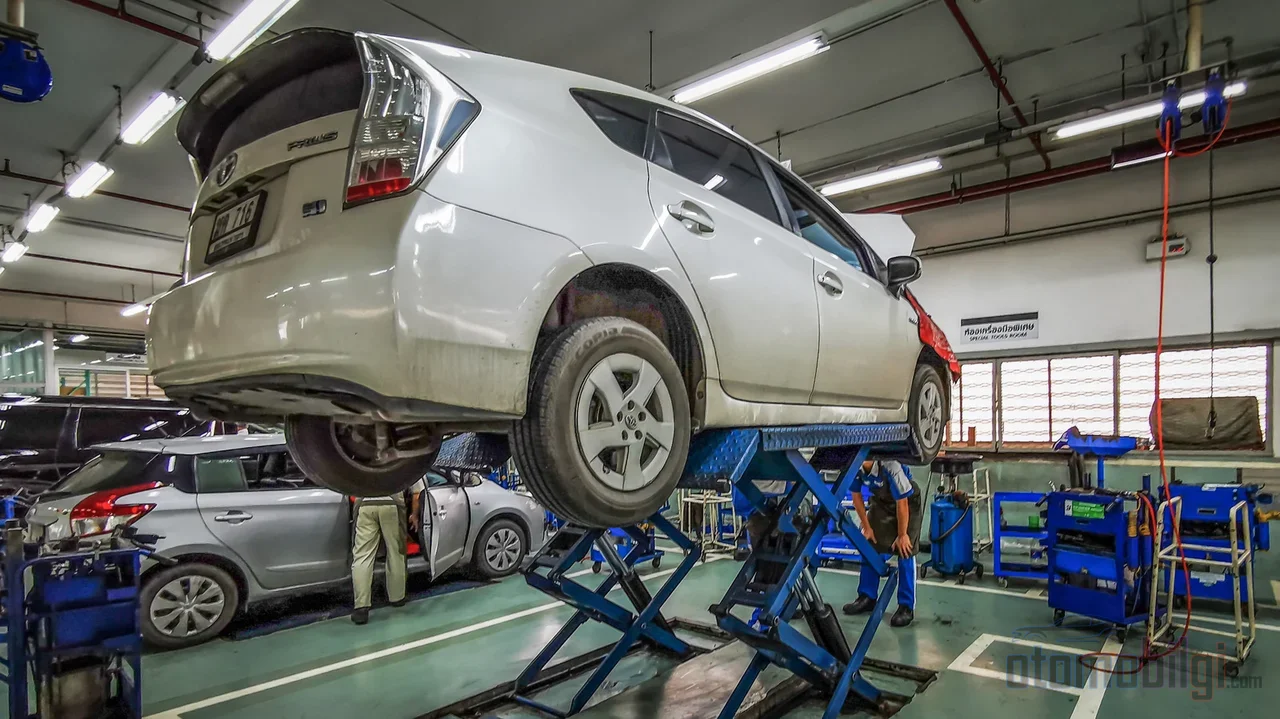
- Note down the fault codes and symptoms. Warning lights, fault codes read by the diagnostic device, and performance loss are the technical basis of your claim.
- Prepare your maintenance records. Having authorized service maintenance documented is the strongest shield against having the coverage questioned.
- Read the conditions in your warranty certificate. Apply knowing within what period, at what mileage, and with what threshold (for example, 70% SOH) the coverage is triggered.
- Have the source of the fault determined. The authorized service's report clarifies whether the fault is production-related or usage-related.
- If you receive a rejection, use the appeal route. In case of a warranty rejection, applying to the Consumer Arbitration Committee is a practical and accessible path.
Recent cases on complaint platforms show how important it is for the process to be based on documentation. In applications made with hybrid battery fault codes, "negligence during the warranty process" and ambiguously drafted warranty terms can be criticized in a way that leads to additional charges. Clarifying the conditions from the start is the most effective preventive measure against such friction.
The Real Value of a Warranty: Comparing It with Replacement Cost
To understand the monetary value of the warranty, you need to look at battery replacement costs - but this figure does not settle on a single number and comes from different definitions. One replacement quote is based on the part price, while another factors in labor, shipping, and module-based repair options together; model year and package content also shift the figure. In Türkiye, for a compact-class hybrid's battery replacement, the literature cites a wide band of 80,000 TL to 320,000 TL ; the lower end corresponds to the part price only, while the upper end corresponds to a complete replacement including labor. On the electric side, module-based repair starts at around 30,000 TL, while complete packages range from 300,000-500,000 TL in the entry and mid segments, and can exceed 1.5 million TL in premium models.
In this picture, a Corolla Hybrid example makes it concrete: battery replacement is an item at roughly 15-20% of the vehicle's value level. Compared to a vehicle whose risk is nearly eliminated by an 8-year / 160,000 km capacity warranty, in a model that only offers a 3-year / 100,000 km mechanical warranty, this risk stays with the buyer for longer - a difference also reflected in second-hand prices. When buying a used hybrid, you should similarly request an SOH report, service records, and a battery health test; a 85% SOH is recommended as a reasonable starting threshold on the used market.
In conclusion, when evaluating the warranty, answer three questions: what is the capacity threshold, what are the time and mileage limits, and which conditions are excluded? These three lines make the most uncertain item of a hybrid's ownership cost measurable - and from a mechanical engineering standpoint, a well-defined warranty is as valuable as a well-designed battery.
Sources
- Toyota Warranty System | Toyota Türkiye
- 5-Year Warranty | Hyundai Motor Türkiye
- Warranties | BMW Türkiye
- Kia Passenger Vehicle Warranty Handbook
- Suzuki Automobile Warranty Conditions
- Toyota Battery Warranty
- Toyota Car Warranty
- How Long Does an EV Battery Last? Warranty and Cost 2026
- When Is a Hybrid Vehicle a Sensible Choice? - 2026 Decision Guide
- What Does EV Warranty Coverage Include?
- Hybrid Battery Prices 2026
- Free Repairs on a New Vehicle | Repair Under Warranty
- Defective Product Purchased in Türkiye
- Product Liability and Safety in Türkiye
- Is the Legal Warranty Period for Cars in Türkiye Insufficient?
- Consumer Arbitration Committee Ruling Against Apple for 'Unauthorized Intervention'
- The Product I Bought Broke Down, They Say It's Not Covered by Warranty
- Toyota Hybrid Warranty Terms Violation and Additional Fee Request
- How To Buy A Used Hybrid Without Getting Burned
- Hybrid Battery Replacement - ToyotaClubTR