Phil Hill: America's First Le Mans Champion
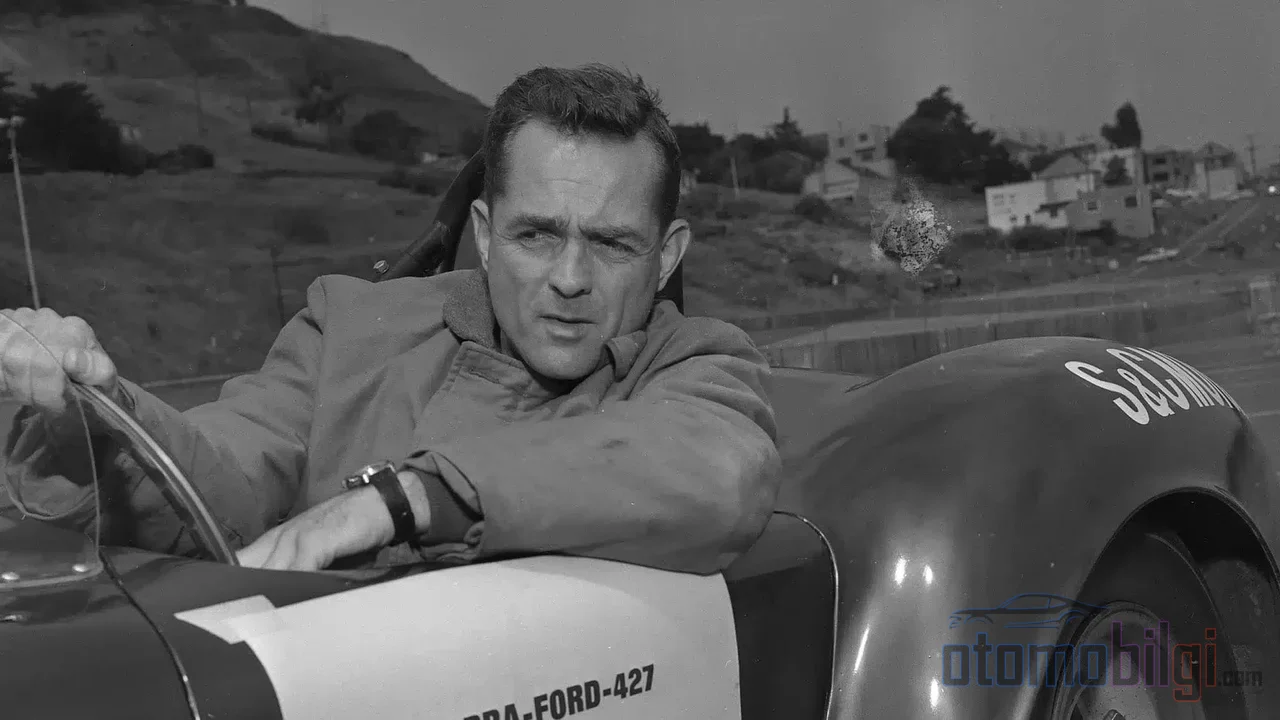
Imagine an American on the asphalt of the Circuit de la Sarthe at midnight in June 1961, rain streaming down the windshield: The calm man behind the wheel would become Formula 1 world champion a few months later and would also win Le Mans that same year. A double that no one has ever repeated to this day. So how did Phil Hill win those three Le Mans victories? The answer is a story about patience more than speed, and intelligence more than courage.
I don't know what comes to mind when you hear the name Phil Hill, but it's most likely this sentence: America's first and only US-born Formula 1 world champion. True, but incomplete. Because Hill's real area of mastery was Le Mans, a race where you press a button and then have to endure for 24 hours. He won it three times, in 1958, 1961 and 1962 - and on all three occasions alongside the same person: The Belgian legend Olivier Gendebien.
From Santa Monica to Maranello: The Path of a Mechanical Passion
Philip Toll Hill Jr. was born in Miami on April 20, 1927, but grew up in Santa Monica. A classic story: While studying business at the University of Southern California, a racing career seemed more appealing, and he dropped out. In 1949 he went to England as a Jaguar apprentice, and won his first race that same year in an MG TC. In 1956 he signed with Enzo Ferrari's team, and his fate was sealed.
What set Hill apart from other drivers during his Ferrari years was his character: A calm, thoughtful and gentle man. A peaceful person winning championships in the most dangerous era of motor racing - that, by his own admission, was the real paradox. That calmness would become his greatest weapon at Le Mans.
Highlights
- Phil Hill won Le Mans three times, in 1958, 1961 and 1962.
- The first Le Mans champion born in America: 1958.
- In 1961, the only driver to win both Le Mans and the Formula 1 world championship in the same year.
- All three victories came with Ferrari, in partnership with Olivier Gendebien.
- The Ferrari 330 TRI/LM of 1962 was the last overall victory for a front-engined car at Le Mans.
Before Ferrari: The Bitter Side of Le Mans
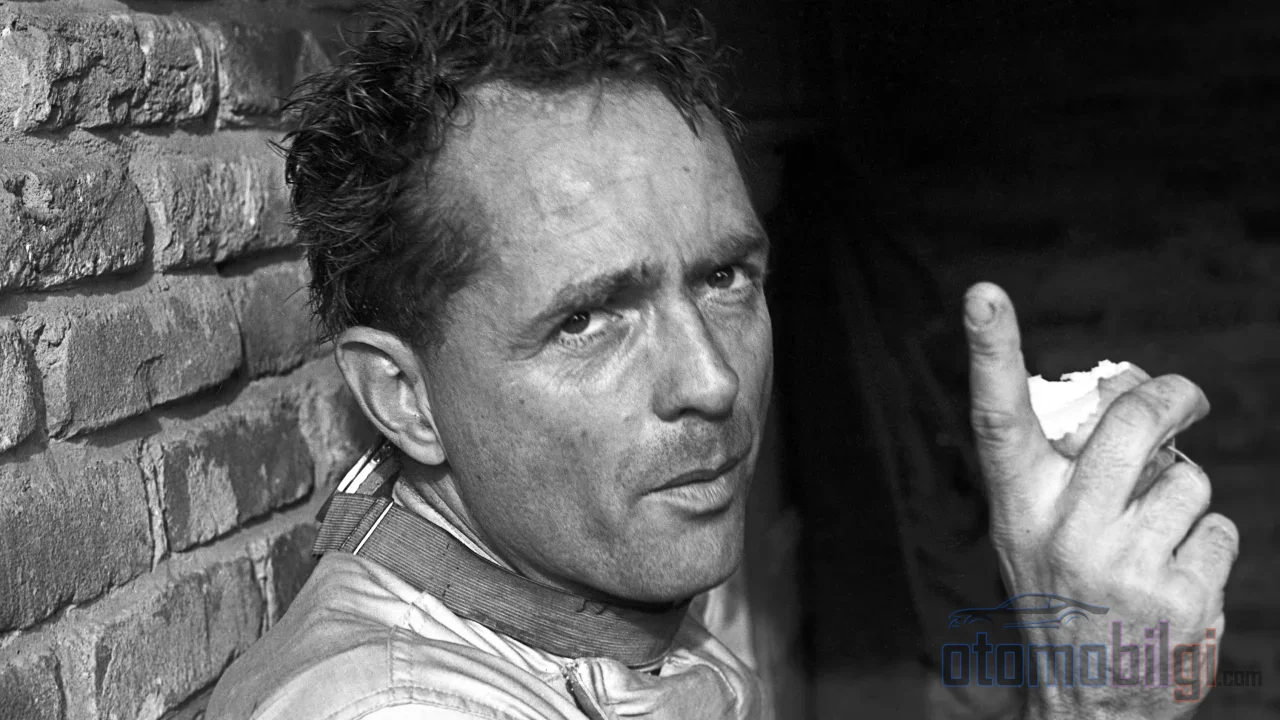
Hill's Le Mans adventure did not start rosy. His first entry came in 1953 with an O.S.C.A MT-4, and in the 10th hour he retired from the race. When he went in 1955 with a Ferrari 121 LM, a radiator failure cut his run short in the 6th hour. That same year, he witnessed one of the greatest disasters in motorsport history: The 1955 Le Mans catastrophe. Continuing to race in such an environment tested everything we say about Hill's character.
Shall we give you a surprising statistic? Hill entered Le Mans 14 times in his career, but the number of races in which he saw the checkered flag is only three. And he won all three of those races. So for Hill, finishing at Le Mans meant winning - that is the privilege of the men who become synonymous with the brand.
1958: The First Victory in the Rain and a Historic First
On the night of June 21-22, 1958, Hill and Gendebien would drive the #14 car, the Ferrari 250 TR/58. The race night turned into a torrential downpour, and Hill spent most of the night at the wheel. Visibility was nearly zero, the track was wet, and the car was a 3-liter V12 monster capable of 270 km/h. The result: Victory with 305 laps and a distance exceeding 4,100 kilometers.
With this victory, Hill became the first American-born Le Mans champion. Though it may seem like a dry statistic, it was huge news at the time: Europe's most prestigious endurance race had been won by a Californian whose name very few people knew. And at the wheel not of an American automotive giant, but of an Italian race car.
1961: The Seemingly Impossible Double
Now we come to the most absurd part of the story. The 1961 season was the peak of Hill's career. In Formula 1 he was chasing the World Championship with the Ferrari 156, while at Le Mans he was partnering with Gendebien again in the 250 TRi/61. On June 11, 1961, the duo won Le Mans - second place went to the Mairesse and Parkes pairing, also in a Ferrari. Hill clinched the F1 world championship at the end of the season, bringing Ferrari both the drivers' and constructors' titles.
So why was it so special? Because Phil Hill is the only driver to win both the 24 Hours of Le Mans and the Formula 1 championship in the same year. Just think about it: Can you imagine one of today's drivers winning both Le Mans and the F1 crown in the same year? The calendar, the physical strain, the mental demands of two different disciplines... This double has not been repeated for over sixty years.
A Detail Left in the Shadow: Monza 1961
The 1961 Italian Grand Prix, where Hill secured his championship, is remembered not with joy but with mourning. His teammate Wolfgang von Trips' fatal crash at Monza cast a shadow over the season. Hill's fear of death, which had haunted him since childhood, surfaced in a way that would mark the end of his career.
1962: The Farewell Year and the Last Dance of the Front-Engined Cars
In 1962, Hill and Gendebien entered Le Mans for the last time - this time in the Ferrari 330 TRI/LM. The 4-liter 330 V12 engine had a displacement of 3,967 cc and produced 390 hp; it was equipped with six Weber 42 DCN carburetors. The fastest lap of the race also came from this car: 4:10.8. At the finish, they were about 42 miles ahead of the 250 GTO in second place.
The historical significance of this victory is immense: The 330 TRI/LM claimed the last overall victory for a front-engined car at Le Mans. It was the closing of an era that would last nearly forty years. That same year, with its sixth Le Mans victory, Ferrari overtook Bentley and Jaguar to become the most successful manufacturer in the race's history up to that point.
Hill's Winning Cars: A Technical Comparison
Two Testa Rossa bodies and one 330; that is the formula behind three victories. Here are the engine, power and speed figures:
| Car | Year | Engine | Power | Top Speed |
|---|---|---|---|---|
| Ferrari 250 TR/58 | 1958 | 3.0 L V12 (Tipo 128) | 300 hp @ 7000 rpm | ~270 km/h |
| Ferrari 250 TRi/61 | 1961 | 3.0 L V12 (Tipo 128) | 300 hp | 270 km/h |
| Ferrari 330 TRI/LM | 1962 | 3,967 cc V12, 6x Weber 42 DCN | 390 hp @ 7500 rpm | Not disclosed by the manufacturer |
To be honest, neither the official torque figures nor factory-approved 0-100 km/h data are available for either car; for the 250 TR, the 0-60 mph time measured in tests is cited as approximately 6.0 seconds. It's better to leave it here rather than make up numbers we don't know, right?
Why Did He Leave? Ferrari's Bloodletting and Hill's Decline
The story up to this point is brilliant, but what follows is sorrowful. At the end of 1961, Ferrari lost most of its engineers under the leadership of chief designer Carlo Chiti - the great wave of departures that went down in history. Amid this chaos, Hill was forced to leave the team in 1962, even though he won Le Mans and the Nurburgring 1000 Km that year and finished the championship just 5 points behind Gendebien. He moved to the newly founded ATS, but he was no longer the same driver.
Hill's loss of motivation was openly expressed: He was no longer hungry enough to put himself at risk - an honest admission from a man living in the most dangerous sport of his era. He then took part in the early years of Ford's Le Mans venture and completed his career in 1966-67 with Chaparral. In 1964, he won the 24 Hours of Daytona with Pedro Rodríguez, becoming the driver to complete the first Triple Crown in endurance history (Le Mans + Daytona + Sebring).
Life After the Track
In retirement, Hill's name was associated with the quality of classic Ferrari restorations; he founded a classic car restoration company, did race commentary on television, wrote for automotive magazines, and served for years on the jury of the Pebble Beach Concours d'Elegance. On August 28, 2008, he passed away at the age of 81 from complications of Parkinson's disease.
What Was the Formula Behind Three Victories?
Let's summarize: The secret of Phil Hill's three Le Mans victories is not a single thing. First, Ferrari produced the best endurance cars of the era. Second, his perfect synergy with Gendebien - this pairing was the first driver lineup to win three victories at Le Mans. Third, and perhaps most importantly, Hill's own style: the presence of a driver who could stay calm even in moments of panic and preserve the car for 24 hours straight. A nervous system that performed flawlessly for minutes in the rain of that 1958 night is not something one is given - it was a skill that was developed.
Today, when we watch Le Mans, Hill's legacy is still there: the name of the last victory for a front-engined car, the duo whose F1 championship could not be repeated the same year, and Americans' first day of pride in this race. Next time you watch a rainy midnight race, think of Hill - and let a voice inside you remember 1958.