Olivier Gendebien: The Gentleman Driver Who Walked Away at the Top
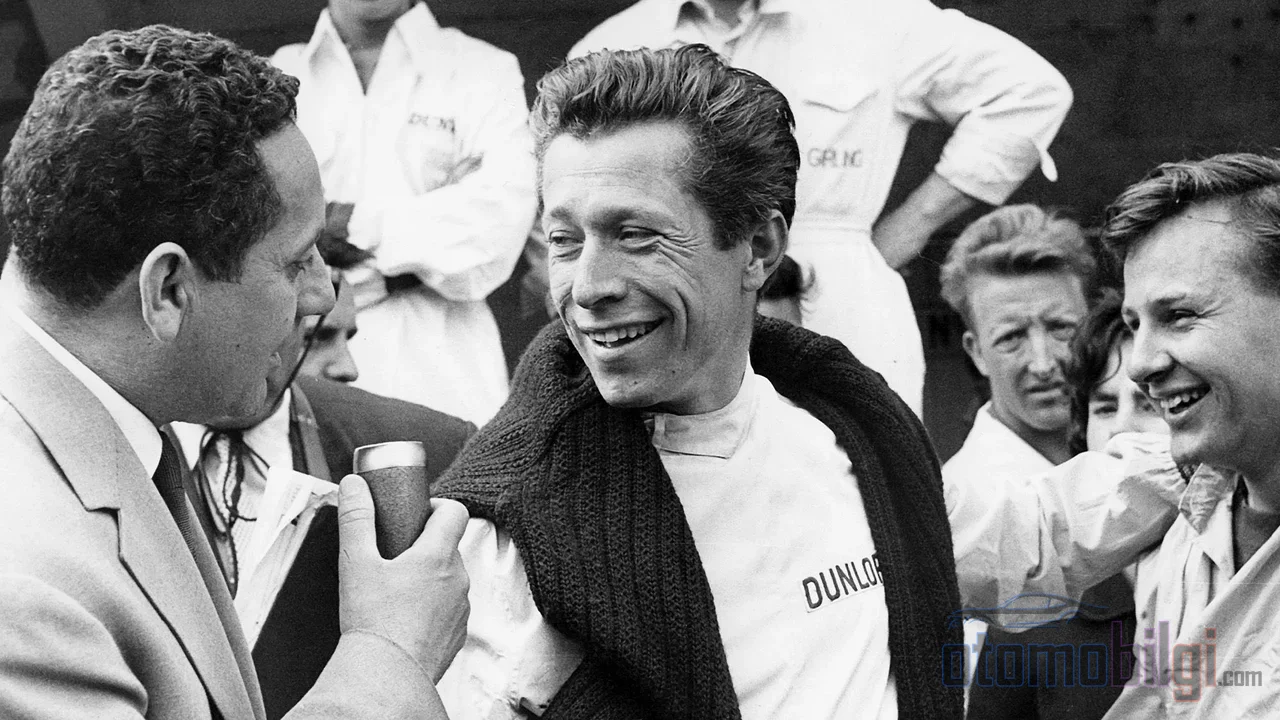
Suppose the topic of Le Mans comes up; who comes to mind? Jacky Ickx, or Tom Kristensen, the record holder with nine trophies? Both are legends, no argument there. But there is one name who stamped his mark on the Sarthe asphalt four times before all of them and, for some reason, is still rarely talked about today: Olivier Gendebien. The Belgian gentleman who won the overall classification in four of the five years from 1958 to 1962, during Ferrari's golden age. And he did it not with dazzling aggression, but by taking care of his car, with a calm, clockwork-like driving style. His story, however, begins somewhere you would never expect on the track: from the forests of Africa.
From the Congo Forests to Ferrari: How Did It Start?
Gendebien was born on January 12, 1924, in Brussels, into a wealthy family. The war years interrupted his engineering education; young Olivier served as a paratrooper and resistance fighter. And when the war ended, he did not return to Europe for a long while: He went to the Belgian Congo and began working in forestry there. Imagine: he discovered his own talent while driving trucks carrying cargo on forest roads. When he returned to Europe in 1952, he had two things in hand: a passion for rallying and a driving discipline that never panicked.
His rally career rose quickly. In 1954, he won the Tulip Rally with an Alfa Romeo 1900 TI; in 1955, with a Mercedes-Benz 300SL, he won the Liège-Rome-Liège, the Coppa d'Oro delle Dolomiti, and the Rally Stella Alpina back to back. That same year, his driving at the Mille Miglia, where he competed with another 300SL, caught Enzo Ferrari's attention, and the Belgian driver joined the Ferrari sportscar team. His debut was not particularly brilliant: He had a heavy crash during practice for the Tourist Trophy at Dundrod. But Ferrari had seen the potential in him, once and for all.
Highlights
- Gendebien won four overall Le Mans victories, in 1958, 1960, 1961 and 1962
- Three of the victories came with Phil Hill; the pair became Le Mans' first multi-victory driver partnership
- The 1958 victory came with the Ferrari 250 TR/58, at an average of 170.9 km/h
- The 1962 victory with the 330 TRI/LM was the last overall win for a front-engine car at Le Mans
- His record was surpassed by his compatriot Jacky Ickx with a fifth victory in 1982
1958: The First Victory and a Partnership Is Born
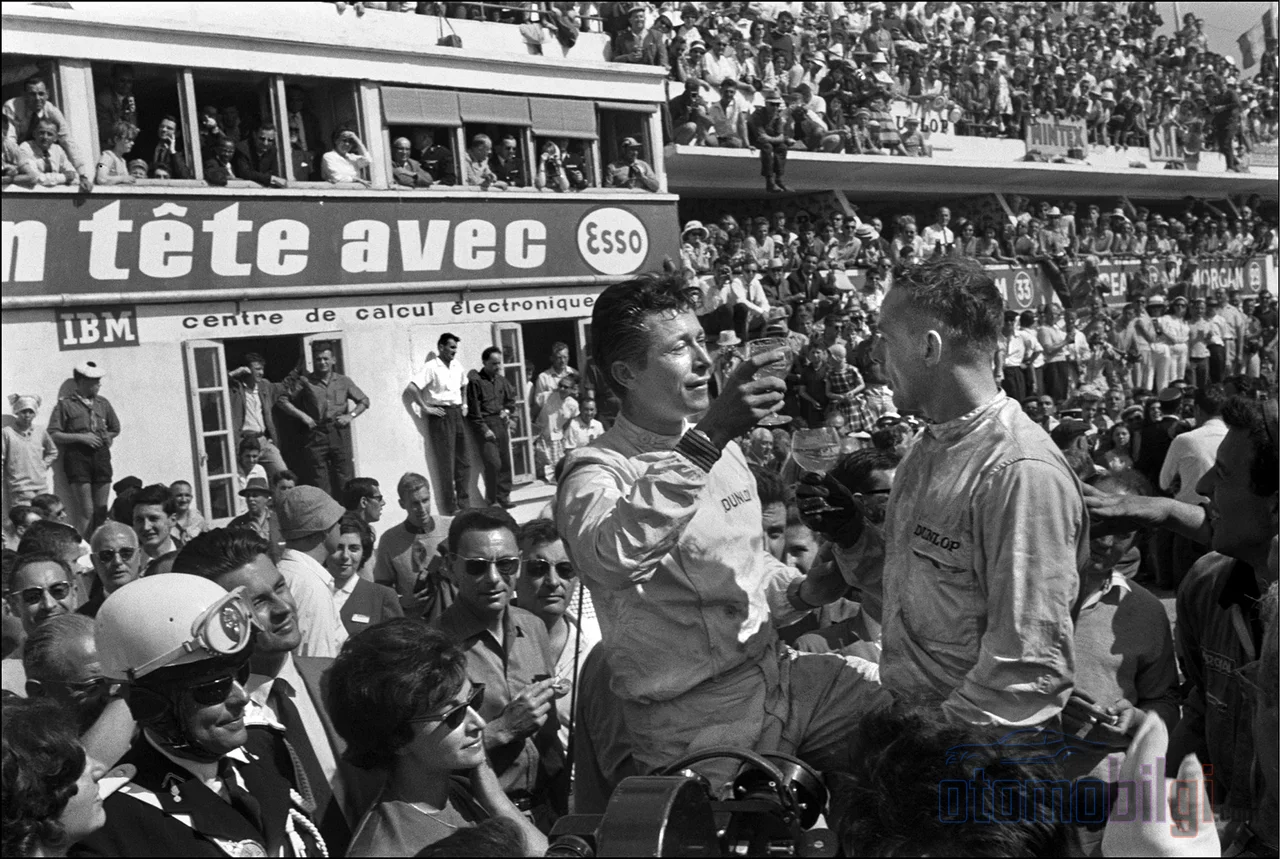
Gendebien's Le Mans adventure had actually begun in 1955, with Écurie Nationale Belge's Porsche; in his first attempt, he finished second in his class. In 1956, a third place came with Ferrari. The real breakthrough happened in 1958. The Ferrari 250 TR/58 he shared with Phil Hill was the only factory Ferrari left standing at the end of a rainy race. 305 laps, approximately 4,102 kilometers, an average of 170.9 km/h. This victory also brought the World Sportscar Championship to the Ferrari factory; Hill, meanwhile, earned the title of the first American driver to win Le Mans.
So what was the secret of this victory? Not tearing the car apart. While the rain pushed everyone into making mistakes, Gendebien took the corners not right at the limit, but at the speed the car could endure. This logic would become the foundation of his next three victories as well.
1960 and 1961: The Testa Rossa Years
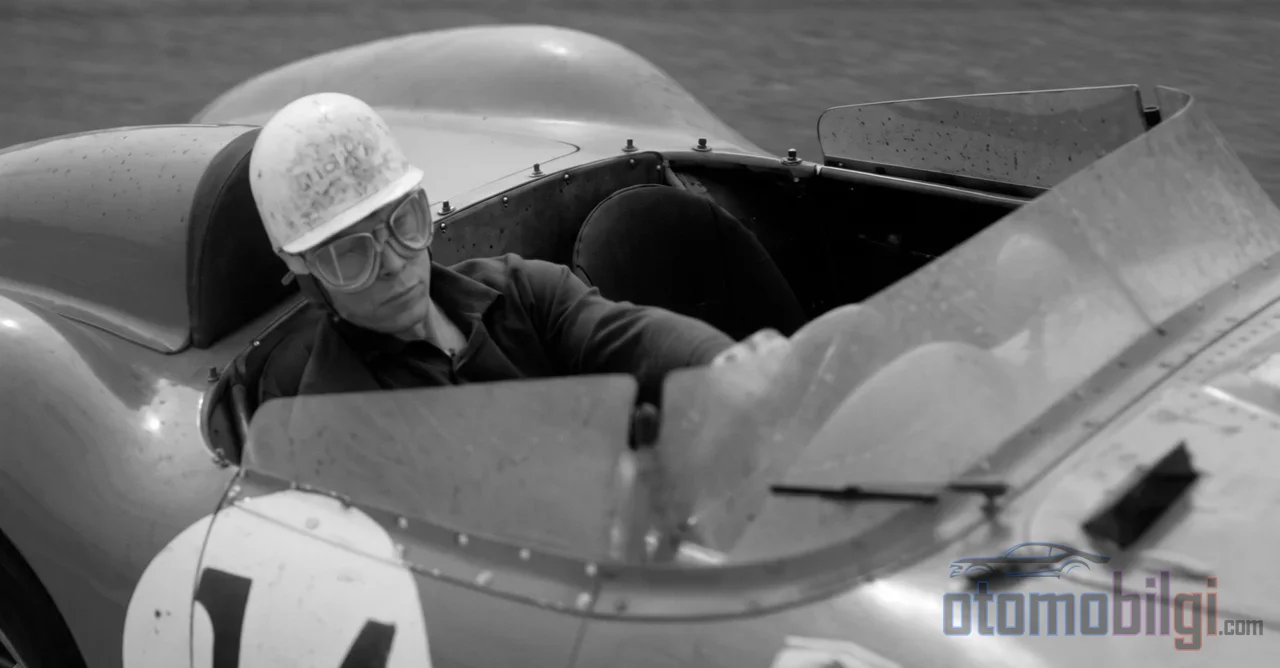
1960: A Cup Ceremony with the Citizen
1960 produced an unexpected name on the calendar: Gendebien's partner was not his compatriot Phil Hill, but fellow Belgian Paul Frère. The two Belgians climbed to the top step of the podium with the Ferrari 250 Testa Rossa 60. The same car had taken three overall victories at Le Mans since 1958 and collected ten World Sportscar Championship races, including Sebring and the Targa Florio. The name Testa Rossa came as a reference to its red-painted cylinder heads: The 2,953 cc V12 engine produced around 300 hp.
1961: A Third Cup with a Record
In 1961, the lineup returned to its former state: Phil Hill was back, and the pair won with the 250 Testa Rossa 61, breaking the average distance record. Ferrari drivers swept the top three positions; Maranello's situation that summer was plain to see. But a question mark slips in: so what happened in 1959? That year is remembered as the only missed race of Hill's career; the gap between the four victories lies exactly there.
1962: Saying Goodbye at the Summit
The fourth and final victory came in 1962 with the Ferrari 330 TRI/LM. Gendebien and Hill completed 331 laps and carried a race led by the Ferraris to victory. This was also the last overall victory for a front-engine car at Le Mans; an era was changing, and it was exactly at that point that Gendebien left the stage. That same year, the pair also went down in history as the only driver lineup to win both the 24 Hours of Le Mans and the 1000 km Nurburgring.
And none of it was a coincidence. Gendebien and Hill were the first driver duo to win three times at Le Mans. Years later, when the Ickx and Bell partnership became legendary, the names remembered as their forerunners were once again this duo.
The Perfect Balance with Phil Hill
This partnership was no accident - it was a case of perfect chemistry. Hill was fast and aggressive; Gendebien was calm and gentle with the car. Think of it like a road trip combination: one friend flooring it to catch the ferry, and the other smoothing out the corners and thinking of the tires. Ferrari's formula was simple: Hill pushes the car forward, Gendebien keeps it there. That balance was the common thread of the victories in 1958, 1961 and 1962.
Mechanical Gentleness: What Was the Secret of His Driving?
The shortest way to describe Gendebien's style begins with the approach Enzo Ferrari used to describe him: an elegant and measured force behind the wheel, aware that nobility brings responsibility. Throughout his career he was spoken of like this: a driver who took good care of his car, drove with clockwork regularity, and one you could trust in races demanding solid character and common sense. And when asked the secret of winning, his answer was plain and playful: taking the corners a little faster than you actually want to.
So did Gendebien lack speed? Of course he had it; but he spent that speed with flawless information management. A 24-hour race is not a sprint - it is a race of resource management. How fast to go in each stint, where to preserve the tires, where to save fuel; Gendebien did it with an engineer's meticulousness. Even the official history of Le Mans calls him an amateur; because the gentleman, with his aristocratic bearing and flawless style, painted the portrait of a gentleman driver in the middle of the professional era.
Why Did He Quit Everything at 38?
Here is the least talked about, but perhaps most striking part of the story. Gendebien, in 1962; immediately after his fourth Le Mans victory and his success at the Nurburgring, left racing entirely at the age of 38 and never returned. The reason was not a single one. He had grown weary of Ferrari's internal politics. He had lost all of Peter Collins, Alfonso de Portago, Luigi Musso and Wolfgang von Trips, with whom he raced alongside Enzo. His wife was pressuring him to quit racing, and he was financially independent; he didn't have to win. One of the rare examples in the history of sport: walking away, by one's own decision, at the very peak.
What came after turns sorrowful: his wife Marie-Claire lost her life in a traffic accident in April 1965; Gendebien moved to the United States and dealt in cattle trading. In 1998, when he passed away at the age of 74 at his home in southern France, he had received the Belgian Order of the Crown from King Albert II two years earlier, and in honor of his three victories at Sebring, the track's turn 15. had been named after him: Gendebien Bend.
How Should We Remember Gendebien Today?
Four Le Mans victories stood as a record for many years; until his fellow countryman Jacky Ickx won for the fifth time in 1982. Today, in the shadow of Tom Kristensen's nine victories, might Gendebien's four seem too few? But consider the context: winning four of five races between 1958 and 1962 was achieved entirely in Ferrari's golden age, and two of them by breaking race records. His productivity on the sportscar side is the kind that could rival Ickx even in the debate over Belgium's greatest driver.
To sum it up: Olivier Gendebien claimed four overall victories at Le Mans, in 1958, 1960, 1961 and 1962; in 1958 and 1961-62 with Phil Hill in the 250 TR/58, 250 TR 61 and 330 TRI/LM cars, and in 1960 with Paul Frère in the 250 TR 60, and with his final victory he closed the era of front-engined cars at Le Mans. Living proof that speed is not everything, and that sometimes taking good care of the car is the fastest way. Next time the name Ickx or Kristensen comes up, squeeze in a sentence: before them, there was a Belgian gentleman who won four cups.
Sources
- Olivier Gendebien - Wikipedia
- Belgium's greatest racing driver? Olivier Gendebien - Motor Sport Magazine
- Olivier Gendebien, the amateur four-time Le Mans winner - 24h-lemans.com
- Olivier Gendebien and Phil Hill, from Le Mans to the Nürburgring - lemans.org
- 1962 24 Hours of Le Mans, 330 TRI LM - Fornari Passione Rossa
- Le Mans 24 Hours 1958 Race Results - racingsportscars.com
- 1960 Winners and Records - 24h-lemans.com
- 1961 Winners and Records - 24h-lemans.com
- Olivier Gendebien - Grandprix.com
- 8W - Who? - Olivier Gendebien