Tom Kristensen: The Nine-Time King of Le Mans
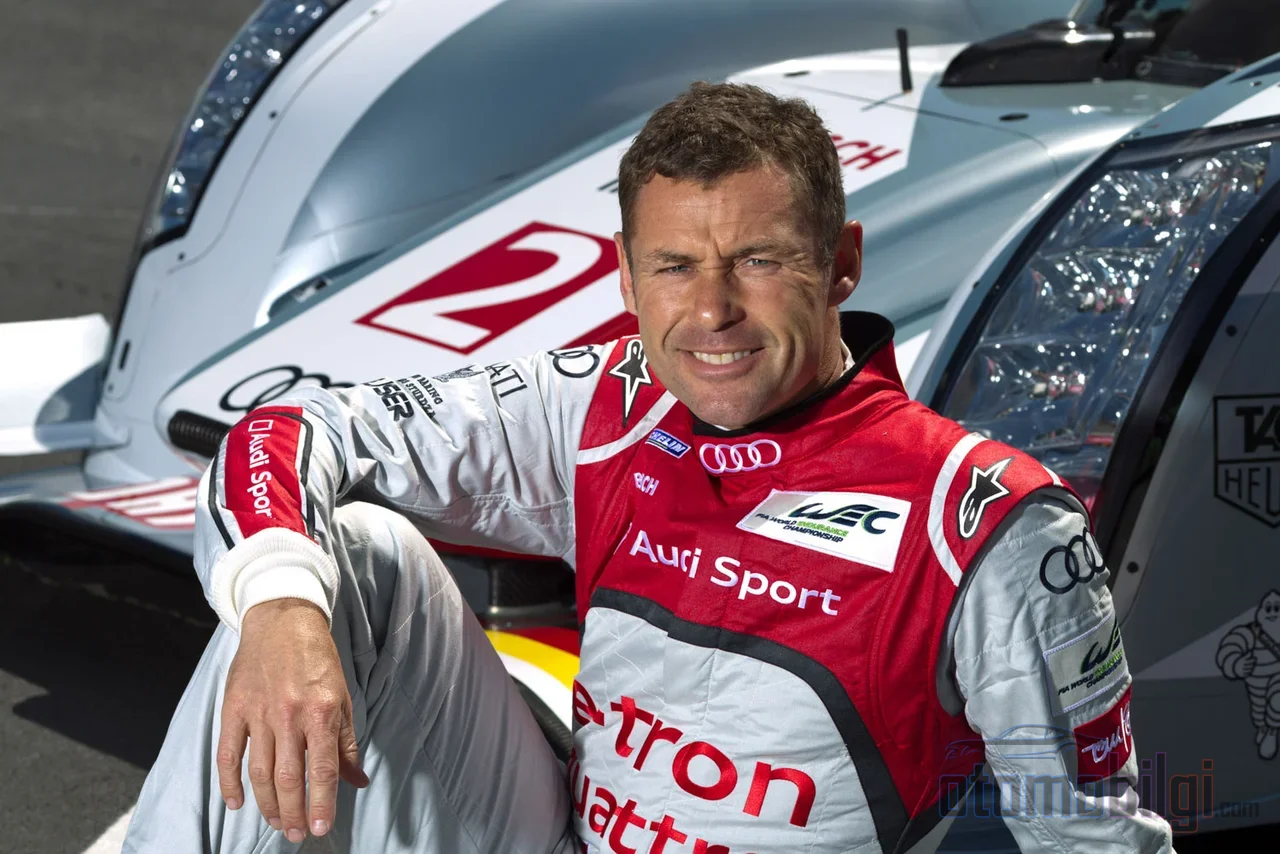
Nine. Even writing "nine" just once sends shivers down my spine. While winning the 24 Hours of Le Mans once is a story told for a lifetime, Tom Kristensen won this race 9 times, and no one has come close. Stop for a minute and think: What is it like to reach victory nine times in a race where you're sleepless, exhausted, and driving endless laps through night and rain for 24 hours? Come along with me, and let's unravel this Danish legend together.
Or are you still among those wondering what Le Mans is all about? Let me explain briefly: This race, held in France since 1923, means machines and humans enduring for hours on the track. And the most successful driver of this era is a Dane born on July 7, 1967: Mr Le Mans himself.
Who is Tom Kristensen and why is he called Mr Le Mans?
Kristensen raced 18 times at Le Mans, considered the greatest of endurance races; 9 of them ended in victory, and 14 ended on the podium. In other words, he won half the races he entered. Think of it like getting full marks on every assignment in a class, except one assignment lasts 24 hours.
The victory years are an impressive list too: 1997, almost every year from 2000 to 2006, then 2008 and the farewell victory in 2013. The six consecutive victories between 2000 and 2005 are still a streak I find hard to believe when I catch my breath.
Highlights
- The all-time record with 9 Le Mans victories; he surpassed Jacky Ickx's former limit of 6 victories
- In his first victory in 1997, he joined the race just two days before, replacing the injured Davy Jones
- 6 consecutive victories between 2000 and 2005, mostly with the Audi R8
- He also holds the record at the 12 Hours of Sebring with 6 victories
- In 2013, he won both his ninth victory and became FIA WEC World Champion
1997: The first victory, coming just two days before the race
Here's the best of the stories: In 1997, Joest Racing called Kristensen two days before the race. Davy Jones had been injured, the seat was empty. The Danish driver had driven only 20 laps on the track with this car before, and that too was in a practice session. And what happened, you ask? He set fastest lap after fastest lap during the night section, combined the planned quadruple stint with the night, and broke the lap record during the race.
The car was the Tom Walkinshaw Racing-designed Porsche WSC-95; when the factory Porsche 911 GT1 was knocked out by a late-occurring fire, the Joest team won by a one-lap margin. Without Ralf Juttner's phone call, this whole story might never have been written. The next chapter actually begins on a slippery slope: He retired early in 1998, and in 1999, while leading until the final hours, a heavy crash caused by teammate JJ Lehto's stuck throttle ended the race. Fate had delivered its cruelest lesson, but the best chapter was yet to be written.
The Audi era: The empire years from 2000 onwards
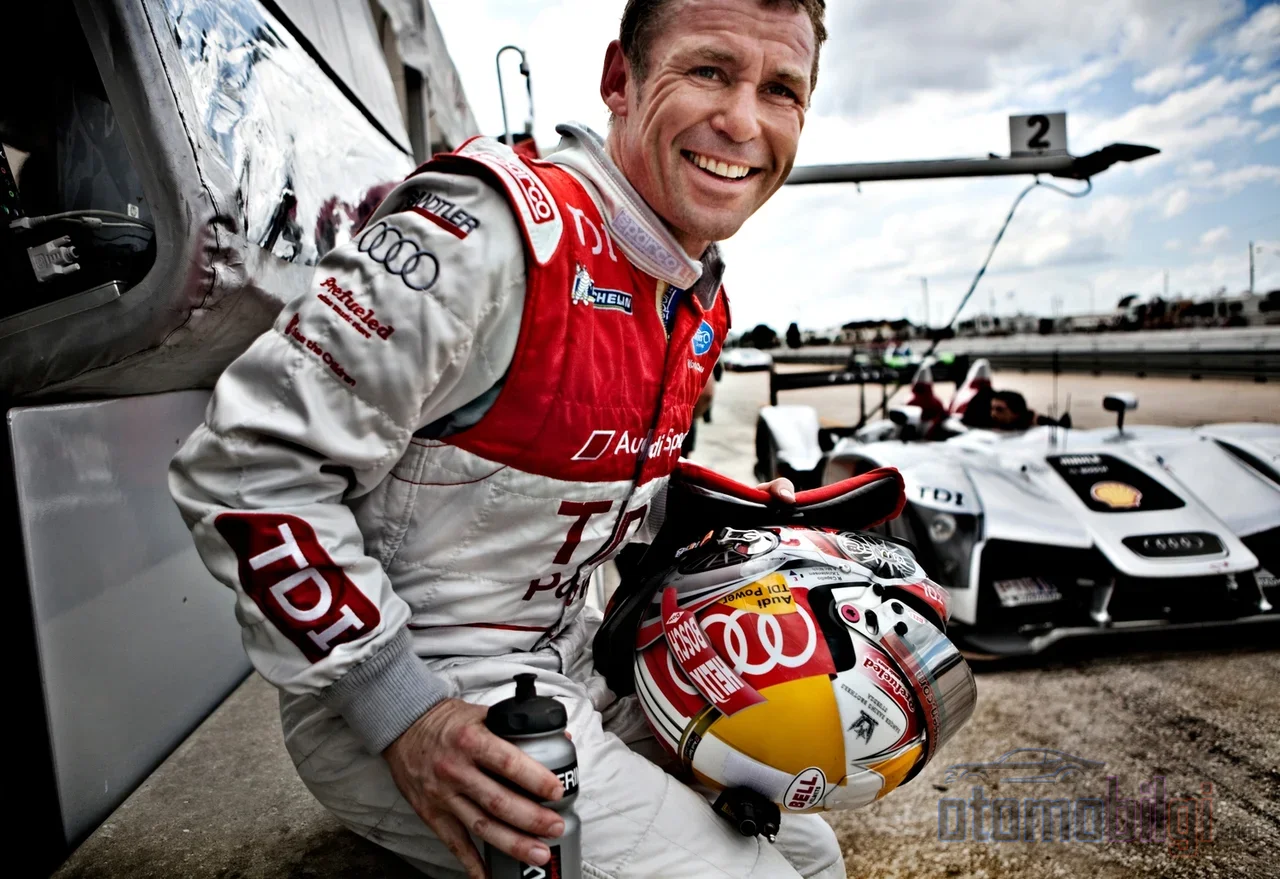
In 2000, Kristensen's path crossed with Audi and Joest, and this partnership defined a period spanning more than a decade. The first victory came on June 18, 2000: Emanuele Pirro and Frank Biela, with the Audi R8 LMP, celebrated Audi's first victory at Le Mans after 368 laps. This trio also won in 2001 and 2002; they became the first drivers to share victory three years in a row.
My favorite technical detail comes from 2001. 19 of the race's 24 hours were spent on wet or intermediate tires, meaning it was almost entirely a survival test underwater. That year Audi brought its new Fuel Stratified Injection, or FSI, direct injection system; this gave them the advantage of fuel savings and faster restarts after pit stops. Injecting fuel into the engine one drop at a time is like drip irrigation instead of watering the garden with sewage: the same resource, far more efficient results.
2003: The Audi man wins with Bentley
This is the most colorful chapter. In 2003 Kristensen took to the track in the Bentley Speed 8 under the Team Bentley banner and won from pole position with Dindo Capello and Guy Smith; he was two laps ahead of the sister car in second place. He also didn't neglect to set the fastest lap of 3:34.820 in the final minutes of qualifying. On the first race lap he passed his former teammate Lehto and took back the lead. You know what they say: true friendships are sometimes tested in the face of brands.
2004-2008: The years the record was broken
In 2004 he won with Team Goh's Audi R8 alongside Capello and Seiji Ara, equaling Jacky Ickx's legendary record of 6 victories. In 2005, with the Champion Racing team, he reached victory alongside Lehto and Marco Werner with a two-lap margin; it was his sixth consecutive victory. In 2006, however, the story reversed: the new diesel Audi R10 TDI was knocked out of contention due to an injector change in the early hours and subsequent problems, and Kristensen finished third. That car had already gone down in history that same year as the first diesel to win a major sports car race, at Sebring.
2008 was the year of the comeback, and it was a complete strategy show: against Jacques Villeneuve driving the Peugeot on rainy night stints he opened up a gap of up to 7 seconds per lap, took the lead with the morning strategy, and celebrated his eighth victory with Capello and Allan McNish. The rain had practically become this man's friend.
Distribution of victories by year
Looking at it as a whole, the table speaks for itself; only two of the nine victories came in non-Audi cars:
| Year | Car | Note |
|---|---|---|
| 1997 | Porsche WSC-95 | First victory, with Joest Racing |
| 2000-2002 | Audi R8 | Three in a row with Pirro and Biela |
| 2003 | Bentley Speed 8 | Victory from pole position |
| 2004 | Audi R8 | Equaling Ickx's record |
| 2005 | Audi R8 | Sixth consecutive victory |
| 2008 | Audi R10 TDI | Against Peugeot in the rain |
| 2013 | Audi R18 e-tron quattro | Final victory, with McNish and Duval |
2013: The farewell victory in the shadows
Here is the most emotional part of the story. In 2013 Kristensen won for the ninth time with McNish and Loïc Duval in the Audi R18 e-tron quattro, but the victory was no celebration; it passed in a mood of mourning. In the opening laps of the race, Allan Simonsen lost his life when he crashed his Aston Martin at Tertre Rouge on the third lap. Kristensen dedicated that year's victory to Simonsen, just as he had dedicated every victory since his first in 1997 to his father; his father had passed away at the beginning of the year. That same season, as FIA WEC World Champion, he signed the most complete year of his career; the championship was secured with one race to spare, thanks to a third place in Shanghai.
In 2014, he finished second at Le Mans once again, and at a press conference held in Copenhagen on November 19, 2014, he announced his retirement. He closed out his final race with a podium in São Paulo. He later received the title of Knight of the Order of the Dannebrog, and in 2018 he was inducted into the Danish Sports Hall of Fame.
How does a driver win 9 Le Mans? Consistency, team, and night
Now let's get to the heart of the question: what makes this record so exceptional? In my view, three things.
- Consistency: The long-term partnership established with Audi and Joest from 2000 onwards gave Kristensen a machine and crew that improved year after year, instead of having to search for a new team every year. The fact that he won the 9 victories with 11 different drivers shows that this environment carried everyone to the top along with him.
- Team choice: Before Audi, Joest was primarily a Porsche team, and between 1984 and 1997 it had won four Le Mans victories with them. Kristensen chose teams with the right infrastructure; not luck, but reading the game.
- Night and rain: In 1997, lap after lap of fast times at night; in 2001, command in 19 hours of wet conditions; in 2008, seconds per lap against Villeneuve in the rain. Difficult conditions were most drivers' nightmare, but his spotlight.
Can he be compared with Michael Schumacher?
So how about we compare him with F1? Michael Schumacher holds the record of 7 Formula 1 World Championships (matched by Lewis Hamilton in 2020), and he raced for Mercedes at Le Mans in 1991, so he also had a chance to win it. Kristensen's story, however, contains a missed F1 opportunity: when he was tested as a test driver at Tyrrell, he was about half a second slower than Rosset in the car with the older engine. That door closed, but another door opened - a 24-hour door. It is hard to weigh the two records numerically, because they are entirely different disciplines; but if one is seven championships in a single seater, the other is nine crowning victories of endurance over 24 hours. Neither is a small feat.
The legacy of Mr Le Mans: why the record still stands
Years after his retirement, even today no one has come close to 9. This is like a footballer scoring 100 goals in a season; the record is not just a number, it is the face of an era - the era of Audi dominance. There is a truth on the table that resembles what Kristensen himself has said: Le Mans brings out everyone's best; winning matters, but it is not everything. Winning it nine times, however, must be a bit more than everything. Do you think anyone will ever be able to reach this record again? Every time I see the sparkle of that track, I still think about those night stints.
Sources
- Tom Kristensen
- Tom Kristensen - Prize list & statistics
- The inimitable Tom "Mr. Le Mans" Kristensen turns 50!
- About - Tom Kristensen
- Le Mans win tinged with tragedy for Kristensen
- Le Mans winner dedicates triumph to tragic Simonsen
- Bentley's stunning 2003 Le Mans win
- Tom Kristensen, Le Mans Marathon Man
- Tom Kristensen: Talking Cars With 'Mr Le Mans'
- Le Mans star Tom Kristensen on his missed F1 opportunity