Rallycross Suspension: The Secret of 300 mm of Travel
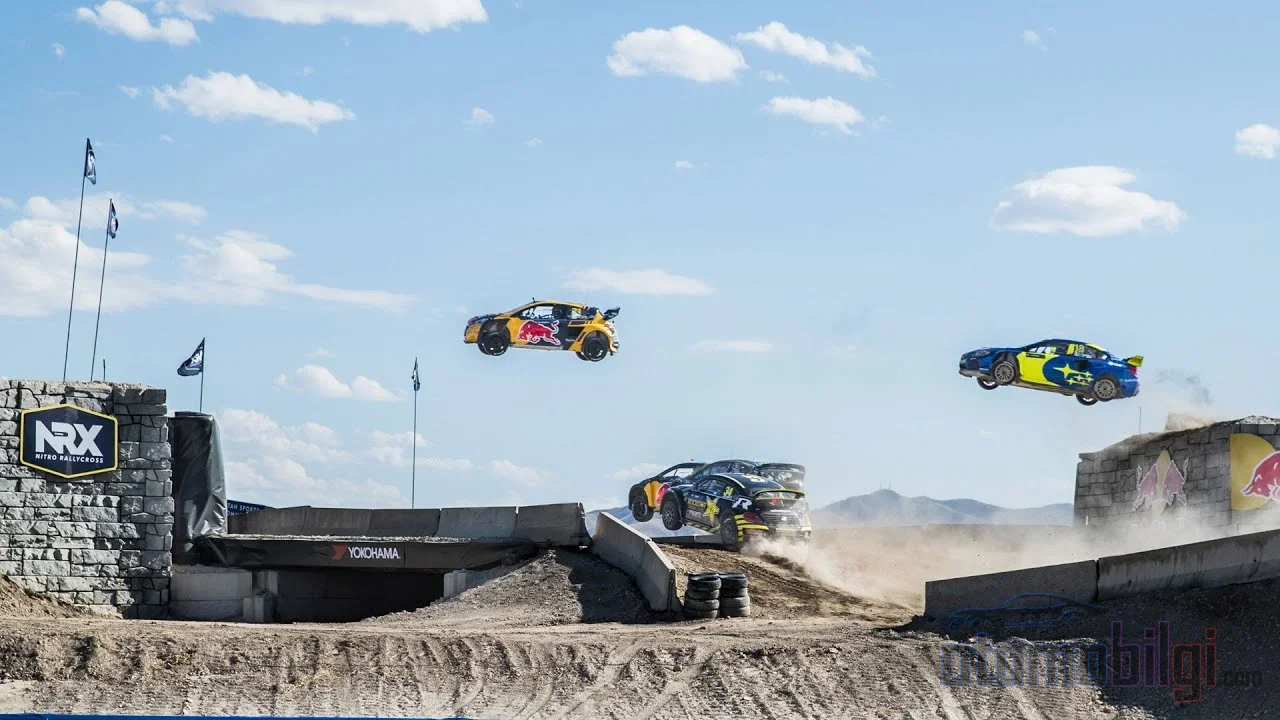
While watching a rallycross Supercar fly through the air, most of us look at the power of the engine. Yet what brings the car safely down into the next corner is not the 580 horsepower under the hood, but those metal columns above the wheels: the suspension. So how does rallycross suspension work, and how different is it from that of an ordinary road car? The short answer: from a completely different world. A world where shock absorbers work like tiny chemistry labs converting fluid into heat, springs struggle against tons of force in a fraction of a second, and it is the first place the team looks after a race. If you are ready, let's examine, piece by piece, the most abused part of Supercars on this page.
The Role of Rallycross Suspension: Keeping the Tire on the Ground
Everything comes down to a single sentence: the suspension's job is to keep the tire in constant contact with the ground. Sounds simple, doesn't it? But in rallycross, this sentence is a matter of life and death. If the wheel is in contact with the ground, braking distance is shortened, the risk of sliding drops, and the engine's power is genuinely transferred to the road. Without contact, that expensive engine is just a decoration producing noise.
Think of a corner assembly like this: a strong coilover, a spring, a shock absorber, control arms and reinforced mounting points. When the wheel hits a bump, the spring stores the impact energy; just like a compressed spring-loaded pen. The shock absorber, in turn, converts this energy from motion into heat, preventing the car from bouncing around. The fine-tuning part begins here: compression damping controls how quickly the suspension shortens, while rebound damping controls how quickly it extends. Remember from physics class: spring force depends on the amount of compression according to Hooke's law (F = kx), while damper force is generally proportional to velocity.
Long Travel: Why Is Suspension Travel So Large in Rallycross Cars?
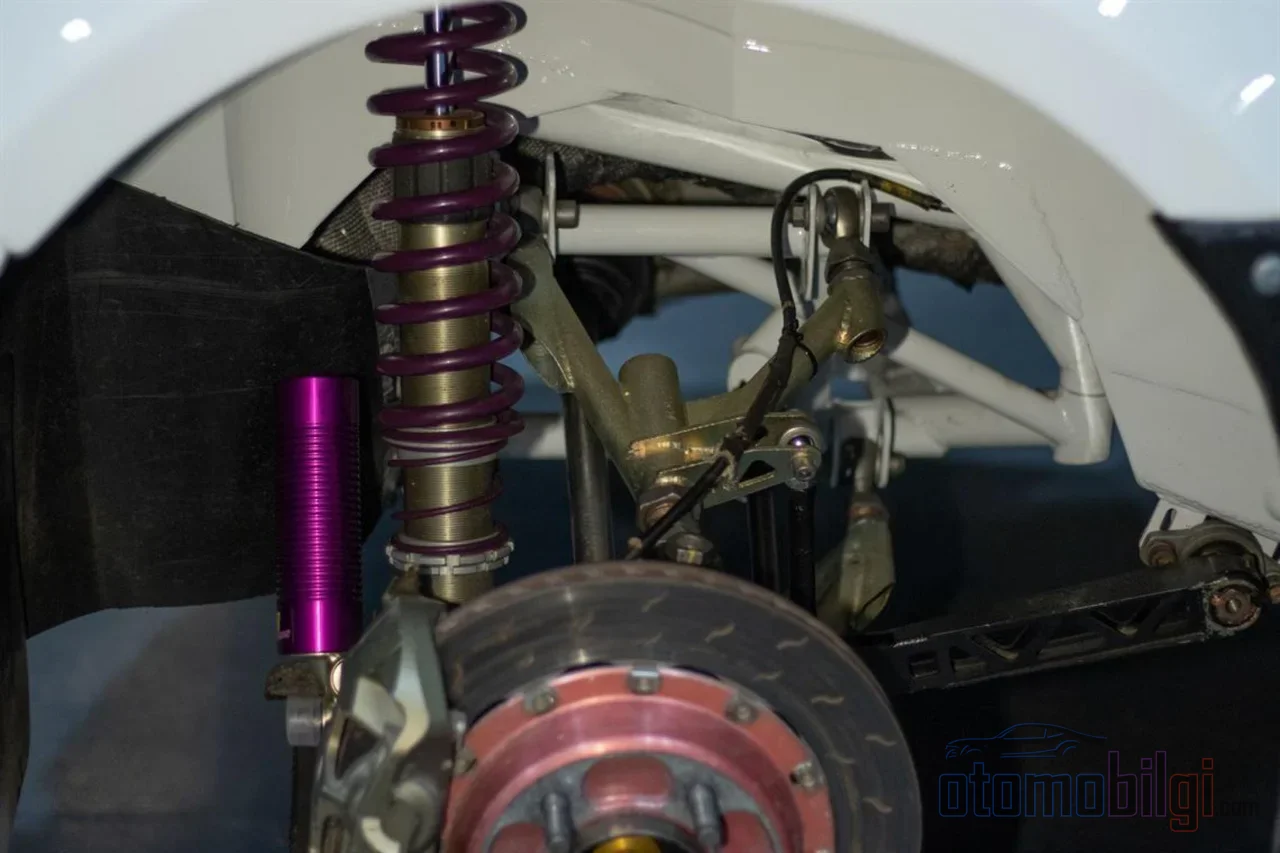
Here is one of the most striking figures of the whole business: in rally-style cars, suspension travel can reach up to 300 mm. Rally cars have suspensions with 300-350 mm of long travel, adjustable shock absorbers, and even twin damper setups at each corner. The electric rallycross car FC1-X offers more than 33 cm of suspension movement with R53 shock absorbers. For comparison, an ordinary road car's wheel works over a much, much shorter distance.
So why such long travel? Because a rallycross track is not an asphalt road, but a series of natural trampolines. Track designers even deliberately place holes and bumps that shake up the cars for a good track; because these are what make the race watchable. Drivers must use their joker lap every lap, and the surface changes at every corner from asphalt to sand, from sand to gravel. In such an environment, a short-travel suspension launches the car at every bump; long travel, on the other hand, allows the wheel to follow the ground.
Highlights
- In rally cars, suspension travel can reach up to 300-350 mm; the electric FC1-X offers more than 33 cm of movement.
- A Supercar engine produces 580-600 hp and 0-100 km/h acceleration is around 1.9 seconds.
- Gravel surfaces demand 200-250 mm of wheel travel while 150-180 mm is sufficient on asphalt.
- In asphalt setup the car sits about 100 mm lower and stiffer springs are used.
- The 5 Nations BRX car carries a total of eight dampers, two per corner.
The Stiffness Paradox: Is Stiffer Always Better?
Let's demolish a common misconception here: a stiffer suspension does not always deliver better performance. Excessive stiffness causes the tire to lose contact on bumpy surfaces, and grip drops. Another false belief is that long travel only helps with jumps. In fact, long travel also proves useful in braking and cornering when tracking small bumps, potholes and loose surfaces. So suspension setup is an art of balance; neither a trampoline nor a block of stone.
Damper Architecture: Inverted Strut and the Reservoir Trick
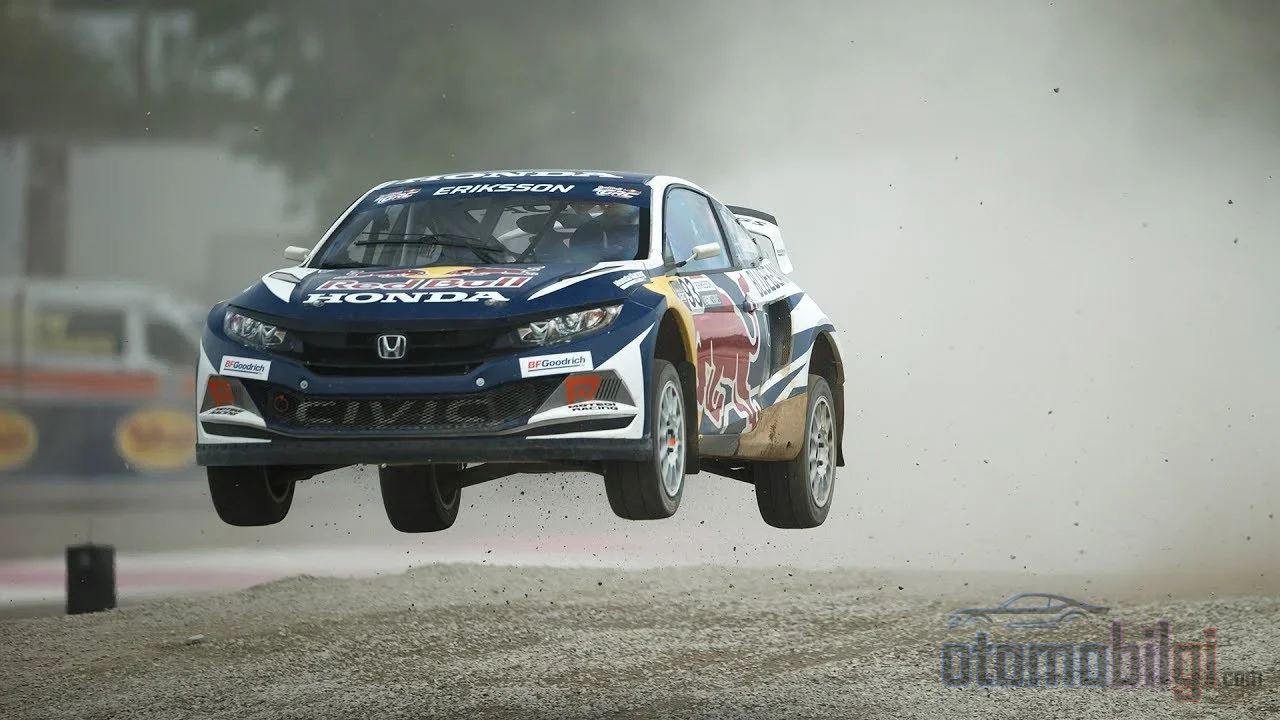
Now that we've talked about engine power, let's clarify the brute force of a Supercar as well. For example, an Audi-based Team JC Supercar engine with an inline 4 turbo and intercooler produces 580 hp from 2000 cc and completes 0-100 km/h acceleration in 1.9 seconds. Global Rallycross Supercar engines produce around 600 hp and 650 lb-ft of torque. Only suspension engineering this serious can cope with taming that kind of force.
Standard struts on road cars are not built to withstand the abuse of rally; moreover, rally springs carry more than 100 pounds of force compared to a road car spring. The solution comes in two parts. First is the inverted strut, that is, a strut mounted upside down: the stress concentrated on a single point of the narrow 14-19 mm piston rod is spread across the 50 mm body by inverting the assembly, and the piston rod is protected from elements like mud. Second is giving the damper more fluid with a separate reservoir; more fluid heats up later, cools outside the strut, and the flow rate to the reservoir provides adjustability. A simple but brilliant touch.
Pressure Balance and Multi-Way Adjustment in Racing Dampers
Ohlins' TPX and TTX series developed for rally and rallycross are fully pressure-balanced designs; this eliminates the risk of cavitation inside the damper, i.e. bubble formation in the fluid, during high-speed impacts. Low gas pressure also keeps internal friction low. The TPX is a McPherson-type unit with a 44 mm column, a piggyback reservoir and 3-way adjustability; it offers separate compression adjustment at high and low speed. The TTX, on the other hand, has a twin-tube structure, a 44 mm solid column and 4-way adjustment. Developed for off-road use, the TTX Flow carries a 46 mm column and features a patent-pending internal pressure regulation system. On the Bilstein side, there is the 5-way adjustable EVO RX version for rally and rallycross. Some teams go even further: the 5 Nations BRX car has been modernized with two dampers per corner, meaning eight dampers in total, along with wishbones and shafts.
Surface-Specific Setup: The Difference Between Sand, Gravel and Asphalt
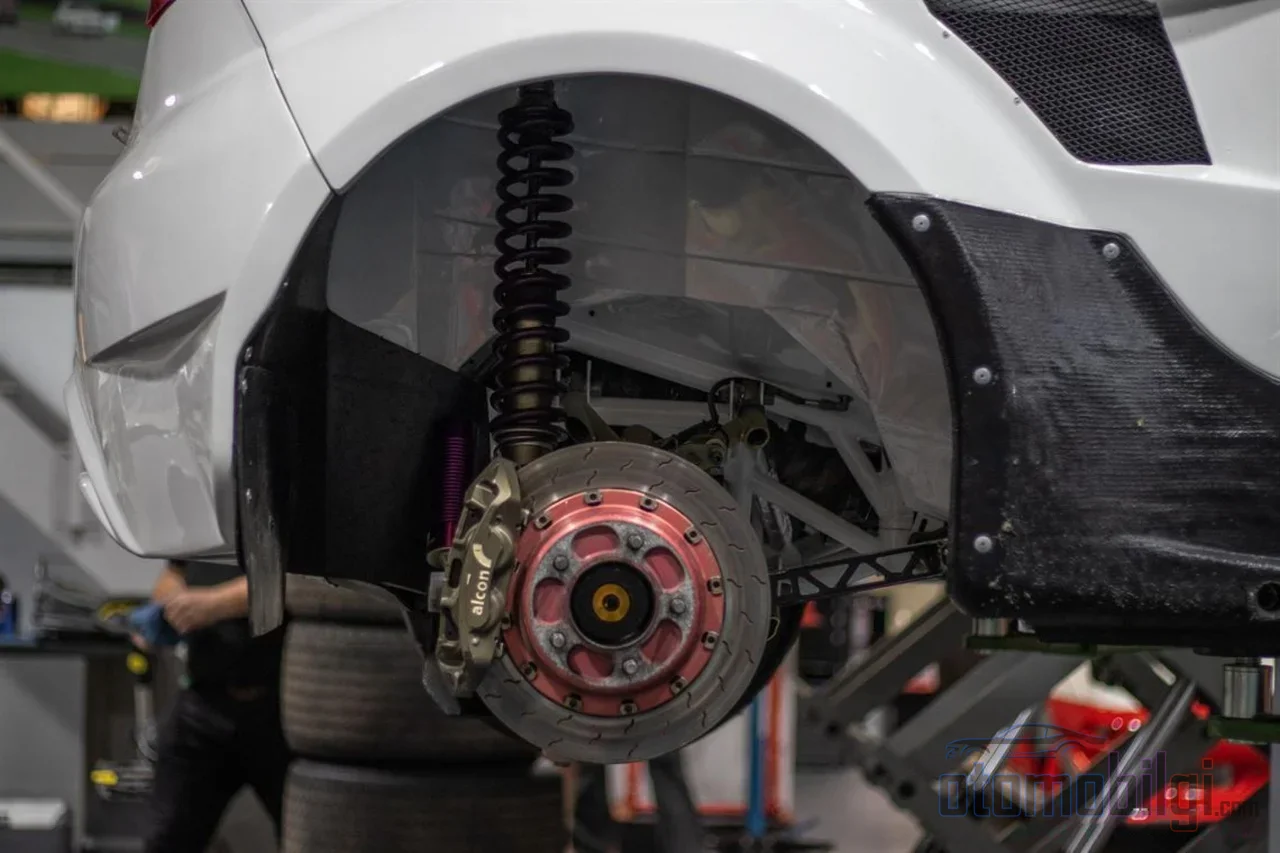
Since rallycross tracks are a mix of asphalt and dirt, teams have to be prepared for every surface with a single setup. But the surface logic we learned from the world of rallying also applies to rallycross. Gravel is flexible and slippery; so in a gravel setup the car sits higher, with softer suspension and semi-soft settings. On asphalt, everything reverses: the car sits roughly 100 mm lower, the springs get shorter and stiffer, and the anti-roll bars get thicker. In the WRC there are two separately homologated setups for tarmac and gravel; in the tarmac setup the wheel center is positioned higher on the upright.
Let's look at the numbers:
| Surface | Typical wheel travel range | Setup character |
|---|---|---|
| Gravel | 200-250 mm | Soft springs, reduced compression damping |
| Asphalt | 150-180 mm | Stiff and short springs, thick anti-roll bars, body roughly 100 mm lower |
| Rally / rallycross general | 300-350 mm | Adjustable, even twin dampers per corner |
The Physics of Hard Landings: What Happens After a Jump?
In rallycross the car goes airborne, then comes back down; and that is exactly when the suspension's real test begins. A landing happens in three phases. First comes the bump response: the spring and damper absorb the sudden load. Then the recovery phase controlled by rebound damping begins; here the aim is to prevent the car from bouncing back or slamming into the ground. Finally, traction is re-established and the driver gets back on the throttle. Tuning these phases is a craft of its own: sharp, high-frequency bumps are matched with high-speed, i.e. fast bump compression settings, while landings from jumps are matched with low-speed compression settings.
An interesting detail: the spring compresses under a bump, but it is not given permission to reopen instantly, so the car doesn't turn into a trampoline traveling at 200 km/h; uncontrolled rebound would launch the car into the air. That's why pilots also try to soften hard landings by changing the car's attitude mid-air with throttle, entry speed or braking; the general approach is a kind of unloading of the car at the moment of landing. A setup that neglects rebound causes the wheel to extend too quickly after a bump, leading to the car bouncing and loss of stability. A certain track section in Sweden is considered the legendary exam of this business: you approach at speed, hit the crest, and on landing you gather up both the car and your heart.
The Price Contact Racing Puts on Suspension
One thing that sets rallycross apart from rallying is that contact is part of the race. In the world of Global Rallycross there's a creaking joke in response to NASCAR's view that rubbing is normal: here, crashing is racing. On mixed-surface tracks, short and explosive heats push cars and components to their limits. That's why small steering and suspension parts such as tie rods, ball joints, bushings and wheel bearings are always kept ready for replacement. There are sensitive points on the rules side too: FIA, Article 279 of the 2014 Appendix J regulation. under the relevant article, vehicles whose rear suspension shock pivot and mounting points do not comply with the specified rule receive a 40 kg weight handicap. So the geometry of the mounting points is directly part of the performance balance.
Post-Race Maintenance: Why Do Teams Inspect the Suspension After Every Race?
Rallycross is downright punishing on suspension; the strut, shocks, and bushings are checked for integrity before a race, and this is routinely repeated after the race. So what is done before sending the car back out on track? First, the shock shafts are inspected: a single hard impact can slightly bend a shaft and cause the suspension to seize. A bent shaft is not attempted to be straightened; it is replaced outright with a new one. Oil leaks are checked. A high-pressure washing hose is never pointed directly at the seals; water can seep inside and things can go wrong in there.
The cost discussion is a whole other matter: as a starting budget for a serious rally suspension setup, 1500-2000 dollars is recommended, and cheap coilovers under 1000 dollars are advised against. While experiences vary, quality shocks are known to be long-lasting; it is said that a car with Bilstein shocks has lasted more than 100,000 miles, though it gradually wears out over time. That's why one of the best investments to make when preparing for rallycross is a fresh set of shocks.
In summary: How Does Supercar Suspension Work?
Let's wrap it up, because the answer to this question is hidden in a single sentence: rallycross Supercar suspension is a system that, with over 300 mm of travel, pressure-balanced fully adjustable shocks, and inverted strut architecture, absorbs the hard landings over bumps, dips, and the joker chicane while keeping the tire constantly on the ground, and withstands the load of contact racing and surface changes all day long. The spring stores energy, the shock converts it into heat, and the compression and rebound settings set the rhythm of that dance. The next time you watch a rallycross race, think once more about a car's landing from the air: at that moment, it is the quietest yet most intense engineering work you will ever see.
Sources
- Professional Motorsport Rally & RallyX TPX / TTX - Öhlins
- World RX Rallycross Suspension Technology | Öhlins
- Rally Long-Travel Suspension Infographic | LivePhysics
- What makes it a rally car? The suspension.
- How to: Change to an asphalt set-up - WRC
- How to set up a rally car for gravel and asphalt - DirtFish
- The Best Ways to Tune Your Rally Car for Jump Landings
- KYB Team JC
- Latest decisions of the WMSC concerning Rallycross - FIA
- How dampers turn WRC cars into high fliers - Red Bull