Strange Noise from Your Car: Where Does It Come From, What Does It Mean?

Everyone reacts the same way to that faint creak you hear while parking your car: pause and listen for a moment, then brush it off with "probably nothing." I have been in this business for more than thirty years, and I can say this with confidence; in most cars that arrive at the service door with a serious repair bill, the first sign of that bill was a sound that had been heard weeks earlier. Modern cars are designed to run relatively quietly. That is why every unusual sound is the unwelcome first visit of a worn, loose, or failing part.
So what should you do when you hear a strange sound in your car? This guide is a practical manual prepared for diagnosing a sound based on the area it comes from and its character: brakes, suspension, engine area, exhaust, and transmission. I will explain, without exaggeration, the possible causes of each sound, its urgency level, and when you need to go to the service. Because warning lights do not see everything; the ear often reports before the sensors do.
The First Rule of Diagnosing a Sound: When, Where, How?
Diagnosis begins with identifying the sound precisely. Going to the service and saying "my car is making a noise" is about as useful as telling a doctor "I feel unwell." The critical questions are: Does the sound appear when accelerating, braking, or cornering? Is it heard constantly or intermittently? Does the tone and intensity of the sound change as speed increases? Does it start when going over a bump? Does it come from the front, the rear, or underneath the vehicle?
The answers to these questions narrow the number of possible causes from several down to one. For example, a sound that appears only during braking and a hum that increases with speed point to completely different components. There is another fact to keep in mind: sounds become both louder and more expensive over time. When a small squeak is left unchecked, it can turn into a serious mechanical problem; many major repairs began with a small sound.
Then there is the reality of modern vehicles. In the past, a sharp-eared mechanic would open the hood, listen to the sound, and often find the problem right there. Today, sensors and computerized systems are in play; therefore, a sound is a good clue but not a definitive diagnosis. A road test, digital diagnostic devices, and inspection on a lift are still necessary. Your job is to describe the sound accurately; the mechanic's job is to find the source.
Highlights
- A grinding sound should never be postponed: it usually indicates metal-on-metal contact.
- A rattling over bumps is often the harbinger of a worn suspension component.
- A hum that increases with speed may come from the tires, wheel bearing, or drivetrain.
- A hissing sound accompanied by overheating is a serious problem; the vehicle must be stopped immediately.
- If the sound is getting louder, or if handling or brake feel has changed, the inspection must not be delayed.
Brake Sounds: Squealing May Be Harmless, Grinding Cannot
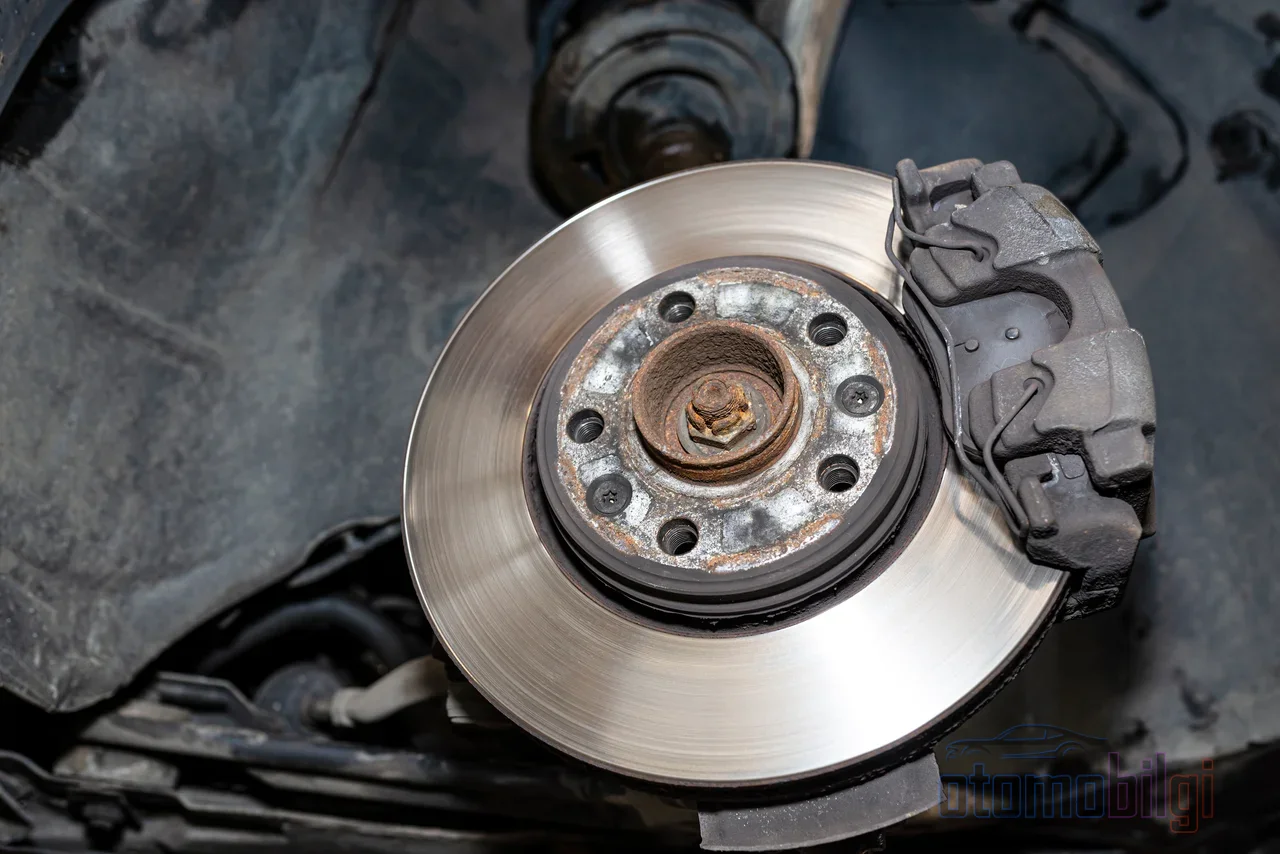
The high-pitched squeal from the brakes is one of the most common complaints heard at service doors. Not every squeal is a cause for alarm; Moisture, rust or surface contamination in the brake pad area, faulty installation, or insufficient lubrication can also cause squeaking. A brief squeak on the first drive of the morning usually stems from such harmless causes and disappears after a few brake applications.
What does the wear indicator tell you?
However, if the squeak recurs regularly during braking, the situation changes. Many brake pads contain a metal wear indicator that touches the disc and produces a high-pitched sound when the pad has worn down excessively. In other words, the sound is a deliberate design intended to signal that the pad has reached the end of its life. At this stage, simply booking a service appointment is enough; if neglected, the pad starts to damage the disc, the disc sustains damage, and braking power decreases. No driver enjoys the price difference between replacing pads and replacing discs.
Why is grinding a red flag?
The sound that must be distinguished from squeaking is grinding: that harsh, metallic, merciless tone that feels like metal being deliberately ground against metal. This sound typically indicates that the pad has worn down so much that the caliper is now rubbing directly against the metal disc; in other words, there is metal-on-metal contact, which signals serious damage. Moreover, grinding does not always come from the brakes: a faulty wheel bearing, a drivetrain component, or a damaged underbody guard can also produce a similar sound. The common denominator is this: a driver who hears grinding should stop the vehicle and take it to a service shop by the shortest route.
Suspension Sounds: Rattling and the Click in Corners
A rattle heard from the front end when going over a bump is the classic sign that a suspension component has failed. The possible culprits are worn sway bar links, ball joints, bushings, strut mounts, shock absorbers, or loose suspension connections. In rattling and knocking sounds over bumps, the most common cause is a worn strut mount; this part acts as a cushion between the suspension tower and the shock absorber, and when it wears out, every bump turns into an impact.
The cost of taking this sound lightly is not just a loss of comfort. Suspension failures directly affect grip and stability; braking distances increase, and the car's behavior in corners becomes unpredictable. There is a natural contradiction between driving fast and safely and driving a car that rattles.
A clicking or ticking sound heard in corners, however, is a page from a different book: it usually stems from a worn CV joint, a damaged axle shaft, or reduced joint lubrication. The CV joint is the articulated component that transmits power to the wheel, and when it reaches the end of its life, it can eventually leave the car unable to move at all. A car that is silent at constant speed but ticks in turns is announcing that the work is on its joints.
Sounds from the Engine Bay: Hissing, Ticking, and Knocking
Hissing: The sound of escaping pressure
A hiss from under the hood says that pressure is escaping from somewhere. Possible causes are a vacuum leak, a coolant leak, or pressure escaping from a hose or line. The distinguishing sign is the accompanying symptoms: If the hissing is accompanied by overheating, steam, or a sweet smell, the problem is serious and the vehicle should not be driven. A hissing sound coming from under the hood at idle should not be underestimated, as it may indicate engine overheating.
Idle Ticking and Knocking
A ticking or clicking sound at idle is usually related to the valve train, valves, lifters, or pushrods. Such sounds are sometimes also a loud summary of an oil change that has long been neglected; you should never go anywhere without checking the oil level first.
The sound that really demands attention is engine knock: that disturbing metallic, hammer-blow-like rhythm coming from within when you accelerate. Possible causes are low-quality or wrong fuel, carbon buildup, timing issues, and low engine oil. Knocking should be investigated immediately; because if prolonged, it can lead to internal engine damage. Body paint is cheap to fix, an engine block is not; this is not a sound worth postponing.
Exhaust Sounds: Why Did the Engine's Tone Change?
One of the earliest signs of an exhaust leak is a change in the engine's sound. If your vehicle starts running a little louder than usual one morning, especially with a loud roar appearing when accelerating, there may be a leak in the exhaust line, a damaged muffler, or a loose component. The "clunk" sounds heard at start-up and the rising pitch when accelerating point in the same direction; the clue is remembering when the sound changed.
Intermittent popping sounds from the exhaust area and vibrations that increase with acceleration are also among the common symptoms. Consider that under the vehicle there is a long exhaust line consisting of pipes, a muffler, and a catalytic converter: every loose connection along this line carries the sound outward. Rattling sounds, on the other hand, sometimes come not from the exhaust but from loose heat shields or interior trim parts; some rattles are harmless, while others indicate an exhaust leak or emission system problems. Since the location of the leak matters, describing the sound is not enough; the line must be inspected from underneath.
Humming and Whining: Tire, Bearing, or Drivetrain?
A hum that increases with speed is the sound of a rotating component, and it is one of the types of sounds whose diagnosis requires the most patience. There are three main candidates: tire cupping or uneven wear, a worn wheel bearing, or a problem in the differential and drivetrain. A faulty bearing, in addition to humming, can also produce growling, grinding, or even rattling.
A practical way to tell them apart is to follow the sound pattern. A hum that persists at constant speed on a straight road but changes in intensity when cornering usually indicates a bearing; when the vehicle leans to one side, the load on the bearing changes, and so does its sound. A hum that appears only within a certain speed range and changes tone with changes in the road surface is most often caused by tire wear. The definitive distinction must be made on a lift; rocking the wheel to check for play remains one of the most honest methods of bearing diagnosis. Transmission noises are among the hardest noises to diagnose; noises that appear during acceleration can come from engine mounts, the transmission, or an exhaust leak, and require a systematic process of elimination.
When Should You Go to a Service Center? Distinguishing Urgency
Not every noise is equally serious, and the driver's job is to draw the line correctly between routine and urgent. The difference between a steady, consistent engine hum and a metallic growl is significant; the first calls for a maintenance appointment, the second is a reason to stop on the road. Situations that require scheduling an inspection include:
- If the noise has become constant or is gradually getting louder
- If road grip or brake feel has changed
- If warning lights are on
- If vibration or loss of power accompanies it
When unexpected noises are heard, acting quickly is essential to prevent long-term damage. The red flag list is short but indisputable: brake squeal, engine knocking, and hissing accompanied by overheating. When one of these three is heard, the immediate destination is no longer home or work, but the nearest service center.
Summary: Quick reference by noise type
| Noise | Possible Source | Urgency |
|---|---|---|
| High-pitched squeal when braking | Worn pads, wear indicator, moisture/rust | Check soon |
| Grinding | Metal-to-metal contact, bearing, drivetrain | Immediate service |
| Clunking over bumps | Suspension component, strut mount | Check within a short time |
| Clicking when cornering | CV joint, axle shaft | Check within a short time |
| Hum that increases with speed | Tire, wheel bearing, differential | Service for diagnosis |
| Hissing from under the hood | Vacuum or coolant leak | Immediately if overheating is present |
| Engine knocking | Fuel, carbon, timing, oil | Immediate inspection |
| Roaring when accelerating | Exhaust leak, loose component | Scheduled check |
Which Noises Are Warnings Before Your Car Breaks Down? Final Word
A clear answer to the question in between: the noises that warn of impending failure are the ones that are constant, gradually getting louder, and the ones that change road grip or brake feel. A high-pitched squeal from the brakes usually means worn pads or the wear indicator; grinding (not squeaking) points to metal contact and the possibility of serious damage. Clunking over bumps indicates a suspension component failure, and hissing from under the hood points to a vacuum or coolant leak; if accompanied by overheating, it must be taken seriously.
The observation that comes from long years is this: cars don't speak, but they always tell. A driver who can describe the sound they heard shortens both the repair time and the bill. Early diagnosis prevents further damage, reduces the risk of failure, increases safety, and lowers long-term repair costs. When your car starts making a noise, the most expensive decision is to pretend you didn't hear it.
Sources
- Expert Guide to Diagnosing Strange Noises While Driving
- Decoding Your Car's Noises: What They Really Mean
- Squealing or Grinding Brakes: 7 Urgent Reasons Not to Ignore
- Why Are My Brakes Squeaking?
- What Causes a Scraping Noise When Braking?
- What Causes a Front-End Clunking Noise Over Bumps
- Wheel Bearing Noise vs Tire Noise
- Engine Noise: What Strange Sounds Mean
- Signs of an Exhaust Leak
- The Sound of Silence: Diagnosing Transmission Noises