Why Does the Parking Brake Loosen Over Time and How to Adjust It?
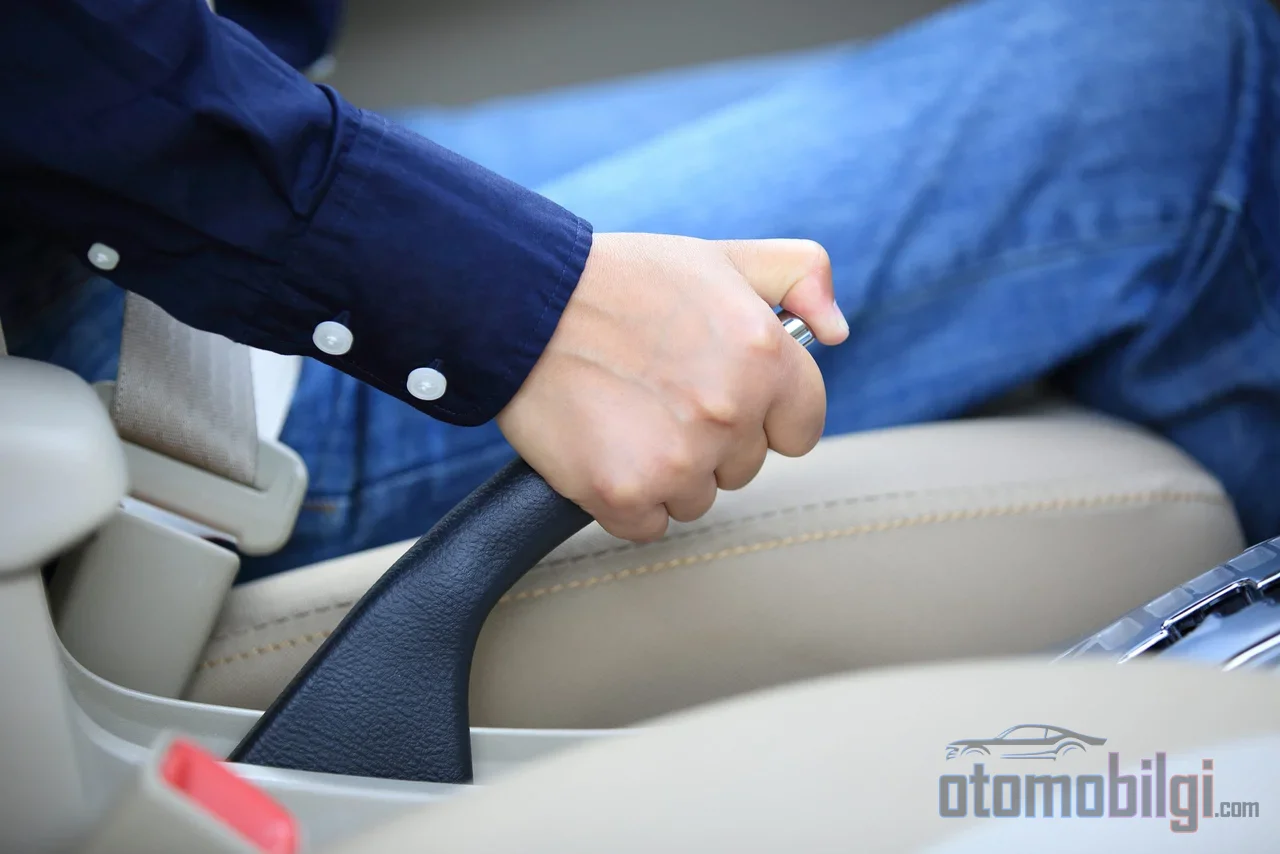
Counting the clicks as you pull up the parking brake lever is the oldest conversation most drivers have with their car. One day that lever starts rising higher and higher toward the sky, or the car slides on a slight slope despite the parking brake being engaged. That is the moment of reckoning for a mechanism that has been working quietly for years. Yes, the parking brake loosens over time; understanding why it does so also brings the question of whether you will solve the problem with a cheap, quick adjustment or whether there is deeper work to be done in the braking system.
On this page, we will cover why the mechanical cable-operated parking brake loosens, the tests you can safely perform yourself, the limits of cable adjustment, and the calibration issue faced by owners of electronic parking brakes (EPB). The maintenance logic of the two systems is so different that the same complaint can have completely different solutions in two cars.
Why Does the Parking Brake Loosen Over Time?
There is no single culprit behind the loosening; several mechanisms wear out together over the years. The most common cause is wear of the pads and brake shoes: as the friction material thins, even if the cable is pulled the same amount, the shoes cannot get as close to the drum or disc as before, and the lever or pedal travel increases. The cable itself also stretches slightly with repeated use; this is a natural behavior of steel wire.
Beyond that, the seizing of the self-adjusting mechanisms in drum brakes and corrosion in the cable housing prevent the inner cable from moving freely, causing a similar complaint. A cable rubbing inside a rusted housing will not work correctly no matter how much it is adjusted. If the cable is frayed, kinked, or jammed in its housing, adjusting it will not help; the cable must be replaced.
Key Takeaways
- The most common cause of parking brake looseness is wear of the pads and shoes; cable stretching comes second.
- Cable adjustment only takes up the slack; it cannot compensate for worn pads.
- Overtightening the cable can leave the brakes partially engaged while driving.
- Electronic parking brakes generally have no manual cable adjustment; calibration or a reset may be required after pad work.
- If the red brake warning light is on while driving, the car should be stopped and the system checked immediately.
How Does a Cable-Operated Parking Brake Work?
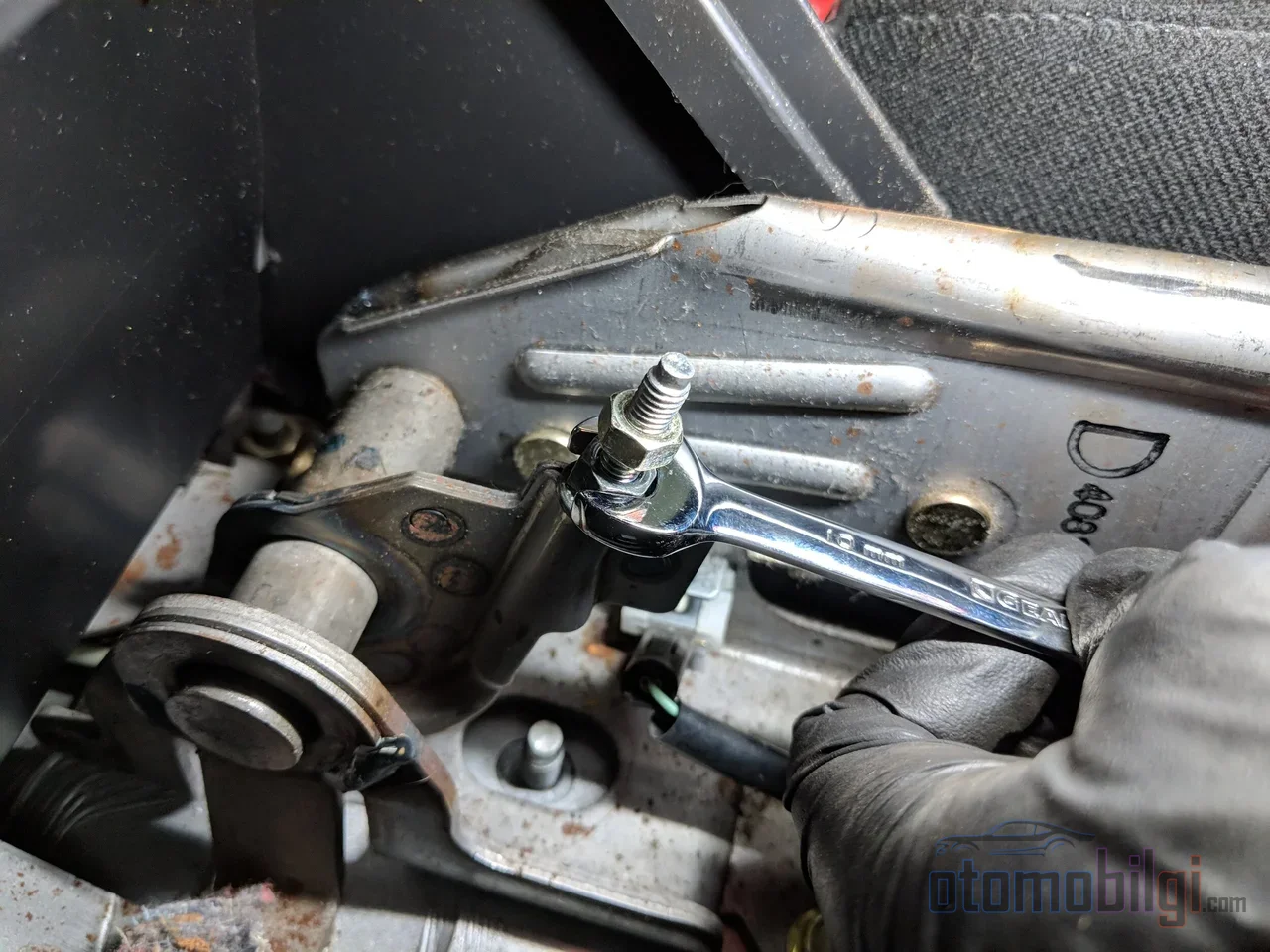
The logic of the mechanical system is simple: when the lever is pulled, the front cable transmits force to a part under the car called the equalizer; the equalizer splits this force between two rear cables, and each cable pulls the lever at the wheel. If there are drum brakes at the rear, the shoes expand against the drum. If there are disc brakes at the rear, two designs are encountered: a small drum with separate shoes fitted into the hub of the rotor, or a lever mechanism integrated into the caliper.
The adjustment screws are usually located in one of two places: the threaded rod and nut on the equalizer, or at the base of the hand lever, under the center console. Knowing the system is the first step to understanding whether the problem is adjustment or part fatigue.
How Do You Know the Parking Brake Has Loosened?
The symptoms often progress silently; the driver may not be aware of the situation until the vehicle starts sliding on a slope. Signs to watch for include:
- The vehicle rolling or slightly sliding on an incline after the handbrake is applied.
- The lever or pedal travels much higher than before, and the brakes engage late.
- The lever or pedal feels loose, and the brake does not hold fully.
- The parking brake warning light stays on while driving even though the brake has been released.
A constantly illuminated warning light can indicate a faulty sensor, damaged cables, or an ABS-related problem, just as much as an unreleased brake. In particular, if the red brake warning light is on while driving, the vehicle should be stopped in a safe place and the system checked immediately; if the brake pedal feels unsafe, or there is rubbing or noise, or a strong vibration is felt, this is an urgent service matter.
A Safe Handbrake Test at Home
For the test, first prepare the setting: choose flat, firm ground with plenty of open space around; avoid gravel, wet grass, and loose soil surfaces. Then park the vehicle safely on a slope, put it in neutral, and let it roll to observe whether the handbrake holds it. If it does not hold, adjustment or repair comes into question.
Some manufacturers' manuals prescribe a more systematic method: run the engine at about 1,200-1,300 rpm in the lowest gear and check whether the parking brake holds the vehicle in place. Some manuals instead require the braking effect to be tested on an incline of about 30 degrees. These tests give you a snapshot of the situation; what makes the diagnosis is a physical inspection of the lever travel and the rear brakes.
How Is a Mechanical Handbrake Cable Adjusted?
Adjustment is by no means the first solution to reach for, as is often assumed; it is the last step of the job. The correct order is as follows: first the rear brakes are visually inspected, the shoes and pad mechanism are adjusted according to the vehicle's specifications, and the cable tension is adjusted last of all. When the job is done, the rear wheels should turn completely freely with the brake released, and lock when the brake is applied.
Safety and Preparation
The vehicle is parked on level ground and the front wheels are chocked; the rear is raised with a jack and supported with jack stands. Never work under a vehicle supported only by a jack. After the brake has been fully released, the cables are checked along their length for broken strands, kinks, torn dust boots, rusted bodies, and missing clips.
How the Adjustment Is Done
The adjustment nut at the equalizer or at the base of the lever is tightened in small steps; after each step, the lever travel and the free rotation of the wheels are checked again. Once the desired grip is reached, the lock nut is secured. Rushing to tighten the cable all the way hides the problem instead of solving it; trying to press a worn pad or a seized mechanism into action with excessive tension keeps the rear brakes partially engaged even when the brakes are released. The symptoms of this condition are clear: one rear wheel being noticeably hot, a burning smell, a dragging sensation while driving, and the parking brake light staying on even after the brake is released. If any of these signs appear, the adjustment must be loosened back. If the entire adjustment range has already been used up, cable replacement is inevitable.
A fine detail: in some systems with an integrated lever mechanism on the caliper, when new pads are installed the pistons are not pushed back but screwed back in. The wrong method can render the caliper unusable.
The Electronic Parking Brake Is a Different World
In the past, the lever on the center console was the most mechanical and most understandable part of the brake system; now electric motors and actuators on the calipers do the same job instead of cables. The electronic parking brake (EPB) frees up space on the console, automatically compensates for pad wear to deliver consistent performance, and does not tend to slip. User experiences are also positive in this respect.
But the maintenance side changes. In vehicles with EPB, there is usually no such thing as manual cable adjustment. After pad or rotor replacement, caliper and actuator work, disconnecting the battery, or some service procedures, the system may require a reset or calibration. In some cases a standard reset is enough, while some repairs require fully releasing the actuator and running a calibration procedure. For example, there are manufacturers who require the entire system to be reset during rear caliper replacement.
Entering service mode varies from vehicle to vehicle: in some, you enter with a specific cycle while the ignition is on and the foot brake is pressed; in others, the EPB button is held for about five seconds while the parking brake light on the instrument panel is monitored. In most vehicles, the EPB motor cannot be manually retracted without a scan tool; in fact, in some systems entering service mode with a diagnostic device is mandatory before starting rear brake work. There are also brands that offer brake service activation from in-vehicle menus.
Adjustment or Service? The Moment of Decision
The clear answer of this summary is this: The handbrake does indeed loosen over time; the main reason is pad and shoe wear, while cable stretching and body corrosion speed the process up. In a mechanical system, the solution is to first bring the rear brakes into proper condition and then adjust the cable in a measured way. In an electronic system, the solution is not the cable nut but the reset and calibration procedure.
The situations requiring professional help are also clear: if the brake still does not hold despite a correct adjustment, if the cable is damaged or jammed, if the ratchet mechanism of the lever is not working, if the EPB gives a fault message, if the rear brakes are below the wear limit, or if fluid has contaminated the pads. If the brake shoes have worn to the point that the brake does not hold at all, the vehicle should be parked safely on level ground and the wheels chocked; putting an automatic transmission in P or a manual transmission in gear is no substitute for a working parking brake. Moreover, in automatic vehicles with a handbrake that does not fully hold, the load when parking on a hill falls on the transmission's parking pawl; this part is not a shaft that will be continuously strained for this job.
Here is what someone who has been in this business for thirty years would say: using the parking brake every time you park is a good habit; it protects the transmission and the vehicle. Slack is not a price of this usage, it is the natural wear of the system. When the lever starts needing more travel, don't wait; a small adjustment turns into a pad replacement if delayed.
Sources
- How to Adjust and Tighten a Parking Brake Cable
- Adjusting Parking Brakes
- GM Electronic Parking Brake Procedures
- What is Electronic Parking Brake (EPB)?
- Exploring the Types of Electronic Parking Brakes
- Brake Warning Lights Explained
- Signs Your Emergency Brake Needs Repair
- How to Test Parking Brake Safely at Home
- Are You Using Your Emergency Brake the Right Way?