Time Extension Granted for Internal Combustion Engines in Europe

The European Parliament's Environment Committee has adopted the draft revising the CO2 targets for passenger cars and light commercial vehicles. With the vote passing 48 in favor, 30 against, and 2 abstentions, the 100% reduction target, which would effectively mean the end of the internal combustion engine by 2035, was lowered to 87.5% for cars. The answer to this question, which has been hanging over the European automotive industry for three years, is now taking shape: Gasoline, diesel, and hybrid vehicles will still be sellable in Europe after 2035. But how exactly will the mechanisms establishing this new balance work, and what steps lie ahead in the process?
What Was Decided in the Committee Vote
The Environment Committee's (ENVI) vote essentially means the approval, at the Parliament level, of the compromise reached in October among the three major groups. The centrist platform formed by the conservative EPP, the social democratic S&D, and the liberal Renew Europe had found common ground toward flexibility in the existing targets, taking into account the pressure the European automotive industry is under. Behind this compromise was the support given by the Industry Committee on October 22 with 49 votes in favor, 27 against, and 5 abstentions, and by the Transport Committee, also on October 22, with 27 in favor, 18 against, and 1 abstention.
As anyone well-versed in this business knows, the fact that the Parliament's three specialized committees said yes to the same text within the same week is no coincidence; it is a sign that the political rhythm has worked. The centrist platform agreement is a bridge built between the realities of a market slowly trying to acclimate its immune system to going electric and the political commitment to climate targets.
Key Highlights
- The 2035 car target was lowered from 100% to 87.5%; completed up to 95% with low-carbon steel credits
- For vans, the 2030 target was raised to 35% and the 2035 target to 80%
- Super credits with a 1.4 and 1.2 multiplier are coming for electric vehicles up to 4.2 meters produced in the EU
- The zero-emission definition is being broadened to cover vehicles running on eligible renewable and low-carbon fuels
- Next step: The plenary vote in December 2026, followed by EU Council negotiations
New Target for Cars: 87.5% and the Steel Credit Mechanism
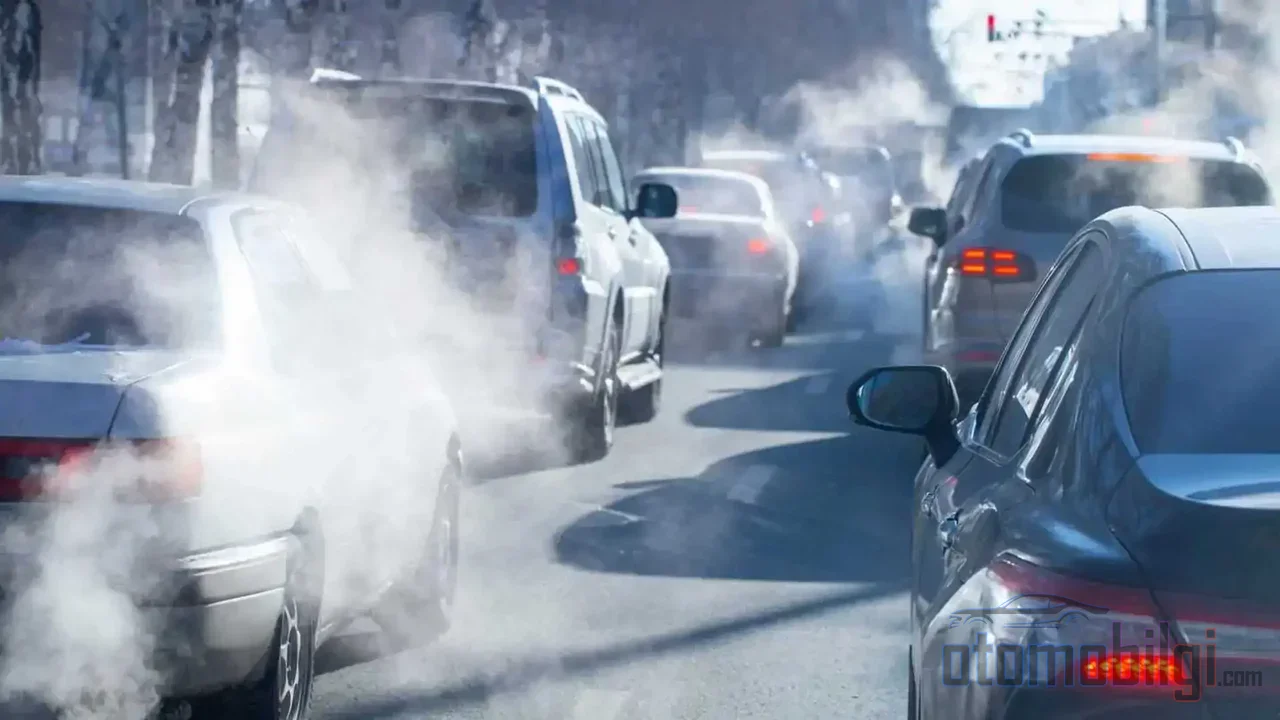
At the heart of the draft stands the new reduction rate set for 2035. Manufacturers will have to reduce their CO2 emissions by 95% compared to the 2021 base year; the remaining 7.5-point gap can be compensated through the use of EU-produced certified low-carbon steel. In other words, the buffer zone will be filled with report-card points coming from hydrogen-based steel production in the EU.
This mechanism is a two-sided gamble. On one hand, it gives breathing room to the automotive industry that is pushing demand; on the other, it creates a guaranteed market for Europe's steel producers that have invested in green steel. Steel credits can be counted during the period from the entry into force of the revised regulation until the end of 2034; the upper limit discussed for this period is being kept at the 3-point level. Credits before 2035 may account for 3% of the targets, and from 2035 onwards, 7.5%.
A Deeper Stretch for Vans
On the light commercial vehicle side, the comparison is even harsher. The current 50% reduction target for 2030 is dropping to 35%; even the Commission's own draft had projected 40%. By 2035, an 80% reduction instead of 100% will be deemed sufficient. The steel credit can also be applied to vans, but the cap is limited to 7.5%. The concern of commercial fleet operators over the costs of electrification is the main reason behind this concern on paper.
| Category | Old target | New target | Steel credit |
|---|---|---|---|
| Cars 2035 | 100% | 87.5% | 7.5 points (completes to 95%) |
| Vans 2030 | 50% | 35% | - |
| Vans 2035 | 100% | 80% | 7.5% cap |
Super Credits and the Broadened Zero-Emission Definition
The draft has two more significant provisions on its industrial policy side. First is the super credit scheme, under which electric cars produced within EU borders and no longer than 4.2 meters will count as 1.4 vehicles; for highly efficient models, this multiplier will be at the 1.2 level. The multipliers increase even further for vehicles registered under the social leasing program. Second is the expansion of the zero-emission vehicle (ZEV) definition: vehicles running solely on renewable and low-carbon fuels compliant with the Renewable Energy Directive will also count as zero-emission. This means a long-awaited door is being left ajar on the synthetic fuel and biofuel side.
It is natural that the 4.2-meter limit on the production side seems restrictive to some; the aim is clearly to protect Europe's production capacity in the small car segment and to make prices more accessible. Keeping the domestic production base standing against mostly Asian-sourced compact electrics is the real calculation behind these multipliers.
A More Flexible Line than the Commission's 90% Proposal
One should not miss the difference in depth here. In its automotive package announced in December 2025, the European Commission had proposed a 90% reduction for 2035, stipulating that the remaining 10% be fully offset with EU-produced green steel and e-fuels/biofuels. The text adopted by the Parliament committee both goes lower, at 87.5%, and removes the full offset requirement. In other words, the line has been moved a step beyond even the Commission's position.
The compromise reached by Germany and France in early October played a major role in the architecture of this outcome. The two countries had agreed on a formula of 90% reduction without offsets for 2035; it is known that German support regarding intra-European production conditions was decisive in France's move to this joint position. The two major countries standing on the same side in the Council vote significantly eases the qualified majority arithmetic.
What the Current Rule Would Have Meant
The current regulation, adopted in 2023 under the Fit for 55 framework, foresaw a 100% reduction in new cars and vans from 2035 onwards. In practice, this meant the effective end of new gasoline and diesel vehicle sales in Europe. Now this picture is changing: Under the 87.5% reduction target (95% with e-fuel credits), the registration of internal combustion and hybrid vehicles will remain possible even after 2035.
Industry Reactions: Flexibility Was Not Enough
While CLEPA, which represents the supplier industry, welcomed the compromise positively, it expressed the view that additional adjustments were needed for genuine flexibility. ACEA, the manufacturers' umbrella organization, argues that the flexibility on the car side falls short in terms of scope and duration. In short, this new balance is too much for some and not nearly enough for others.
The process that brought manufacturers to this point also matters. The automotive industry had been warning for years that the targets were unrealistic due to EV demand remaining slower than expected and the US moving away from its electric vehicle policy. As demand-side pressure mounted and competitors raced under different rules in export markets, the political system's answer took shape in this direction.
Opposition from critics is also on the table: Even if zero-emission sales reach the 100% level, critics calculate that only 83% of Europe's fleet could be zero-emission by 2050. It is also stated that renewable fuel crediting risks weakening how the standards function. These objections will come back to the table at the December plenary vote and in Council deliberations.
Where the Process Is Heading: December Plenary and Council Deliberations
The Commission vote is not over; only the first major gate has been passed. In December 2026, the Parliament's plenary will hold the vote determining negotiating authority. Then comes the EU Council process with a qualified majority requiring approval from at least 15 countries and at least 65% of the EU population. Changes to the text are still possible at these stages.
Additionally, the same vote relaxed the clean corporate vehicles regulation governing corporate fleets. The Parliament also proposes that the Commission adopt interoperability technical requirements for electric vehicles and plug-in hybrids by December 31, 2027. The regulation is also read as a hope for hydrogen-based steel production.
The summary of this point is as follows: The 2035 date is still on the table, but it is now tied to 87.5% rather than 100%. For someone who has watched this industry's transformations for thirty years, what is truly striking is not so much the target itself as the fact that Europe has embedded its industrial policy directly into the emissions rule through compensation mechanisms. The end of the process will be finalized with the Council vote; until then, every figure is open to negotiation.
Sources
- CO2 emissions: adjusted targets, more incentives for clean vehicles - European Parliament
- European lawmakers push to ease car CO2 emission targets - Reuters
- EU Parliament: Environment Committee votes to relax CO2 rules - electrive
- EU Parliament committee backs lowering 2035 car emissions reduction target to 87.5% - Anadolu Ajansı
- ENVI vote marks another step towards a more pragmatic CO2 framework - ACEA
- EU automotive proposal offers hope for hydrogen steelmaking - gasworld
- EU lawmakers back weaker 2035 car emissions target - Automotive News Europe