What Is a Slow Zone in WEC and How Does It Work?
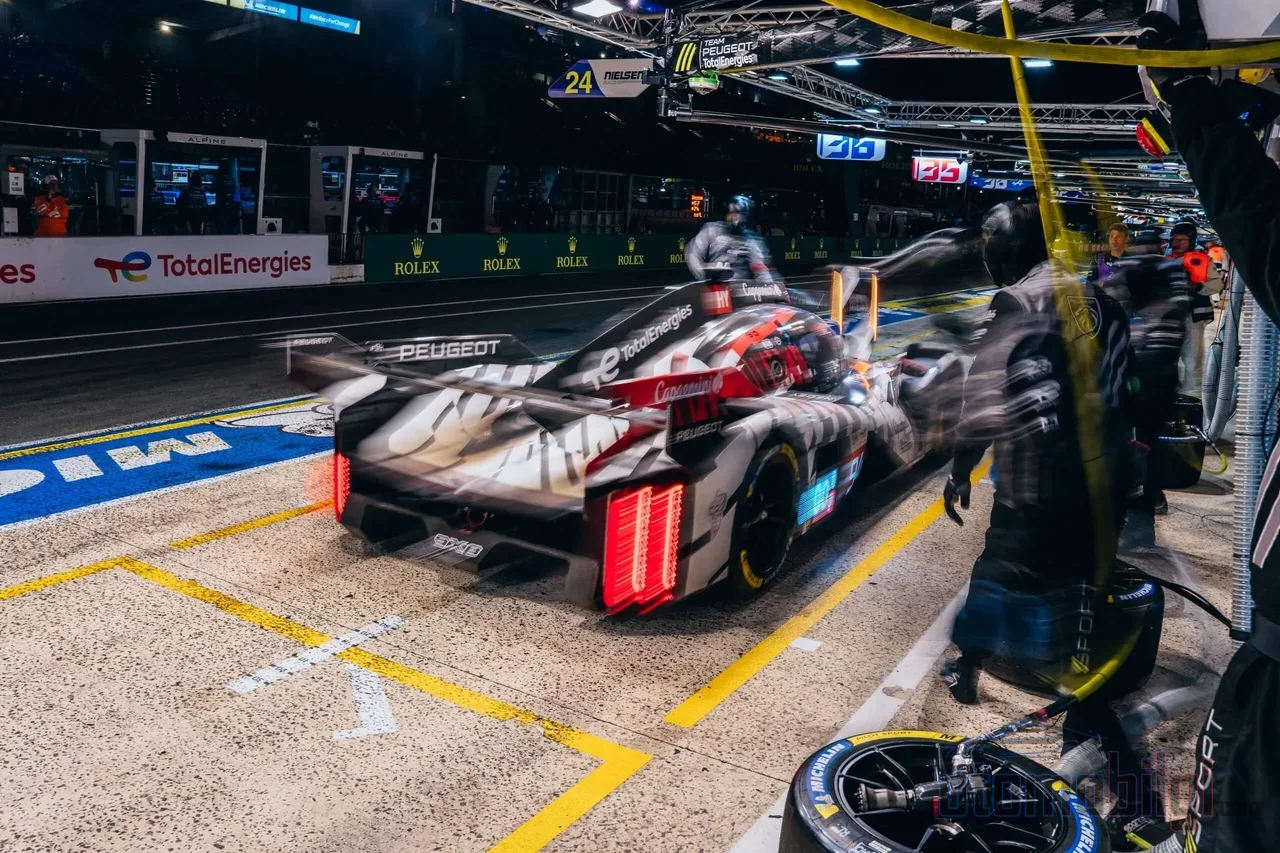
Hour 10 of Le Mans. Hour 10, that is. After a long battle, the #8 Toyota leads, with the team's other car, the #7, two minutes behind. Then race control slows down a zone and news of a penalty comes in: The #8 Toyota has exceeded the slow zone speed limit. A two-minute lead changes hands in an instant. The fate of a 24-hour race was decided by an 80 km/h limit on just a few hundred meters of track. Sounds strange, doesn't it? But in the WEC world, that's exactly how the slow zone works - a rule most viewers know by name but don't fully understand. So let's begin: What is a slow zone, how does it come into effect, how does a driver go from 300 km/h down to 80 km/h, and what exactly is the difference from a Full Course Yellow?
What Is a Slow Zone and How Does It Come Into Effect?
The slow zone is one of endurance racing's most elegant safety solutions. The logic is simple: When a problem occurs on track - for example, a car stuck in a gravel barrier or a barrier piece fallen onto the track - instead of stopping the entire track, only that section is slowed down. In that zone, speed is limited to 80 km/h and overtaking is prohibited; the rest of the track continues under green flag at full racing speed. It is designed precisely this way so that marshals and technical crews can intervene safely.
The WEC, which introduced the system in 2014, had set the speed limit at 60 km/h at that time; in today's practice, the limit is 80 km/h. The old 60 km/h information still circulating from time to time dates back to that early period. Also, the system's purpose is not only safety, but preserving the flow of the race: Without slow zones, a safety car would have to be deployed for every local incident, and the race would turn into a spectacle under near-constant neutralization.
Key Highlights
- In a slow zone, the speed limit is 80 km/h and overtaking is prohibited within the zone
- The Le Mans circuit is divided into 35 zones, and these are divided into 9 sectors
- During FCY, the pit entrance is closed; in a slow zone, pits remain open - that's where the strategic difference lies
- From Season 10 onwards, the slow zone was removed from the WEC and lives on only as a Le Mans practice
- A well-timed slow zone pit stop can gain you 20-40 seconds
How Is the Track Resolved Zone by Zone?
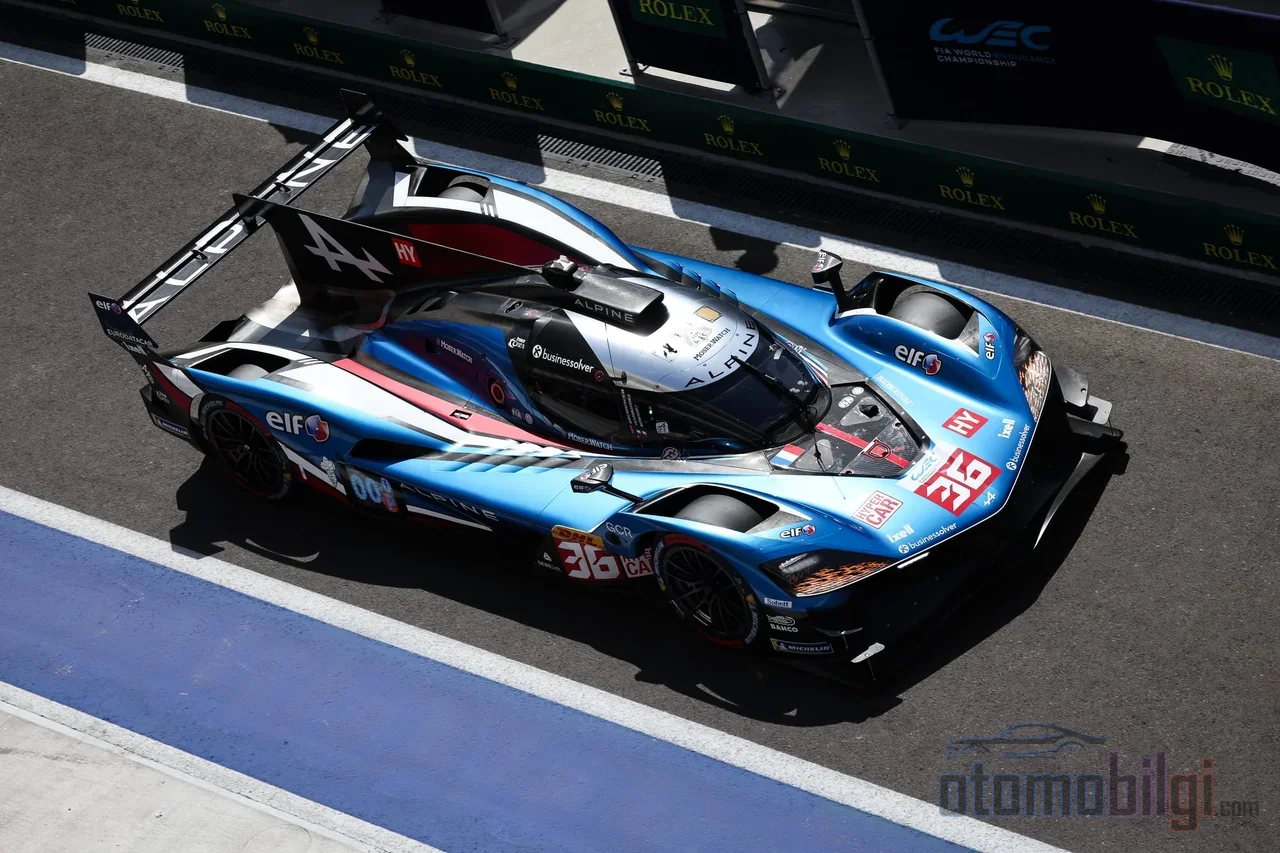
The 13.629 km Le Mans circuit is divided into 35 zones, and these zones are divided into 9 sectors. Each zone extends from one marshal post to the next and is approximately 300-500 meters long. At the beginning and end of each zone, there is a light on both the inside and outside of the track; when the zone is activated, these lights turn on and the marshal waves a yellow flag. The critical detail is this: the marshals in the previous zone also give a warning signal, so approaching drivers don't enter the zone at full speed - they enter at the correct speed.
Speed Line, Overtaking Line and the 5-Second Rule
Each slow zone is defined by two lines. The speed line is the point where the 80 km/h limit begins; the overtaking line is where the overtaking ban is lifted and racing resumes. After the countdown ends, the driver must already be down to 80 km/h when reaching the speed line, and a 5-second tolerance is allowed for this transition. The zigzag movement done to keep the tires warm, known as weaving, is prohibited inside the zone.
So who is monitoring? Not by visual observation; speed is checked with the help of technology, via a GPS-based satellite system and timing loops embedded in the track surface. Moreover, the onboard device fitted to the cars displays active zone information on the steering wheel screen over WiFi. This is exactly the life-saving detail when reading the trackside signs becomes impossible at night or in fog.
Slow Zone, Full Course Yellow, or Safety Car?
Here is where things get confusing. The practical difference between FCY and slow zone is not speed, but scope: both apply an 80 km/h limit, but the slow zone imposes it at a single point, while FCY applies it to the entire track. FCY is mainly used for short neutralizations, such as clearing scattered debris, and when activated, a countdown of at least 20 seconds is broadcast. Under FCY, cars maintain a two-car-length distance from the car ahead.
| Feature | Slow Zone | FCY | Safety Car |
|---|---|---|---|
| Scope | A section of the track | Entire track | Entire track |
| Speed limit | 80 km/h | 80 km/h | Behind the Safety Car |
| Gap between cars | Largely preserved | Preserved | Erased, field closes up |
| Pit lane | Stays open | Entry closes automatically | Managed by race control |
| Typical use | Local incident | Short neutralization | Major accident, bad weather |
The most discussed line on the strategy desk is the pit lane line. Under FCY, pit entry closes automatically; a team reacting to the FCY announcement and diving into the pit finds the door closed. The cheap pit stop opportunity lies in the slow zone, not in FCY. WEC tightened the rule on this over time, and with a season change, the option of pitting under FCY was removed entirely.
The Safety Car, on the other hand, is a completely different animal. The only neutralization tool that wipes out the gaps teams spent hours building in a single move. At Le Mans, three safety cars deploy from different points of the track and split the field into three separate trains; which train you end up in is largely a matter of luck, and can mean a loss or gain of one lap's worth. In the opening hours of the 2023 Le Mans, the safety cars taking almost an hour to resolve had ignited debates. Because this practice is seen as the biggest randomness factor in the Le Mans outcome, there is a strong tendency for race control to prefer the slow zone whenever possible.
What Happens If You Violate It: Penalties and the Points System
The cost of a slow zone violation can be heavy: time penalties, drive-through, or stop-and-go penalties are the options on the table. In a 24-hour race, a stop-and-go can end a class battle all by itself. WEC also operates a points-based penalty system: each driver starts the season with a reserve of 12 points, and stewards can deduct up to 6 points per race. There is also a regulation introduced with Season 10: a 35-second stop & go penalty is applied. It is also known that Anthony Davidson, a WEC champion of his era, had previously voiced concerns about the slow zone system at Le Mans.
Moments That Changed the Course of the Race: Le Mans Examples
In a previous Le Mans, in the 10th hour of the race, the #8 Toyota exceeded the speed limit inside a slow zone, took a penalty and dropped back; the name that took over the lead for two minutes was the #7 Toyota. Going a few km/h over the limit in a single zone swapped the positions of the two cars. This is exactly why the slow zone's relationship with race strategy is so deep.
The Slow Zone Becomes Part of the Strategy
Making a pit stop in a slow zone is much cheaper than stopping under a green flag; no tire changes while refueling, only 4 mechanics may work in the pit lane, and a maximum of 2 people with at most 2 wheel guns may be used for a tire change. A lap containing a slow zone burns significantly less fuel, so the stint can be extended. Teams can shift the driver change rotation to coincide with a slow zone. But the other side of the coin is ruthless: if the slow zone kicks in on the very lap right after a pit stop, that race can be lost. It is a complete gamble; those who play it calculated win.
The asymmetry between classes is also interesting: the 80 km/h limit costs the Hypercar class more than LMGT3, because the drop from normal race speed is much greater. Pit rules also complicate things: you cannot change tires while refueling, only 4 mechanics may work in the pit lane, and during a tire change a maximum of 2 people and a maximum of 2 wheel guns may be used.
The Short Answer: How Does the Slow Zone Work?
In summary: when race control identifies an incident on track, the zone containing that incident is activated; the preceding marshal post gives a warning, zone signals light up, when the driver reaches the speed line he slows to 80 km/h within a 5-second tolerance, overtaking is not allowed until the overtaking line, once the marshals finish their work the zone is released and the race resumes where it left off. The rest of the field races at full throttle throughout this entire period.
Let's also touch on the latest situation, because it matters: with the Season 10 regulations, the slow zone system is no longer used in races on the WEC calendar; the system lives only in Le Mans' specific regulations. For 2026, the Le Mans circuit is divided into 9 slow zones. The same idea also has a cousin in other series: Code 60, used in the Nürburgring and 24H Series world, with its 60 km/h limit and pink signage, is the same logic packaged differently. A different name, the same purpose: ensuring safety without stopping the race. And in the darkness of Le Mans at midnight, for a driver looking at that zone warning appearing on the steering wheel display, it all comes down to one thing: 80 km/h, right?
Sources
- 24 Hours of Le Mans - How the Slow Zones work
- Slow Zones and the Marshalling System
- What's new for WEC Season 10? - FIA WEC
- Le Mans hour 10: Penalty setback for #8 Toyota - Autosport
- Le Mans slow zone approach concerns Davidson - Motorsport.com
- Which needs more fixing: Safety Cars or Slow Zones? - Reddit r/wec