Why Can't the Laser Headlight Range Exceed the Stopping Distance?
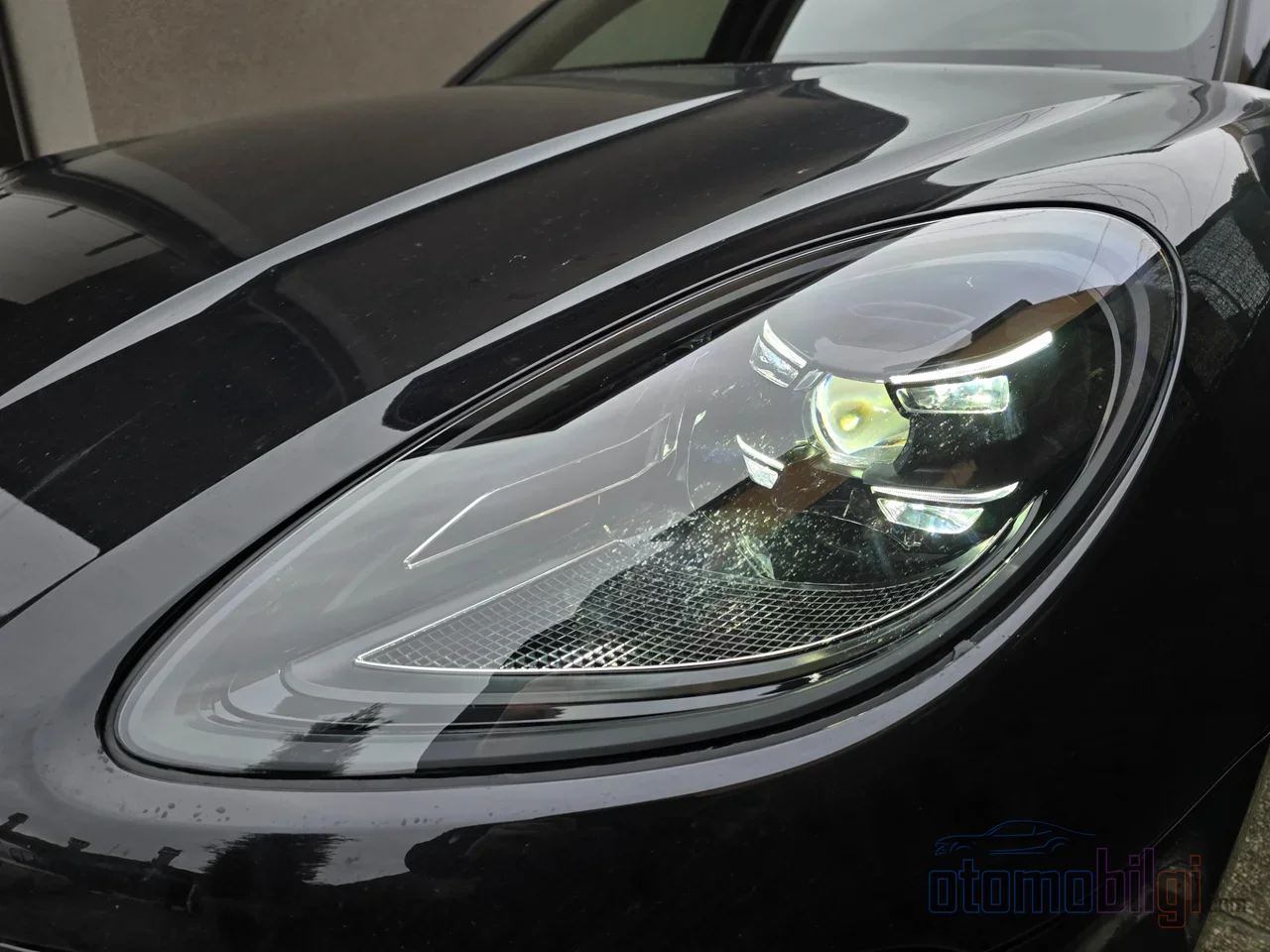
Have you ever gotten lost in this thought on a night drive: my headlights illuminate what's ahead, so I can stop in time for anything I see? Right here lies the sneakiest mathematical trap of night driving. Because headlight range and stopping distance are two separate worlds, and as speed increases these two worlds drift apart. While stopping distance grows exponentially with speed, headlight range stays where it is. So beyond a certain point, a huge gap opens between the last point your eyes can see and the point where your car will stop when you hit the brakes. This gap has a name: outdriving your headlights. And on this page, we will place all technologies, from the famous 600 meters of laser headlights to halogen's modest 49 meters, into this safety math.
What Does Outdriving Your Headlights Mean?
In short, we are talking about a speed condition where the vehicle's stopping distance exceeds the distance illuminated by the headlights. At such a moment, it means the driver cannot come to a complete stop at a point they cannot see. In short, braking is not enough. For example, standard halogen low beams illuminate the road to about 49 meters ahead. At 97 km/h, this distance is covered in about 1.8 seconds; if danger appears right at the edge of the light boundary, you are left with less than 2 seconds to react and stop. Yet at the same speed, the total stopping distance is about 93 meters. The distance you see is 49 meters, the distance you need to stop is 93 meters. Those 44 meters in between are equivalent to saying "I hope there's nothing ahead of me" while driving.
Key Takeaways
- Standard halogen low beams illuminate about 49 m ahead, high beams 107-152 m.
- At a speed of 97 km/h, the total stopping distance is about 93 m, twice the low beam range.
- Laser high beams can project up to 600 m; but the industry is backing away from this technology.
- When speed is halved, the stopping distance is divided by four; the most effective nighttime safety intervention is reducing speed.
Why Is Speed So Decisive?
Here is the critical point of the matter: stopping distance increases exponentially with speed, while headlight range is fixed. When speed doubles, the stopping distance increases roughly fourfold. Even small increases in speed create large safety losses. At 72 km/h, the stopping distance drops to about 52 meters; this is a value much closer to the standard headlight range. So at night, on an unlit road, the single most effective safety intervention you can make is to take your foot off the gas. So why do headlights stay so short-ranged? Because the job of low beams is not just to light your way, but also to consider oncoming traffic; the light cutoff line is deliberately kept low to prevent glare.
Range Comparison of Halogen, LED, and Laser Headlights
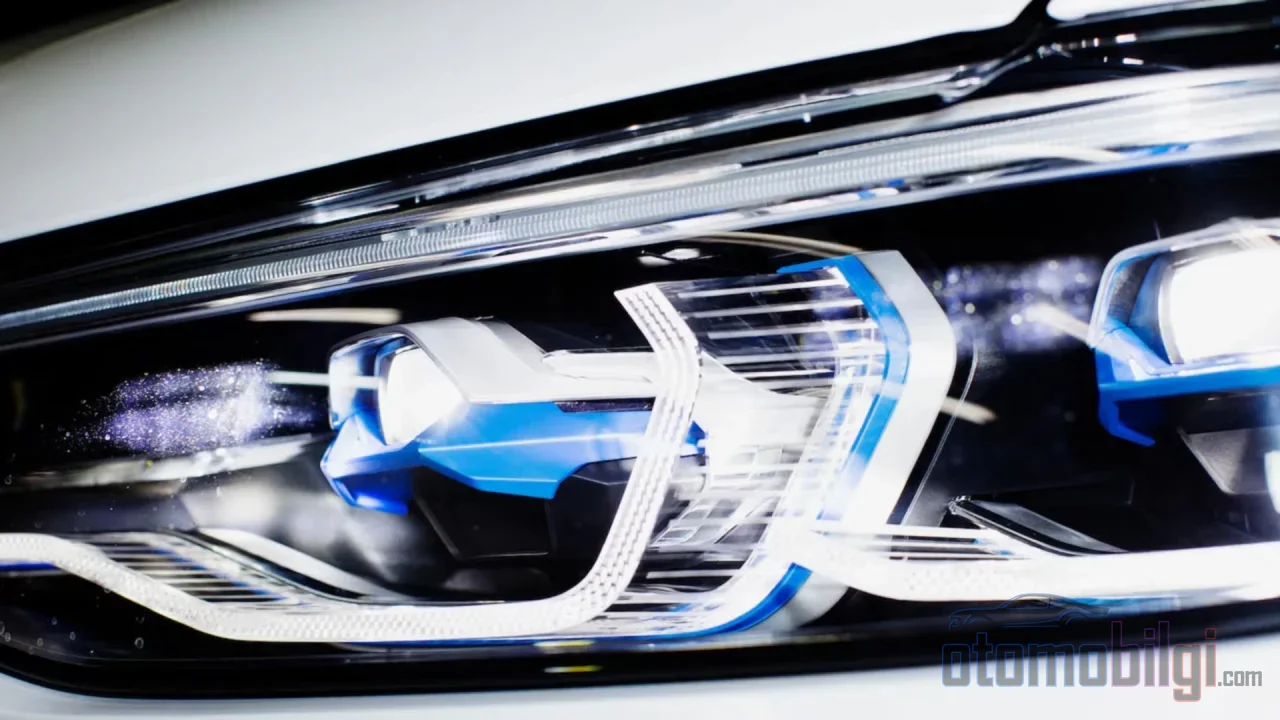
Now let's move on to the technology side of the matter. Because what we call headlight range changes significantly depending on the type of bulb. According to Transport Canada, the low beam system of most vehicles provides the driver with about 140 meters of visibility; however, the effective illumination distance of halogen headlights is much shorter, measured in a range of about 49-91 meters. High beams carry this distance to 107-152 meters; moreover, if there is a vehicle in the oncoming direction within 150 meters, you must switch to low beam. On the laser side, however, things change: BMW's laser module provides projection up to 600 meters and consumes 30 percent less energy than an equivalent LED module. Audi's laser high beam engages at speeds above 60 km/h and extends the range to up to 600 meters, roughly twice that of conventional LED.
| Headlight technology | Typical range | Standout feature |
|---|---|---|
| Halogen low beam | Approximately 49-91 m | Bulb life ~500 hours |
| Standard low beam system | Approximately 140 m of visibility | Limited by the cutoff line |
| High beam (conventional) | 107-152 m | Must switch to low beam when a vehicle is within 150 m |
| LED high beam | About half of laser | Instant full brightness |
| Laser high beam | Up to 600 m | 30 percent less energy than LED |
Let's also add an operational dimension to the table. In each module of the R8 LMX, Audi's first production model with laser high beam, there are four high-power laser diodes with a diameter of 300 micrometers. The monochromatic and coherent blue laser beam is generated at a wavelength of 450 nanometers and converted to white with a phosphor converter. In short, laser light is not projected onto the road directly; it is converted and turned into safe white light. The LED side, however, has a critical advantage: it produces light instantly. Halogen bulbs light up with a 0.2-second delay, while xenon can take up to 1 second. This delay stands out as a factor that increases the risk of rear-end collisions in rear lights.
So Why Are Laser Headlights Disappearing?
Here's the interesting part: Despite this impressive 600-meter range, laser headlights are quietly being withdrawn from the automotive world. BMW announced that it has removed the technology from its applications; although it is still present in the X7, the general trend is toward retreat. The reason is cost and the fact that Matrix LED is sufficient. In other words, the industry does not see value in paying the price for the extra range that the narrow 600-meter light cone provides. Laser headlights already had a structure that supported the wide dispersion of Matrix LED systems; they were not positioned as a standalone solution. As of 2024, this page seems to be closing.
Matrix Headlights and the Adaptive High Beam Solution
What has replaced the range war is a race for intelligence. Porsche's HD matrix modules contain 32,768 individually controllable pixels per headlight and produce high-resolution light directly. Audi's Digital Matrix LED system, while maintaining high beam illumination, dims only the areas that could cause glare. BMW's selective beam technology dynamically masks the area around oncoming vehicles using micro-mirrors. The logic is simple: rather than extending the range, keeping the high beam on at all times. Because while the nighttime detection rate rises to 93 percent with high beam, it stays at 87 percent with low beam; and during the day it is 98 percent. In other words, adaptive systems try to compensate for the loss of detection experienced with low beam by giving the high beam continuity.
Fatigue, Age, and Weather Conditions Disrupt the Equation
Math is not just about headlights and speed; human factors significantly worsen the picture. Let's look at glare: after the oncoming vehicle's headlights, it takes 2 to 5 seconds for the eyes to fully return to the image. At 97 km/h, this means 54 to 134 meters of impaired vision on the road. As age advances, contrast sensitivity decreases and adaptation to glare slows down; reaction and focusing time lengthens. While HID headlights illuminate farther and increase the driver's reaction distance, the glare effect creates serious problems for older oncoming drivers. In short, what one technology gains may be stolen from another driver's vision.
Fatigue, meanwhile, is the invisible enemy of night driving. Fatigued driving causes an estimated 91,000 police-recorded accidents per year, and most of these accidents occur between 00:00 and 06:00. Caffeine delays fatigue by 30-60 minutes but does not eliminate it; a 20-minute nap is a more effective solution. On wet surfaces, the stopping distance nearly doubles compared to dry roads. Also, oxidized, fogged headlight lenses can reduce light output by up to 70 percent; meaning the vehicle's age is also a variable in this equation. Although night driving accounts for about 25 percent of total kilometers, it is the scene of about half of traffic fatalities, and the main cause is not alcohol but visibility.
Thermal Cameras: Seeing What Headlights Cannot
Faced with the headlight range problem, the industry's other answer is not to use light at all. Thermal night vision cameras detect the infrared radiation that all objects emit according to their temperature; darkness, fog or smoke makes no difference. They are not affected by headlight glare and provide images in every light condition. In summary, while headlights enable the driver to see the road, thermal systems can detect hazards before human vision can. In detecting pedestrians and maintaining road clarity, this technology moves range math onto a completely different axis. It is also known that LWIR thermal cameras added to the autonomous driving sensor stack improve vehicle detection and tracking.
So What Is the Answer? Speed or Technology?
A clear picture emerges from all this analysis: headlight range can never fully keep up with stopping distance as speed increases, because stopping distance grows exponentially while range increases only constantly or in a limited way. This gap, which started with halogen, narrowed with LED, and seemed to close with laser up to 600 meters, actually showed - with even laser headlights being withdrawn from the market - that technology alone is not the solution. Range alone is not decisive; the detection and reaction chain is considered as a whole. Matrix headlights brought glare-free high beam continuity, and thermal cameras provide detection independent of light. But the most consistent and supported safety intervention is still the same: reducing speed on unlit roads. Even if you have laser headlights, the moment you drive at 97 km/h with low beams at night, the math is working against you. Unless your headlight range stays ahead of your stopping distance, you are driving on top of something you cannot see.
Sources
- Nighttime Driving Safety: Statistics and What Actually Helps
- What does overdriving your headlights mean and why it matters
- How Far Can You See When Driving at Night?
- Halogen v LED v matrix LED v laser: Headlights compared and tested
- The Audi R8 LMX - world's first production car with laser high beams
- Nighttime Glare and Driving Performance: Research Findings
- Day and night performance differences in detection
- Laser Headlamps Are Disappearing. Here's Why